


























Views
Downloads

Printable 5-Minute Intervals Time Worksheet | Grade 2-4 Math
Paste this activity's link or code into your existing LMS (Google Classroom, Canvas, Teams, Schoology, Moodle, etc.).
Students can open and work on the activity right away, with no student login required.
You'll still be able to track student progress and results from your teacher account.
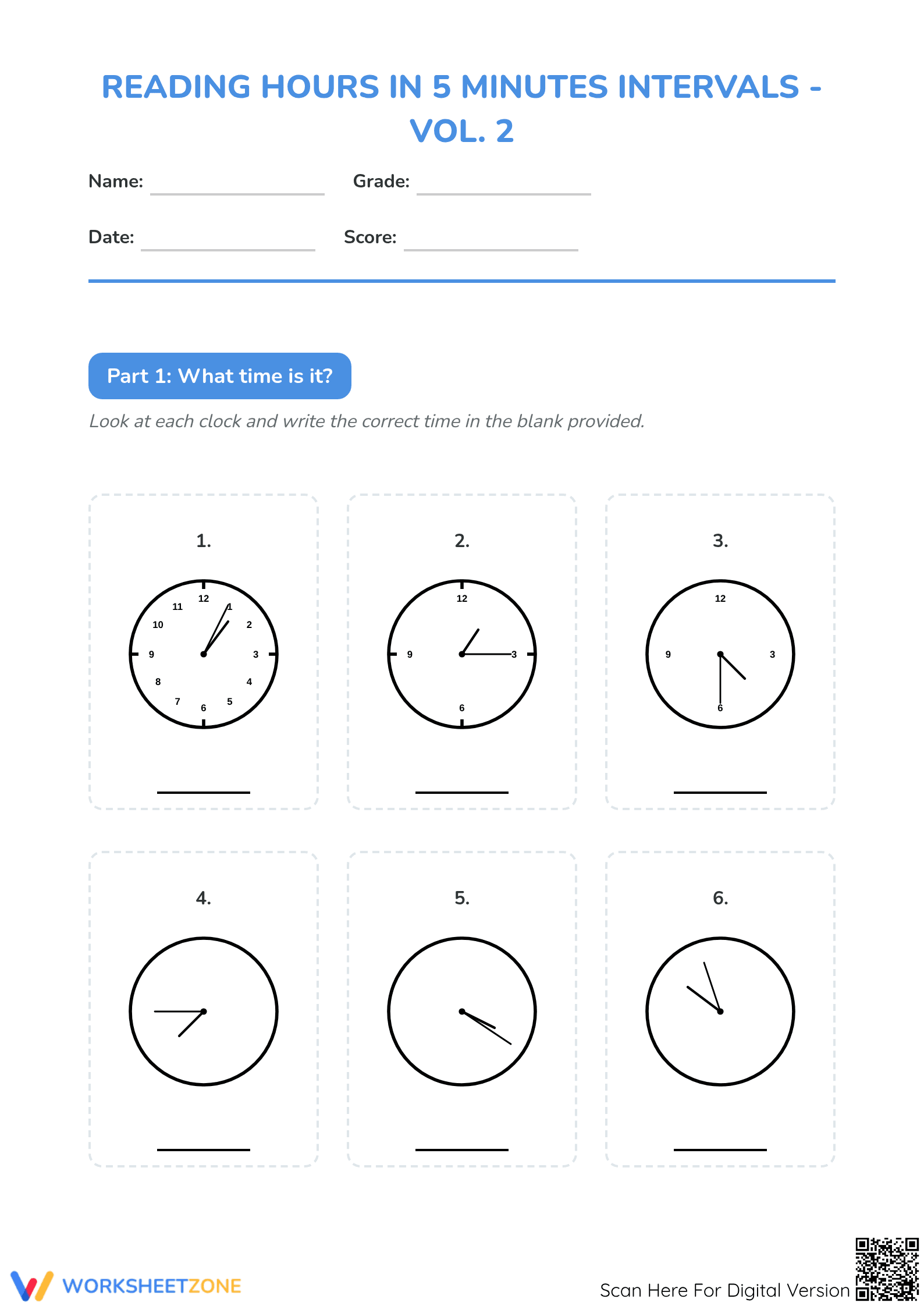
This comprehensive Grade 2-4 Math worksheet empowers students to master reading analog clocks at five-minute intervals. Through 30 diverse tasks, learners build fluency in telling time, drawing hands, and solving elapsed time word problems. This resource ensures students transition from hour recognition to precise time management and conversion.
At a Glance
- Grade: 2-4 · Subject: Math
- Standard:
CCSS.MATH.CONTENT.2.MD.C.7— Tell and write time from analog and digital clocks to the nearest five minutes- Skill Focus: Telling time to the nearest 5-minute interval and elapsed time
- Format: 5 high-quality pages · 30 rigorous problems · Full answer key included · PDF
- Best For: Comprehensive classroom unit review, sub plans, or independent homework practice
- Time: 40–60 minutes
What's Inside
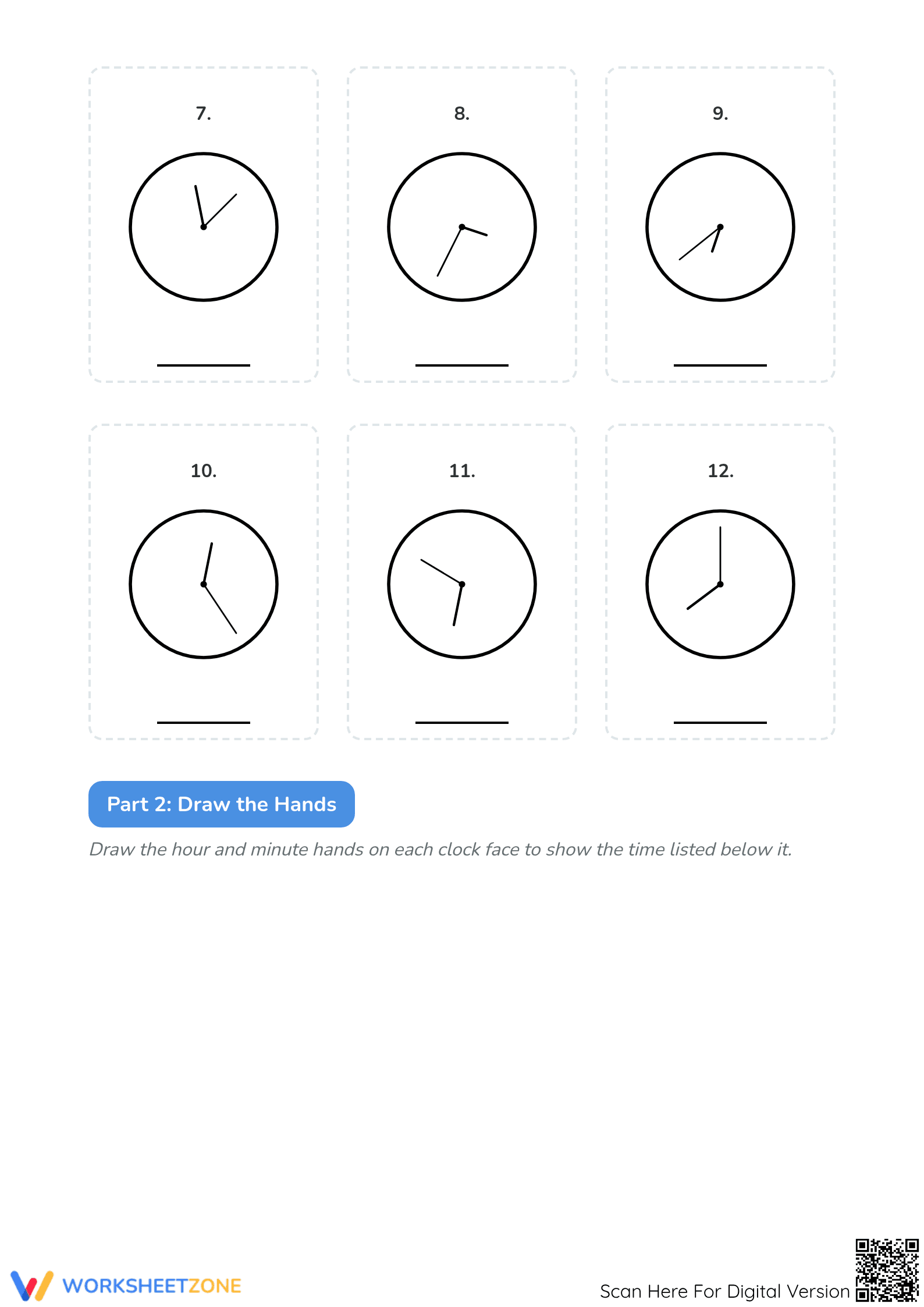
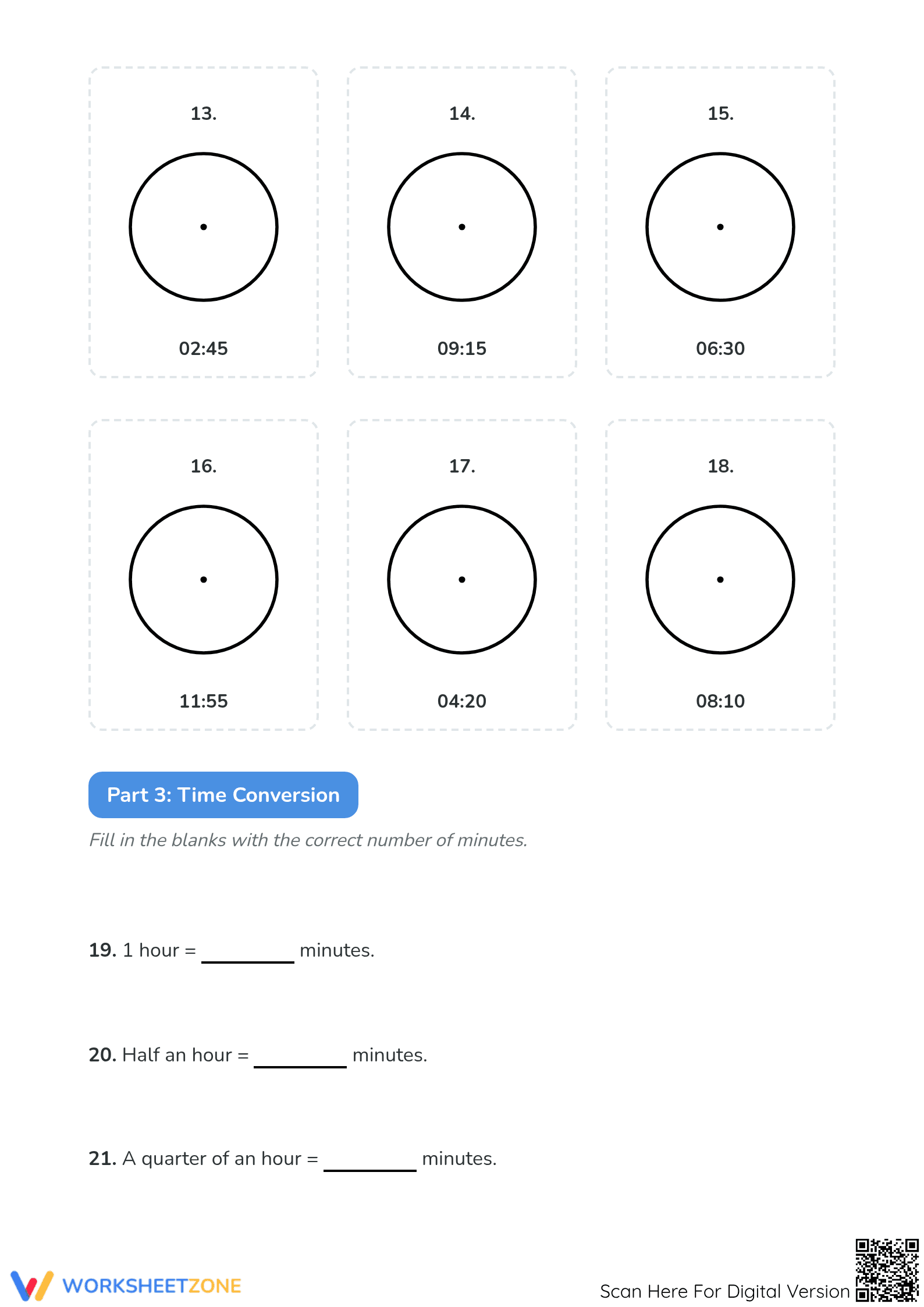
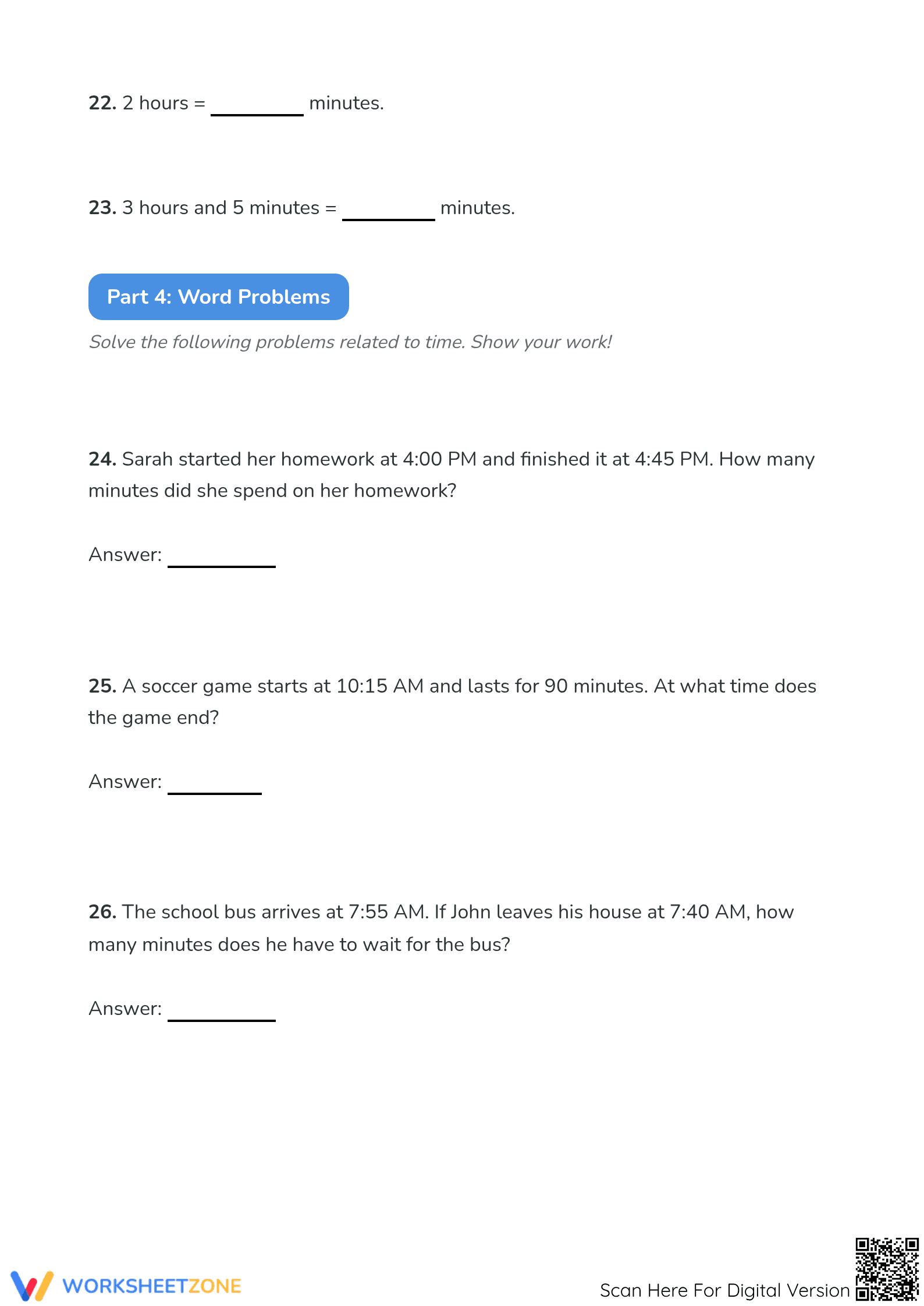
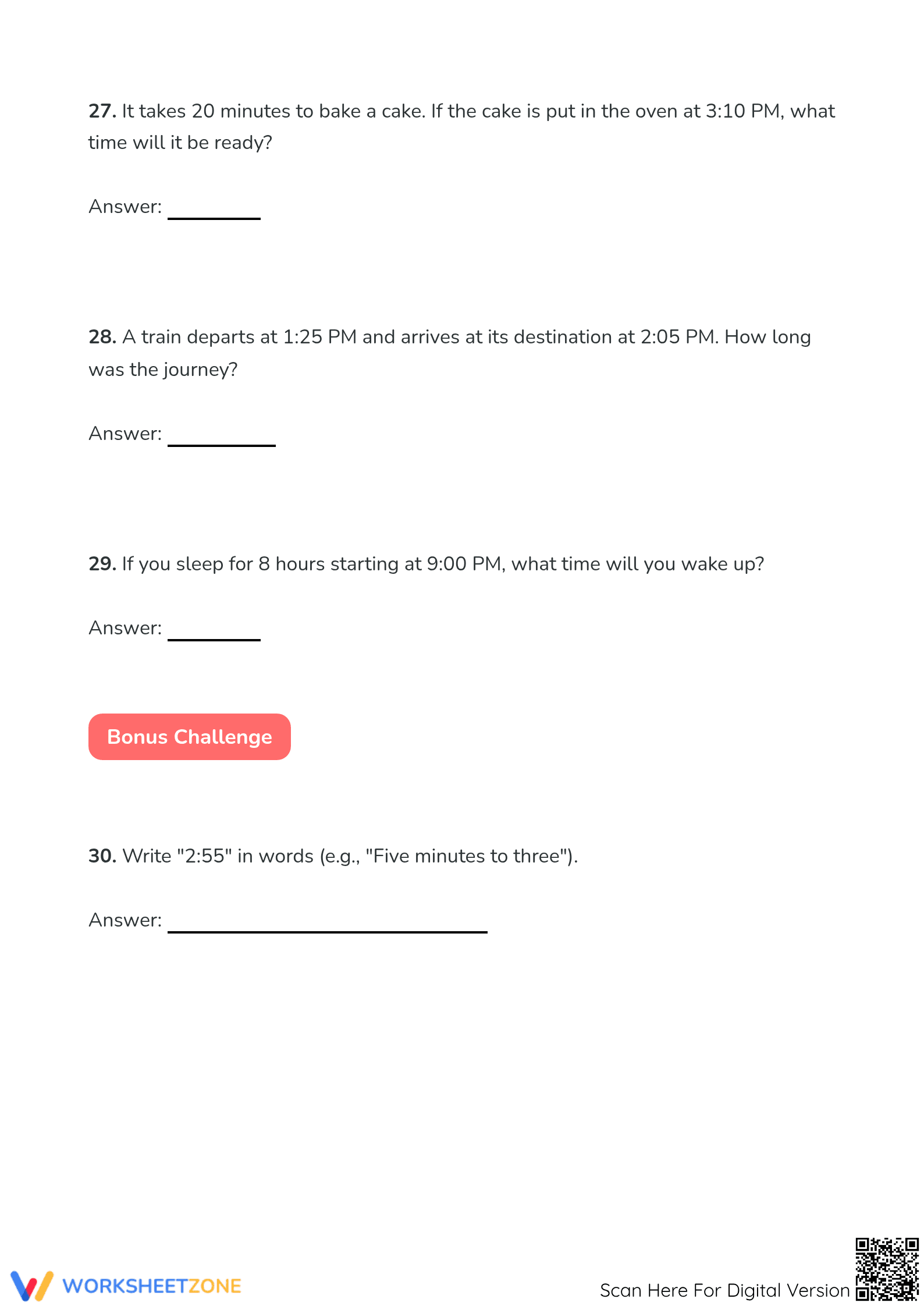
This five-page packet is structured into four parts for a scaffolded experience. Students read 12 clocks, draw hands for 6 digital times, perform 5 time conversions, and solve 6 elapsed time word problems. A bonus challenge and a full answer key are included for comprehensive practice and feedback.
Zero-Prep Workflow
Integrate this resource into your schedule in under two minutes. Print the PDF (60 seconds), distribute to students (30 seconds), and use the answer key for review (30 seconds). This streamlined workflow makes it an ideal choice for emergency sub plans or independent centers without requiring complex teacher setup.
Standards Alignment
The primary focus is `CCSS.MATH.CONTENT.2.MD.C.7`, telling time to the nearest five minutes. It also supports `CCSS.MATH.CONTENT.3.MD.A.1` through word problems involving addition and subtraction of time intervals. Both standard codes can be copied directly into lesson plans, IEP goals, or district curriculum mapping tools.
How to Use It
Use this as a summative assessment or assign pages during direct instruction. For example, use the "Draw the Hands" section for guided practice following a clock demonstration. Observe if students correctly distinguish between the hour and minute hands. Most students will complete the full packet within 45 minutes.
Who It's For
This is designed for Grade 2-4 students refining their chronological awareness. It benefits visual learners needing analog interface practice. For differentiation, provide physical geared clocks to model the problems. This pairs naturally with anchor charts detailing the "skip counting by 5s" method for reading minutes.
The mastery of telling time to five-minute intervals, as addressed by standard CCSS.MATH.CONTENT.2.MD.C.7, is a foundational mathematical milestone that bridges simple number recognition with complex interval measurement. Research from ScienceDirect TpT Analysis indicates that scaffolded practice—moving from reading to drawing to application—significantly increases retention of non-decimal measurement systems. By solving word problems and performing time conversions, students develop the cognitive flexibility required for higher-order scheduling and planning tasks. This 30-task worksheet provides the heavy lifting needed for students to move beyond surface-level recognition into deep procedural fluency. Educators can utilize the diverse problem types to identify specific gaps in a student's understanding of hand placement or elapsed time calculations. The inclusion of an answer key supports immediate error correction, a critical component in the gradual release of responsibility model of instruction.


