


























Views
Downloads
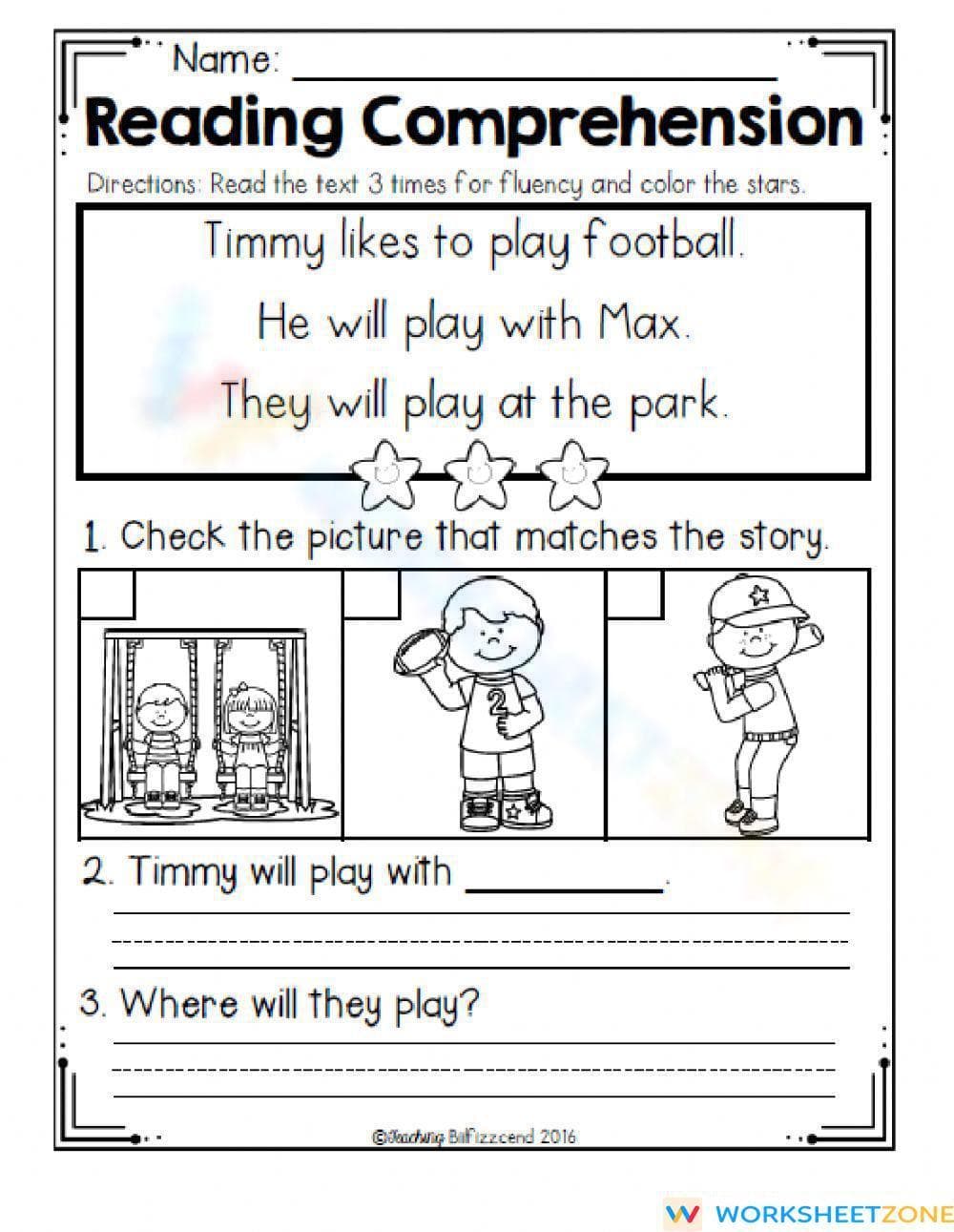

Grade 1 Timmy Reading Comprehension — Printable Worksheet
Paste this activity's link or code into your existing LMS (Google Classroom, Canvas, Teams, Schoology, Moodle, etc.).
Students can open and work on the activity right away, with no student login required.
You'll still be able to track student progress and results from your teacher account.
This Grade 1 reading comprehension worksheet helps young learners build foundational literacy skills through a focused narrative about Timmy. Students practice reading for fluency and answering text-dependent questions to demonstrate their understanding. By matching visual cues to text, children develop the essential ability to extract key details from a simple story.
At a Glance
- Grade: 1 · Subject: ELA
- Standard:
CCSS.ELA-LITERACY.RL.1.1— Ask and answer questions about key details in a text- Skill Focus: Reading Comprehension & Fluency
- Format: 1 page · 3 tasks · Answer key included · PDF
- Best For: Independent practice or morning work
- Time: 10–15 minutes
What's Inside
This printable resource features a short narrative about Timmy. The worksheet is structured on a single page, making it ideal for quick assessments or supplemental practice. It includes a fluency tracker with three stars for students to color, a multiple-choice visual matching task, a fill-in-the-blank sentence completion, and an open-ended comprehension question. A comprehensive answer key ensures easy grading.
Zero-Prep Workflow
The workflow for this resource is designed for maximum efficiency in the primary classroom. First, print the single-page PDF for your class (under 1 minute). Second, distribute the worksheets for students to complete independently or in small groups (approximately 12 minutes). Finally, review the answers using the provided key for immediate formative assessment (2 minutes). It is a perfect solution for sub plans.
Standards Alignment
The primary focus of this worksheet is CCSS.ELA-LITERACY.RL.1.1, which requires students to ask and answer questions about key details. The fluency instruction aligns with CCSS.ELA-LITERACY.RF.1.4, supporting students as they read with accuracy and expression. Both standard codes can be copied directly into lesson plans, IEP goals, or district curriculum mapping tools.
How to Use It
Use this worksheet as a warm-up activity during your literacy block to reinforce reading strategies. It works well after direct instruction on identifying key details, allowing students to apply their skills to a simple text. While students work, observe their ability to locate evidence in the story for the fill-in-the-blank section. Most Grade 1 students will finish the tasks in 15 minutes.
Who It's For
This resource is tailored for Grade 1 students but is also suitable for Kindergarteners ready for more complex tasks. It is effective for English Language Learners due to the visual scaffolding in the matching section. Pair this worksheet with an anchor chart about "Who, What, Where" questions to create a comprehensive lesson on story elements for young readers.
This instructional resource is designed to address the core requirements of CCSS.ELA-LITERACY.RL.1.1, focusing on the student's ability to identify key details within a narrative. According to research from Fisher & Frey (2014) regarding the gradual release of responsibility, providing structured practice with immediate visual feedback is essential for transitioning students from guided to independent reading. The inclusion of a fluency component—reading the text three times—directly supports cognitive load reduction, allowing students to focus more energy on comprehension rather than decoding. This worksheet provides a measurable task count of three specific problems that target different cognitive levels, from recognition to recall. By integrating these evidence-based strategies into a single-page format, educators can effectively monitor student progress toward mastery. The alignment with national standards ensures that this tool meets the rigorous demands of current educational frameworks while remaining accessible for primary learners in various classroom settings.


