


























Views
Downloads

Grade 7 Reading Comprehension | Essential Printable
Paste this activity's link or code into your existing LMS (Google Classroom, Canvas, Teams, Schoology, Moodle, etc.).
Students can open and work on the activity right away, with no student login required.
You'll still be able to track student progress and results from your teacher account.
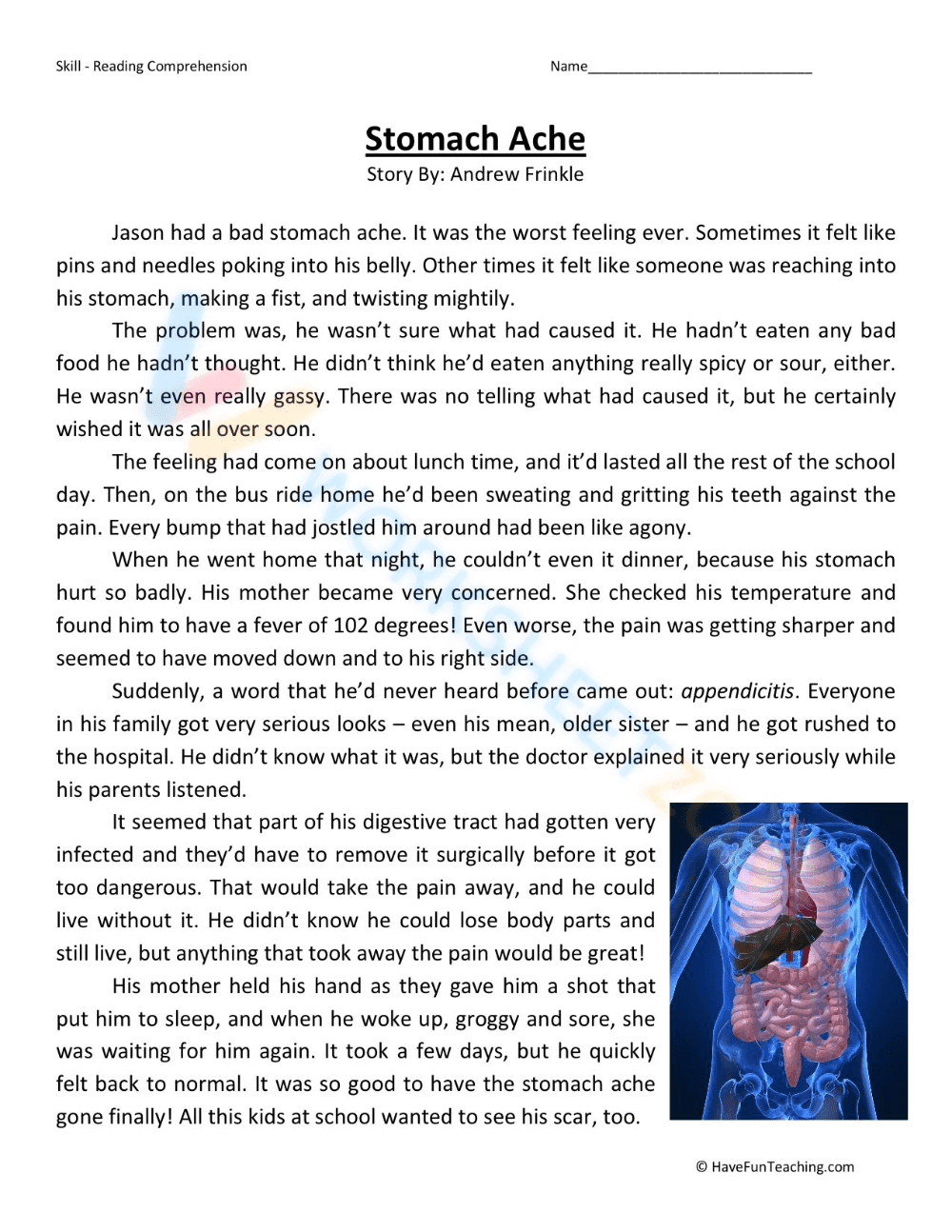
This Grade 7 reading comprehension worksheet helps students master narrative analysis through a focused story about a medical emergency. By engaging with the text "Stomach Ache," learners practice identifying key details and drawing logical conclusions from explicit evidence. It provides a clear path for students to demonstrate their understanding of plot progression and character experience.
At a Glance
- Grade: 7 · Subject: ELA
- Standard:
CCSS.ELA-LITERACY.RL.7.1— Cite several pieces of textual evidence to support analysis of explicit text- Skill Focus: Narrative Comprehension
- Format: 2 pages · 5 problems · Answer key included · PDF
- Best For: Independent practice or emergency sub plans
- Time: 15–20 minutes
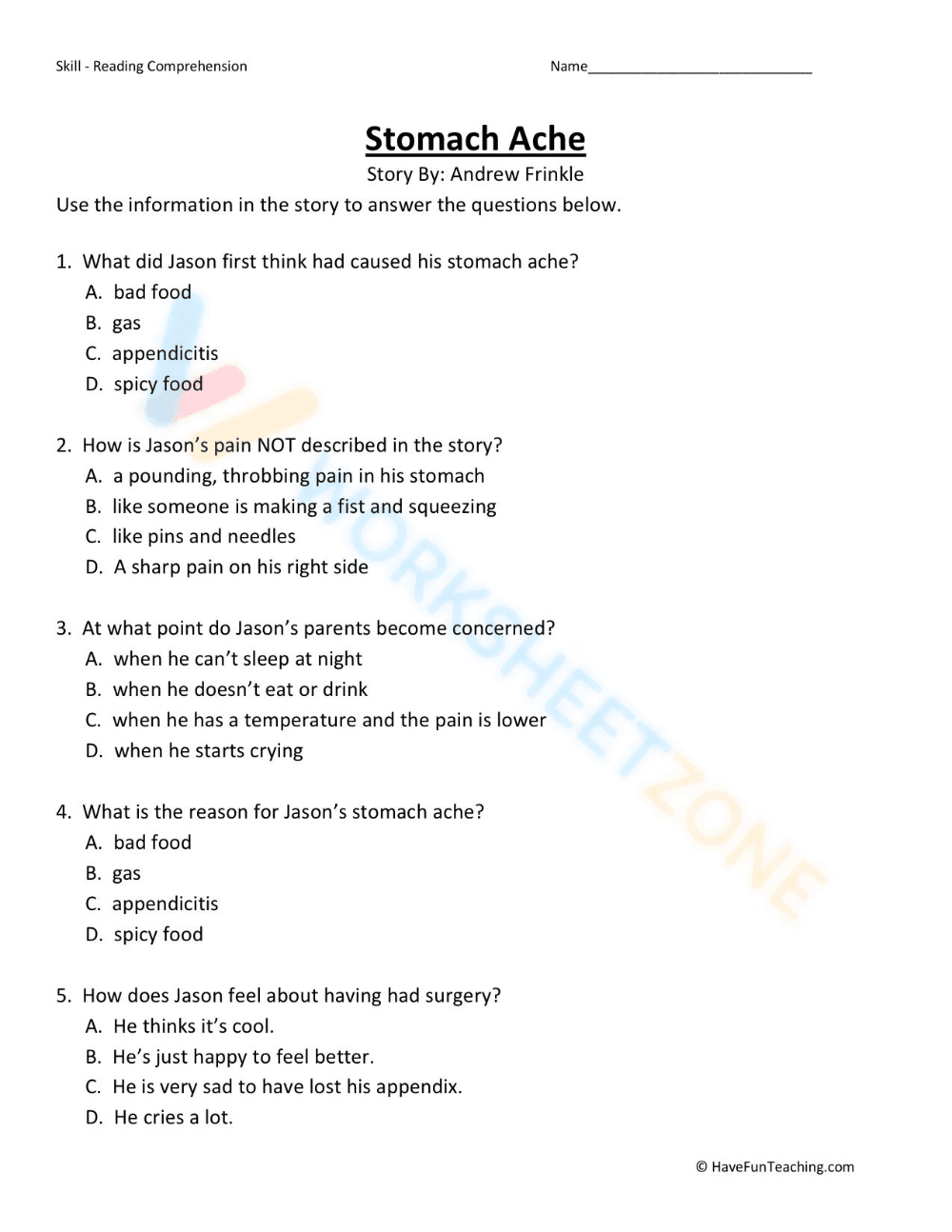
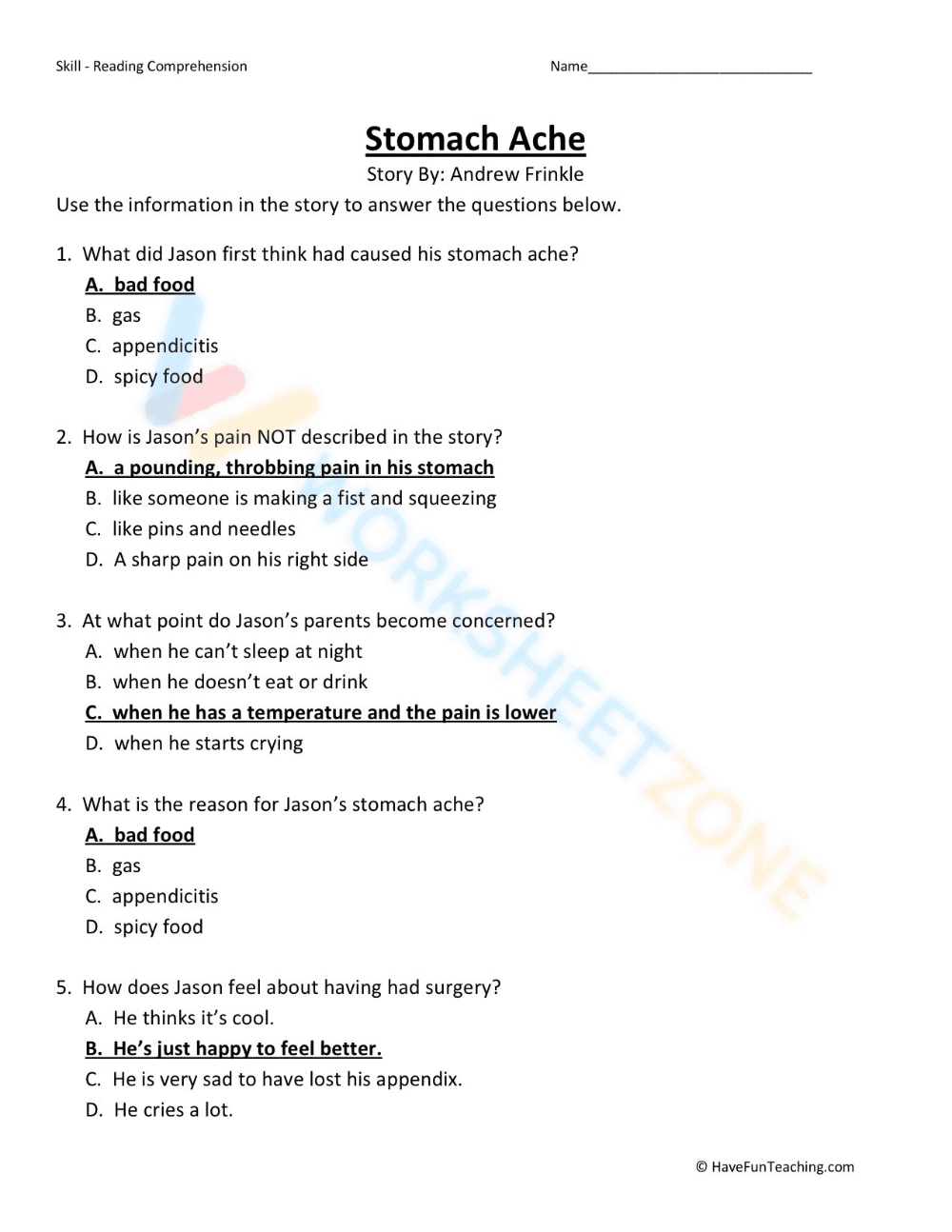
The resource includes a one-page narrative passage titled "Stomach Ache" by Andrew Frinkle, followed by a dedicated assessment page. The assessment features 5 multiple-choice questions designed to test literal recall and inferential reasoning. A full answer key is provided on the final page, allowing for immediate feedback or self-grading by students.
This worksheet is designed for a three-step classroom implementation. First, print the two-page PDF (30 seconds). Second, distribute the passage and question set to students for independent reading (15 minutes). Finally, review the answers using the included key to identify common misconceptions (2 minutes). Total teacher preparation time is under 2 minutes, making it an ideal choice for busy mornings or unexpected absences.
The primary focus is `CCSS.ELA-LITERACY.RL.7.1`, which requires students to cite several pieces of textual evidence to support analysis of what the text says explicitly as well as inferences drawn from the text. By answering questions about Jason's symptoms and the eventual diagnosis, students must return to the text to verify facts. This standard code can be copied directly into lesson plans, IEP goals, or district curriculum mapping tools.
Use this worksheet as a formative assessment after a lesson on identifying key details in a narrative. It works well as a "bell-ringer" activity to settle the class or as a quiet independent task during small-group rotations. Teachers should observe if students are flipping back to the first page to find evidence, which is a key indicator of developing proficiency. Expected completion time is 15 to 20 minutes.
This resource is tailored for 7th-grade students working on grade-level reading targets. It is also suitable for 8th graders needing a quick review or 6th graders ready for a challenge. It pairs naturally with an anchor chart on "Citing Evidence" or a direct instruction lesson on narrative structure.
This Grade 7 ELA resource targets the CCSS.ELA-LITERACY.RL.7.1 standard, focusing on the essential skill of citing textual evidence to support narrative analysis. Research from Fisher & Frey (2014) emphasizes that close reading of short, complex narratives is a foundational requirement for secondary literacy success. By engaging with 5 targeted comprehension questions, students build the stamina required for high-stakes testing environments. The worksheet provides a structured environment for students to practice literal and inferential comprehension, which are critical components of the NAEP reading framework. This printable PDF ensures that students interact with physical text, a practice that RAND AIRS 2024 reports can improve retention compared to purely digital reading tasks. It serves as a reliable tool for measuring student progress toward mastery of middle school literacy standards.


