


























Views
Downloads

Essential Sleepy Hollow Reading Worksheet | Grade 7 ELA
Paste this activity's link or code into your existing LMS (Google Classroom, Canvas, Teams, Schoology, Moodle, etc.).
Students can open and work on the activity right away, with no student login required.
You'll still be able to track student progress and results from your teacher account.
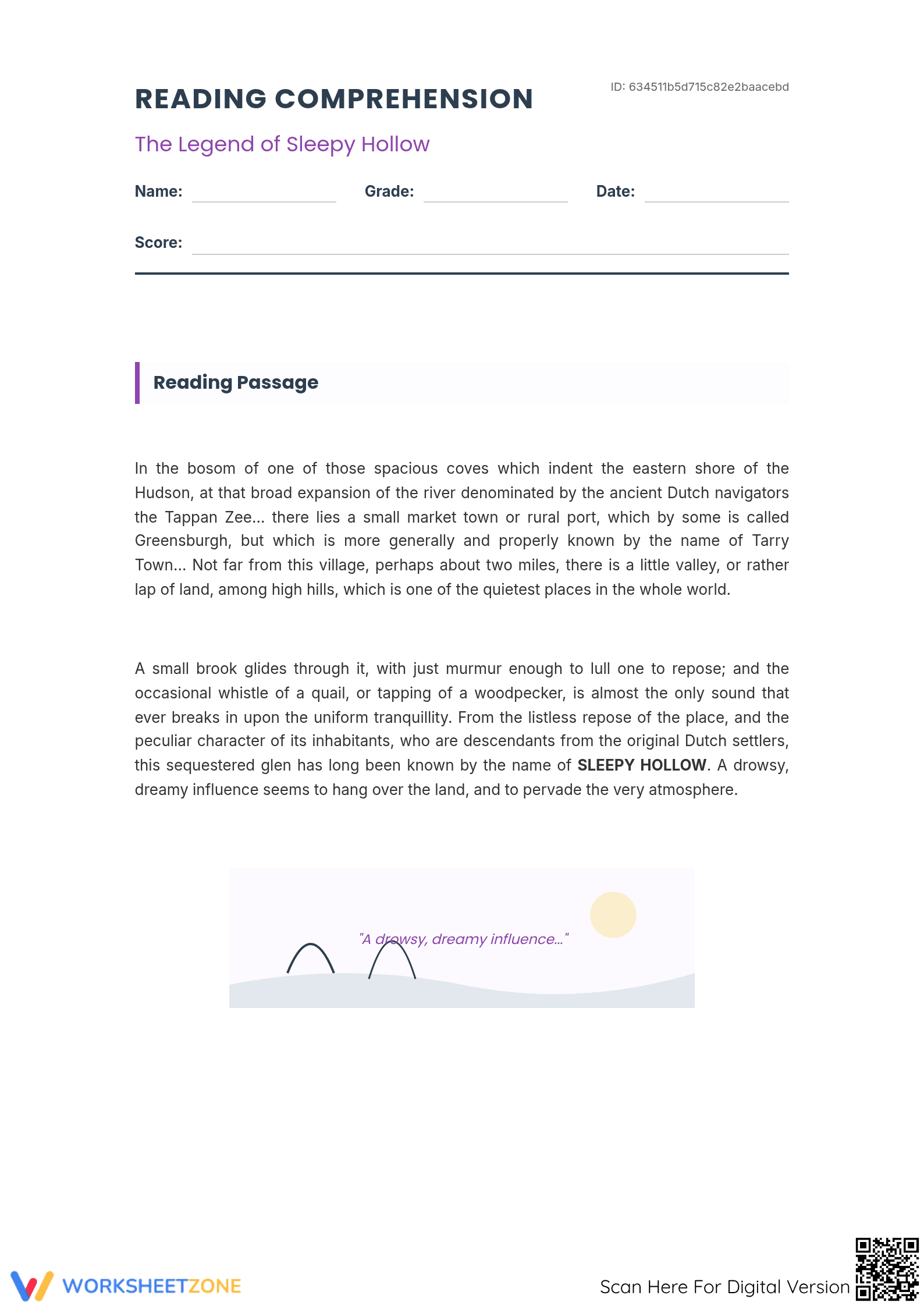
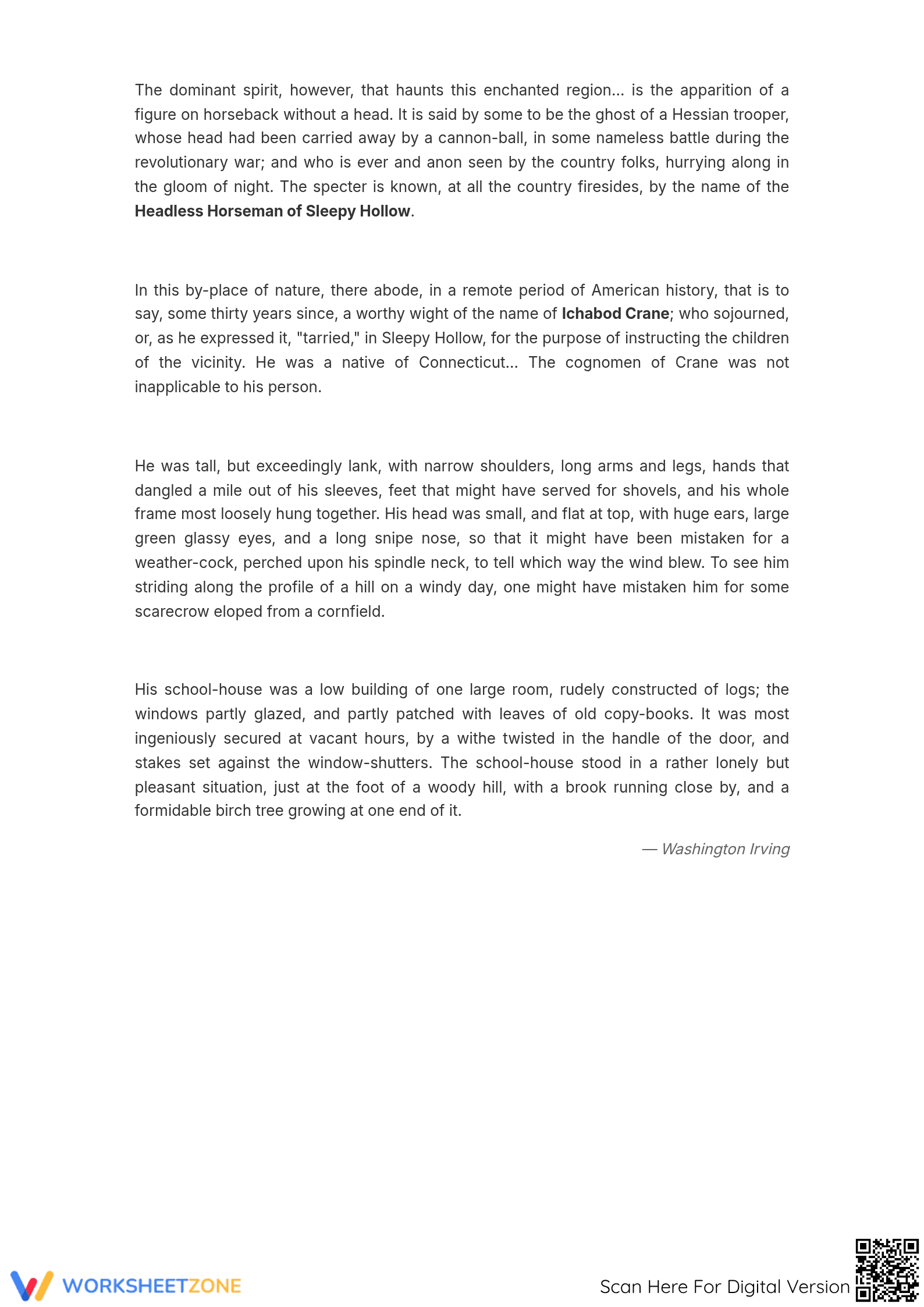
This Grade 7 reading comprehension worksheet uses Washington Irving's classic "The Legend of Sleepy Hollow" to strengthen literary analysis skills. Students engage with complex 19th-century prose to identify key setting details and character traits. By the end of the lesson, learners will be able to cite specific textual evidence to support their inferences about Ichabod Crane.
At a Glance
- Grade: 7 · Subject: English Language Arts
- Standard:
CCSS.ELA-LITERACY.RL.7.1— Cite several pieces of textual evidence to support analysis and inferences- Skill Focus: Literary Analysis & Inference
- Format: 4 pages · 8 problems · Answer key included · PDF
- Best For: Independent practice or sub plans
- Time: 30–45 minutes
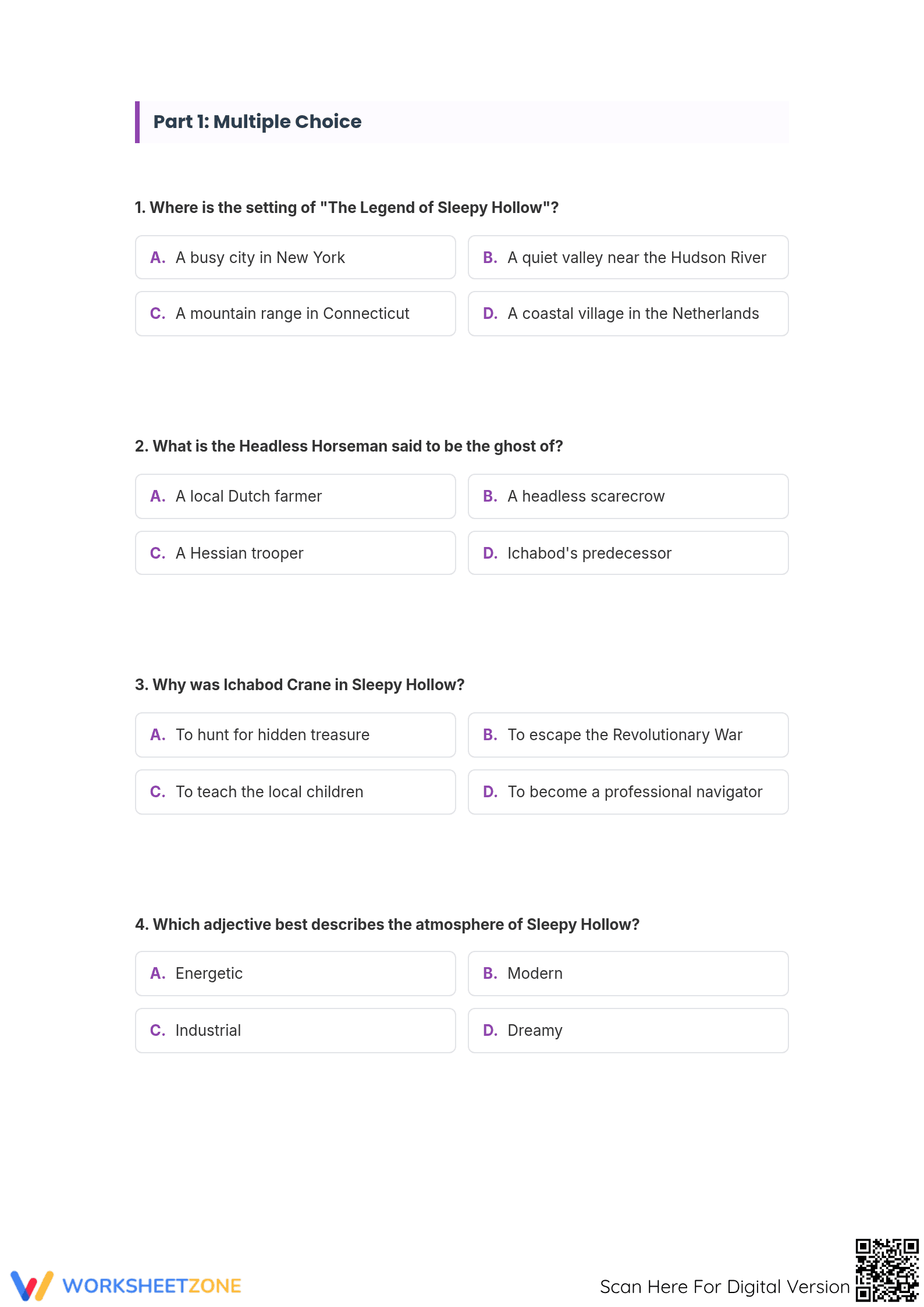
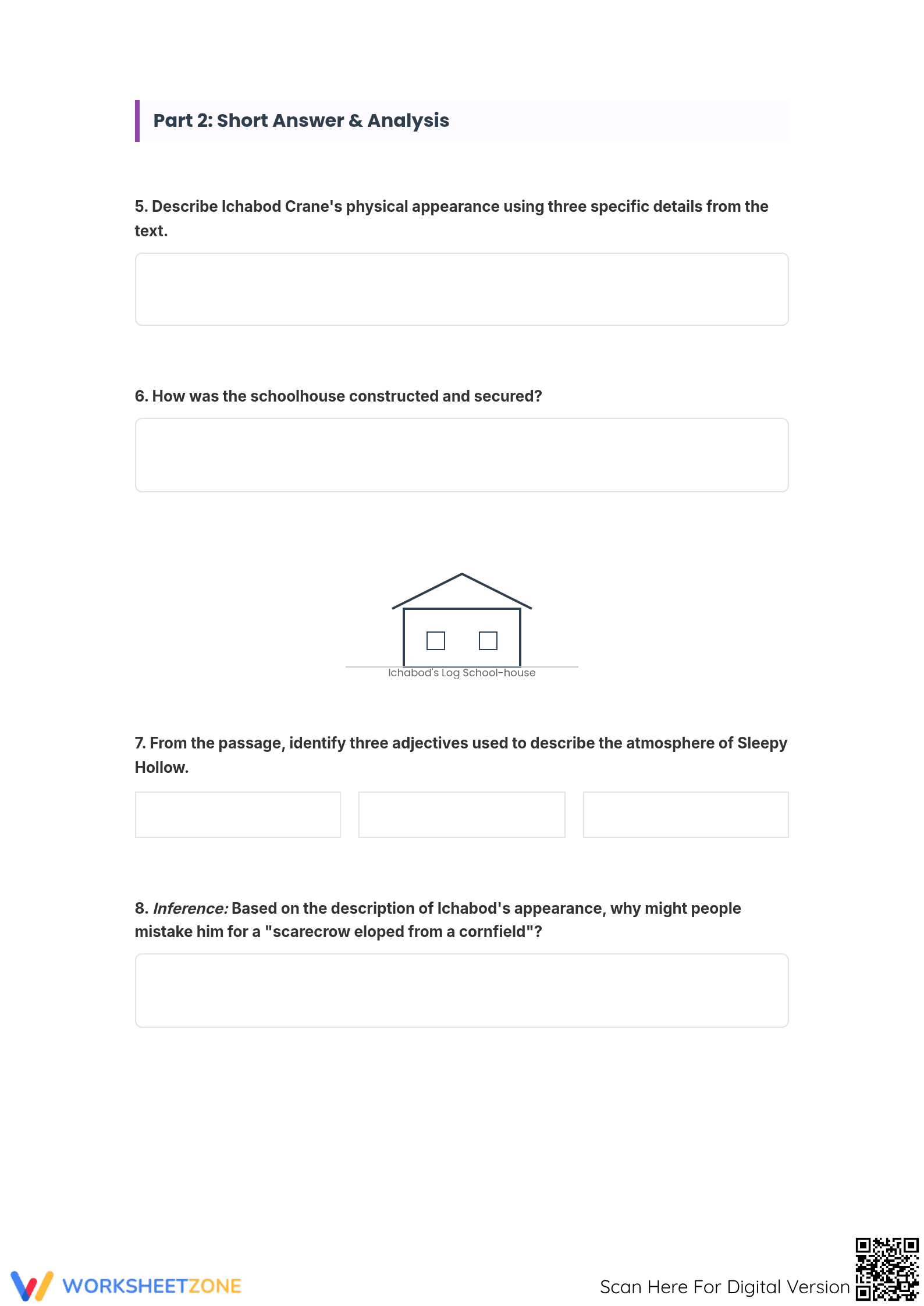
The packet contains a multi-page excerpt from the original text, carefully formatted for readability. It includes 4 multiple-choice questions focusing on foundational comprehension and 4 short-answer analysis questions that require deep dives into the text. A complete 4-page answer key is provided, ensuring students receive immediate feedback on their evidence-based responses.
Zero-Prep Workflow
The workflow is designed for maximum efficiency:
- Print (1 minute): Select the 4-page student packet and print enough copies for your class.
- Distribute (30 seconds): Hand out the worksheets; the self-contained passage means no external books are required.
- Review (10 minutes): Use the included answer key to grade or lead a whole-class discussion.
Total teacher prep time is under 2 minutes, making this an ideal resource for emergency sub plans or busy Monday mornings.
Standards Alignment
This resource is primarily aligned with CCSS.ELA-LITERACY.RL.7.1, which requires students to cite several pieces of textual evidence to support analysis of what the text says explicitly as well as inferences drawn from the text. It also supports RL.7.4 by challenging students to determine the meaning of words and phrases as they are used in a text, including figurative and connotative meanings. Both standard codes can be copied directly into lesson plans, IEP goals, or district curriculum mapping tools.
How to Use It
Assign this worksheet during the "Independent Practice" phase of a unit on American Gothic literature or short stories. It works exceptionally well as a formative assessment to check if students can bridge the gap between literal comprehension and abstract inference. Expect students to spend approximately 35 minutes completing the reading and the 8 associated tasks.
Who It's For
This resource is tailored for 7th-grade students but serves as an excellent challenge for advanced 6th graders or a scaffolded review for 8th graders. It pairs naturally with an anchor chart on "Making Inferences" or a direct instruction lesson on Washington Irving's contribution to the American literary canon.
According to the RAND AIRS 2024 report, high-quality instructional materials that integrate complex texts with evidence-based questioning significantly improve middle school literacy outcomes. This worksheet addresses the critical need for rigorous literary analysis by focusing on CCSS.ELA-LITERACY.RL.7.1. By requiring students to extract three specific details for character descriptions and justify inferences about the "scarecrow" metaphor, the resource mirrors the cognitive demands found in NAEP reading assessments. Research from Fisher & Frey (2014) emphasizes that gradual release of responsibility is most effective when students interact with "cold" passages that demand close reading. This 4-page PDF provides that exact environment, ensuring students practice the specific skill of citing evidence without external prompts. Educators can rely on this structured approach to move students toward mastery in identifying atmosphere and characterization within 19th-century American literature.


