


























Views
Downloads

Grade 7 Reading Comprehension — Printable No-Prep Worksheet
Paste this activity's link or code into your existing LMS (Google Classroom, Canvas, Teams, Schoology, Moodle, etc.).
Students can open and work on the activity right away, with no student login required.
You'll still be able to track student progress and results from your teacher account.
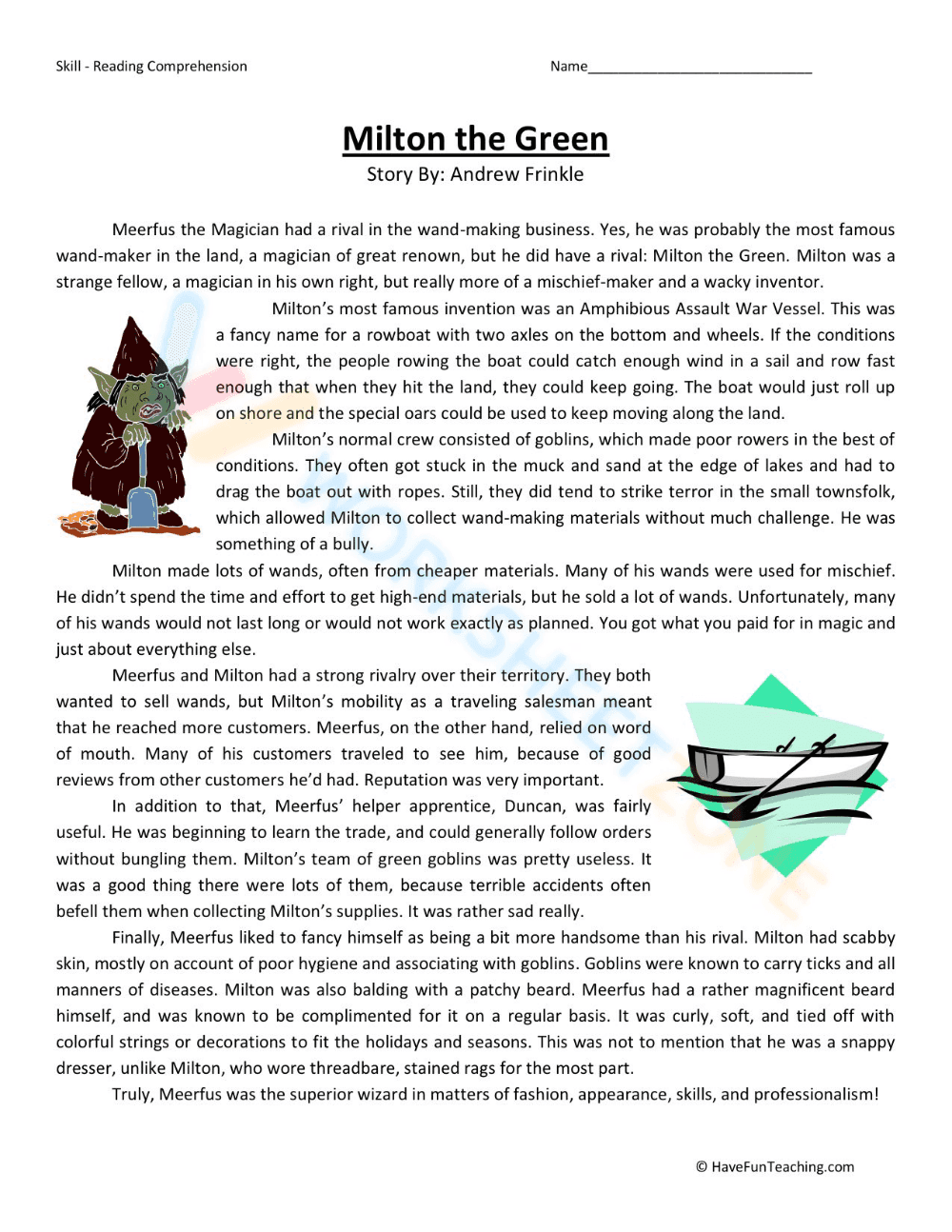
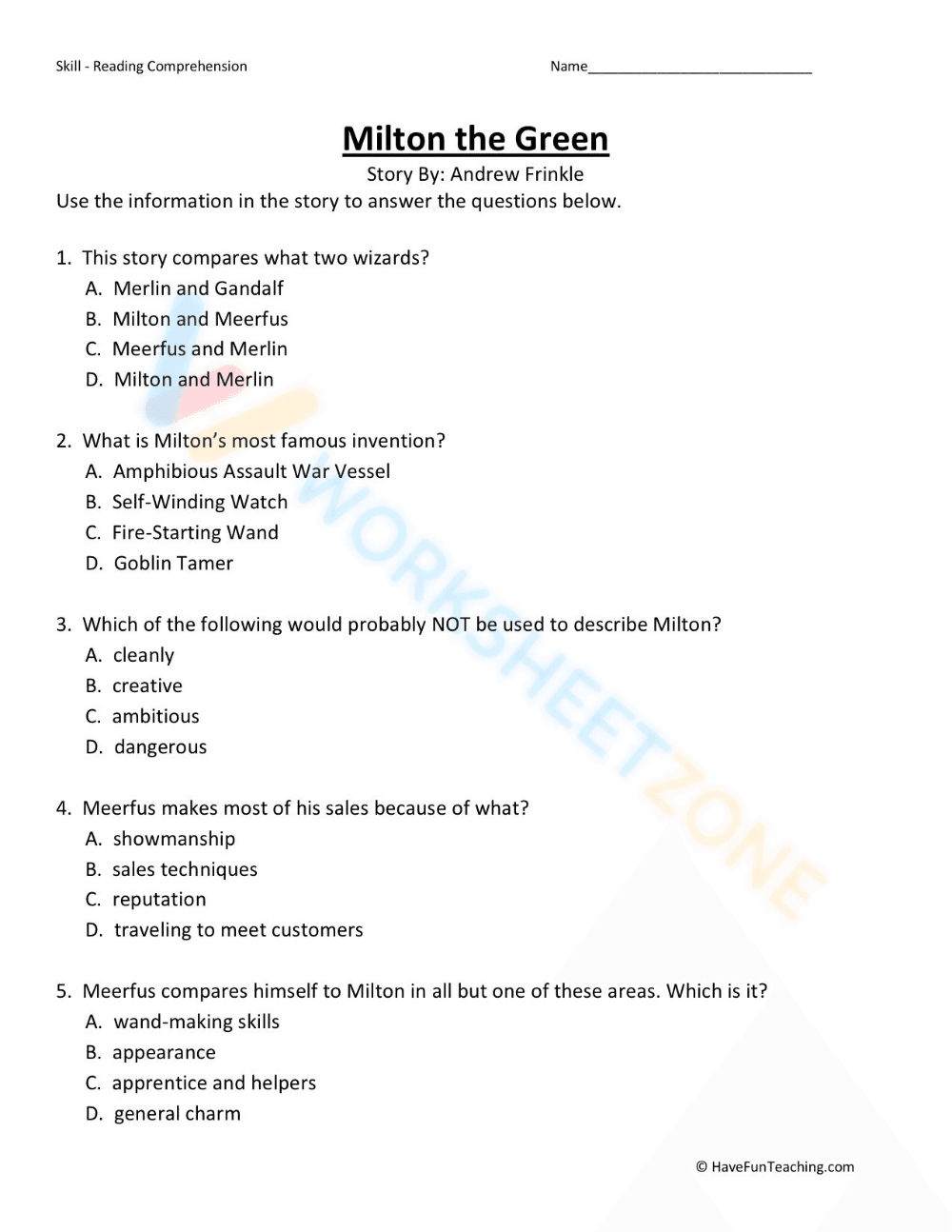
This Grade 7 reading comprehension worksheet provides students with an engaging fictional passage to build essential literacy skills. By reading "Milton the Green" and answering targeted questions, students practice extracting explicit details, comparing character traits, and analyzing text elements to improve their overall reading proficiency.
At a Glance
- Grade: 7 · Subject: English Language Arts
- Standard:
CCSS.ELA-LITERACY.RL.7.1— Cite textual evidence to support analysis of explicit text details.- Skill Focus: Reading Comprehension
- Format: 3 pages · 5 problems · Answer key included · PDF
- Best For: Independent practice and sub plans
- Time: 15–20 minutes
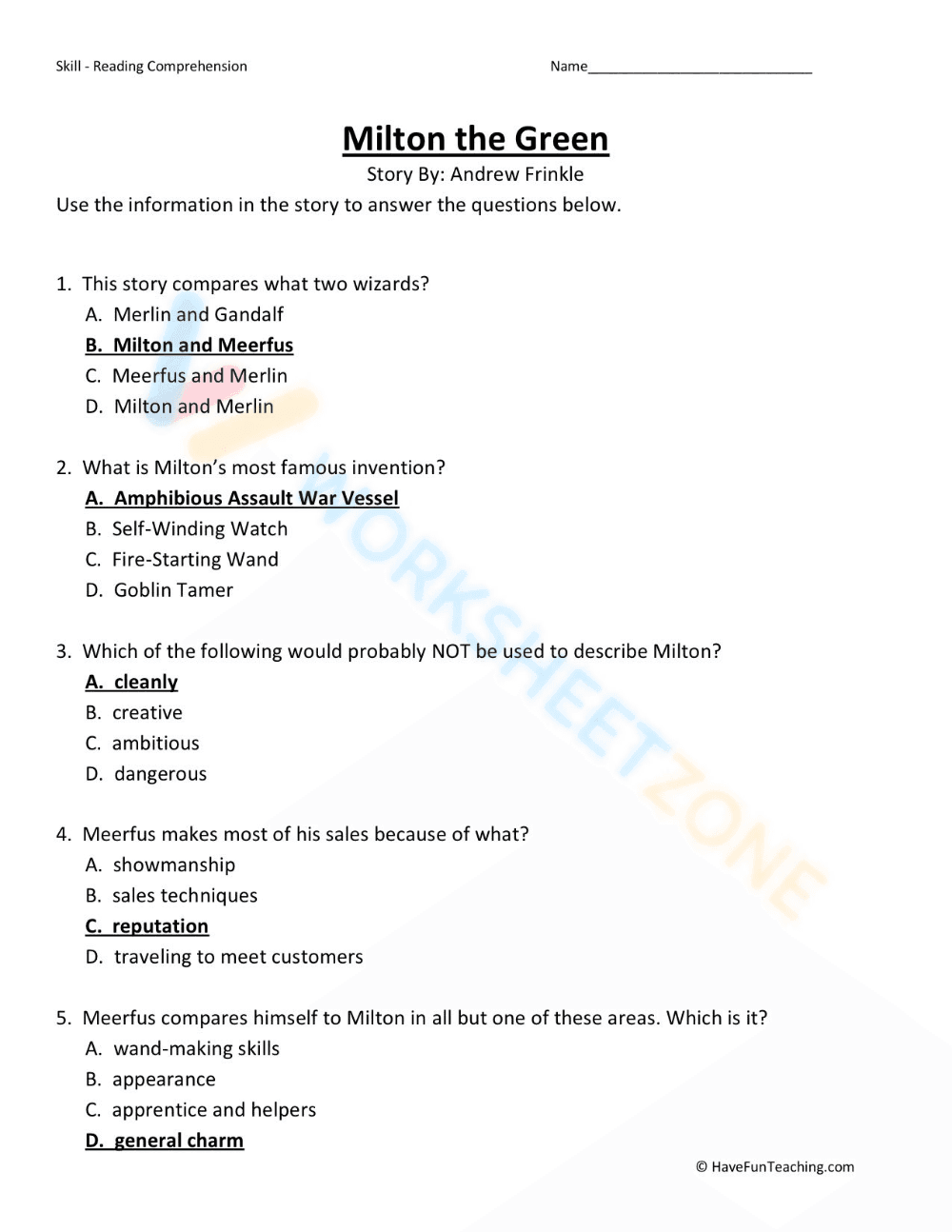
This comprehensive resource includes a one-page original fictional story titled "Milton the Green," followed by a dedicated question page featuring five multiple-choice comprehension tasks. The questions require students to recall specific details, identify character motivations, and compare the two main wizards in the narrative. A complete, clearly marked answer key is also provided on the third page to ensure accurate and efficient grading.
Designed for immediate classroom implementation, this resource requires virtually no teacher setup.
- Print (1 minute): Simply print the two-page student packet. The black-and-white design ensures crisp, ink-friendly copies.
- Distribute (1 minute): Hand out the passage and question sheet to students for immediate engagement.
- Review (3 minutes): Use the included answer key to quickly grade submissions or guide a whole-class review session.
With a total prep time of under two minutes, this worksheet is an ideal, stress-free addition to any emergency sub plan or busy instructional week.
This worksheet is strictly aligned to CCSS.ELA-LITERACY.RL.7.1: "Cite several pieces of textual evidence to support analysis of what the text says explicitly as well as inferences drawn from the text." It also supports character analysis by asking students to contrast the traits and business practices of the two wizards. Both standard codes can be copied directly into lesson plans, IEP goals, or district curriculum mapping tools.
Teachers can utilize this passage during independent reading blocks to assess baseline comprehension skills without interrupting the core instructional flow. It also serves as an excellent warm-up activity before a larger unit on character development or fantasy literature. As a formative assessment tip, observe which students struggle to locate the specific paragraph detailing Milton's inventions, as this indicates a need for targeted scanning and skimming strategies. Expected completion time ranges from 15 to 20 minutes.
This resource is primarily designed for seventh-grade general education students needing focused reading comprehension practice. The straightforward multiple-choice format also makes it highly accessible for students requiring modified assessments or English Language Learners building their vocabulary. It pairs perfectly with a mini-lesson on character foils or a graphic organizer comparing and contrasting literary figures.
Developing strong foundational reading skills requires consistent engagement with diverse texts and targeted questioning. Aligned with CCSS.ELA-LITERACY.RL.7.1, this resource helps students cite textual evidence to support analysis of explicit text details. According to a 2024 report by EdReports, middle school students who regularly practice extracting explicit evidence from fictional narratives demonstrate significantly higher proficiency in complex literary analysis tasks. By utilizing structured multiple-choice formats alongside engaging passages, educators can effectively isolate and assess specific comprehension deficits. This targeted approach ensures that learners not only decode the text but also comprehend the underlying character dynamics and plot structures, ultimately fostering a deeper appreciation for literature and stronger critical thinking capabilities across all academic disciplines.


