


























Views
Downloads

Grade 7 Sleepy Hollow Reading — Printable Worksheet
Paste this activity's link or code into your existing LMS (Google Classroom, Canvas, Teams, Schoology, Moodle, etc.).
Students can open and work on the activity right away, with no student login required.
You'll still be able to track student progress and results from your teacher account.
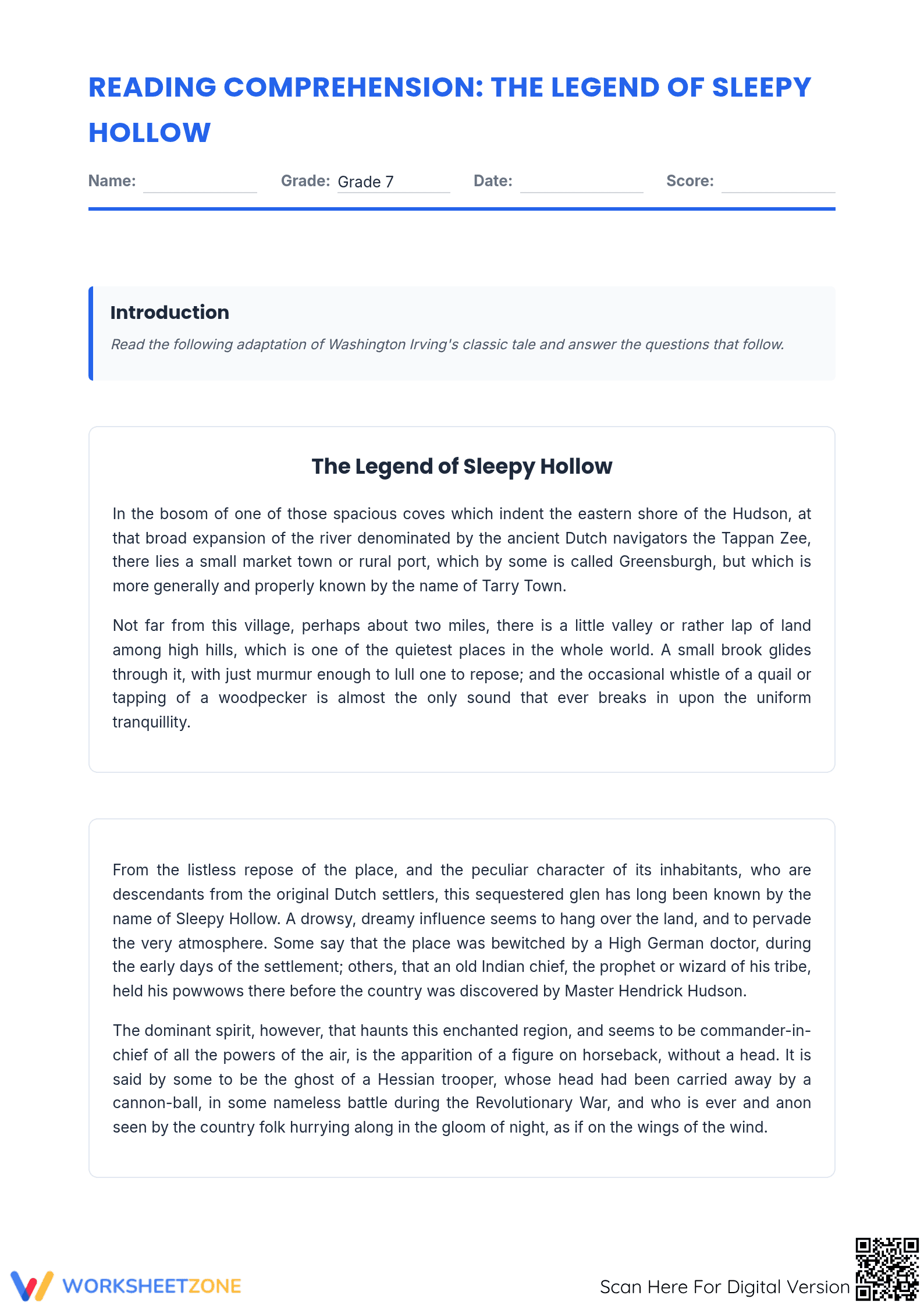
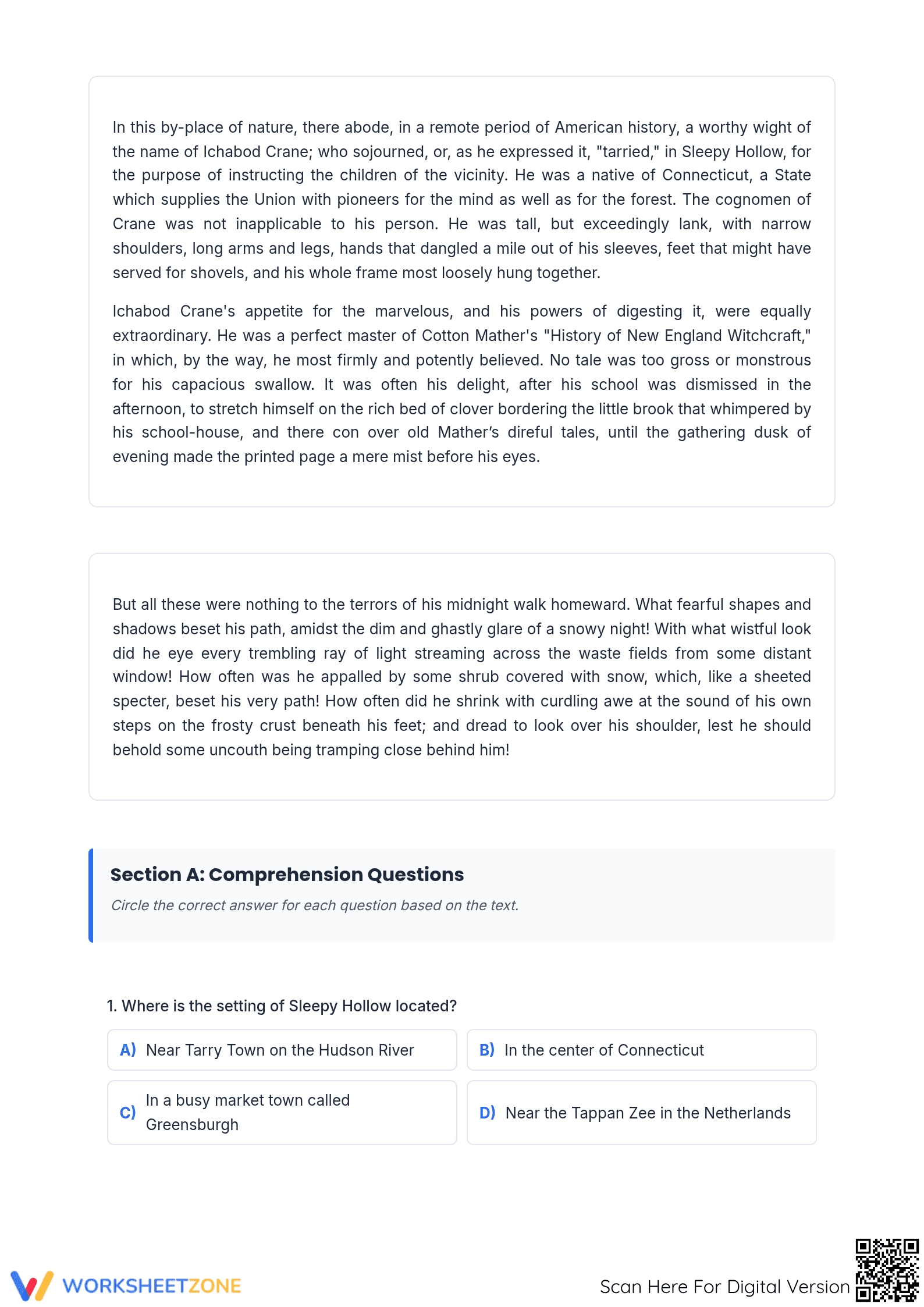
This comprehensive Grade 7 reading comprehension worksheet guides students through an adaptation of Washington Irving's classic tale, "The Legend of Sleepy Hollow." Students analyze character traits, identify atmospheric details, and define complex vocabulary to build a deep understanding of American literary traditions and gothic storytelling elements.
At a Glance
- Grade: 7 · Subject: English Language Arts
- Standard:
CCSS.ELA-LITERACY.RL.7.1— Cite several pieces of textual evidence to support analysis and inferences- Skill Focus: Literary analysis and inference
- Format: 5 pages · 12 problems · Answer key included · PDF
- Best For: Independent practice or sub plans
- Time: 40–50 minutes
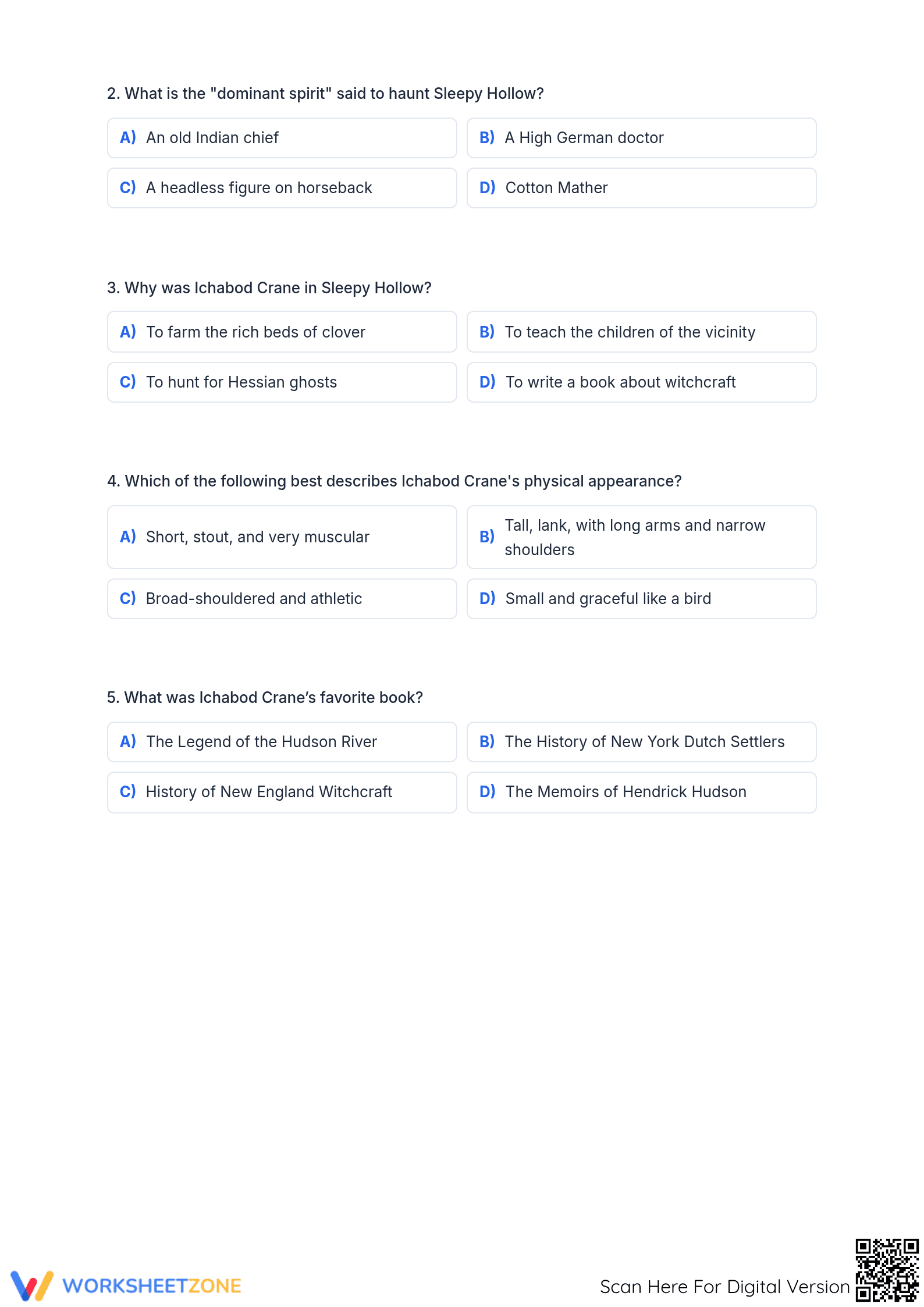
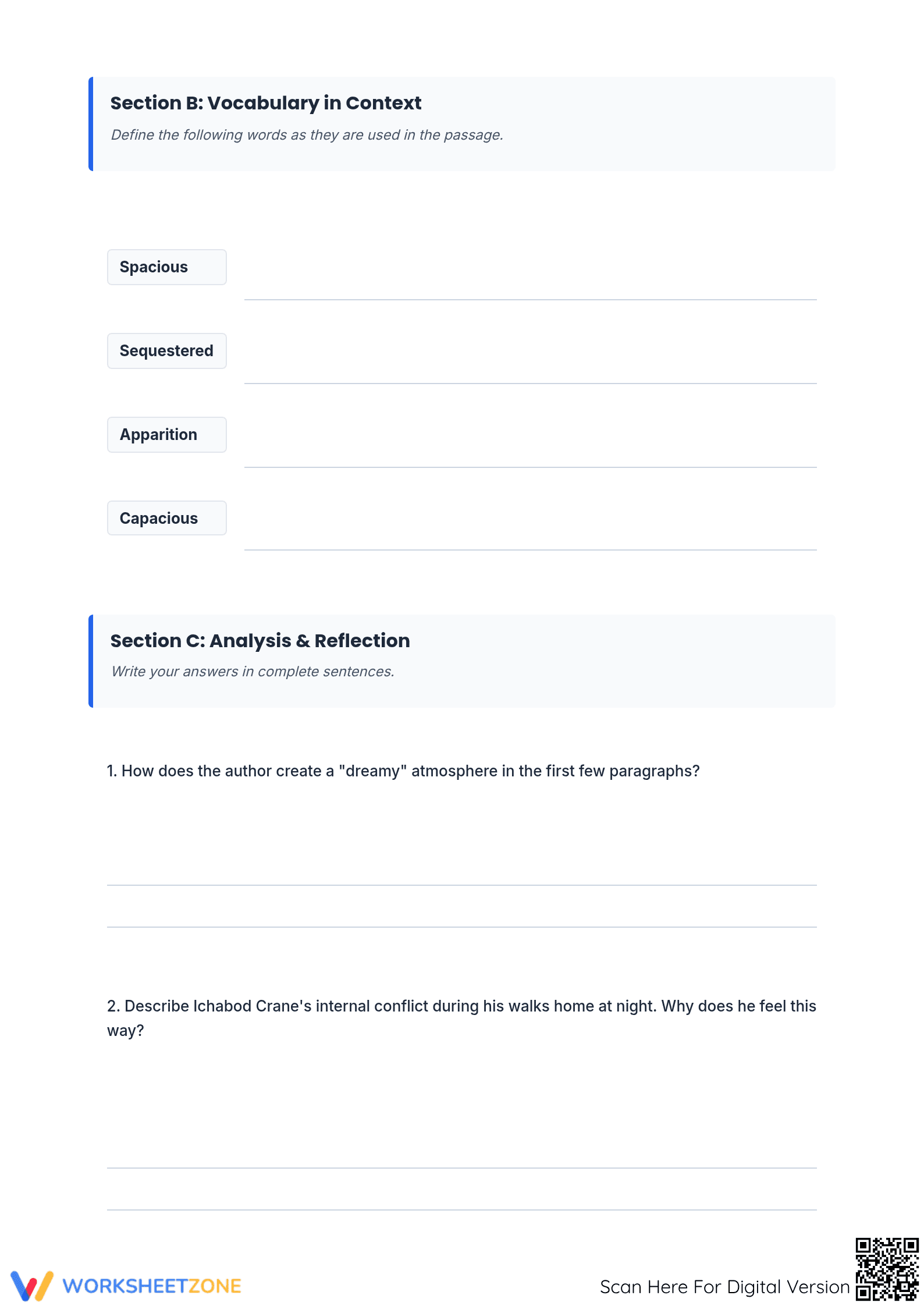
What's Inside: This 5-page instructional packet features a multi-paragraph adaptation of the original text, followed by three distinct assessment sections. It includes 5 multiple-choice comprehension questions, 4 vocabulary-in-context definitions, and 3 short-answer analysis prompts. A full answer key is provided for rapid grading or student self-correction.
Zero-Prep Workflow
- Print (1 minute): Select the 5-page PDF and print enough copies for your roster. No collation or stapling of separate reference sheets is required as the text is integrated.
- Distribute (30 seconds): Hand out the packets at the start of the period. The clear section headers allow students to work independently without teacher intervention.
- Review (30 seconds): Use the included answer key to check for understanding or project the answers for a whole-class debrief.
Standards Alignment: This resource is primarily aligned to `CCSS.ELA-LITERACY.RL.7.1`: Cite several pieces of textual evidence to support analysis of what the text says explicitly as well as inferences drawn from the text. It also supports vocabulary acquisition through context clues. Both standard codes can be copied directly into lesson plans, IEP goals, or district curriculum mapping tools.
How to Use It: This worksheet is ideal for the "You Do" phase of a gradual release model during a unit on American Romanticism or short stories. Use it as a formative assessment to observe how well students can identify the author's use of mood and atmosphere. Expected completion time ranges from 40 to 50 minutes depending on reading speed.
Who It's For: This resource is designed for 7th-grade general education students, but serves as an excellent scaffolded text for 8th graders needing a refresher on gothic elements. It pairs naturally with an anchor chart on characterization or a direct instruction lesson on Washington Irving's influence on American folklore.
The use of classic literary adaptations in middle school is supported by Fisher & Frey (2014), who emphasize that complex texts provide the necessary rigor for students to practice citing evidence and making logical inferences. This worksheet specifically targets CCSS.ELA-LITERACY.RL.7.1 by requiring students to look back into the text to define the "dominant spirit" of Sleepy Hollow and analyze Ichabod Crane's internal conflicts. By engaging with 12 distinct tasks across multiple formats, students demonstrate mastery of both explicit comprehension and higher-order analysis. Research indicates that structured reading guides with integrated vocabulary support significantly improve retention of narrative details in adolescent learners. This 5-page resource ensures that students are not merely reading for plot, but are actively deconstructing the author's craft. The inclusion of a clear answer key allows for immediate feedback, which is a critical component of effective formative assessment in the ELA classroom.


