




























Views
Downloads



Printable 4th Grade Reading Comprehension Worksheet

Paste this activity's link or code into your existing LMS (Google Classroom, Canvas, Teams, Schoology, Moodle, etc.).
Students can open and work on the activity right away, with no student login required.
You'll still be able to track student progress and results from your teacher account.
This Grade 4 reading comprehension worksheet helps students practice drawing inferences and identifying literary devices like foreshadowing. Featuring an engaging original mystery story, "Foggy Figure," learners will read the text and apply critical thinking skills to answer targeted questions, building strong foundational literacy habits.
At a Glance
- Grade: 4 · Subject: ELA
- Standard:
CCSS.ELA-LITERACY.RL.4.1— Refer to details and examples to explain the text and draw inferences.- Skill Focus: Reading Comprehension & Foreshadowing
- Format: 8 pages · 12 problems · Answer key included · PDF
- Best For: Independent practice or sub plans
- Time: 30–45 minutes
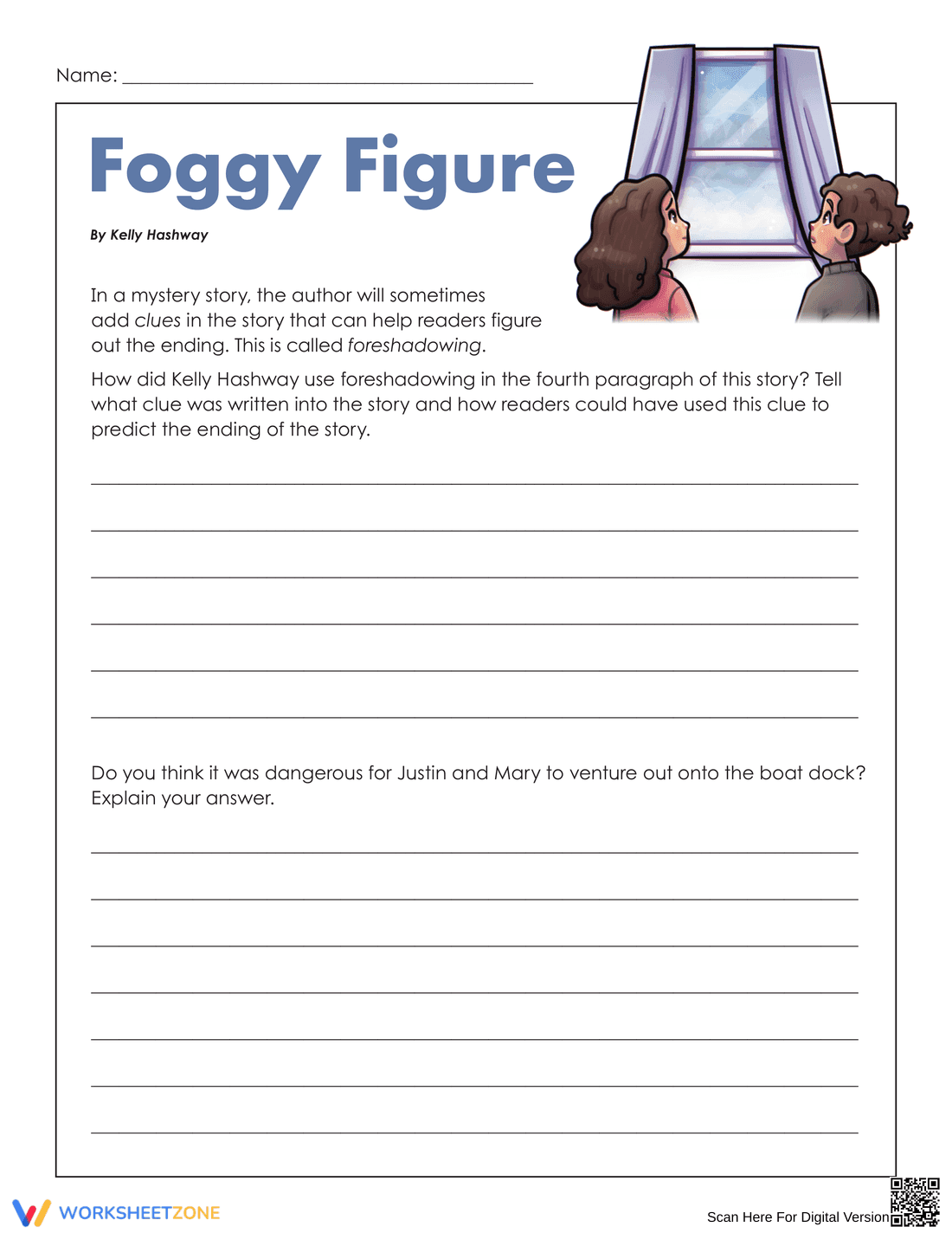
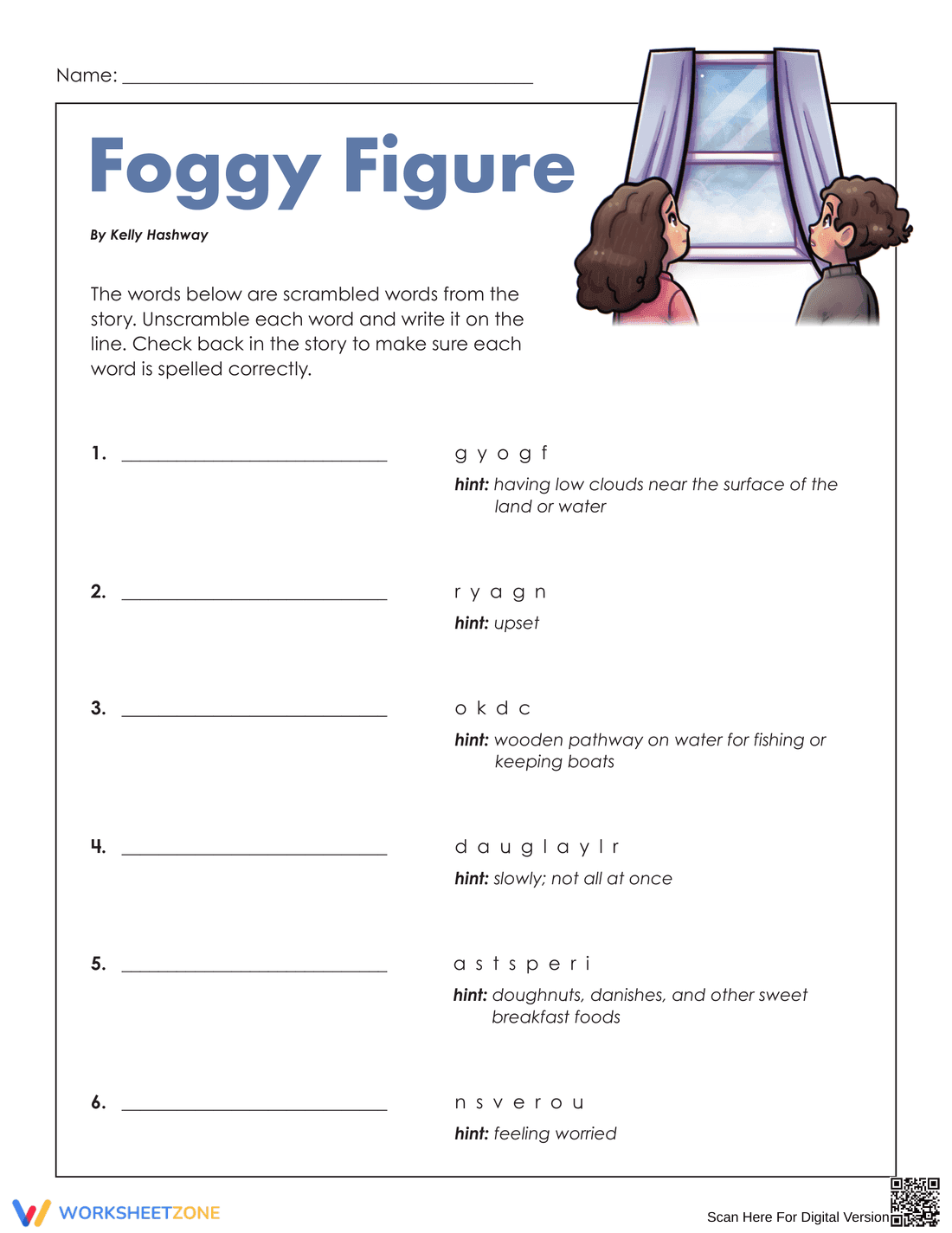
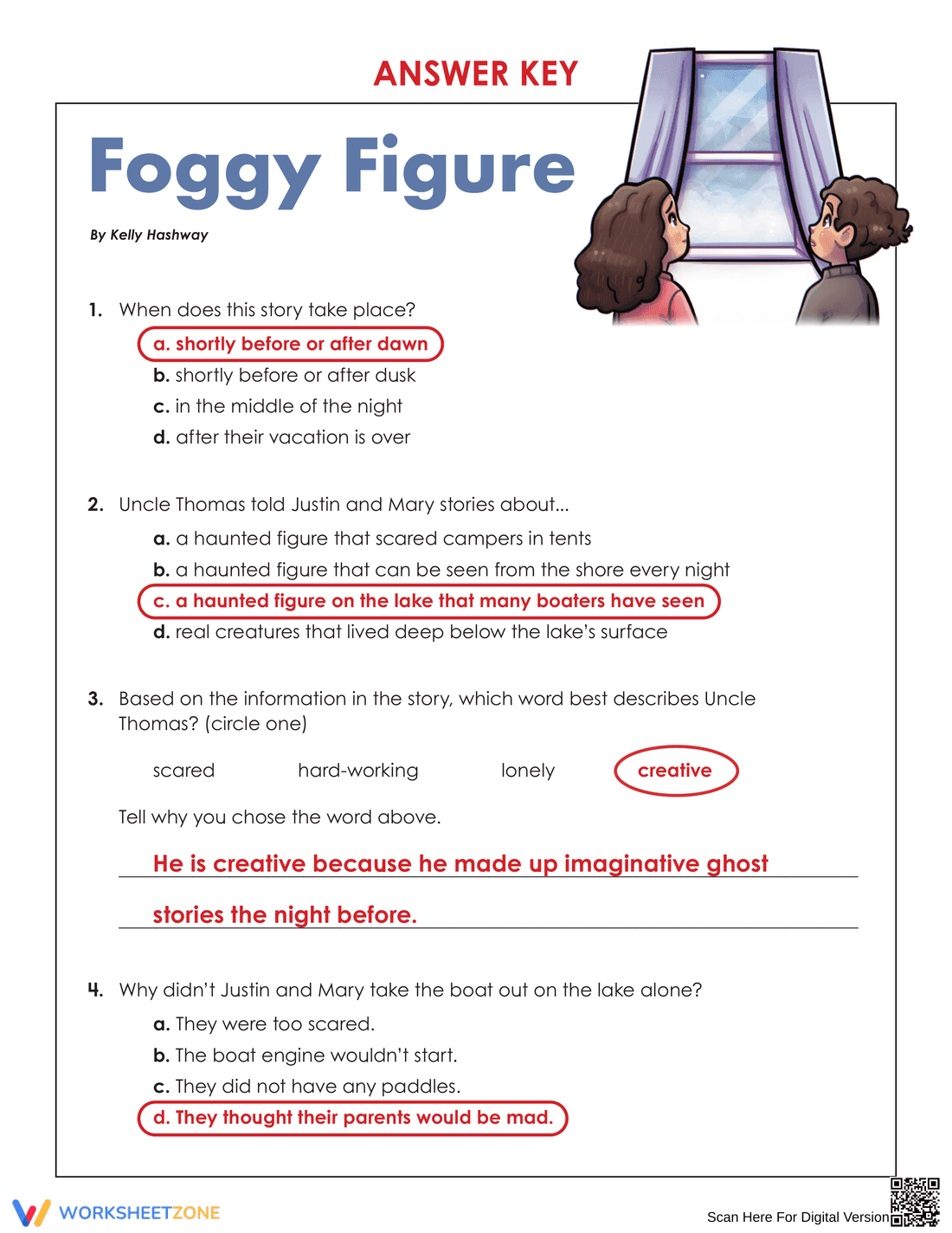
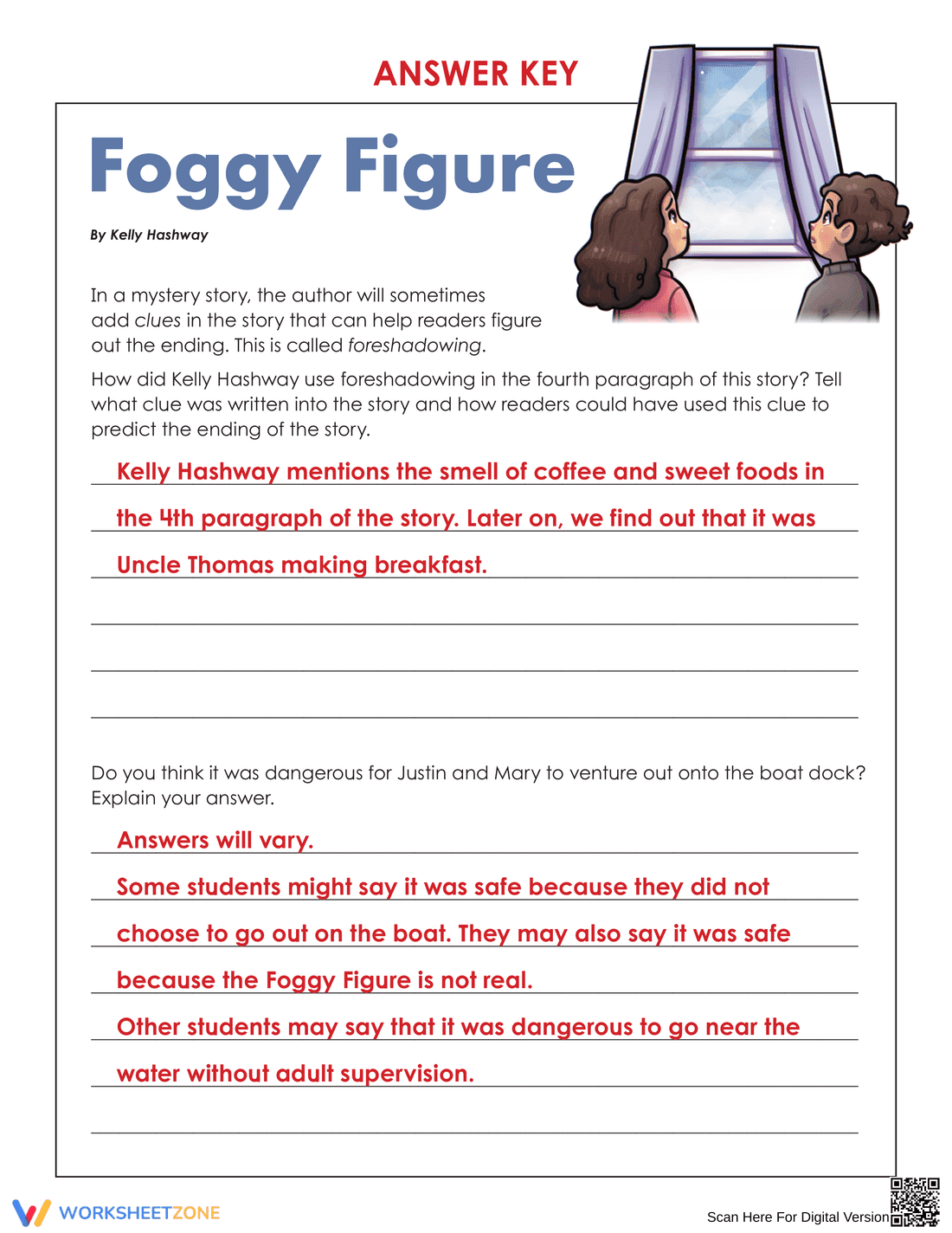
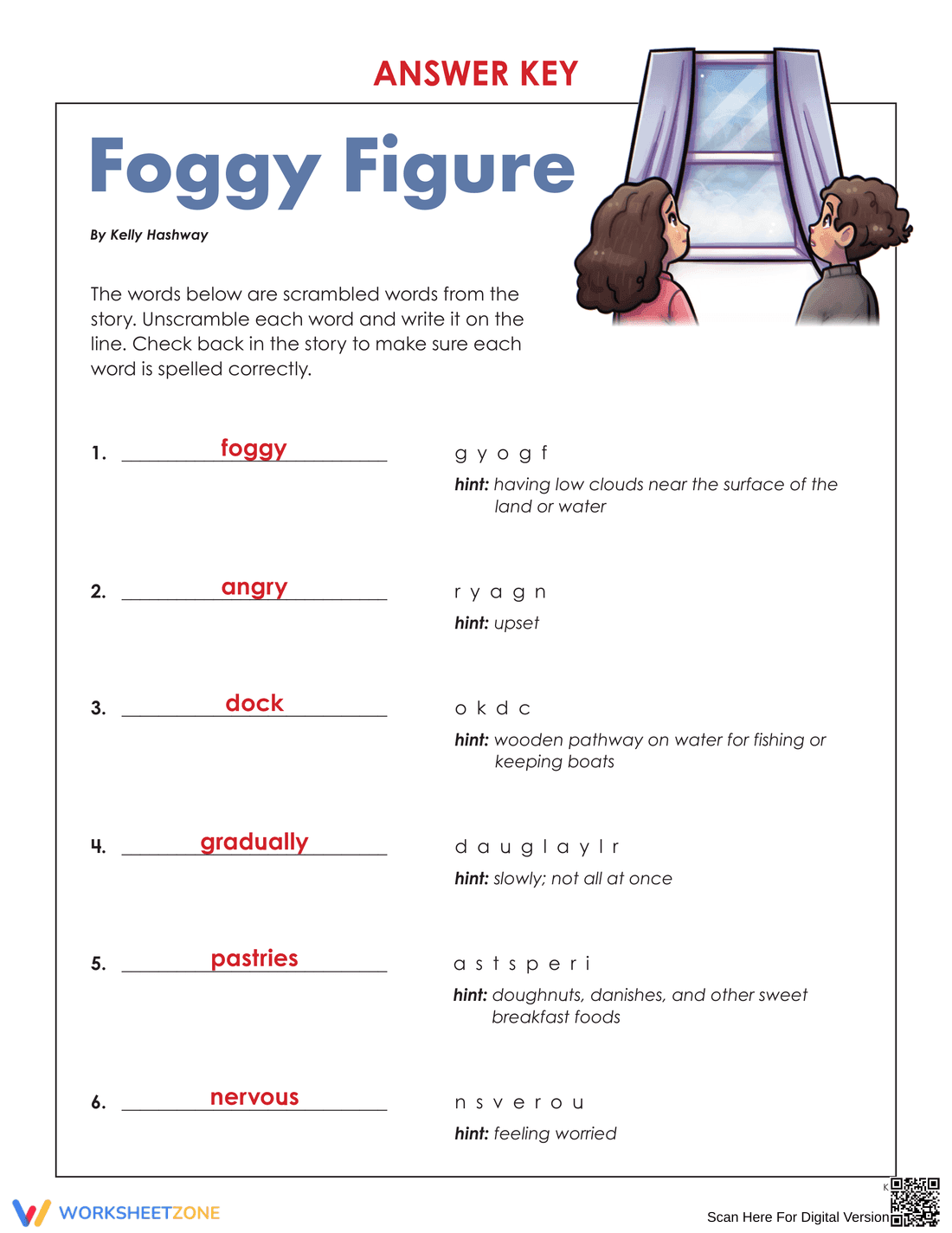
This comprehensive packet includes a two-page original mystery story followed by three distinct activity pages. Students will tackle four general comprehension questions featuring both multiple-choice and short-answer formats. Next, they will complete a dedicated page analyzing the author's use of foreshadowing, requiring them to cite specific textual evidence. Finally, a six-word vocabulary scramble reinforces context clues. A complete three-page answer key is provided for effortless grading.
- Print (1 minute): Simply print the five student-facing pages. The layout is clean, self-explanatory, and ready for immediate distribution.
- Distribute (1 minute): Hand out the packets during your literacy block. The engaging story immediately hooks readers without requiring extensive background building.
- Review (3 minutes): Use the included comprehensive answer keys to quickly check student responses or guide a whole-class review session.
Total teacher prep time is under two minutes, making this an ideal resource for emergency sub plans or busy instructional days.
Aligned to primary standard CCSS.ELA-LITERACY.RL.4.1: Refer to details and examples in a text when explaining what the text says explicitly and when drawing inferences from the text. The foreshadowing activity also supports analyzing text structure and author's craft. Both standard codes can be copied directly into lesson plans, IEP goals, or district curriculum mapping tools.
This resource is highly versatile for the upper elementary classroom. Assign it as independent seatwork during literacy centers while you pull small groups for guided reading. Alternatively, use it as a whole-class close reading exercise, reading the story together before releasing students to complete the comprehension and vocabulary tasks independently. As a formative assessment tip, review students' answers on the foreshadowing page to gauge their ability to locate and interpret subtle textual clues. Expect students to complete the reading and activities within 30 to 45 minutes.
This worksheet is designed for fourth-grade students developing their critical reading skills. The engaging mystery theme appeals to reluctant readers, while the mix of multiple-choice and constructed-response questions provides appropriate rigor for on-level learners. Pair this passage with an anchor chart on literary devices to further support students as they analyze foreshadowing.
Mastering the ability to draw inferences and identify literary clues is a critical milestone in upper elementary literacy. By aligning with CCSS.ELA-LITERACY.RL.4.1, this resource ensures students can refer to details and examples to explain the text and draw inferences effectively. According to a 2024 report by EdReports, high-quality instructional materials that integrate complex texts with text-dependent questions significantly improve reading proficiency and critical thinking. When students actively search for foreshadowing clues within a narrative, they transition from passive decoders to active analytical thinkers. This targeted practice builds the cognitive stamina required for more advanced literary analysis in middle school. Providing structured opportunities to engage with text-based evidence fosters deeper comprehension and equips learners with the essential skills needed to navigate complex narratives successfully.


