


























Views
Downloads
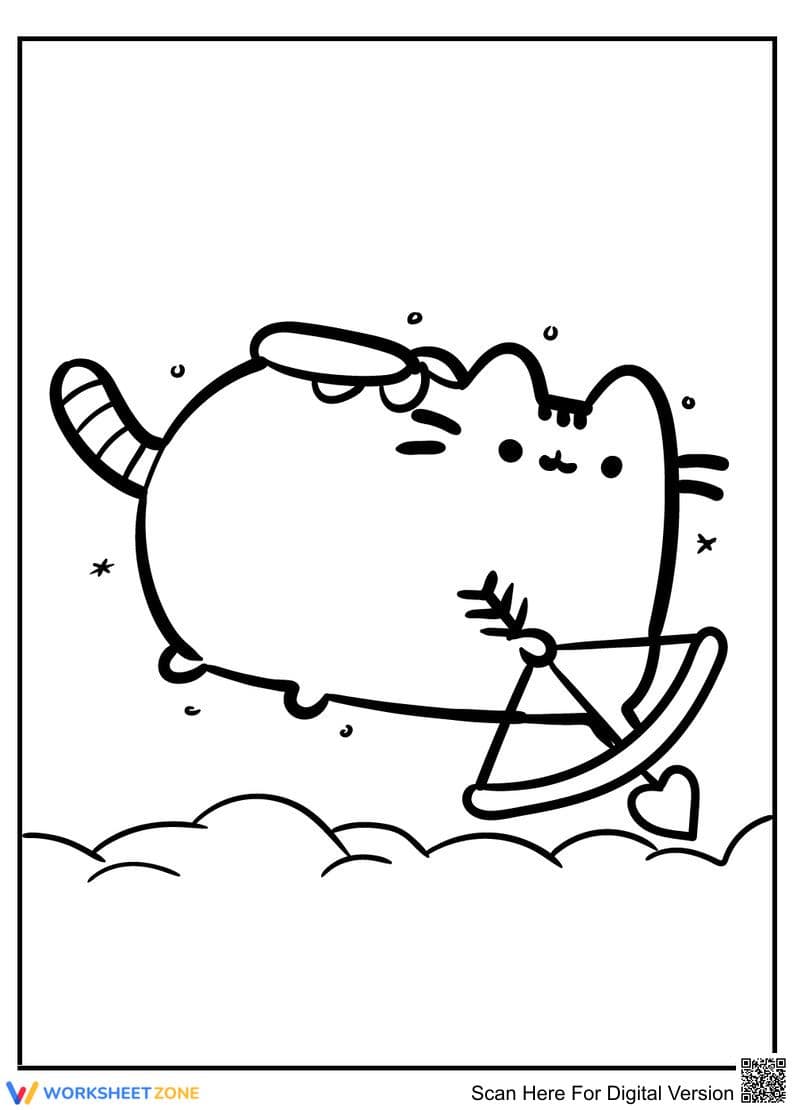

Printable Pusheen Cupid Coloring Page | Grade K-2 Art
Paste this activity's link or code into your existing LMS (Google Classroom, Canvas, Teams, Schoology, Moodle, etc.).
Students can open and work on the activity right away, with no student login required.
You'll still be able to track student progress and results from your teacher account.
This engaging Pusheen Cupid coloring page provides early learners with a fun, creative outlet while developing essential fine motor skills. Students practice hand-eye coordination and crayon control as they bring this popular character to life, making it an ideal addition to Valentine's Day activities or free-choice art centers.
At a Glance
- Grade: K · Subject: Arts & Crafts
- Standard:
CCSS.ELA-LITERACY.W.K.3— Use drawing to narrate an event- Skill Focus: Fine motor control and coloring
- Format: 1 page · 1 creative task · No answer key · PDF
- Best For: Morning work or art centers
- Time: 15–20 minutes
Inside this single-page PDF, educators will find a high-quality, bold-line illustration of Pusheen the cat dressed as Cupid, complete with a bow, arrow, and heart motif. The thick outlines are specifically designed to help young students practice staying within the lines, building the grip strength and dexterity required for future handwriting tasks. There is no answer key required, allowing for complete creative freedom in color selection.
Zero-Prep Workflow
- Print (1 minute): Simply download the PDF and print the required number of copies.
- Distribute (1 minute): Hand out the sheets along with crayons, markers, or colored pencils.
- Review (0 minutes): No grading or review is necessary, making this a truly zero-prep activity.
With a total teacher prep time of under two minutes, this worksheet is an excellent emergency sub plan or a quick transition activity between core academic blocks.
Standards Alignment
This activity supports early writing foundations aligned to CCSS.ELA-LITERACY.W.K.3: Use a combination of drawing, dictating, and writing to narrate a single event or several loosely linked events. By practicing the fine motor control needed for drawing and coloring, students build the physical stamina required for written expression. Both standard codes can be copied directly into lesson plans, IEP goals, or district curriculum mapping tools.
How to Use It
Use it as a calming morning work activity as students arrive and settle into the classroom, or deploy it during an afternoon art center to reinforce fine motor skills. As a formative assessment observation tip, teachers can monitor students' pencil grips and their ability to apply consistent pressure while coloring within the boundaries. Expected completion time ranges from 15 to 20 minutes depending on the student's attention to detail.
Who It's For
This resource is primarily designed for Kindergarten and first-grade students developing their fine motor coordination. It naturally differentiates itself, as advanced students can add their own background elements or practice shading, while students needing support can focus simply on filling the main shapes. It pairs wonderfully with a Valentine's Day read-aloud or a direct instruction lesson on primary and secondary colors.
Developing fine motor skills through activities like this Pusheen Cupid coloring page is a critical precursor to formal writing instruction. Aligned with CCSS.ELA-LITERACY.W.K.3, which encourages students to use drawing to narrate an event, this task helps build the hand strength and dexterity necessary for holding a pencil correctly. According to a recent ScienceDirect TpT Analysis, early childhood classrooms that integrate daily fine motor practice, such as targeted coloring and drawing tasks, see a measurable improvement in students' subsequent handwriting legibility and writing stamina. This foundational practice ensures that when students transition to complex letter formation, they possess the physical control required to succeed, bridging the gap between creative play and academic readiness. Consistent engagement with these tools prepares young learners for future literacy milestones.


