































Printable Watering & Drainage Word Search | Grades 4–5 ELA

Paste this activity's link or code into your existing LMS (Google Classroom, Canvas, Teams, Schoology, Moodle, etc.).
Students can open and work on the activity right away, with no student login required.
You'll still be able to track student progress and results from your teacher account.
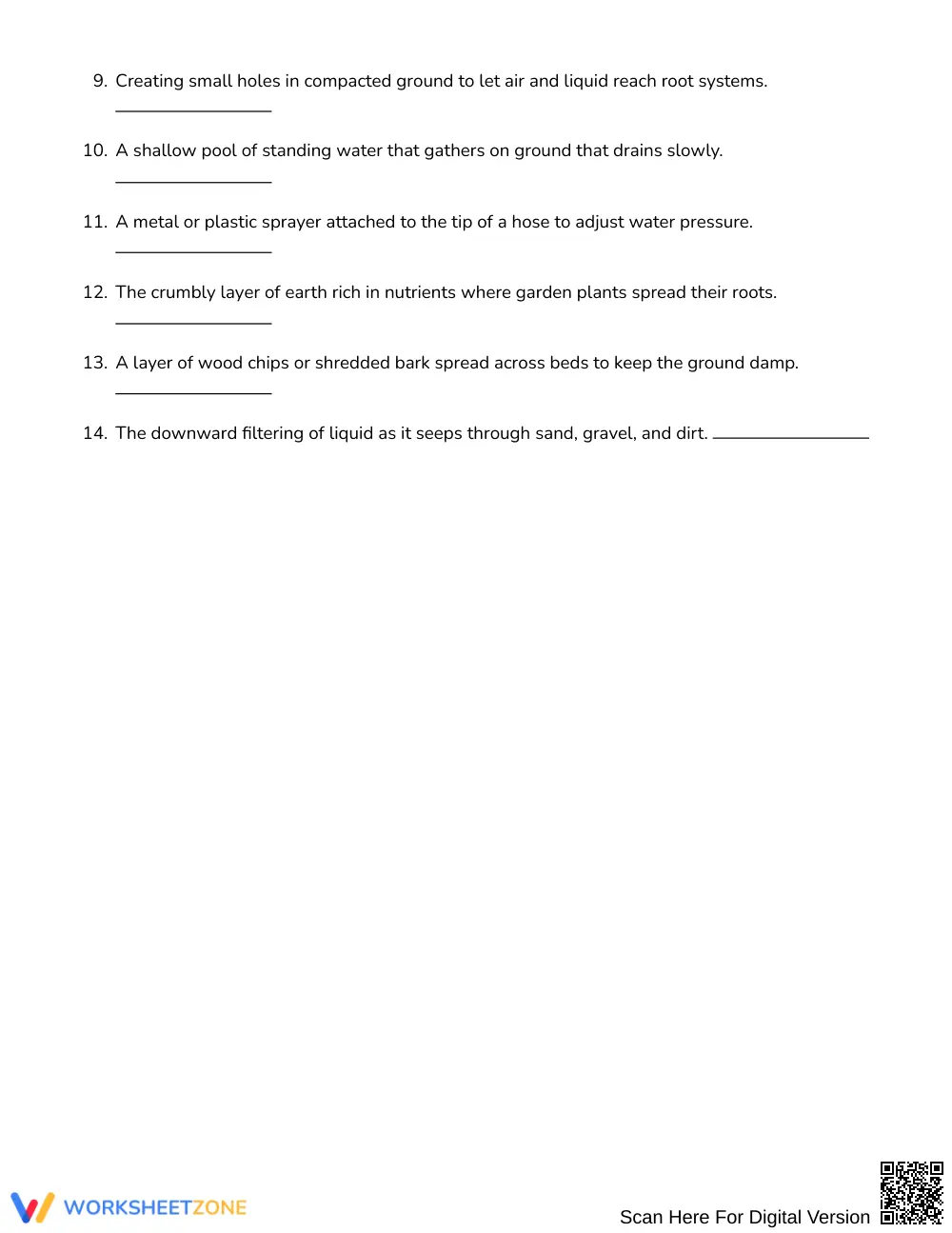
This watering and drainage word search reinforces essential botanical and earth science vocabulary for Grades 4–5 students. Working as clue detectives, learners read 14 descriptive definitions to deduce target terms before locating them within the grid. The activity develops context-clue reading strategies and domain-specific vocabulary retention through an engaging, puzzle-based discovery format.
At a Glance
- Grade: Grades 4–5 · Subject: English Language Arts (ELA) Vocabulary
- Standard: Not standards-assessed — targeted vocabulary enrichment
- Skill Focus: Watering and drainage botanical vocabulary acquisition
- Format: 3 pages total · 14 hidden words · Full answer key included · PDF document
- Best For: Cross-curricular science vocabulary review, literacy centers, and fast finishers
- Time: 20–30 minutes
What's Inside
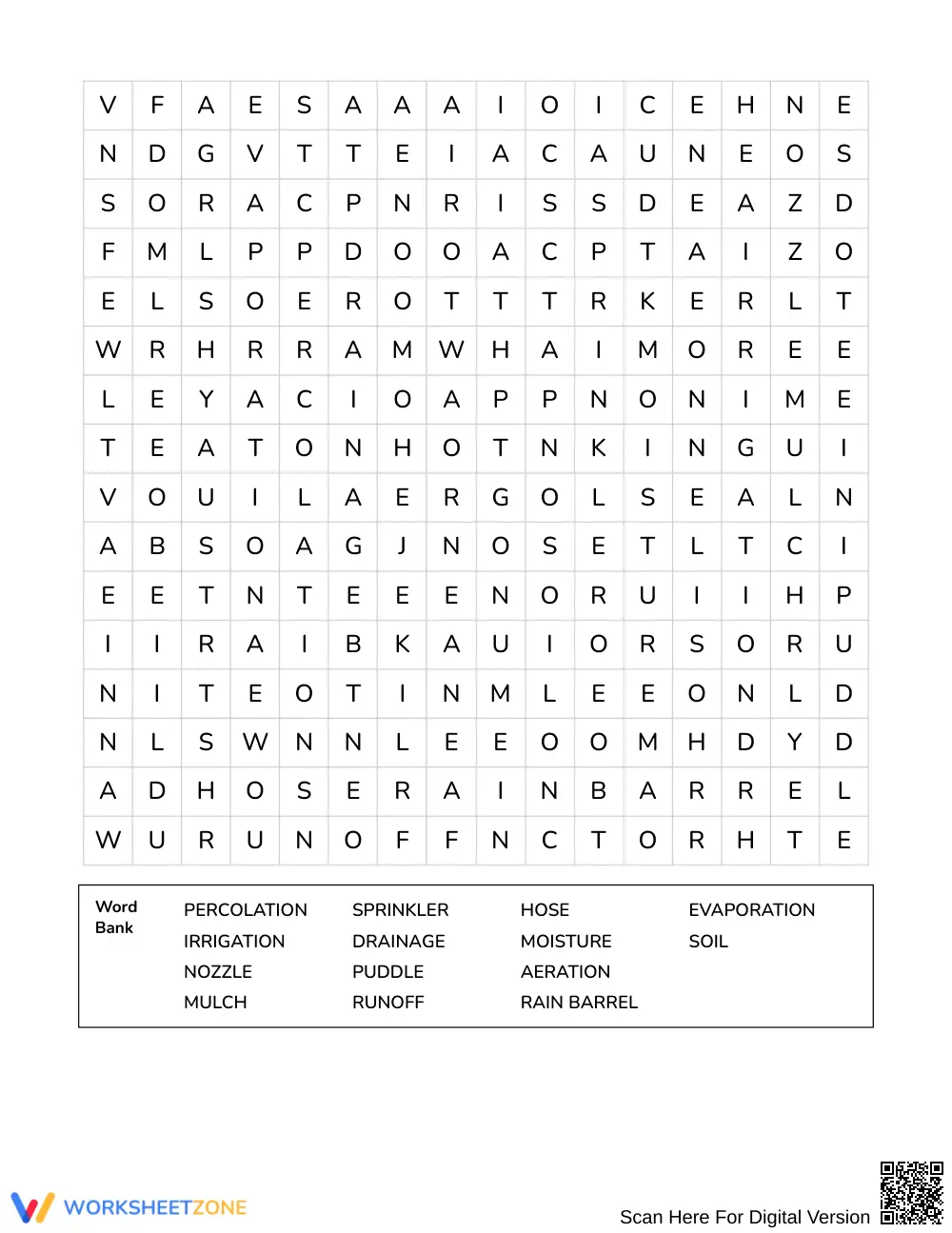
This 3-page printable resource features a Clue Detective activity where students read 14 distinct clues to deduce key gardening terms before finding them in the letter array. The document includes a student puzzle sheet, structured vocabulary clues covering concepts like percolation and aeration, a shuffled word list, and an identical 3-page solution guide highlighting word placements.
Puzzle Mechanics and Structure
This vocabulary word search is built around a challenging 16×16 letter grid designed to strengthen scanning and orthographic awareness. Hidden words are placed in four distinct directional orientations: northeast, east, southeast, and south. Rather than simply copying words from an alphabetized list, students engage with a clue-first format where 14 definitions require active reading comprehension before students track down the shuffled terms across the 256-letter grid.
Standards Alignment
This activity provides targeted vocabulary enrichment focused on earth and plant science terminology rather than assessing a specific grade-level standard code. The tasks support general language acquisition, morphology recognition, and reading comprehension across informational texts by requiring learners to connect operational definitions with domain-specific terms.
How to Use It
Introduce this word search after direct instruction on plant systems or during a cross-curricular unit connecting science and informational reading. For small-group intervention, have students read each clue aloud and highlight key context words before scanning the grid. To assess formatively, observe whether learners can define terms like percolation and runoff in their own words or require the clue bank for support. Students generally complete the activity in 20 to 30 minutes.
Who It's For
This activity is designed for Grades 4–5 students expanding their content-area reading vocabulary. For emerging readers or multilingual learners, consider pairing the puzzle with an illustrated gardening anchor chart showing tools like rain barrels and sprinklers. Advanced learners can be challenged to use three discovered words in an original explanatory paragraph detailing soil moisture management.
Vocabulary acquisition in upper elementary classrooms requires sustained interaction with domain-specific words across multiple contextual exposures. According to Fisher & Frey (2014), intentional word-learning strategies that pair explicit definitions with active retrieval practice significantly strengthen long-term semantic storage and reading comprehension. This Grades 4–5 watering and drainage word search operationalizes that principle by replacing passive word-copying with a clue detective model. Students analyze 14 conceptual clues, infer technical gardening terminology such as percolation, evaporation, and aeration, and execute deliberate visual searches across a 16×16 letter matrix. The cognitive demands of reading operational clues, evaluating word lengths, and scanning across four directional axes promote orthographic mapping and lexical fluency. By integrating disciplinary literacy with focused puzzle-solving, this resource provides educators with a reliable tool for reinforcing academic language, supporting scientific inquiry, and deepening informational text comprehension across diverse classroom environments.


