































Printable Tooth-Care Objects Word Search | Grades 3–4 ELA

Paste this activity's link or code into your existing LMS (Google Classroom, Canvas, Teams, Schoology, Moodle, etc.).
Students can open and work on the activity right away, with no student login required.
You'll still be able to track student progress and results from your teacher account.
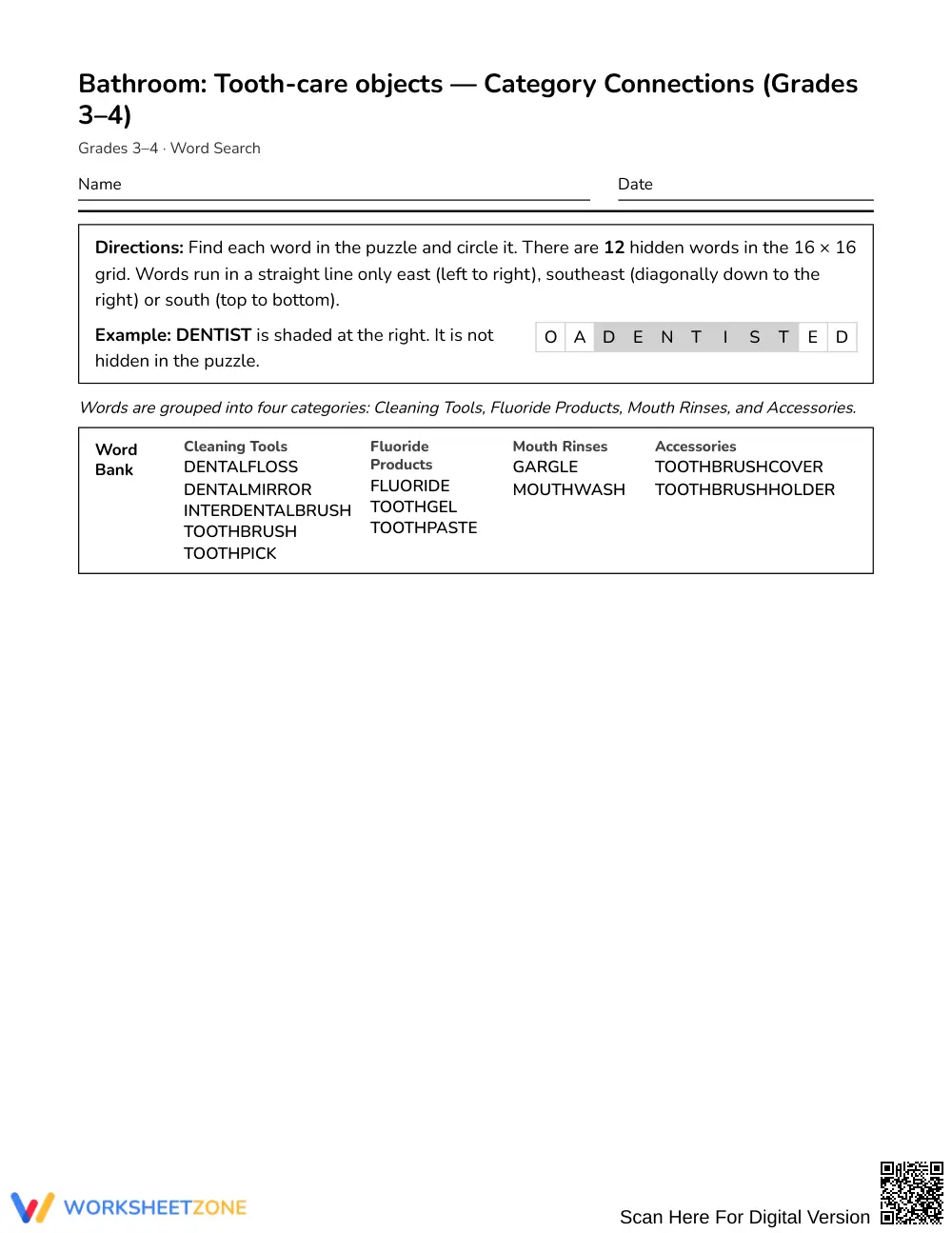
This tooth-care objects word search builds everyday health vocabulary for elementary learners. Students identify and reinforce 12 essential personal hygiene terms grouped into functional categories. By connecting tooth-cleaning tools, fluoride products, mouth rinses, and accessories, students expand thematic language recognition and strengthen spatial pattern awareness through engaging printable practice.
At a Glance
- Grade: Grades 3–4 · Subject: English Language Arts (ELA)
- Standard: Not standards-assessed — vocabulary enrichment
- Skill Focus: Tooth-care objects
- Format: 2 pages · 12 words · Answer key included · PDF
- Best For: Independent vocabulary review and early finishers
- Time: 15–25 minutes
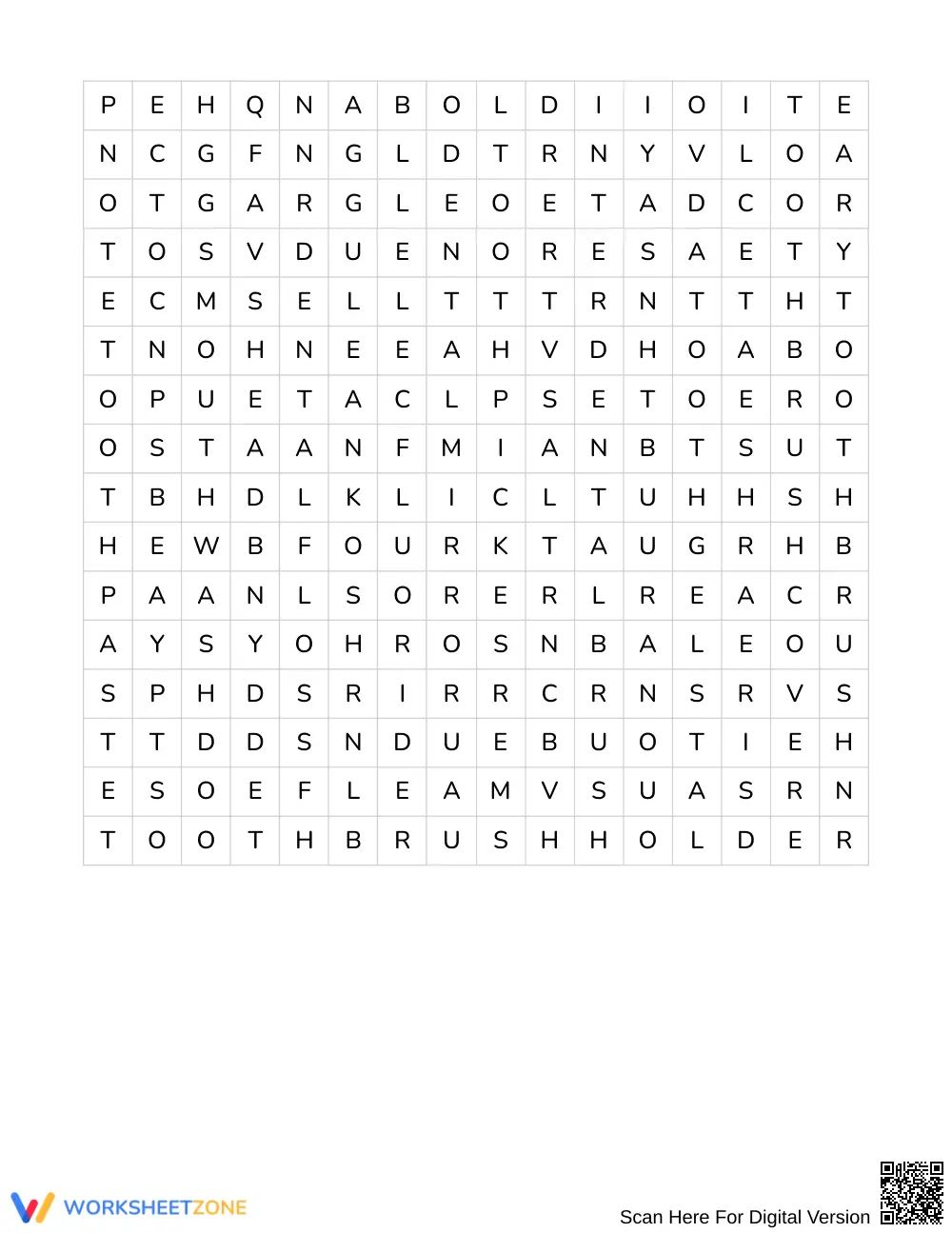
The resource spans 2 pages featuring a themed 16 by 16 letter grid alongside student-friendly definitions. The 12 target vocabulary words are organized into four distinct groups: Cleaning Tools, Fluoride Products, Mouth Rinses, and Accessories. A complete answer key shows exact word placements with clear coordinate highlights, allowing students or instructors to verify solutions immediately without additional preparation.
How the Puzzle Works
Students search for 12 hidden terms within a 16 by 16 letter grid. Words run exclusively in three orientations: horizontally east (left to right), diagonally southeast (down and right), and vertically south (top to bottom). The puzzle features a categorized word bank that groups terms by bathroom function, accompanied by concise contextual definitions for every object. Because words do not appear backward or upward, students can focus directly on orthographic recognition and vocabulary retention rather than confusing spatial reversals.
Standards Alignment
This activity is designed strictly for vocabulary enrichment and is not aligned to a specific academic standard. It provides supplementary language practice that reinforces personal health routines and functional living terminology without formal assessment constraints.
How to Use It
This word search fits naturally into classroom routines as an independent extension during health-themed literacy units or as a calm morning work task after direct vocabulary instruction. During independent work, conduct a brief formative check by asking students to read the category names aloud and explain why terms like dental floss and interdental brush belong in the same group. Learners typically complete the full 12-word search in 15 to 25 minutes.
Who It's For
This resource supports Grades 3–4 students developing foundational health literacy, English language learners acquiring daily life terminology, and students who benefit from structured visual word recognition. To provide additional support, encourage students to highlight category headers with matching colors before searching the grid. Pair this activity with a dental health informational reading passage or an anchor chart detailing daily oral hygiene routines.
Thematic categorization and orthographic word-search tasks support vocabulary acquisition by linking novel terminology to conceptual schema. According to Fisher & Frey (2014), intentional exposure to domain-specific words within clear semantic clusters significantly accelerates reading comprehension and long-term lexical retention. By organizing 12 tooth-care objects into logical categories such as cleaning tools and fluoride products, this activity encourages students to analyze semantic relationships rather than memorizing isolated letter strings. Orthographic searches reinforce correct spelling patterns and visual scanning stamina, both of which are critical foundational components of fluent reading development for upper-elementary students. While designed for vocabulary enrichment outside of formal standard codes, structured word tasks provide accessible entry points that strengthen functional literacy across diverse learner profiles.


