































Printable Rice Dishes Word Search | Grades 2–3 ELA

Paste this activity's link or code into your existing LMS (Google Classroom, Canvas, Teams, Schoology, Moodle, etc.).
Students can open and work on the activity right away, with no student login required.
You'll still be able to track student progress and results from your teacher account.
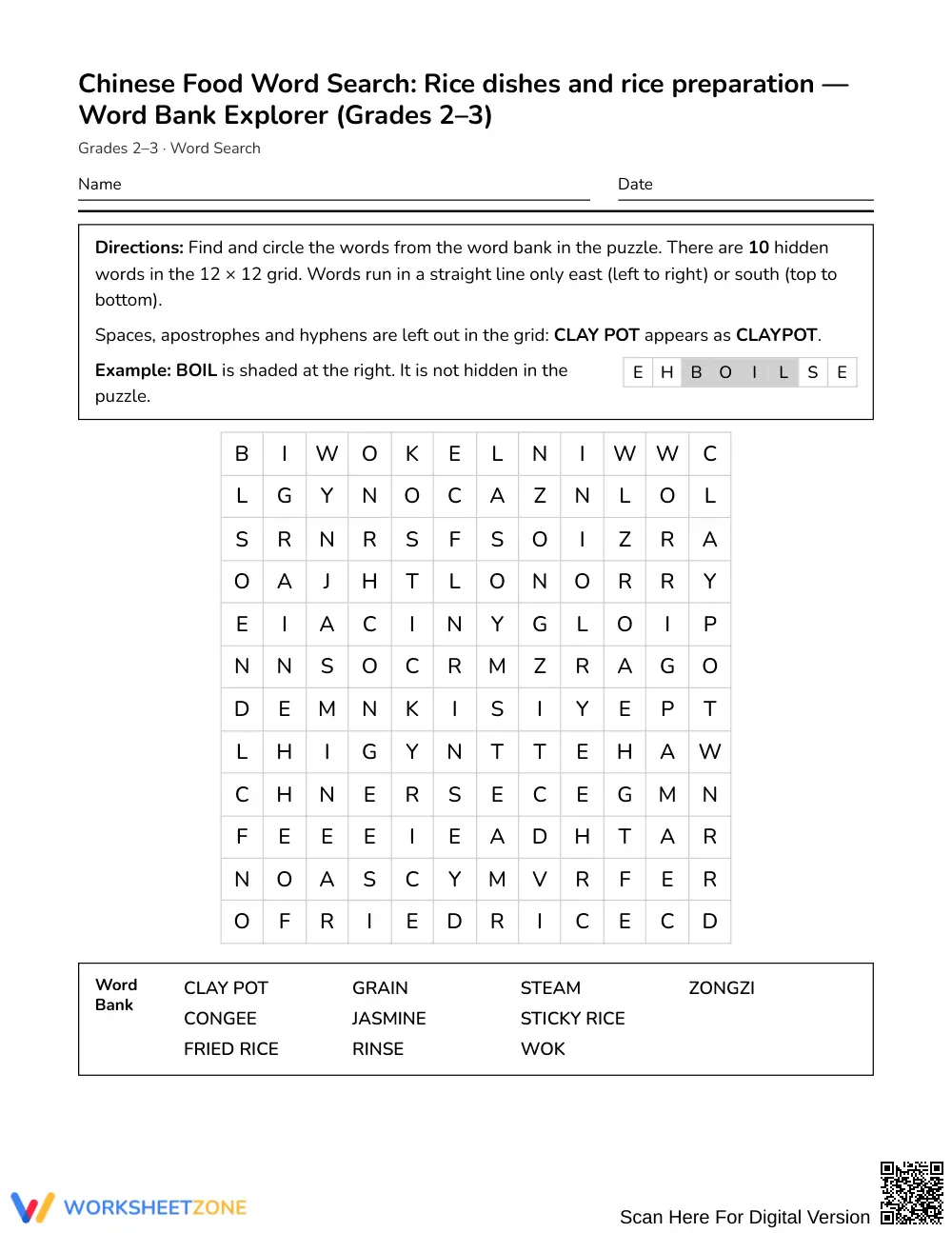
Students explore Chinese culinary vocabulary by locating ten rice‑related terms in a 12‑by‑12 word search and connect them to the cooking methods described in the accompanying word bank.
At a Glance
- Grade: Grades 2–3 · Subject: English Language Arts (ELA)
- Standard:
Not standards-assessed — vocabulary enrichment(focus on rice‑related terms)- Skill Focus: rice dishes and rice preparation vocabulary
- Format: 1 printable page · 10 hidden words to find · Answer key included (3 pages) · PDF format
- Best For: quick, engaging vocabulary practice for small‑group or independent work
- Time: approximately 5–10 minutes per class
The activity consists of a single 12 × 12 grid filled with letters that run eastward and southward. Students search for ten rice‑related terms listed in an alphabetical word bank. An answer key spanning three pages shows each word highlighted in its correct location, making self‑checking fast and reliable.
Puzzle Overview
- Grid: 12 × 12 letters.
- Word direction: words run left‑to‑right (East) and top‑to‑bottom (South).
- Word bank: 10 terms presented alphabetically, no additional clues.
- Students locate and circle each hidden word.
Standards Alignment
This word search is designed for vocabulary enrichment and is not tied to any specific state or district standard. It supports general language‑arts goals such as expanding academic vocabulary and cultural awareness.
How to Use It
1. Before a lesson on Chinese cuisine, have learners complete the search individually to activate prior knowledge of rice‑related terms. Observe which words are missed to gauge pre‑instruction understanding.
2. During a reading of a Chinese food article, pause for a quick group challenge where students race to find the words together, reinforcing comprehension while keeping the activity lively. Allocate 5–10 minutes for each use.
Who It’s For
Ideal for Grades 2–3 English Language Arts classes, especially groups needing engaging vocabulary practice. The alphabetical word bank offers built‑in scaffolding, while the visual puzzle supports visual learners. Pair it with a picture‑rich Chinese food book or an anchor chart of rice dishes for deeper context.
Research shows that short, focused word‑search activities boost incidental vocabulary acquisition and improve spelling retention among early elementary learners (Fisher & Frey, 2014). By presenting rice‑related terms within a culturally relevant theme, this resource leverages meaningful context to deepen students’ understanding of food‑related vocabulary while reinforcing phonemic patterns. The alphabetical word bank further supports self‑directed learning, allowing children to verify their findings independently. Teachers can integrate the search into a multi‑modal lesson that includes visual aids, oral discussion, and writing prompts, thereby reinforcing multiple strands of the language arts standards. Moreover, the quick turnaround time of five to ten minutes makes it feasible for daily warm‑up routines, contributing to consistent exposure to new terminology.


