




























Views
Downloads

Printable Pride Lands Settings Word Search | Grades 2–3 ELA

Paste this activity's link or code into your existing LMS (Google Classroom, Canvas, Teams, Schoology, Moodle, etc.).
Students can open and work on the activity right away, with no student login required.
You'll still be able to track student progress and results from your teacher account.
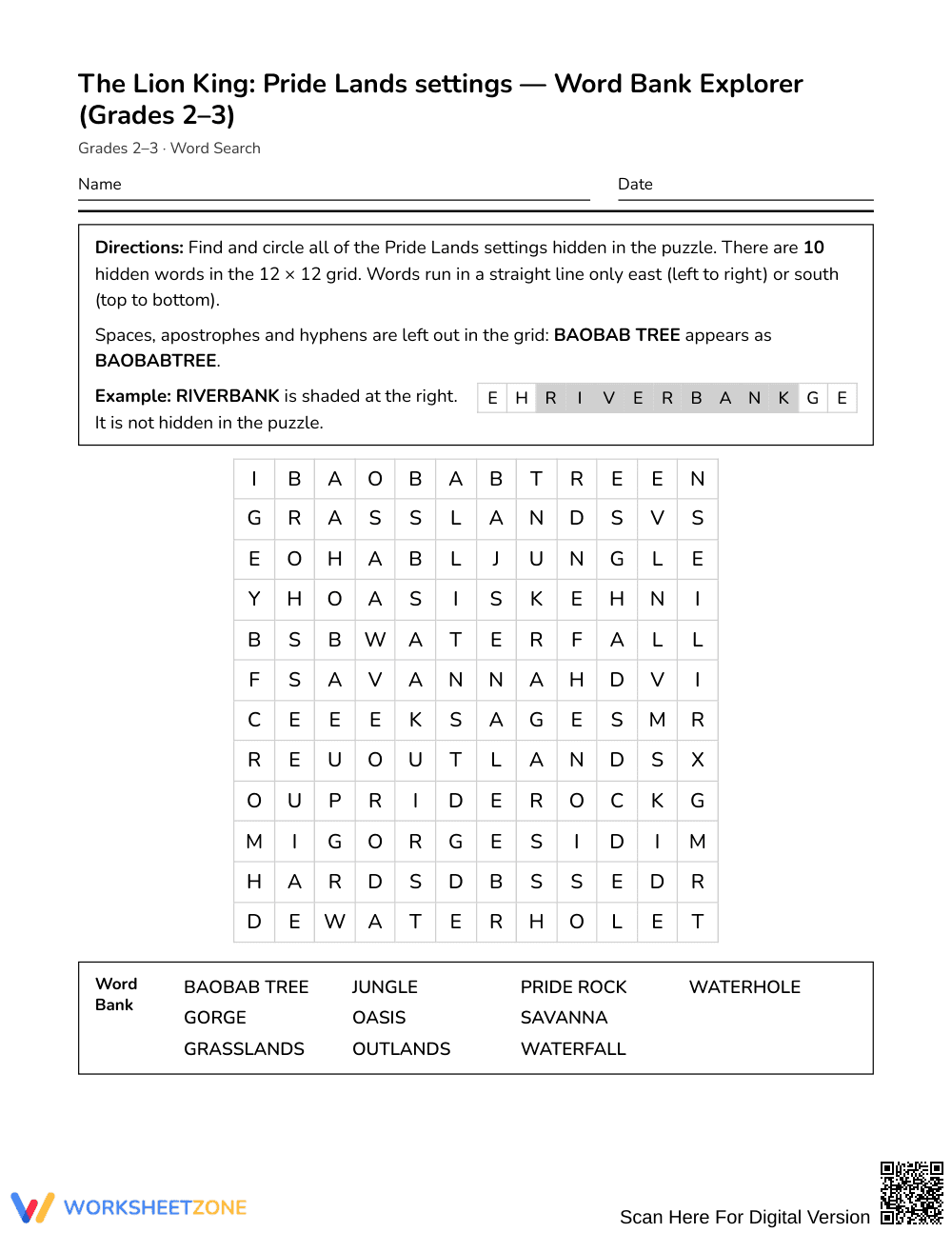
This printable Grades 2–3 word search introduces students to 10 key Pride Lands settings from The Lion King, reinforcing story vocabulary through focused visual scanning. Learners search for geographical terms like savanna, gorge, and oasis, connecting literary habitats to their descriptive definitions while building spelling confidence and thematic word awareness.
At a Glance
- Grade: Grades 2–3 · Subject: English Language Arts (ELA)
- Standard: Not standards-assessed — vocabulary enrichment
- Skill Focus: Pride Lands settings and literary environment vocabulary
- Format: 1 student page · 10 hidden words · 2-page answer key included · PDF file
- Best For: Vocabulary warm-up, independent practice, and fast finishers
- Time: 15–20 minutes of focused activity
What's Inside
This single-page word search features 10 vocabulary terms drawn from iconic Pride Lands locations, including Pride Rock, baobab tree, gorge, savanna, grasslands, and waterfall. The page presents an organized alphabetical word list accompanied by descriptive context sentences that define each habitat feature. Teachers also receive a comprehensive 2-page answer key showing exact letter locations and highlighted answer paths for rapid verification.
How the Puzzle Works
The activity centers on an accessible 12 × 12 letter grid tailored specifically for early elementary learners. All 10 hidden words run strictly East (left to right) and South (top to bottom), avoiding backwards or diagonal placements that cause visual fatigue for developing readers. Students locate each target term using the alphabetical word bank and reinforce comprehension by reading the accompanying habitat clues.
Standards Alignment
This resource serves as targeted vocabulary enrichment and is not aligned to a formal academic standard. It focuses on expanding domain-specific vocabulary and strengthening visual word recognition through engaging thematic exploration rather than formal standardized testing benchmarks.
How to Use It
Use this word search as an engaging introductory warm-up before direct instruction on literary settings, activating schema about African wildlife habitats. Alternatively, assign it after reading a story chapter as an independent quiet-work activity or fast-finisher task. While students work, circulate to observe visual tracking habits and check whether learners reference the alphabetical list systematically. The entire activity typically takes between 15 and 20 minutes to complete.
Who It's For
This printable activity is designed for Grades 2–3 students developing basic reading fluency and print awareness. For emerging readers or English language learners who need extra scaffolding, provide highlighters to mark horizontal and vertical paths or review the glossary clues aloud together. It pairs naturally with an informational anchor chart depicting savanna geography and animal habitats.
Word search puzzles reinforce Pride Lands settings vocabulary by combining spatial problem-solving with focused orthographic scanning. According to Fisher & Frey (2014), intentional exposure to domain-specific terminology across varied print formats solidifies word recognition and supports overall reading comprehension in early elementary readers. When children search for setting terms such as oasis, savanna, and gorge within a structured 12 × 12 grid, they repeatedly process letter sequences in left-to-right and top-to-bottom configurations. This repetitive visual tracking reinforces foundational spelling patterns, promotes word memory, and strengthens mental representations of unfamiliar environmental vocabulary. Furthermore, pairing target words with concise descriptive clues provides meaningful semantic context, transforming an enjoyable puzzle into a valuable language enrichment exercise. By integrating active word discovery with literary setting concepts, this activity enhances vocabulary retention and prepares developing students for subsequent independent reading tasks.


