



























Printable Pollinator Word Search | Grades 6–7 Science
Paste this activity's link or code into your existing LMS (Google Classroom, Canvas, Teams, Schoology, Moodle, etc.).
Students can open and work on the activity right away, with no student login required.
You'll still be able to track student progress and results from your teacher account.
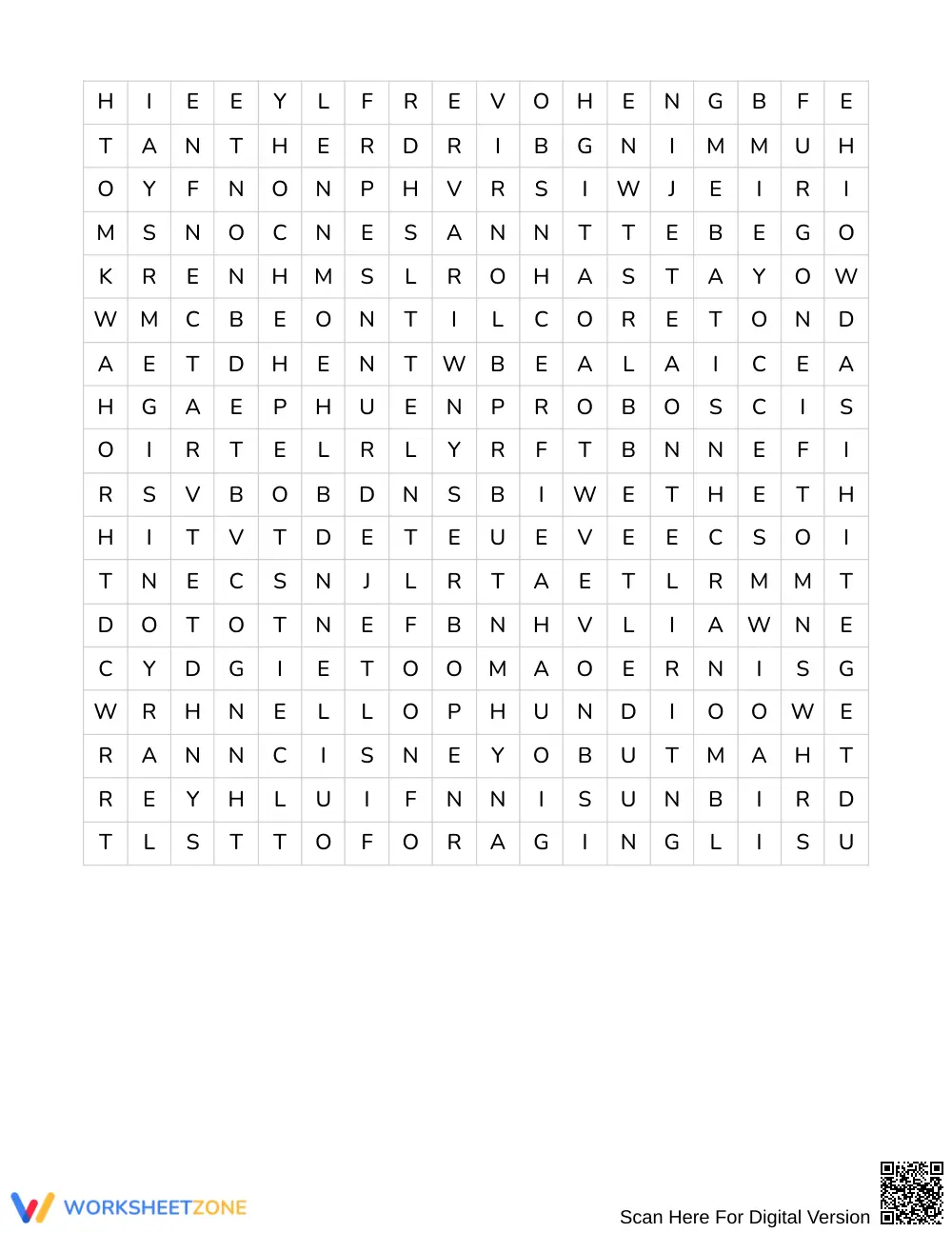
Students explore the world of pollinators while sharpening their vocabulary by locating sixteen hidden terms in a fun, 18‑by‑18 word search. The activity reinforces key biological concepts and encourages careful reading of clues, making vocabulary acquisition an engaging challenge for middle school learners.
At a Glance
- Grade: Grades 6–7 (Middle school) · Subject: Science
- Standard:
None— students find and circle pollinator vocabulary words in a crossword‑style grid- Skill Focus: pollinators and flower visitors, building scientific vocabulary
- Format: 3 pages of activity · 16 hidden words · Answer key included · PDF printable file
- Best For: vocabulary enrichment, ecological awareness, and cross‑curricular science language practice
- Time: Approximately 10–15 minutes for independent completion
The word search spans three PDF pages, presenting an 18 × 18 grid filled with letters that run in all eight compass directions—north, northeast, east, southeast, south, southwest, west, and northwest. Sixteen pollinator‑related terms are hidden, each accompanied by a concise clue that describes the animal or concept. An answer key on a separate page reveals each word’s location for quick verification.
To complete the activity, students read each clue, then scan the grid for the corresponding term, which may appear forwards, backwards, or diagonally in any of the eight directions. Because there is no word bank, the clues serve as the sole guide. Once found, they circle the word and, if desired, record its coordinates for added challenge.
This activity is designed for vocabulary enrichment and is not aligned to any specific state or national standard. It supports the broader goal of expanding scientific terminology related to pollination and flower visitors, complementing any biology curriculum without formal assessment requirements.
Use it as a quick warm‑up before a lesson on pollination, allowing students to activate prior knowledge while you introduce flower anatomy. Alternatively, employ it as an exit activity after a field‑trip or video, using the completed grids as informal formative data; note which clues were most challenging.
The word search targets Grades 6–7 learners studying biology, offering a self‑contained challenge that reinforces key pollinator vocabulary. No differentiation levels are required, but teachers can pair it with a pollinator anchor chart or a short video to deepen context.
Research confirms that vocabulary‑focused puzzles boost retention of scientific terms, especially when paired with meaningful context (Fisher & Frey 2014). This 18 × 18 word search on pollinators and flower visitors provides that context through concise clues that describe each organism’s role in ecosystems. By requiring students to locate sixteen terms, the activity engages visual scanning skills and reinforces spelling while simultaneously deepening ecological understanding. The inclusion of an answer key supports immediate feedback, a practice shown to improve learning outcomes. Although not tied to a formal standard, the puzzle aligns with best practices for vocabulary enrichment in middle‑school science classrooms, offering a low‑prep, high‑engagement resource that teachers can deploy instantly. Students who complete the search often report increased confidence when discussing pollination during class discussions. The activity also serves as a springboard for deeper investigations into plant‑pollinator coevolution, encouraging inquiry‑based projects.


