





























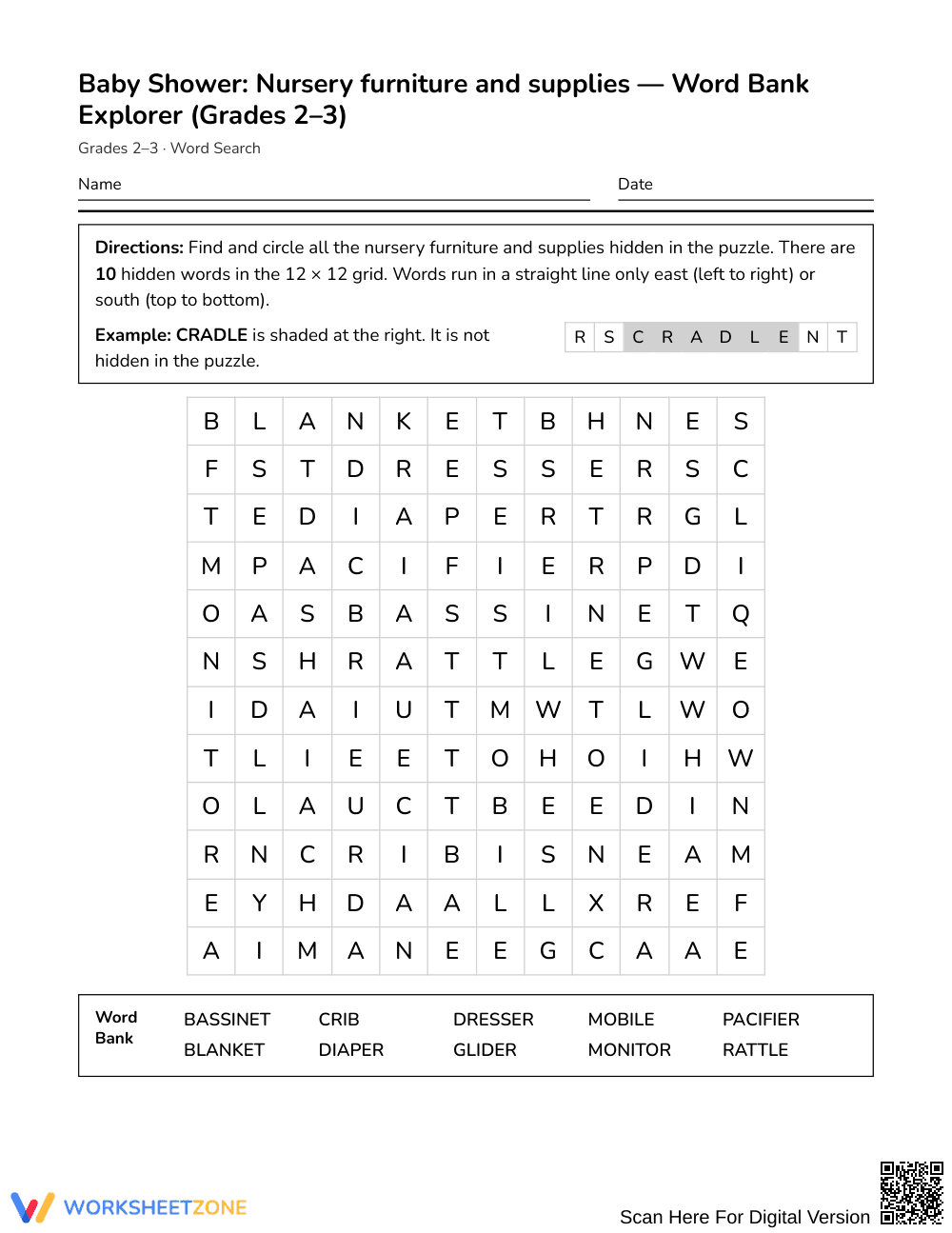


Printable Nursery Furniture Word Search | Grades 2–3 ELA

Paste this activity's link or code into your existing LMS (Google Classroom, Canvas, Teams, Schoology, Moodle, etc.).
Students can open and work on the activity right away, with no student login required.
You'll still be able to track student progress and results from your teacher account.
This Grades 2–3 vocabulary word search introduces learners to foundational infant care items and room furnishings. Students locate 10 vocabulary terms while reinforcing spelling patterns, letter recognition, and contextual word meanings through clear definitions. The puzzle provides focused, low-stress language practice that strengthens scanning abilities and expands topical knowledge in an accessible visual format.
At a Glance
- Grade: Grades 2–3 · Subject: English Language Arts (ELA)
- Standard:
N/A— Not standards-assessed — vocabulary enrichment- Skill Focus: nursery furniture and supplies
- Format: 1 pages · 10 words · Answer key included · PDF
- Best For: Early finisher vocabulary enrichment practice
- Time: 15–20 minutes
What's Inside
This 1-page printable activity features an inviting puzzle layout paired with an alphabetical word list and helpful supporting clues. Each entry matches a 10-word target list with kid-friendly descriptions, helping early readers connect practical definitions to terms like bassinet, crib, and glider. A complete 2-page answer key provides clear visual answer overlays for rapid student self-checking or teacher verification.
Zero-Prep Workflow
Designed for immediate implementation without prior lesson setup, this resource integrates smoothly into busy classroom routines:
- Print (30 seconds): Send the single student sheet to your copier or print on demand.
- Distribute (30 seconds): Hand out the puzzle sheets alongside pencils or highlighters with no prerequisite lecture required.
- Review (1 minute): Post or display the visual answer key so students can check completed rows independently.
With under two minutes of total teacher preparation, this standalone puzzle serves as an ideal resource for emergency substitute plans, quiet transition blocks, or rainy-day learning centers.
Puzzle Structure and Alignment
This activity provides focused vocabulary enrichment and is not aligned to a formal standard. The puzzle uses an accessible 12 by 12 letter grid where all 10 vocabulary words run in beginner-friendly directions: left-to-right horizontally (East) and top-to-bottom vertically (South). Diagonal and backwards placements are excluded, allowing second and third graders to develop visual tracking habits without unnecessary cognitive frustration.
How to Use It
Incorporate this puzzle as a purposeful independent task during literacy rotations, morning arrival routines, or after direct phonics instruction. For a formative assessment observation, monitor how students track letter clusters when identifying multisyllabic terms like monitor or pacifier. Most learners will complete the search within 15 to 20 minutes.
Who It's For
This activity supports primary grade students in general education, English language learners developing domestic vocabulary, and students benefiting from fine-motor visual tracking exercises. Pair this sheet with a thematic read-aloud about growing families or a dedicated picture-word anchor chart.
Explicit exposure to categorized word lists supports incidental vocabulary acquisition and orthographic awareness in developing readers. According to Fisher & Frey (2014), engaging learners in targeted word identification tasks reinforces print recognition and semantic associations without imposing heavy cognitive barriers. When elementary children examine thematic letter sequences on an organized activity sheet, they connect isolated phonics patterns to meaningful real-world objects. This deliberate visual search process encourages sustained concentration, strengthens directional scanning habits, and solidifies spelling memory across unfamiliar terms. Although informal print exercises are not standards-assessed, they offer essential vocabulary enrichment that prepares early readers for complex informational texts and fluent verbal expression. Routine exposure to high-utility household nouns expands background knowledge while building confidence in foundational literacy. Furthermore, discovering hidden words helps emerging readers internalize structural letter combinations and master common spelling conventions naturally. Ultimately, low-stakes word searches provide balanced, enjoyable skill practice that deepens lexical retention throughout primary elementary language arts instruction.


