































Printable Mardi Gras Word Search | Grades 3–4 ELA

Paste this activity's link or code into your existing LMS (Google Classroom, Canvas, Teams, Schoology, Moodle, etc.).
Students can open and work on the activity right away, with no student login required.
You'll still be able to track student progress and results from your teacher account.
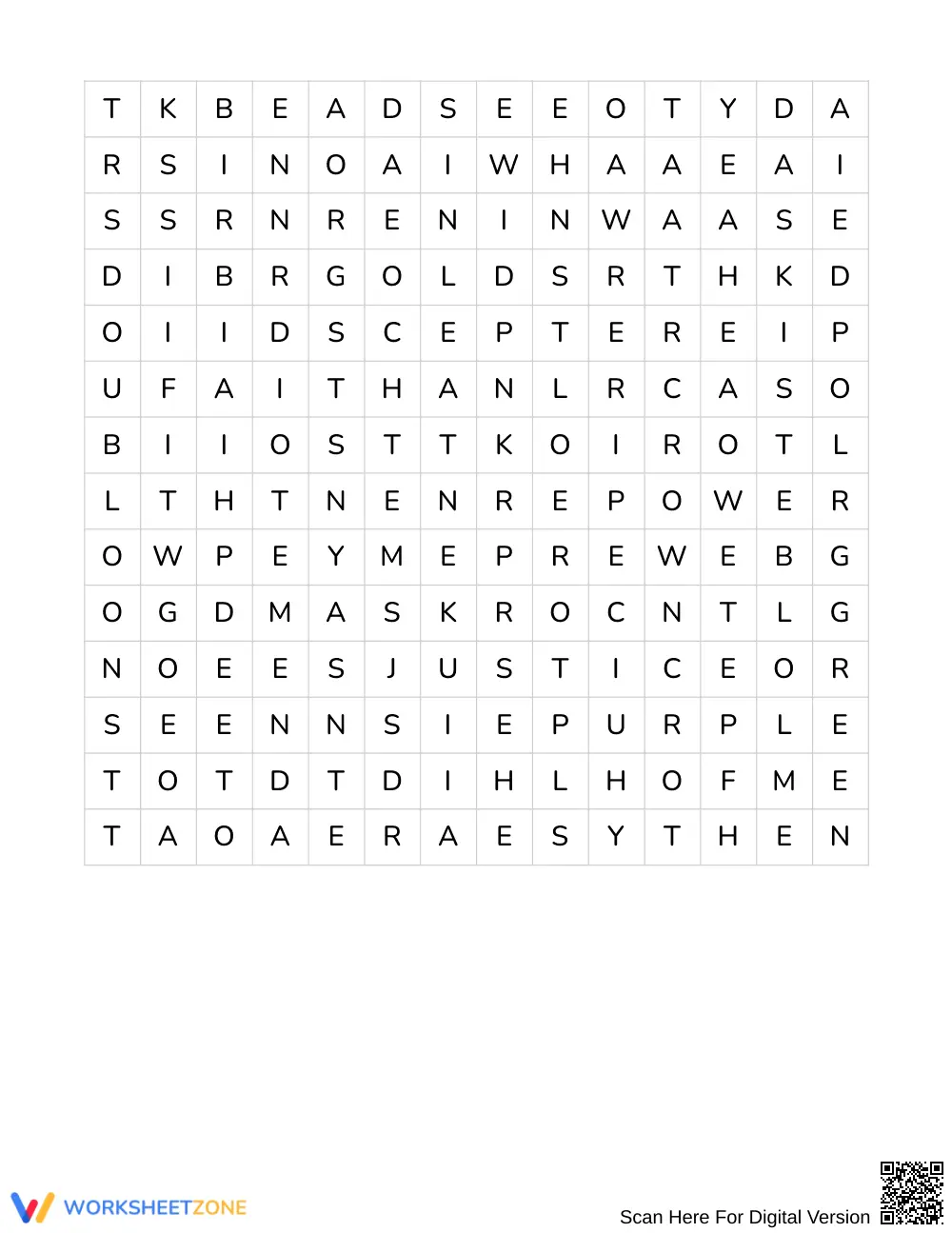
This Mardi Gras word search builds cultural vocabulary and reading stamina by introducing students to color symbolism in local carnival traditions. Learners identify 12 thematic terms connected to festive history, strengthening recognition skills while exploring the historic meanings behind purple, green, and gold.
At a Glance
- Grade: Grades 3–4 · Subject: English Language Arts (ELA)
- Standard: Not standards-assessed — vocabulary enrichment
- Skill Focus: Color symbolism in local traditions
- Format: 2 pages · 12 words · Answer key included · PDF
- Best For: Seasonal vocabulary centers or fast finishers
- Time: 15–25 minutes
What's Inside
This 2-page printable activity features a clean puzzle layout paired with an organized bank of 12 words grouped by category. Informative clue definitions explain each term, giving students context for carnival symbols such as king cake, doubloons, and royal regalia. A 3-page answer key provides clear solution paths for quick visual checking.
Puzzle Mechanics
The activity uses a 14 x 14 letter grid configured for accessible elementary solving. Hidden terms run strictly in three beginner-friendly directions: East (horizontal left-to-right), Southeast (diagonal downward-right), and South (vertical downward). Categorized word groups and short contextual clues assist students in scanning rows efficiently without reverse or upward placements.
Standards Alignment
This resource serves as targeted vocabulary enrichment and cultural literacy practice; it is not aligned to a specific academic standard. It reinforces domain-specific terminology, contextual definitions, and reading engagement during seasonal classroom units or cross-curricular social studies connections.
How to Use It
Distribute this word search after a shared reading about carnival traditions, or set it out as an independent literacy station. During independent work, circulate to observe visual scanning strategies and prompt students to read the clue definitions aloud. Most learners complete the search within 15 to 25 minutes.
Who It's For
Designed for Grades 3–4 readers, this puzzle supports general education classrooms, English language learners, and upper-elementary intervention groups seeking accessible print practice. Pair this printable with an informational mentor text about Louisiana history or a hands-on cultural craft project.
Integrating thematic puzzle activities into elementary instruction fosters active word recognition and sustained visual attention. According to Fisher & Frey (2014), intentional exposure to domain-specific words across diverse formats reinforces conceptual understanding and broadens academic schema. This 2-page vocabulary enrichment activity prompts Grades 3–4 students to explore color symbolism in local traditions through 12 carefully selected terms embedded in a 14 x 14 letter grid. By linking each term to clear descriptive clues—highlighting justice, faith, power, and classic carnival artifacts—the puzzle connects letter-pattern identification with meaningful context. Because all words follow accessible East, Southeast, and South orientations, students experience motivating, low-frustration practice that supports independent orthographic processing. Teachers can reliably deploy this self-contained resource during holiday units, sub plans, or dedicated center rotations to build background knowledge and reinforce language comprehension efficiently.


