































Printable Horse Communication Word Search | Grades 4–5 ELA

Paste this activity's link or code into your existing LMS (Google Classroom, Canvas, Teams, Schoology, Moodle, etc.).
Students can open and work on the activity right away, with no student login required.
You'll still be able to track student progress and results from your teacher account.
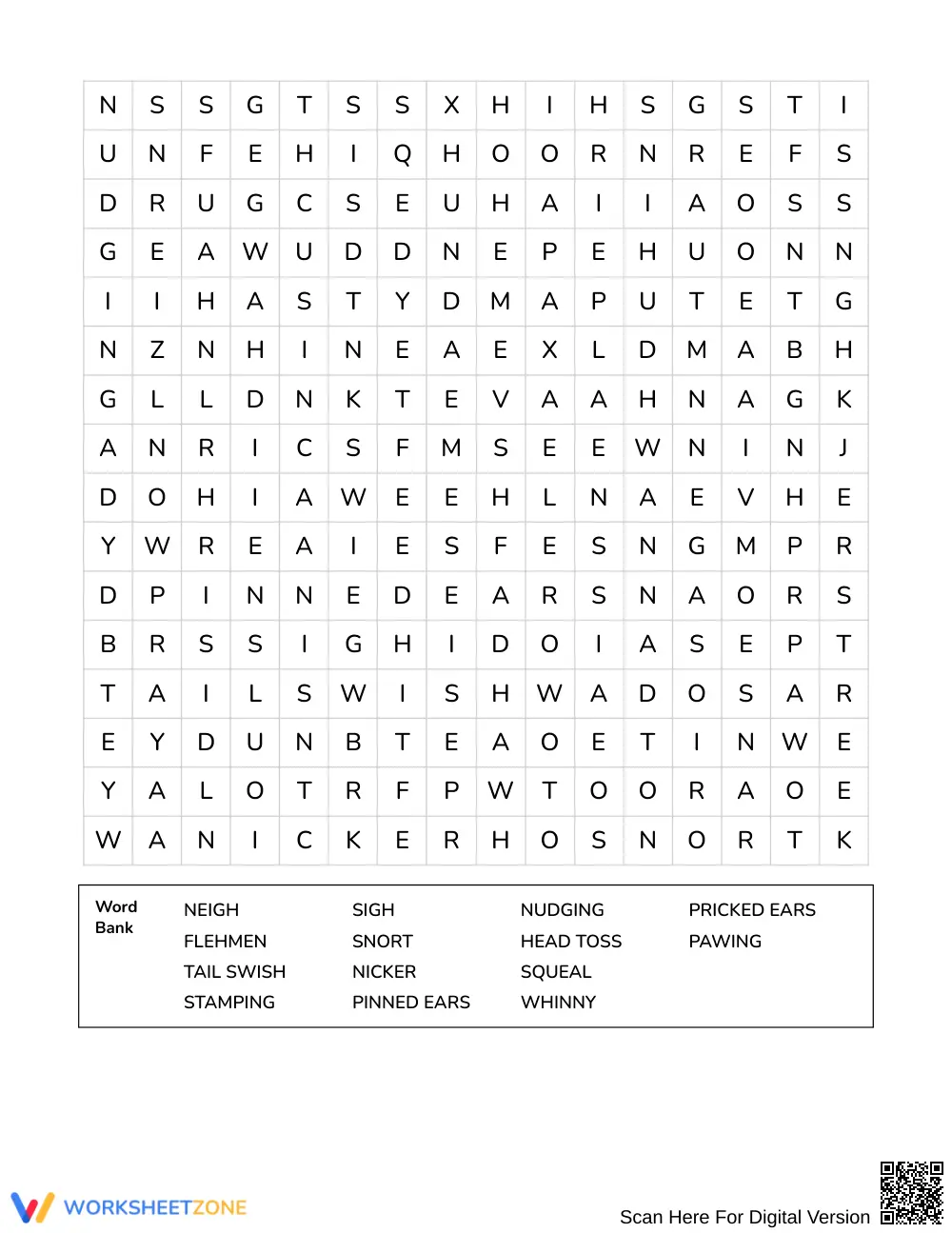
Students explore the world of horse communication by locating fourteen vocabulary terms hidden in a 16 × 16 grid. This printable word search reinforces key equine vocalizations and body‑language cues while sharpening spelling and pattern‑recognition skills, all ready for immediate classroom use.
At a Glance
- Grade: Grades 4–5 · Subject: English Language Arts (ELA)
- Standard:
Not standards-assessed — vocabulary enrichment— students locate and define horse‑communication terms in a fun puzzle- Skill Focus: Horse communication vocabulary (vocalizations and body signals)
- Format: 3 printed pages of puzzle, 14 hidden words, answer key included, ready‑to‑print PDF
- Best For: Quick enrichment activity to boost vocabulary during language arts block
- Time: 10–15 minutes of focused practice
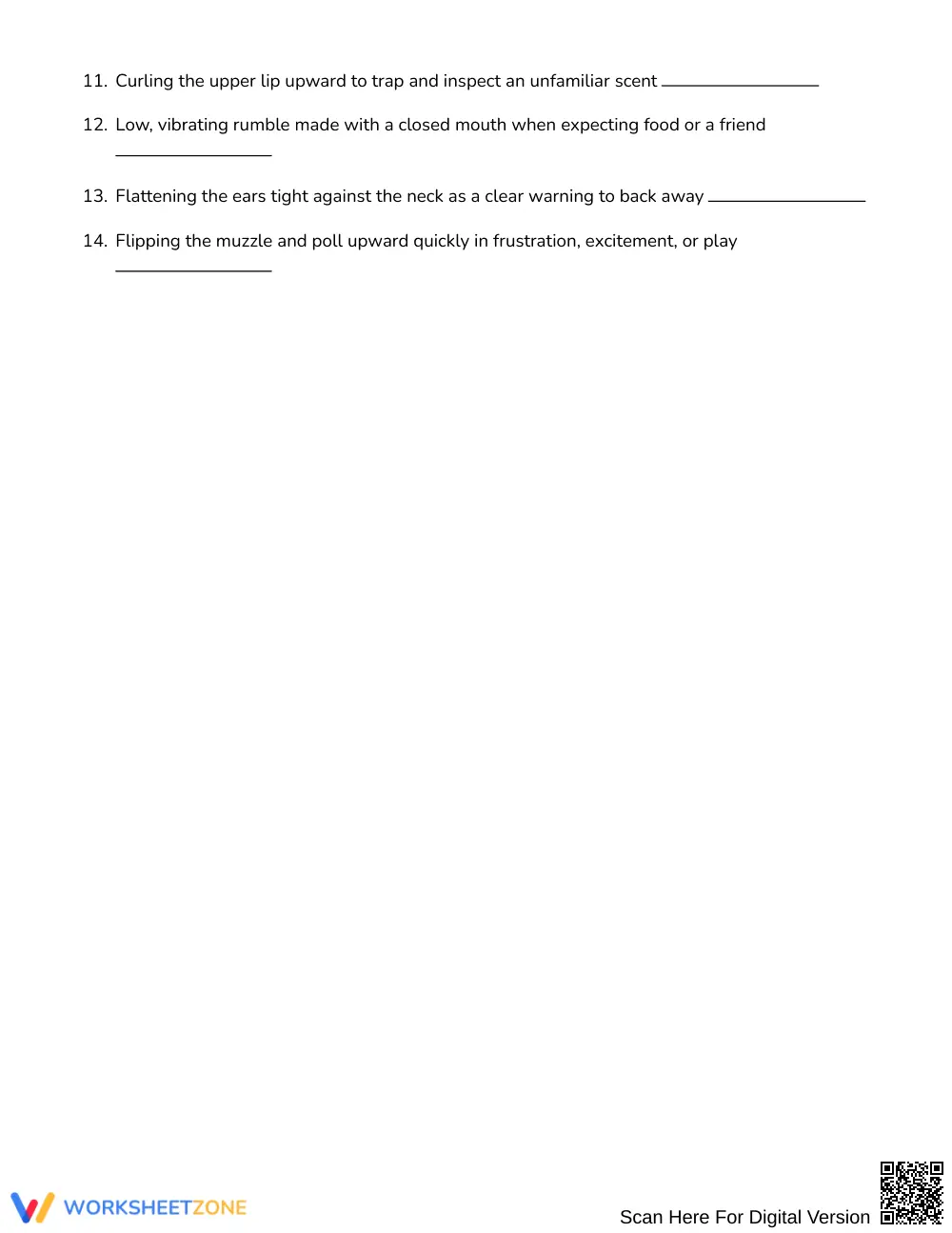
The activity consists of a single 16 × 16 word search grid printed across three pages. Fourteen equine‑communication terms run in the directions NE, E, SE, and S. A shuffled word bank and clear clues accompany the puzzle, and the back of the packet provides a complete answer key showing each word’s location.
- Print: Open the PDF and print the three‑page packet (under 1 minute).
- Distribute: Hand the sheets to students and give the clue list (30‑45 seconds).
- Review: Collect answer keys and discuss a few key terms (1‑2 minutes).
This resource is designed for vocabulary enrichment and is not aligned to any specific state or district standard. It simply offers engaging practice with horse‑communication terminology to broaden students’ language repertoire.
Before a unit on animal behavior, teachers can preview the word list, then launch the word search as a warm‑up activity. While students work, circulate to note which terms they recognize without help, providing immediate informal data.
During a reading of a nonfiction passage about horses, the search can serve as a post‑reading reinforcement. Have students check off each term they heard in the text; the speed of completion (10‑15 minutes) signals comprehension.
Designed for Grades 4–5 ELA learners, the puzzle supports visual and kinesthetic learners through the grid format. No differentiated levels are required, but teachers may pair the activity with a short video on horse body language or an anchor chart of equine vocalizations for added context.
Educational research shows that purposeful puzzle tasks foster incidental vocabulary acquisition when combined with direct content instruction (Fisher & Frey, 2014). By requiring fourth and fifth graders to locate and recognize specialized horse-communication terminology, this activity strengthens orthographic mapping, letter-pattern recall, and conceptual comprehension. Visual grid interactions demand focused scanning, prompting learners to analyze letter sequences rather than skimming past unfamiliar animal science terms. Repeated exposure to domain-specific words within structured print exercises builds robust lexical networks and aids retention across literacy lessons. Because the activity functions as an accessible, low-pressure exercise, students engage readily with complex terminology without feeling overwhelmed by heavy testing constraints. Instructors can use this enrichment worksheet to consolidate equine vocabulary, spark classroom discussions about animal communication systems, and track individual progress as children demonstrate mastery of fourteen core terms across subsequent reading and writing activities.


