































Printable Hero Costume Word Search | Grades 2–3 ELA

Paste this activity's link or code into your existing LMS (Google Classroom, Canvas, Teams, Schoology, Moodle, etc.).
Students can open and work on the activity right away, with no student login required.
You'll still be able to track student progress and results from your teacher account.
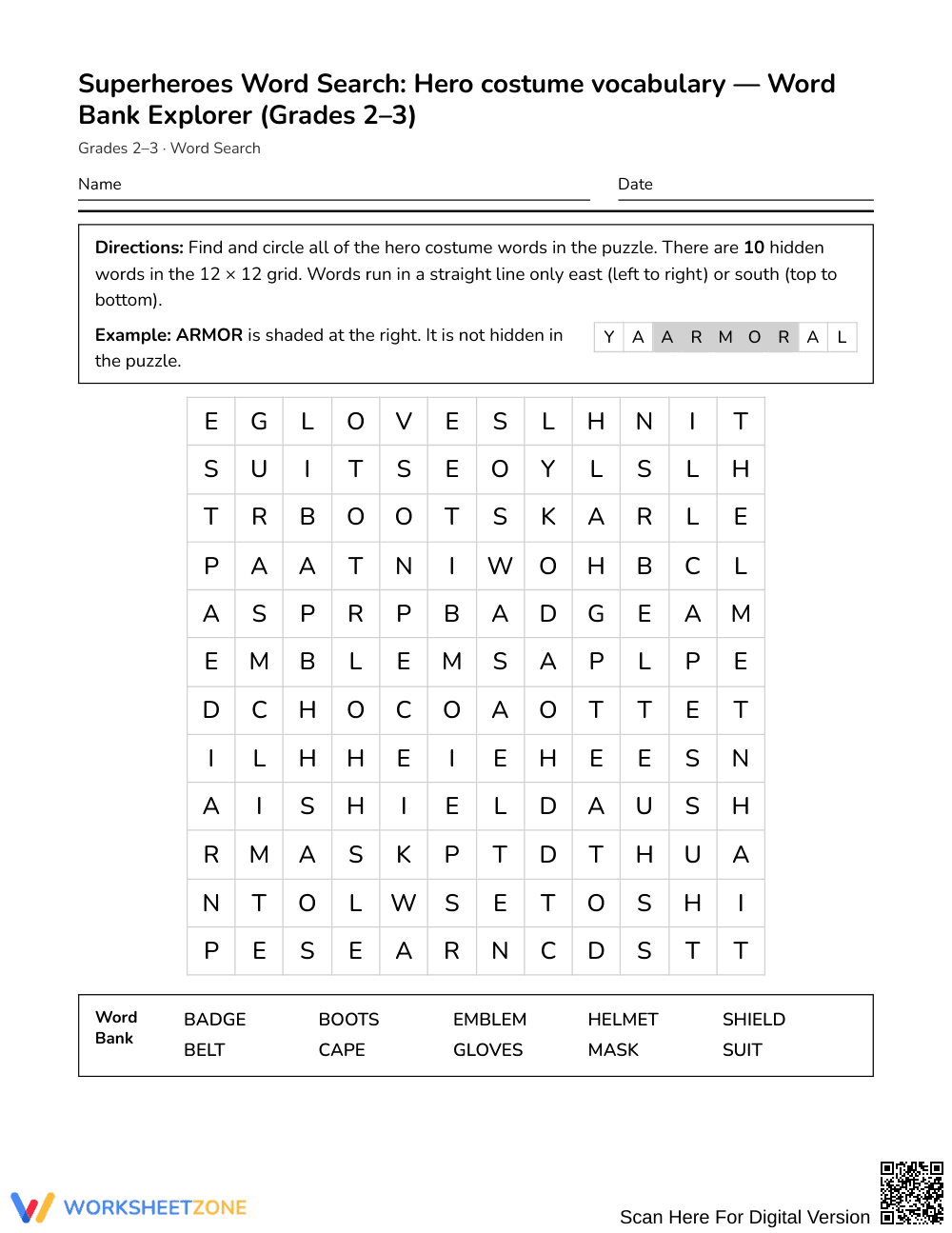
This hero costume vocabulary word search reinforces essential descriptive language for Grades 2–3 learners through focused word recognition. Students identify and track 10 themed superhero accessories, connecting functional costume terms to reading and writing contexts. The engaging puzzle format builds visual scanning habits, strengthens word familiarity, and supports early spelling confidence without unnecessary classroom frustration.
At a Glance
- Grade: Grades 2–3 elementary students · Subject: English Language Arts (ELA) vocabulary
- Standard: Not standards-assessed — vocabulary enrichment
- Skill Focus: Hero costume vocabulary identification and letter pattern tracking
- Format: 1 student page · 10 search words · 2-page complete answer key included · PDF document
- Best For: Independent vocabulary practice, literacy centers, and fast finishers
- Time: 15–20 total minutes
What's Inside
This 1-page vocabulary activity features a clean 12 by 12 letter grid containing 10 target words associated with superhero outfits: BADGE, BELT, BOOTS, CAPE, EMBLEM, GLOVES, HELMET, MASK, SHIELD, and SUIT. An alphabetical word bank guides student searching and reinforces alphabetizing skills. The resource also provides a 2-page answer key showing exact letter coordinates and highlighted placements to ensure quick, reliable self-checking.
Puzzle Mechanics and Structure
Designed intentionally for early elementary solvers, the puzzle operates on accessible, developmentally appropriate mechanics:
- Grid Configuration: A focused 12 by 12 letter grid keeps letter tracking manageable without overwhelming young eyes.
- Word Orientations: Words run exclusively in two accessible directions—East (left-to-right across) and South (top-to-bottom down)—eliminating confusing backward or diagonal placements.
- Alphabetical Word Bank: All 10 vocabulary terms appear in clear alphabetical order, allowing students to cross off items methodically as they locate each term.
Standards Alignment
This activity provides targeted vocabulary enrichment and is not aligned to a specific grade-level standard. It supports foundational literacy by strengthening orthographic awareness, spelling recognition, and thematic word knowledge across primary English Language Arts units.
How to Use It
Deploy this activity during independent literacy rotations after introducing character traits and costume design, or use it as an engaging warm-up before a superhero narrative writing lesson. While students work, circulate to observe visual tracking habits and letter-by-letter scanning techniques, noting which learners benefit from holding a ruler beneath each row. Students typically finish the puzzle in 15 to 20 minutes.
Who It's For
This word search is crafted for Grades 2–3 students who are expanding their thematic vocabulary and visual discrimination skills. It offers low-stress support for emerging readers and English learners through predictable East and South word orientations. Pair this printable puzzle with an anchor chart detailing superhero gear or a descriptive character-building writing prompt.
Fisher & Frey (2014) emphasize that purposeful word exposure across interactive formats solidifies lexical acquisition and contextual familiarity for elementary learners. While this superhero costume vocabulary word search serves as supplemental vocabulary enrichment rather than a standards-assessed test preparation measure, it reinforces essential early literacy competencies. Locating targeted terms such as emblem, shield, and helmet inside an organized 12 by 12 matrix trains visual scanning, orthographic memory, and letter sequence retention. The predictable layout ensures that developing second and third graders engage with precise attire terms without encountering frustration from complex reverse angles. Incorporating structured word puzzles into balanced literacy instruction provides meaningful repetition that bridges isolated spelling practice and applied reading comprehension. As students identify, pronounce, and verify each thematic word against the alphabetical bank, they construct enduring mental models that enrich future descriptive writing projects.


