































Printable Garden Ecology Word Search | Grades 4–5 ELA

Paste this activity's link or code into your existing LMS (Google Classroom, Canvas, Teams, Schoology, Moodle, etc.).
Students can open and work on the activity right away, with no student login required.
You'll still be able to track student progress and results from your teacher account.
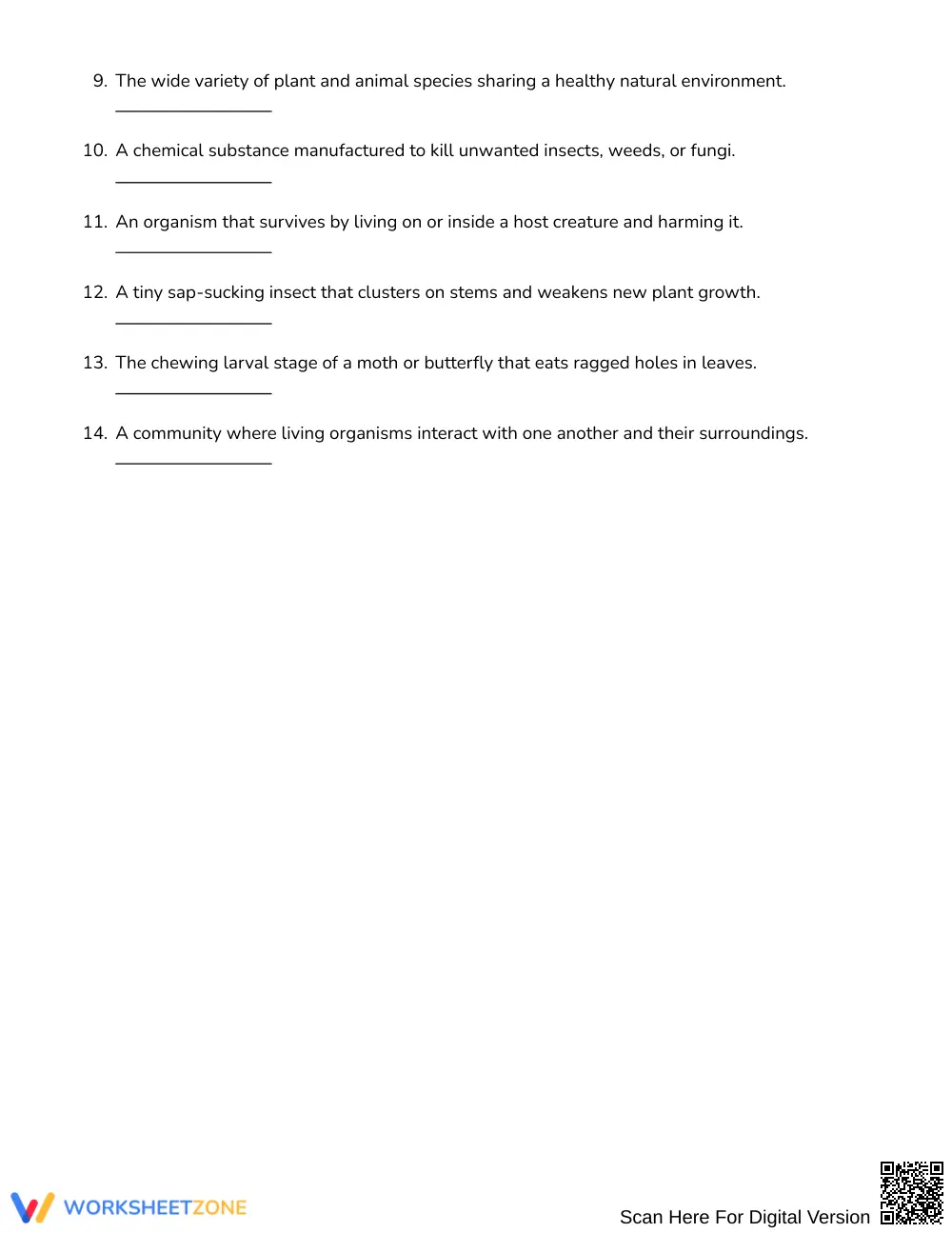
This Grades 4–5 vocabulary word search strengthens ecological literacy through clue detective practice. Students read scientific clues describing garden pests, decomposers, and pollinators to identify 14 target terms before locating them in a grid. The activity builds life science comprehension and orthographic word recognition in an engaging, self-directed format.
At a Glance
- Grade: Grades 4–5 · Subject: English Language Arts (ELA) Vocabulary
- Standard: Not standards-assessed — vocabulary enrichment through botanical science context
- Skill Focus: Garden pests, beneficial organisms, and ecological balance
- Format: 3 printable pages · 14 hidden vocabulary words · Full answer key included · PDF document
- Best For: Independent practice, morning work, and science-integrated vocabulary enrichment
- Time: 20–30 minutes of focused student work
What's Inside
The 3-page printable activity features a full-page puzzle grid paired with detailed clue prompts, a shuffled word bank, and an answer key spanning 3 pages. Students decode 14 domain-specific vocabulary words by reading informative definitions of insects, agricultural pests, and ecosystem processes. A complete answer key highlights exact word placements for quick verification.
Puzzle Mechanics and Structure
This vocabulary activity challenges learners with a 16 by 16 letter grid where words run in four directional paths: northeast, east, southeast, and south. Rather than scanning a simple list, students reference a shuffled word bank and analyze functional science clues, requiring active semantic retrieval before searching the letter matrix.
Standards Alignment
This resource serves as targeted vocabulary enrichment and is not aligned to an assessed state standard. It provides cross-curricular support for upper elementary English Language Arts and life science units by deepening student comprehension of environmental ecosystems, habitat biodiversity, and pest management terminology.
How to Use It
Deploy this activity during independent reading rotations or as a science-integrated vocabulary center after direct instruction on garden ecosystems. During the task, observe whether students read the clues to determine words or scan the grid directly; prompting them to explain each clue supports formative assessment. Most students finish in 20 to 30 minutes.
Who It's For
This word search is designed for Grades 4–5 students developing academic science vocabulary. It provides natural scaffolding through descriptive clues for emerging readers, while early finishers benefit from spelling reinforcement. Pair this resource with an informational text passage on garden food webs or pollinator conservation.
Vocabulary acquisition requires active engagement with academic language across informational domains, reinforcing comprehension through repeated contextual encounters. According to Fisher & Frey (2014), intentional word study that connects definitions to authentic scientific systems strengthens long-term retrieval and reading stamina in upper elementary classrooms. This clue-based word search supports vocabulary mastery by asking learners in Grades 4–5 to decode descriptive definitions of garden pests, beneficial predators, and ecological relationships before locating each term in the puzzle grid. By combining conceptual definitions with orthographic search patterns, students develop dual cognitive pathways for domain-specific terminology such as biodiversity, pesticide, and nematode. This structured enrichment format reinforces cross-curricular literacy in English Language Arts while cementing vital life science concepts. Educators can readily evaluate student grasp of ecological vocabulary by reviewing clue-matching accuracy prior to grid completion, ensuring foundational fluency across essential environmental concepts.


