





























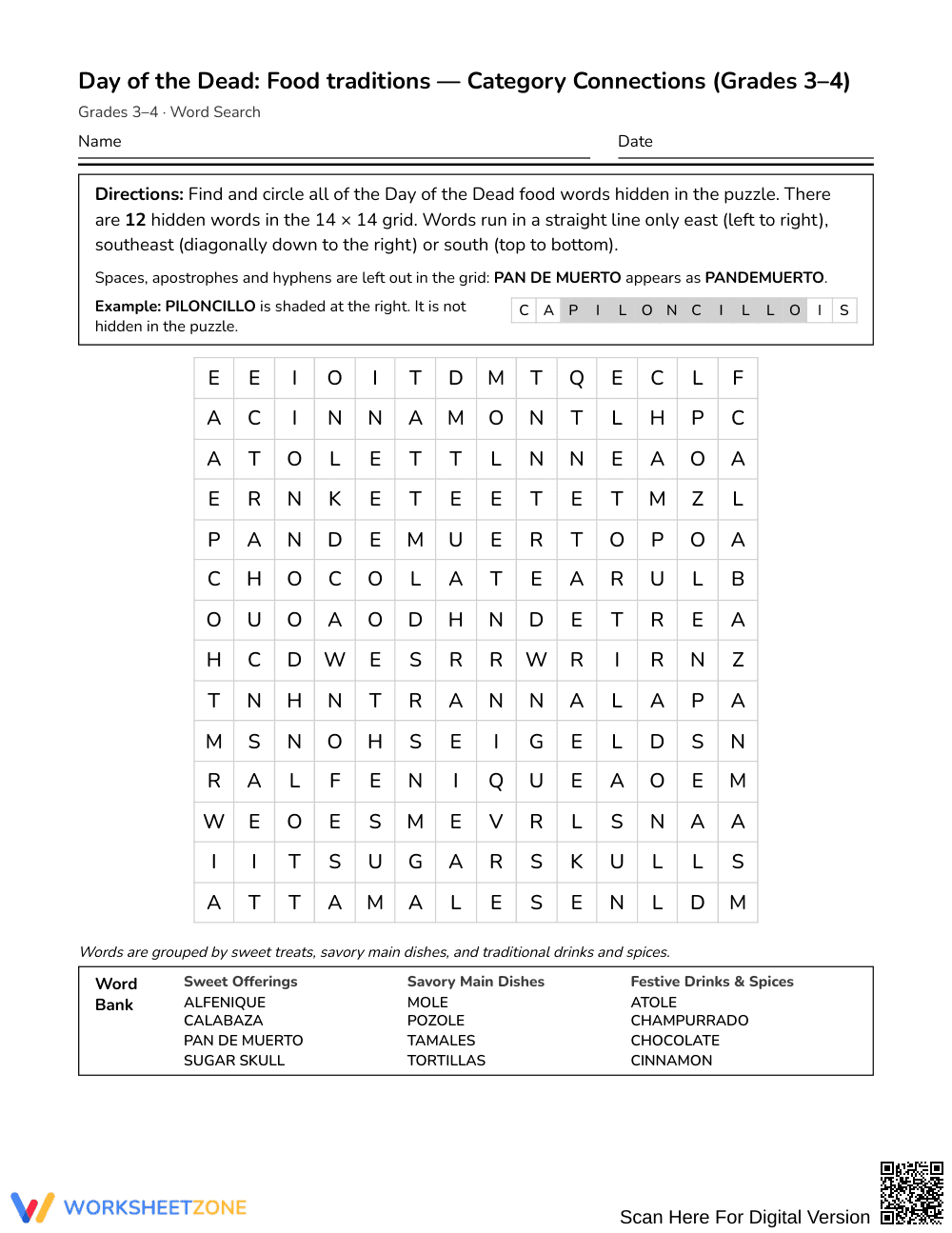


Printable Food Traditions Word Search | Grades 3–4 ELA

Paste this activity's link or code into your existing LMS (Google Classroom, Canvas, Teams, Schoology, Moodle, etc.).
Students can open and work on the activity right away, with no student login required.
You'll still be able to track student progress and results from your teacher account.
This printable word search helps Grades 3–4 learners explore Day of the Dead food traditions while reinforcing vocabulary through active discovery. Students locate twelve culturally rich terms, strengthening spelling, recognition, and cultural awareness in a single, engaging activity.
At a Glance
- Grade: Grades 3–4 · Subject: ELA
- Standard:
Not standards-assessed — vocabulary enrichment— students discover and label cultural food terms- Skill Focus: food traditions
- Format: 1 page · 12 words · Answer key included · PDF
- Best For: quick vocabulary enrichment activity
- Time: 5–10 minutes
What's Inside
One 14 × 14 grid filled with hidden words grouped into sweet treats, savory main dishes, and festive drinks & spices. A concise word bank lists each term; clues are provided for deeper understanding. An answer key on a separate page shows the completed grid.Zero-Prep Workflow
- Print: Open the PDF and print the single-page puzzle (under 30 seconds).
- Distribute: Hand the sheets to students; they can begin immediately (1 minute).
- Review: After completion, flip to the answer key for quick verification (2 minutes).
Standards Alignment
This activity is designed for vocabulary enrichment and is not aligned to any specific state or Common Core standard. It supports language development by exposing learners to authentic cultural terminology.How to Use It
- Before a lesson on Day of the Dead, use the search as a warm‑up to activate prior knowledge of holiday foods.
- During a reading unit, pause for the activity as a formative check; observe which words students find quickly to gauge familiarity.
Who It's For
Designed for Grades 3–4 ELA classes, this word search works well for diverse learners, including English language learners who benefit from visual word exposure. Pair it with a Day of the Dead cultural anchor chart or a short video about Mexican food traditions for richer context.Educational research indicates that structured, contextual word puzzles strengthen lexical acquisition and promote cross-cultural knowledge among elementary learners (RAND AIRS 2024). When children search for domain-specific terminology within an organized letter grid, visual scanning combines with phonetic decoding to anchor unfamiliar vocabulary into long-term memory. By embedding twelve authentic food traditions into a focused exercise, this printable sheet invites students to explore heritage customs while developing orthographic awareness and reading stamina. Teachers can use this targeted practice to foster lively classroom conversations about global celebrations, family meals, and seasonal customs without requiring extensive instructional prep. Furthermore, pairing purposeful printables with group discussions helps emerging bilingual students build confidence with specialized terms. Implement this printable worksheet to enrich your weekly literacy routine, reinforce key cultural concepts, and sustain meaningful pupil engagement during independent seatwork.


