





























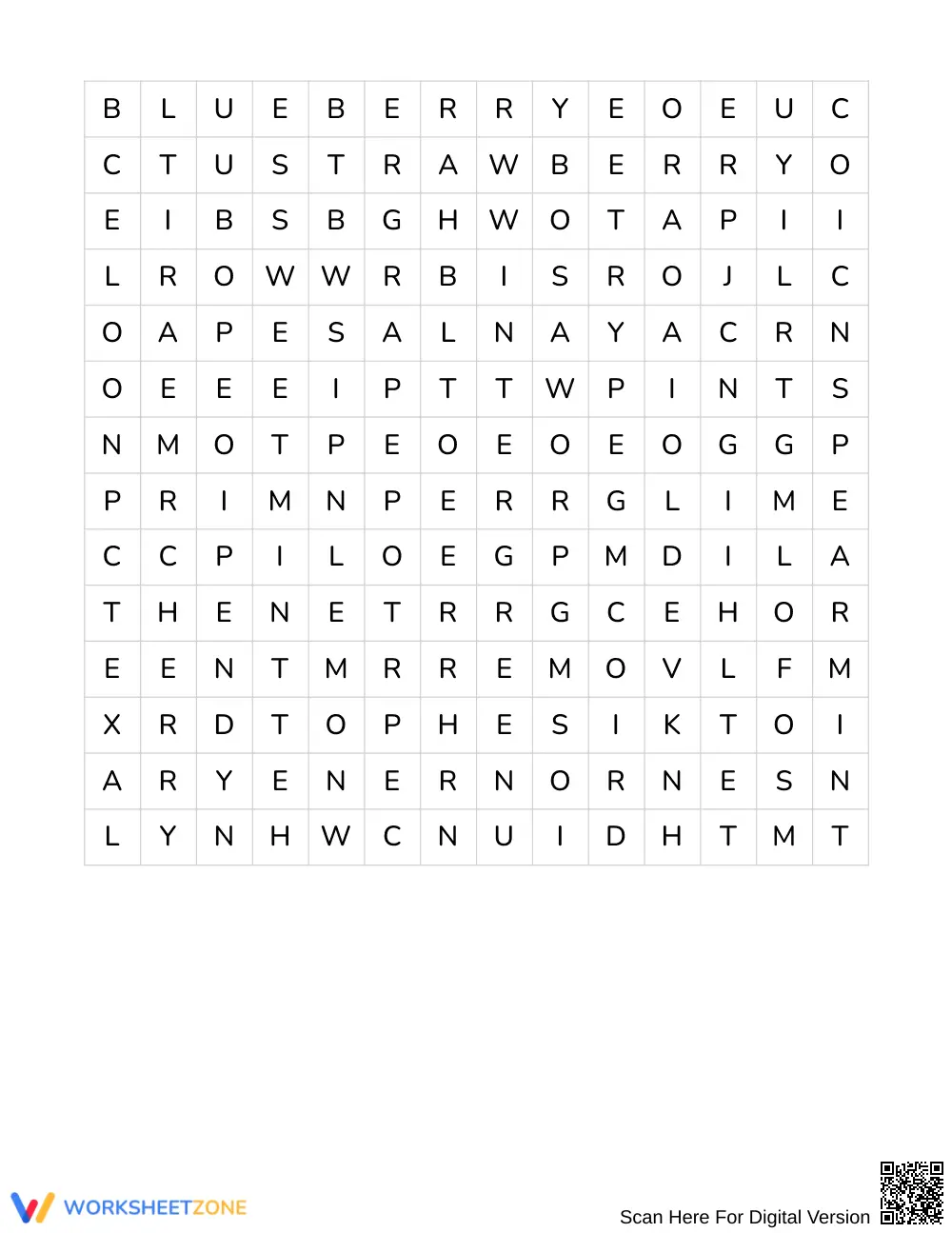


Printable Candy Flavors Word Search | Grades 3–4 ELA

Paste this activity's link or code into your existing LMS (Google Classroom, Canvas, Teams, Schoology, Moodle, etc.).
Students can open and work on the activity right away, with no student login required.
You'll still be able to track student progress and results from your teacher account.
This Grades 3–4 vocabulary word search strengthens word recognition and semantic categorization through engaging candy theme exploration. Students identify and organize 12 distinct flavor terms into fruit and mint groups, reinforcing spelling patterns and descriptive vocabulary. The activity delivers targeted vocabulary review while promoting pattern recognition and sustained attention in upper-elementary classrooms.
At a Glance
- Grade: Grades 3–4 · Subject: ELA
- Standard: Not standards-assessed — vocabulary enrichment
- Skill Focus: Mint and fruit flavors
- Format: 2 pages · 12 words · Answer key included · PDF
- Best For: Vocabulary review and fast-finisher practice
- Time: 15–20 minutes
What's Inside
This 2-page printable activity features a clean, student-friendly layout centered on culinary flavor terms. The resource provides 12 hidden words divided clearly into two thematic categories: Fruit Flavors and Mint Flavors. Accompanied by full descriptive hints and an easy-to-read answer key showing precise coordinate paths, this puzzle gives educators an organized, self-contained vocabulary activity.
Puzzle Structure
This vocabulary activity challenges learners to locate target vocabulary within an organized puzzle environment:
- Grid Configuration: The puzzle is arranged on a balanced 14 x 14 letter grid designed specifically for Grades 3–4 reading levels.
- Word Orientations: Words run in three clear directions: East (horizontal left-to-right), Southeast (diagonal downward), and South (vertical downward), eliminating reverse-spelling frustration.
- Categorized Bank: Learners search for 8 fruit flavors (including blueberry, strawberry, and watermelon) and 4 mint varieties (such as peppermint, spearmint, and wintergreen).
Standards Alignment
This activity serves strictly as vocabulary enrichment and is not aligned to a formal standard. It provides supplementary semantic practice that reinforces letter-sequence awareness, descriptive associations, and categorization skills without standard-specific rubric scoring.
How to Use It
Introduce this word search after direct instruction during an ELA descriptive writing unit or sensory word study. It serves effectively as an independent literacy center station or as a productive choice for early finishers. During completion, circulate to observe scanning strategies, noting whether students cross-reference the category lists or scan letter by letter to monitor orthographic awareness. Most learners complete the activity in 15 to 20 minutes.
Who It's For
This puzzle is designed for Grades 3–4 students working on vocabulary acquisition, spelling automaticity, and thematic sorting. It offers accessible practice for developing readers and English language learners who benefit from categorizing concrete noun modifiers. Pair this puzzle with a sensory adjective anchor chart or descriptive food-writing lesson to connect flavor vocabulary directly to expressive student writing.
Research in elementary literacy acquisition demonstrates that purposeful orthographic search routines and semantic categorization reinforce lexical storage in the developing brain. According to Fisher & Frey (2014), intentional exposure to domain-specific words organized within thematic categories strongly supports long-term vocabulary retention and conceptual understanding for intermediate elementary students. This Grades 3–4 candy-themed word search delivers structured vocabulary enrichment across 12 distinct flavor terms, guiding learners to recognize letter patterns, isolate familiar roots, and categorize sensory descriptors into fruit and mint groups. Although this material is not standards-assessed, the activity reinforces visual scanning stamina, spelling accuracy, and word-meaning associations through accessible independent practice. By connecting structured word banks to descriptive context clues, learners construct durable mental models of sensory language that transfer directly into independent reading fluency, expressive vocabulary usage, and descriptive narrative writing across diverse upper-elementary classroom learning environments.


