































Printable Backyard Birds Word Search | Grades 2–3 Science

Paste this activity's link or code into your existing LMS (Google Classroom, Canvas, Teams, Schoology, Moodle, etc.).
Students can open and work on the activity right away, with no student login required.
You'll still be able to track student progress and results from your teacher account.
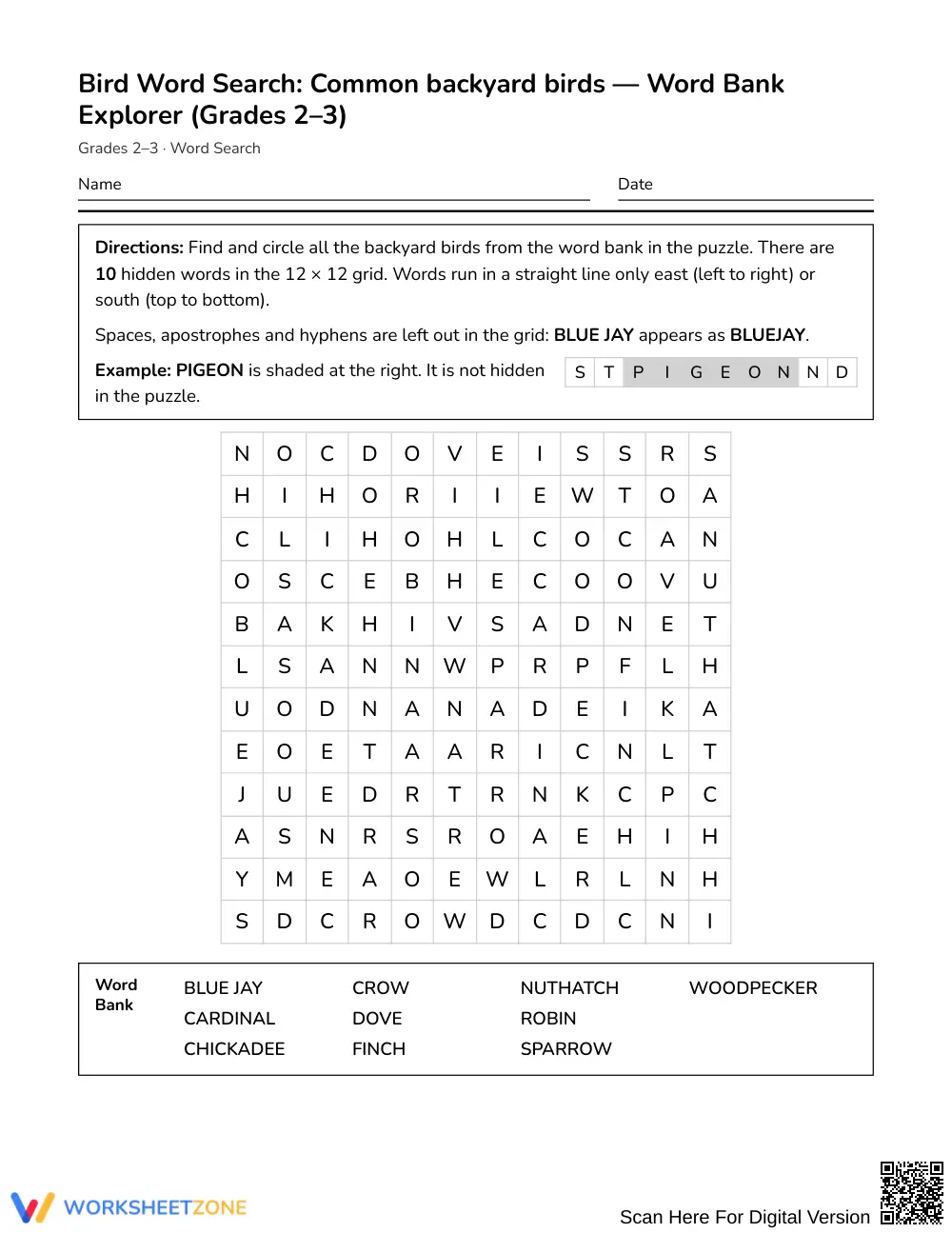
This printable science word search reinforces animal classification vocabulary by helping elementary learners recognize ten common backyard birds. Students build orthographic awareness and domain-specific terminology as they locate familiar avian species, supporting foundational life science concepts through an accessible, high-interest puzzle format designed specifically for primary classrooms.
At a Glance
- Grade: Grades 2–3 · Subject: Science
- Standard: Not standards-assessed — vocabulary enrichment
- Skill Focus: Common backyard birds
- Format: 1 page · 10 words · Answer key included · PDF
- Best For: Science warm-ups and early finishers
- Time: 15–20 minutes
What's Inside
The activity sheet contains a compact word puzzle on one student-facing page alongside an alphabetical bank of ten avian species. Students locate names ranging from common songbirds to woodland foragers. A two-page answer key highlights all letter paths clearly, allowing for rapid independent verification, peer grading, or swift teacher evaluation without supplemental preparation.
Puzzle Mechanics
The puzzle features a structured 12 by 12 letter grid tailored to early elementary visual scanning skills. Target vocabulary words run in only two directions: East (horizontally from left to right) and South (vertically from top to bottom), avoiding backwards or diagonal placements that cause frustration. Learners reference the alphabetical word bank containing ten specific bird names to track their progress systematically across the grid.
Standards Alignment
This resource serves as targeted vocabulary enrichment within life science and animal study units. Because it focuses strictly on orthographic word recognition and spelling familiarity with regional wildlife, it is not aligned to a formal performance expectation standard.
How to Use It
Introduce this word search as an engaging introductory hook before direct instruction on bird adaptations, or assign it immediately following an outdoor nature walk to solidify bird identification terms. During completion, circulate to observe visual tracking habits and letter sequence recognition. Plan for approximately 15 to 20 minutes of quiet, focused student engagement.
Who It's For
This puzzle is structured for students in Grades 2–3 studying life science units on animal classification and habitats. For developing readers needing additional support, encourage partner pairing or highlighting starting letters. Pair this activity naturally with a classroom bird field guide or a visual anchor chart displaying full-color photographs of each featured species.
Explicit vocabulary exposure within introductory life science units builds essential background knowledge that strengthens reading comprehension across informational texts. According to Fisher & Frey (2014), intentional word exposure embedded in structured, low-stakes activities helps primary learners anchor domain-specific concepts in memory before encountering complex expository passages. By searching for ten common backyard bird species across an accessible grid, students connect spoken wildlife terms with their written representations. This single-page word search functions as targeted vocabulary enrichment, providing focused orthographic practice that enhances animal classification units without requiring standard-specific assessment scaffolding or formal grading rubrics.


