


























Views
Downloads

Printable Prefix Worksheet | Grade 2 ELA Practice
Paste this activity's link or code into your existing LMS (Google Classroom, Canvas, Teams, Schoology, Moodle, etc.).
Students can open and work on the activity right away, with no student login required.
You'll still be able to track student progress and results from your teacher account.
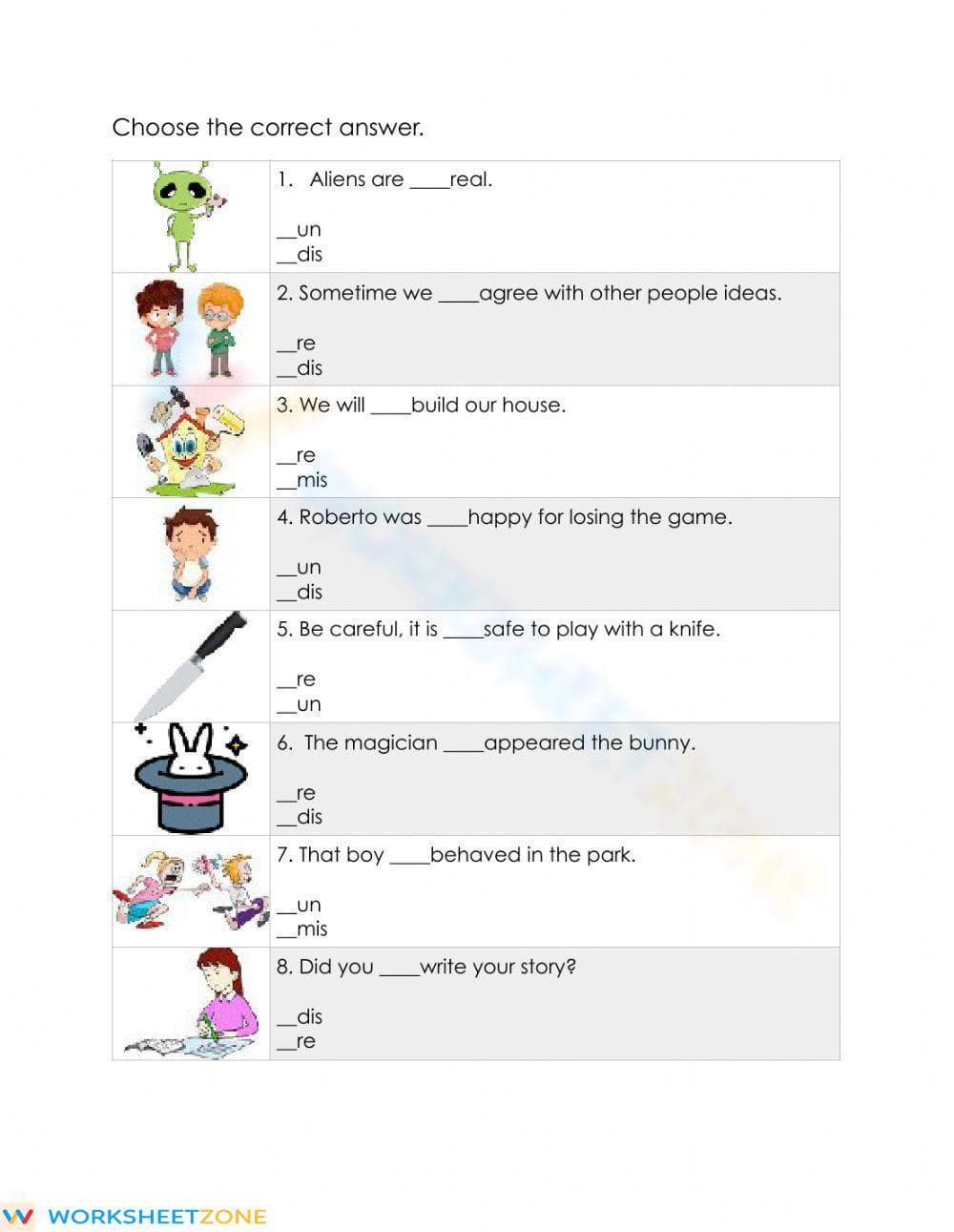
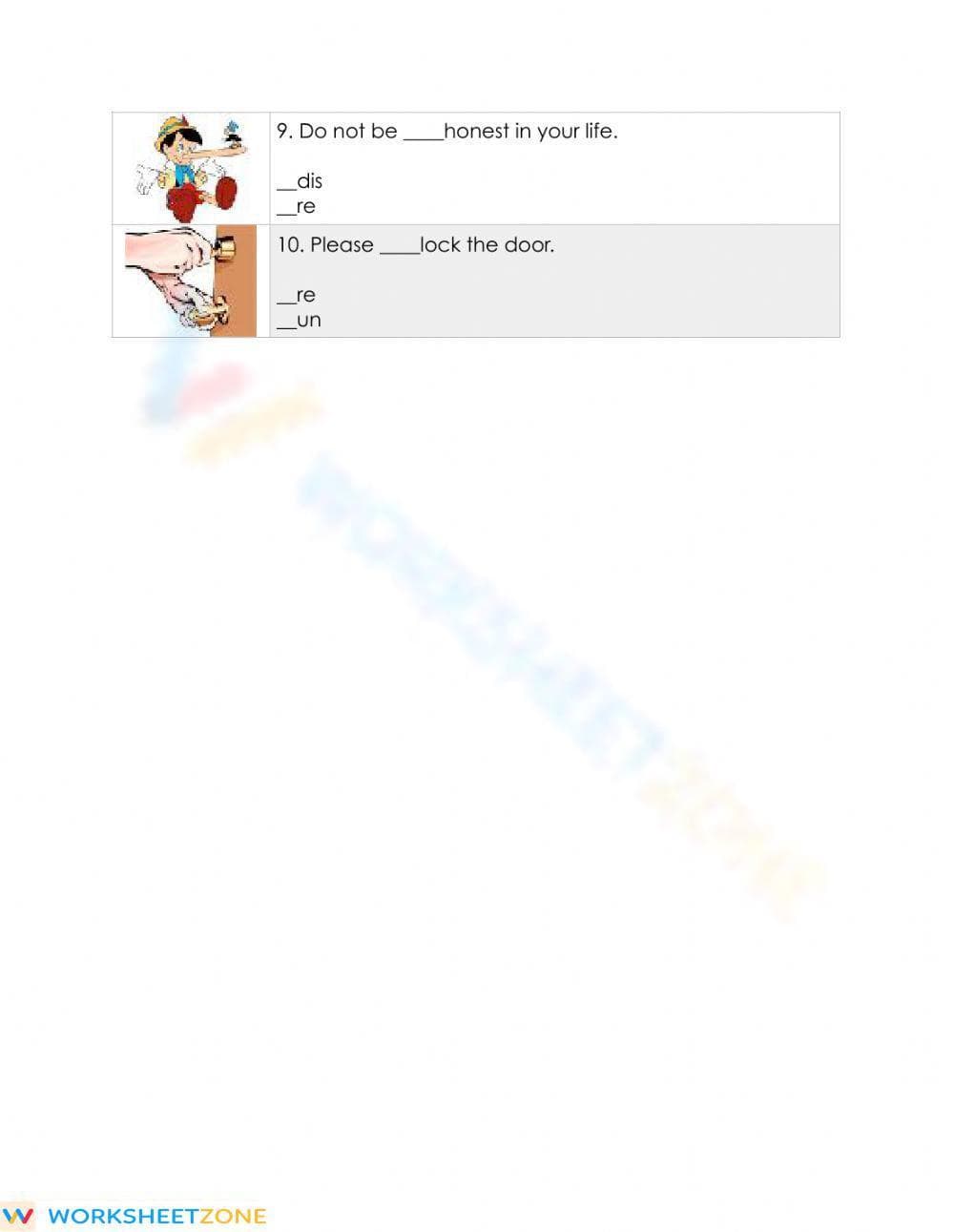
This Grade 2 ELA worksheet provides essential, focused practice on identifying and using common prefixes. Students work through a series of structured problems to build foundational fluency in decoding multi-syllabic words. The printable PDF format allows teachers to assign it for independent practice, homework, or formative assessment with zero additional prep.
At a Glance
- Grade: 2 · Subject: English Language Arts (ELA)
- Standard:
CCSS.ELA-LITERACY.L.2.4.B— Use a known affix as a clue to the meaning of a new word.- Skill Focus: Prefixes (un-, re-, pre-), base words, and word meaning
- Format: 2 pages · 16 problems · Answer key included · PDF
- Best For: Independent practice, exit tickets, or homework
- Time: 15–20 minutes
What's Inside
This two-page resource contains 16 total problems that guide students through prefix identification and application. The first page includes a helpful reference box with definitions and examples for the prefixes 'un-', 're-', and 'pre-'. The second page contains the complete answer key with clear solutions for every problem, enabling quick grading or student self-correction. The worksheet is delivered as a downloadable PDF file.
Skill Progression
The worksheet follows a gradual release model to build student confidence and independence.
- Guided practice (10 problems): Students begin by circling prefixes in provided sentences and writing the corresponding base word, directly reinforcing the concept with clear examples.
- Supported practice (3 problems): Students then apply their understanding to complete words within sentences, requiring them to select the correct prefix based on context.
- Independent practice (3 problems): Finally, students match prefixes to base words to form new words, demonstrating mastery without scaffolds.
Standards Alignment
This resource is directly aligned to a key Grade 2 language standard.
Primary Standard: CCSS.ELA-LITERACY.L.2.4.B — Determine the meaning of a new word formed when a known prefix is added to a known word. This worksheet provides multiple opportunities for students to practice this specific morphological skill.
Both standard codes can be copied directly into lesson plans, IEP goals, or district curriculum mapping tools.
How to Use It
Use this worksheet as a 15-minute independent practice activity after a direct instruction lesson on prefixes. It is also an effective exit ticket to quickly gauge student understanding; sort completed sheets to identify which students grasp the concept and which may need small-group reteaching. The estimated completion time for most second-grade students is between 15 and 20 minutes, making it a versatile tool for various classroom moments.
Who It's For
This worksheet is designed for on-level Grade 2 students. The initial guided practice section provides scaffolding that makes the skill accessible for learners who are approaching grade level, while the independent matching tasks offer a challenge for those who are ready for an extension. It pairs well with an anchor chart of common prefixes.
Foundational skills in morphology, like understanding prefixes per CCSS.ELA-LITERACY.L.2.4.B, are critical for reading proficiency. This standard requires students to use a prefix as a clue to a new word's meaning, moving them toward complex word analysis. Research by Fisher & Frey (2014) supports the worksheet's gradual release design, which transitions students from guided to independent practice. This structured approach ensures students build automaticity across the 16 problems, a key factor in improving reading comprehension. By offering targeted, standards-aligned practice, this resource helps educators implement research-backed strategies to strengthen students' decoding abilities while saving valuable planning time.


