


























Views
Plays


Kindergarten Phonics & Sight Words | Printable Worksheet
Paste this activity's link or code into your existing LMS (Google Classroom, Canvas, Teams, Schoology, Moodle, etc.).
Students can open and work on the activity right away, with no student login required.
You'll still be able to track student progress and results from your teacher account.
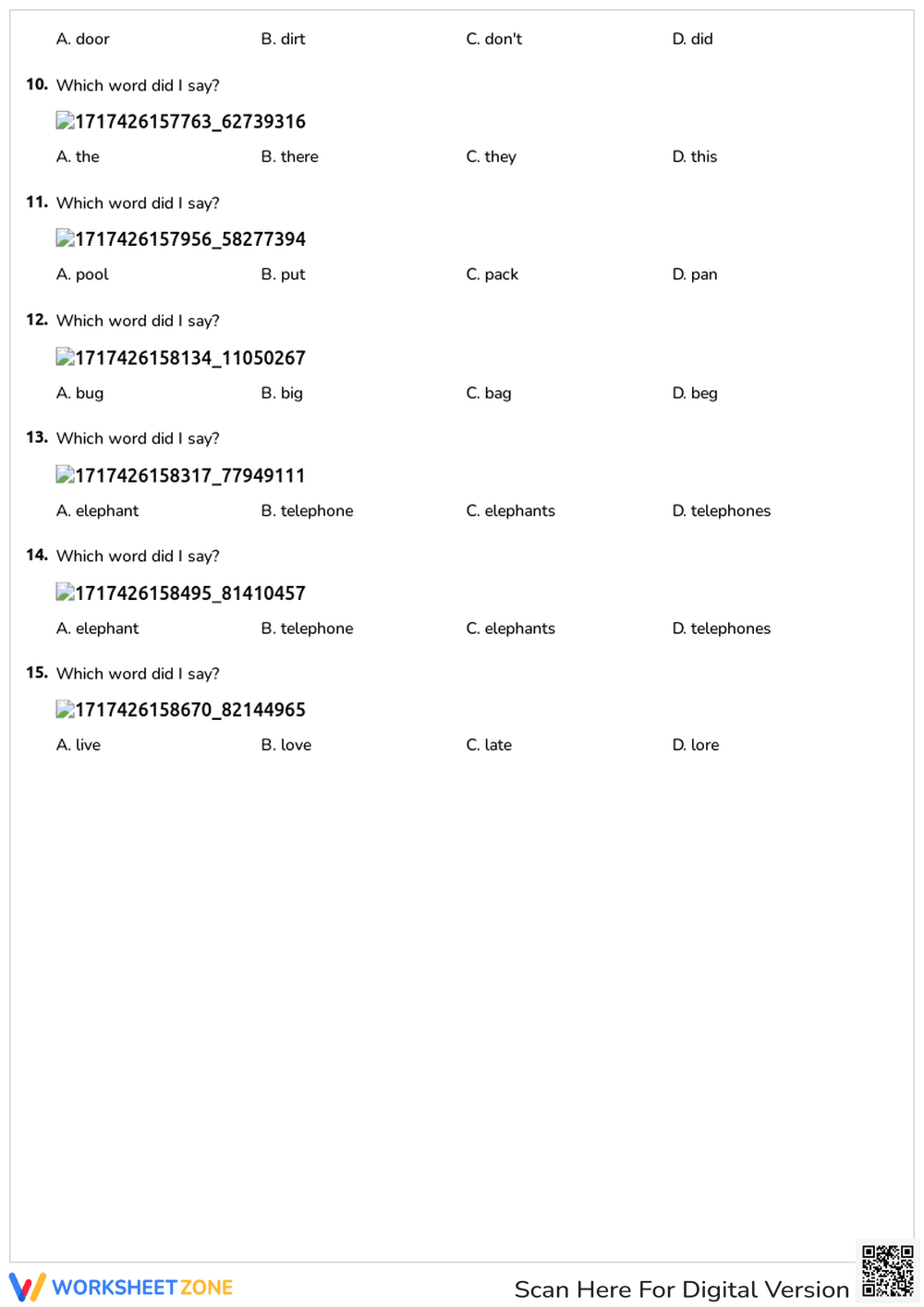
This Kindergarten and Grade 1 phonics worksheet helps early readers master consonant blends and high-frequency sight words through auditory recognition tasks. Students identify specific sounds like "th" and "sk" while distinguishing between similar-looking words. It provides immediate practice to bridge the gap between phonemic awareness and fluent reading.
At a Glance
- Grade: Kindergarten · Subject: ELA
- Standard:
CCSS.ELA-LITERACY.RF.K.3— Know and apply grade-level phonics and word analysis skills in decoding words- Skill Focus: Consonant Blends & Sight Words
- Format: 2 pages · 15 problems · Answer key included · PDF
- Best For: Formative assessment or morning work
- Time: 10–15 minutes
The resource contains 15 multiple-choice questions spread across two clean, distraction-free pages. Each task requires students to select the correct blend or word from a set of four options. The layout includes clear numbering and ample white space, making it accessible for young learners who are still developing fine motor skills and visual tracking.
Zero-Prep Workflow
- Print: Generate the two-page PDF and print copies for your class in under 30 seconds.
- Distribute: Hand out the sheets during your phonics block or as a transition activity requiring minimal instruction.
- Review: Use the included answer key to review responses or have students self-correct during a whole-group check.
Total teacher preparation time is under 2 minutes, making this an ideal solution for sub plans or unexpected schedule changes.
Standards Alignment
This worksheet is primarily aligned with `CCSS.ELA-LITERACY.RF.K.3`, focusing on phonics and word recognition. It also supports `CCSS.ELA-LITERACY.RF.1.3` by challenging students to decode regularly spelled one-syllable words and recognize common irregular sight words. Both standard codes can be copied directly into lesson plans, IEP goals, or district curriculum mapping tools.
How to Use It
Use this as a formative assessment after a direct instruction lesson on digraphs and blends to gauge student understanding. Alternatively, it functions well as a quiet center activity where a teacher or aide reads the prompt "Which word did I say?" to a small group. Completion typically takes 10 to 15 minutes depending on the student's reading level.
Who It's For
This resource is ideal for Kindergarten students beginning to blend sounds and Grade 1 students needing reinforcement of high-frequency words. It serves as an excellent tool for English Language Learners (ELLs) practicing phonetic distinctions. Pair this worksheet with a set of magnetic letters or a sight word anchor chart for a comprehensive literacy experience.
Research from the NAEP highlights that early mastery of phonemic awareness and the ability to decode consonant blends are the strongest predictors of long-term reading comprehension success. This worksheet targets CCSS.ELA-LITERACY.RF.K.3 by requiring students to perform discrete word analysis, a skill that Fisher & Frey (2014) identify as critical for the gradual release of responsibility in literacy instruction. By isolating specific blends like "th" and "fr" alongside high-frequency sight words, the 15-task sequence provides the repetitive, structured exposure necessary for orthographic mapping. According to the RAND AIRS 2024 report, high-quality, focused practice materials significantly reduce the cognitive load on emerging readers, allowing them to transition from decoding to fluency more rapidly. This resource ensures that students build a stable foundation in phonics through clear, multiple-choice assessment, making it a reliable tool for tracking progress toward foundational literacy benchmarks in early childhood education.


