


























Views
Downloads

Grade 3 Reading Comprehension — Printable No-Prep Worksheet
Paste this activity's link or code into your existing LMS (Google Classroom, Canvas, Teams, Schoology, Moodle, etc.).
Students can open and work on the activity right away, with no student login required.
You'll still be able to track student progress and results from your teacher account.
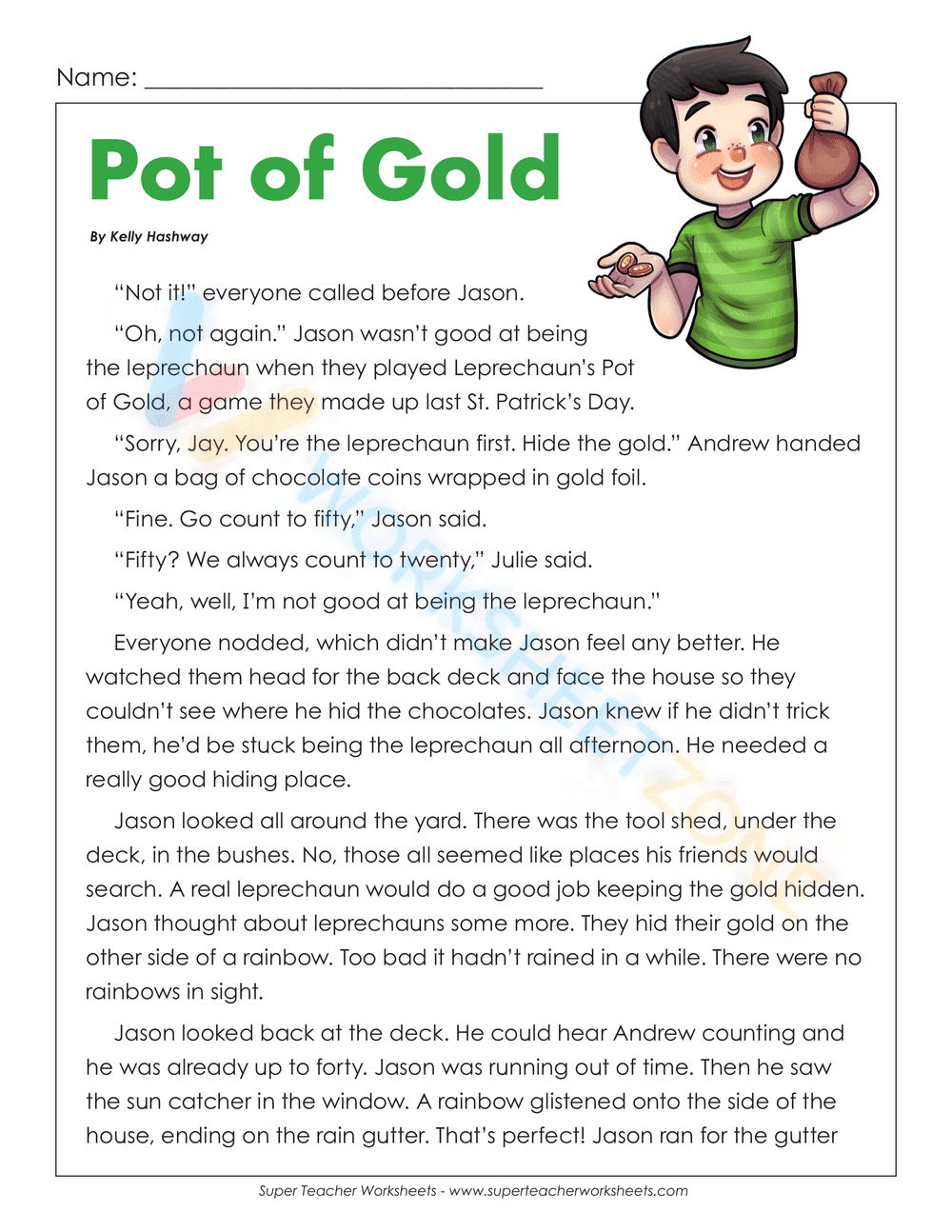
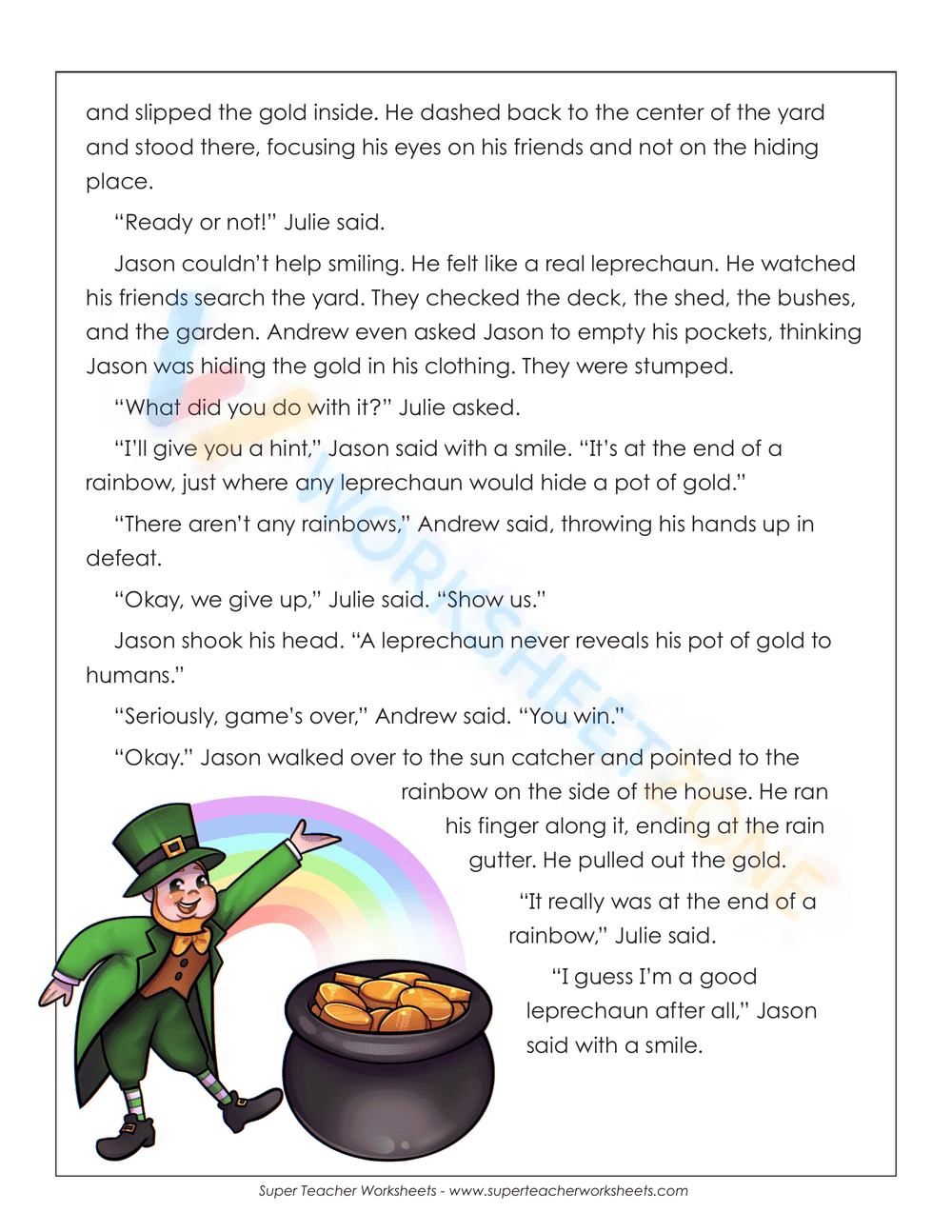
This Grade 3 reading comprehension packet builds essential literacy skills through an engaging St. Patrick's Day story. Students read a fictional passage titled "Pot of Gold" and complete a series of text-dependent questions, writing prompts, and vocabulary exercises to demonstrate their understanding and improve reading fluency.
At a Glance
- Grade: 3 · Subject: ELA
- Standard:
CCSS.ELA-LITERACY.RL.3.1— Ask and answer questions using text evidence- Skill Focus: Reading Comprehension
- Format: 8 pages · 13 problems · Answer key included · PDF
- Best For: Independent practice and sub plans
- Time: 30–45 minutes
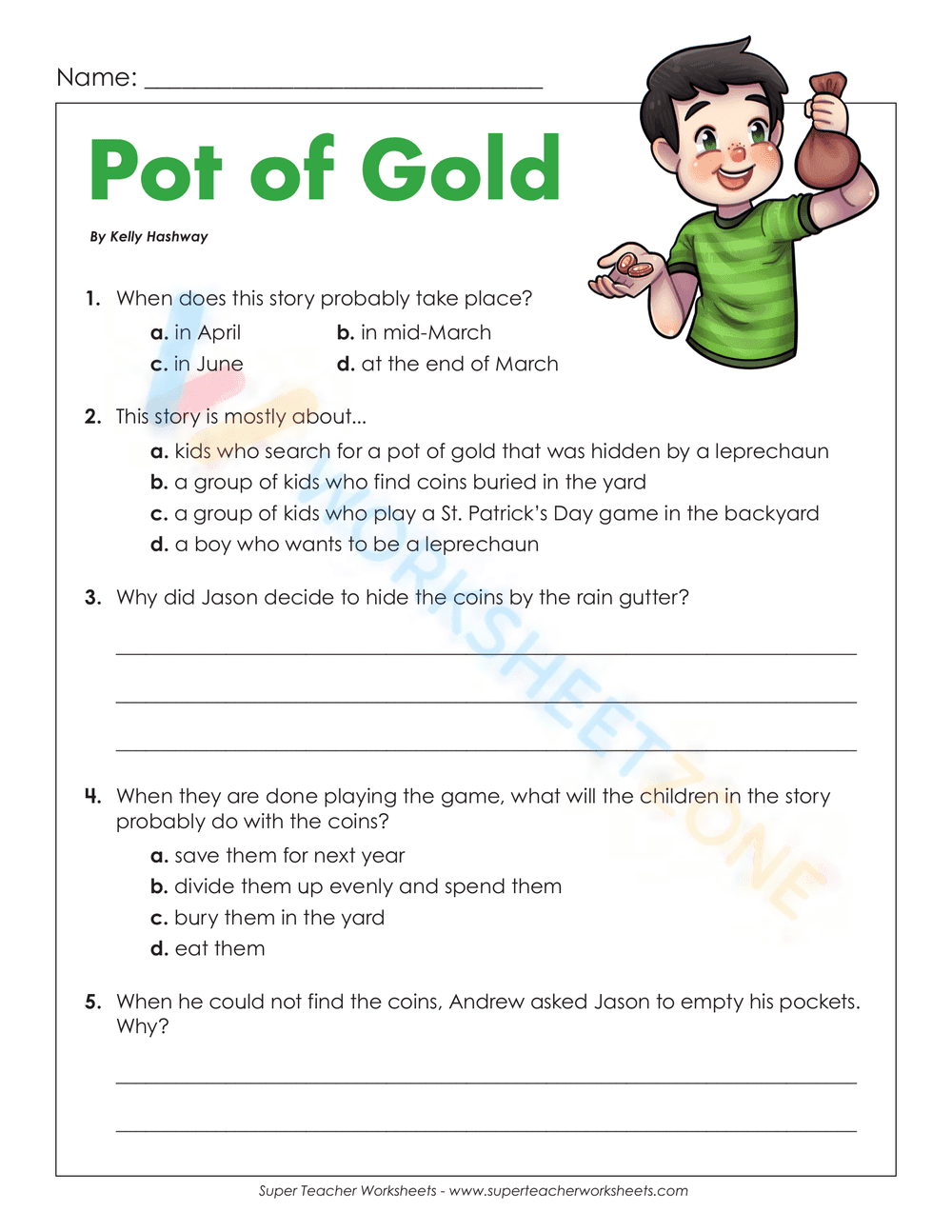
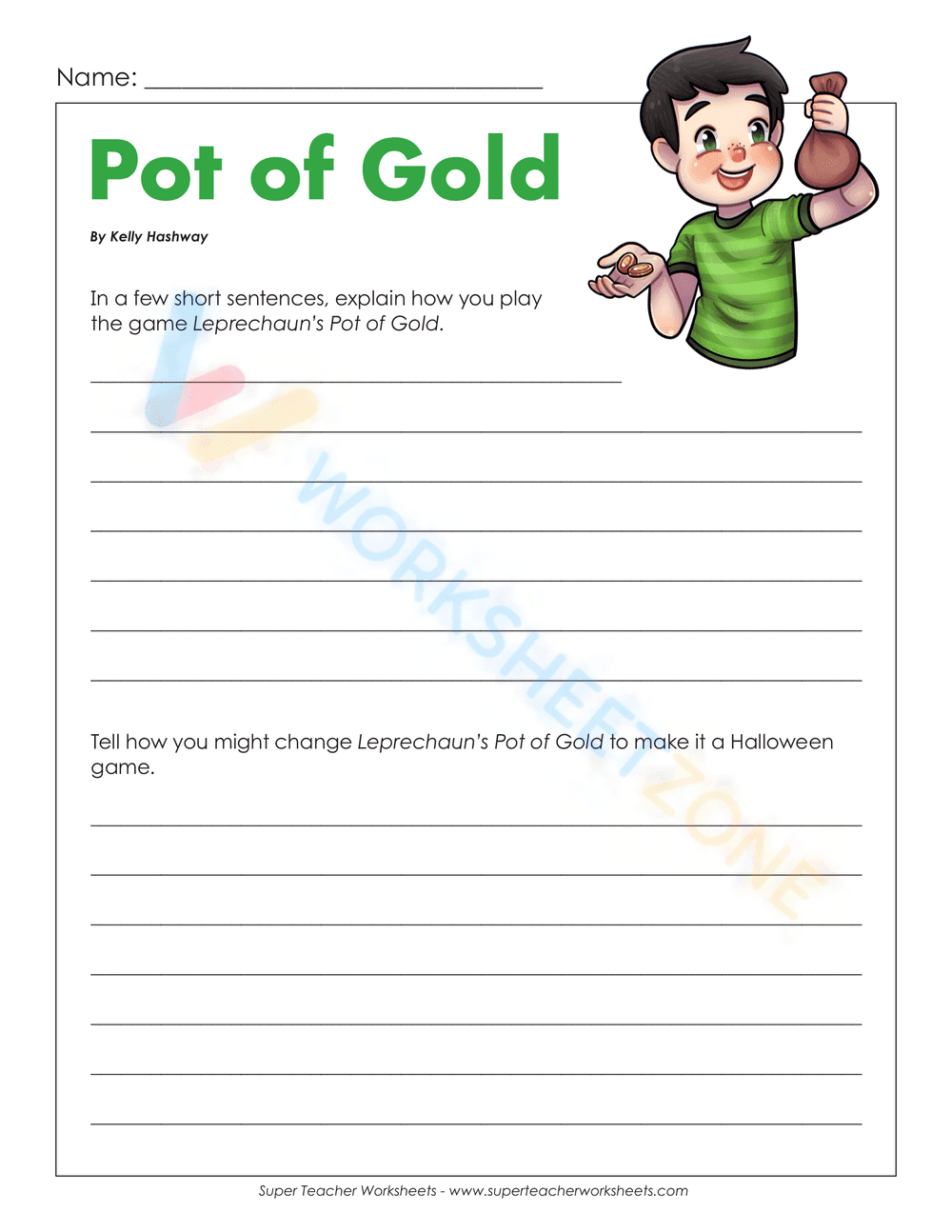
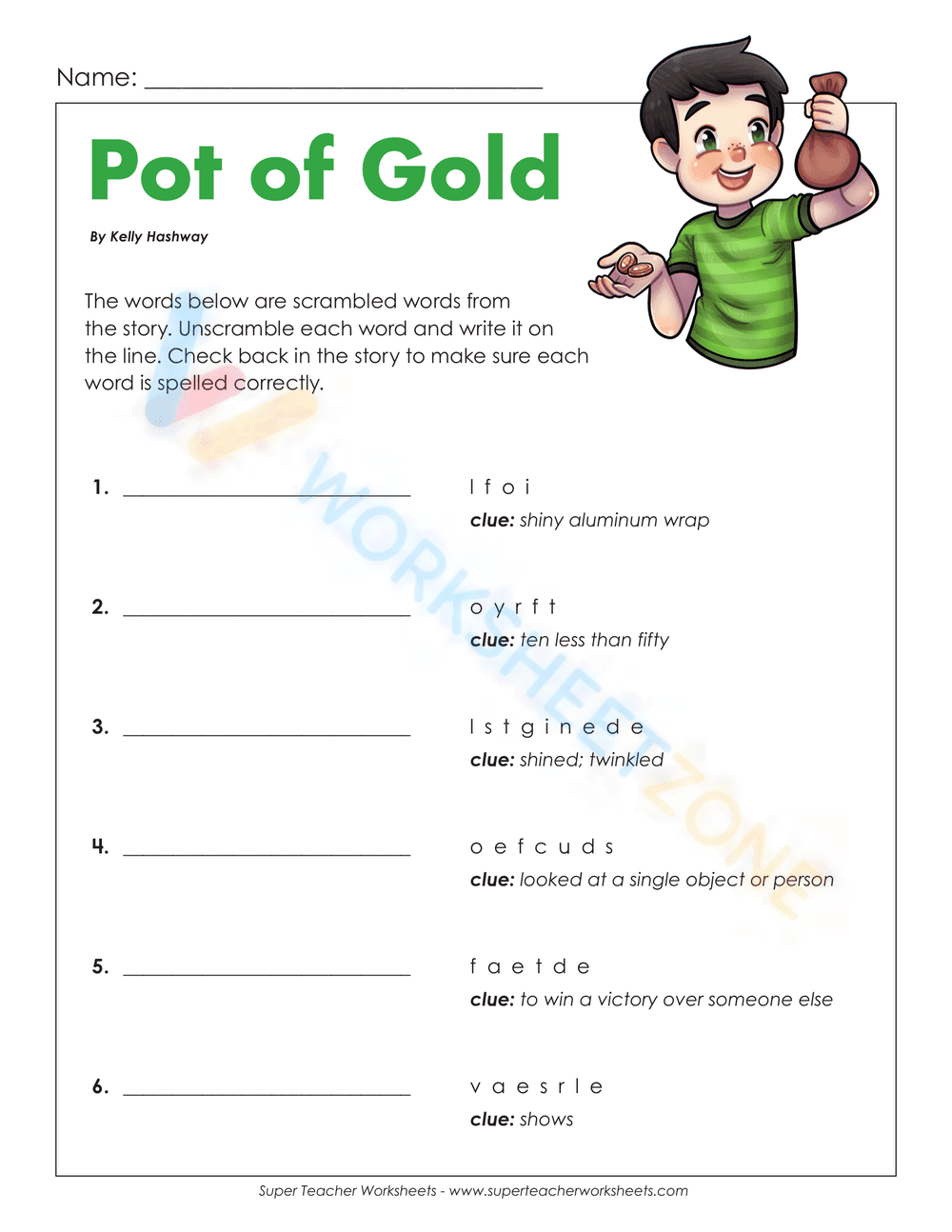
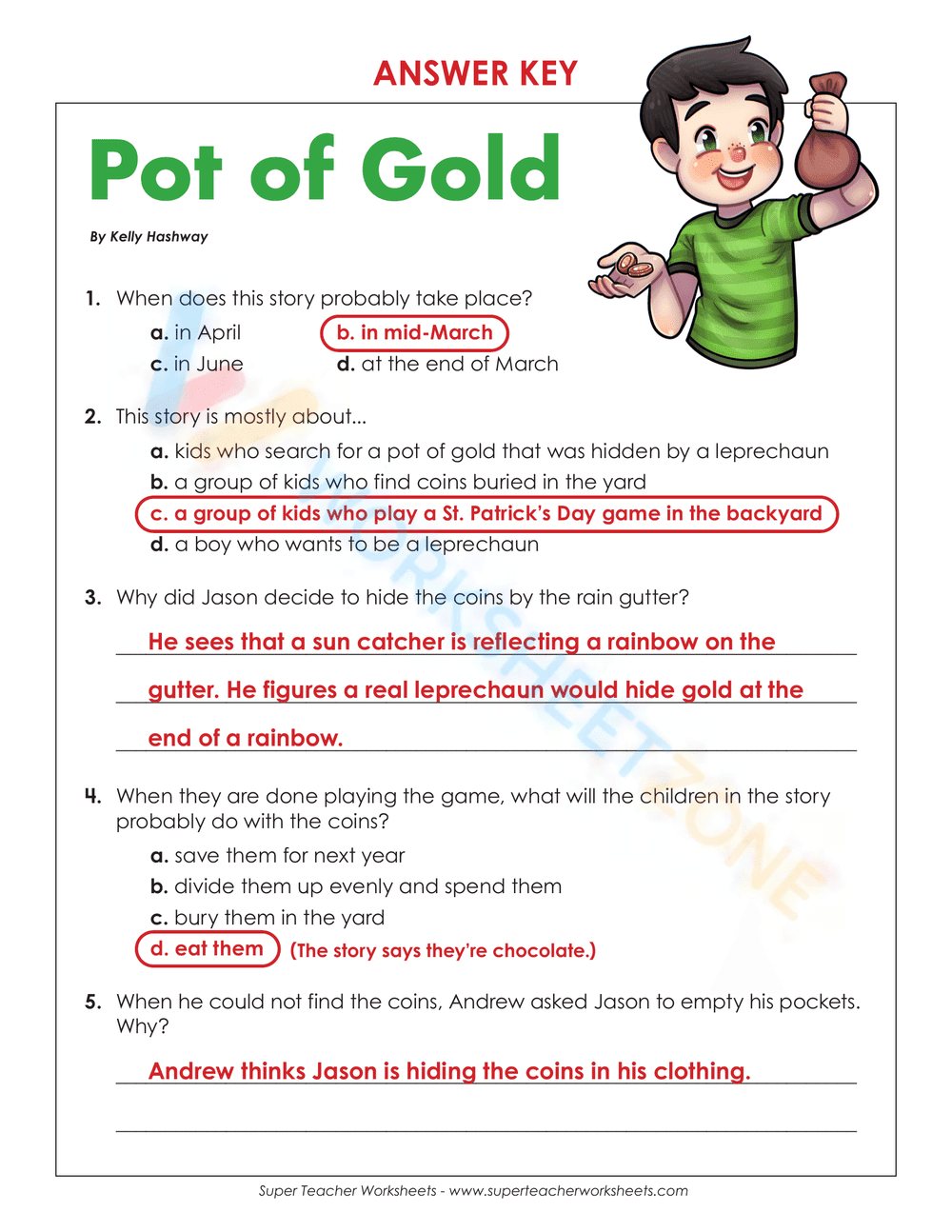
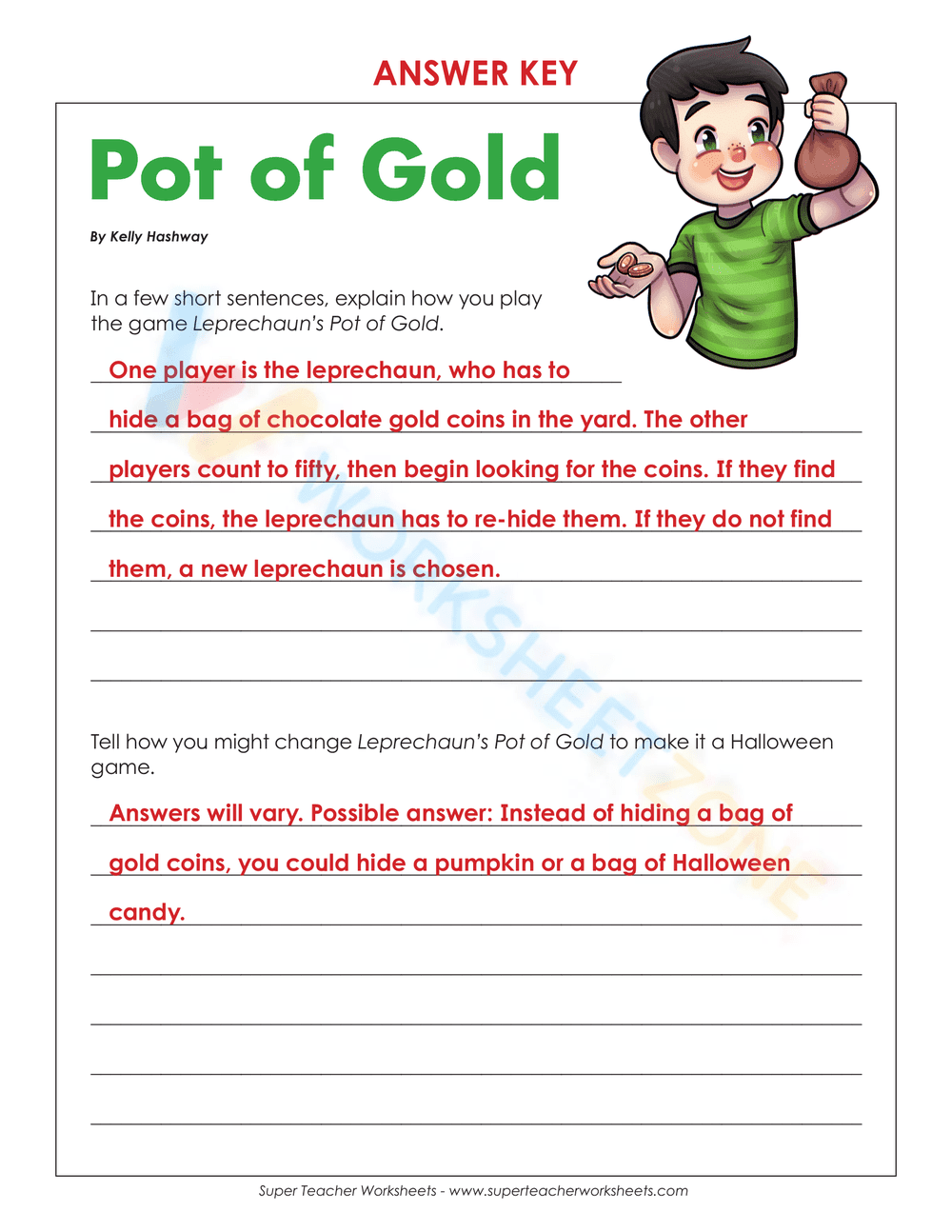
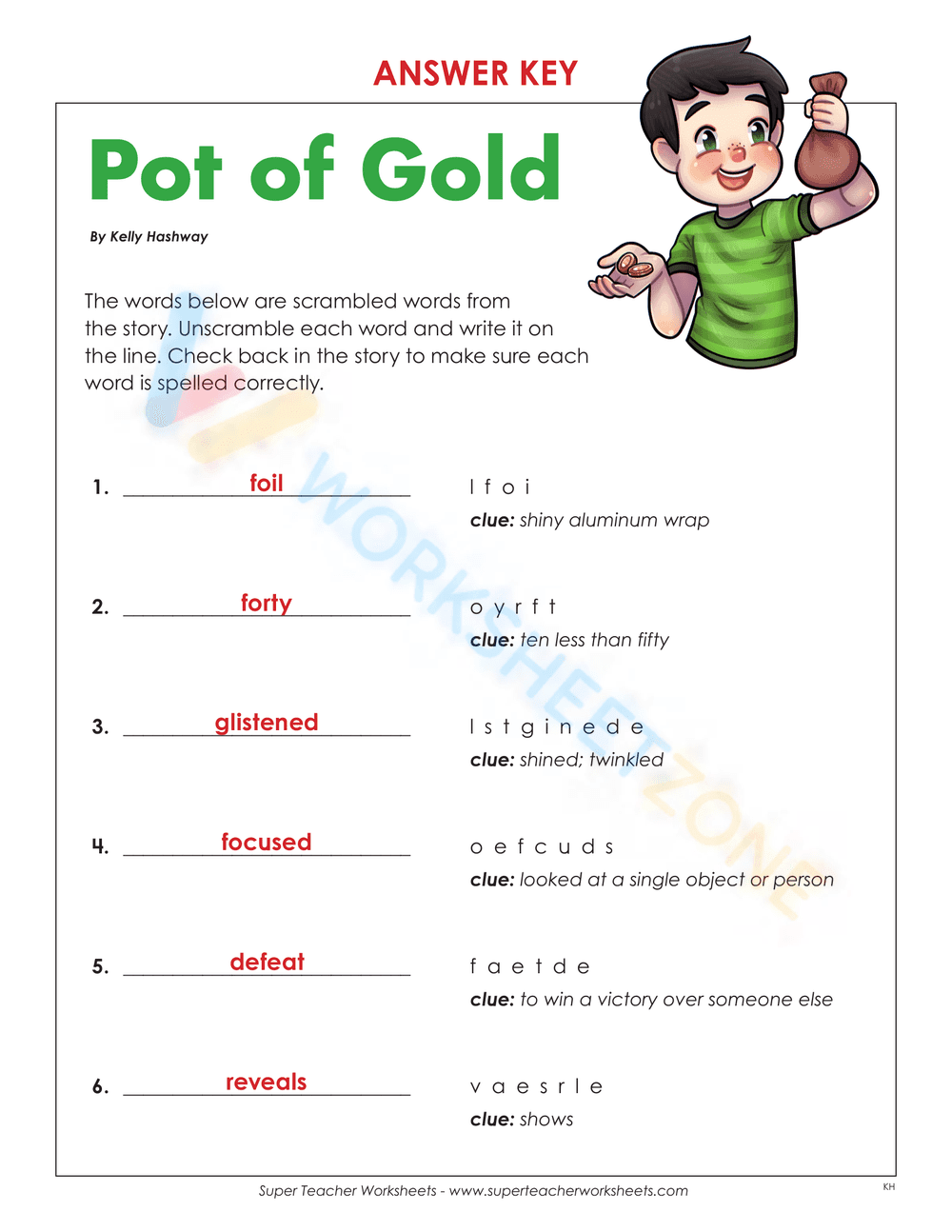
This comprehensive 8-page packet includes a two-page original fiction story, followed by three distinct activity pages. Students will tackle five multiple-choice and short-answer comprehension questions, respond to two creative writing prompts related to the text, and solve a six-word vocabulary scramble using context clues. A complete three-page answer key is provided for quick and accurate grading.
Designed for immediate classroom use, this resource requires zero teacher setup:
- Print (1 minute): Simply print the five-page student packet. The black-and-white design ensures crisp, ink-saving copies.
- Distribute (1 minute): Hand out the packets during your literacy block or morning work period. The instructions are completely self-explanatory.
- Review (5 minutes): Use the included comprehensive answer key to quickly check student responses or guide a whole-class review session.
With a total prep time of under two minutes, this packet is an ideal emergency sub plan or last-minute independent reading activity.
This worksheet is strictly aligned to CCSS.ELA-LITERACY.RL.3.1: Ask and answer questions to demonstrate understanding of a text, referring explicitly to the text as the basis for the answers. It also supports vocabulary acquisition and creative writing development. Both standard codes can be copied directly into lesson plans, IEP goals, or district curriculum mapping tools.
This reading packet is highly versatile. Use it as an independent reading center activity during your literacy block, allowing students to read at their own pace and practice finding text evidence. Alternatively, assign it as a seasonal homework packet leading up to St. Patrick's Day. As a formative assessment tip, observe whether students are flipping back to the passage to locate specific details for the short-answer questions, which indicates strong evidence-gathering habits. Expected completion time is 30 to 45 minutes.
This resource is designed for third-grade general education students, but it also serves as excellent review material for fourth graders needing extra comprehension support. For differentiation, teachers can read the passage aloud to students who struggle with decoding, allowing them to focus purely on auditory comprehension and critical thinking. Pair this packet with a mini-lesson on highlighting text evidence to maximize its effectiveness.
Developing strong reading comprehension requires consistent practice with text-dependent questions. Aligned with CCSS.ELA-LITERACY.RL.3.1, this resource requires students to ask and answer questions using text evidence, a critical skill for academic success across all subjects. According to the RAND AIRS 2024 report, students who regularly engage with structured, text-based questioning demonstrate significantly higher retention and analytical capabilities than those who rely on passive reading alone. By combining a high-interest narrative with targeted comprehension tasks, writing prompts, and vocabulary exercises, this packet provides a rigorous yet accessible format for literacy development. The inclusion of varied question types ensures that learners process the material at multiple cognitive levels, reinforcing both literal understanding and inferential reasoning. This evidence-based approach builds the stamina and critical thinking skills necessary for advanced reading proficiency.


