


























Views
Downloads

Essential Poetry Terms Worksheet | Grade 3-5 Ready
Paste this activity's link or code into your existing LMS (Google Classroom, Canvas, Teams, Schoology, Moodle, etc.).
Students can open and work on the activity right away, with no student login required.
You'll still be able to track student progress and results from your teacher account.
This comprehensive poetry terms worksheet helps students in grades 3 through 5 master the nuances of figurative language. By providing a clear reference guide followed by scaffolded identification and application exercises, students move from recognizing poetic devices to creating their own original sentences. It ensures learners can distinguish between literal and non-literal meanings effectively.
At a Glance
- Grade: 3-5 · Subject: English Language Arts
- Standard:
CCSS.ELA-LITERACY.L.4.5— Demonstrate understanding of figurative language, word relationships, and nuances in word meanings- Skill Focus: Poetic Device Identification & Application
- Format: 4 pages · 13 problems · Answer key included · PDF
- Best For: Independent practice or sub plans
- Time: 25–35 minutes
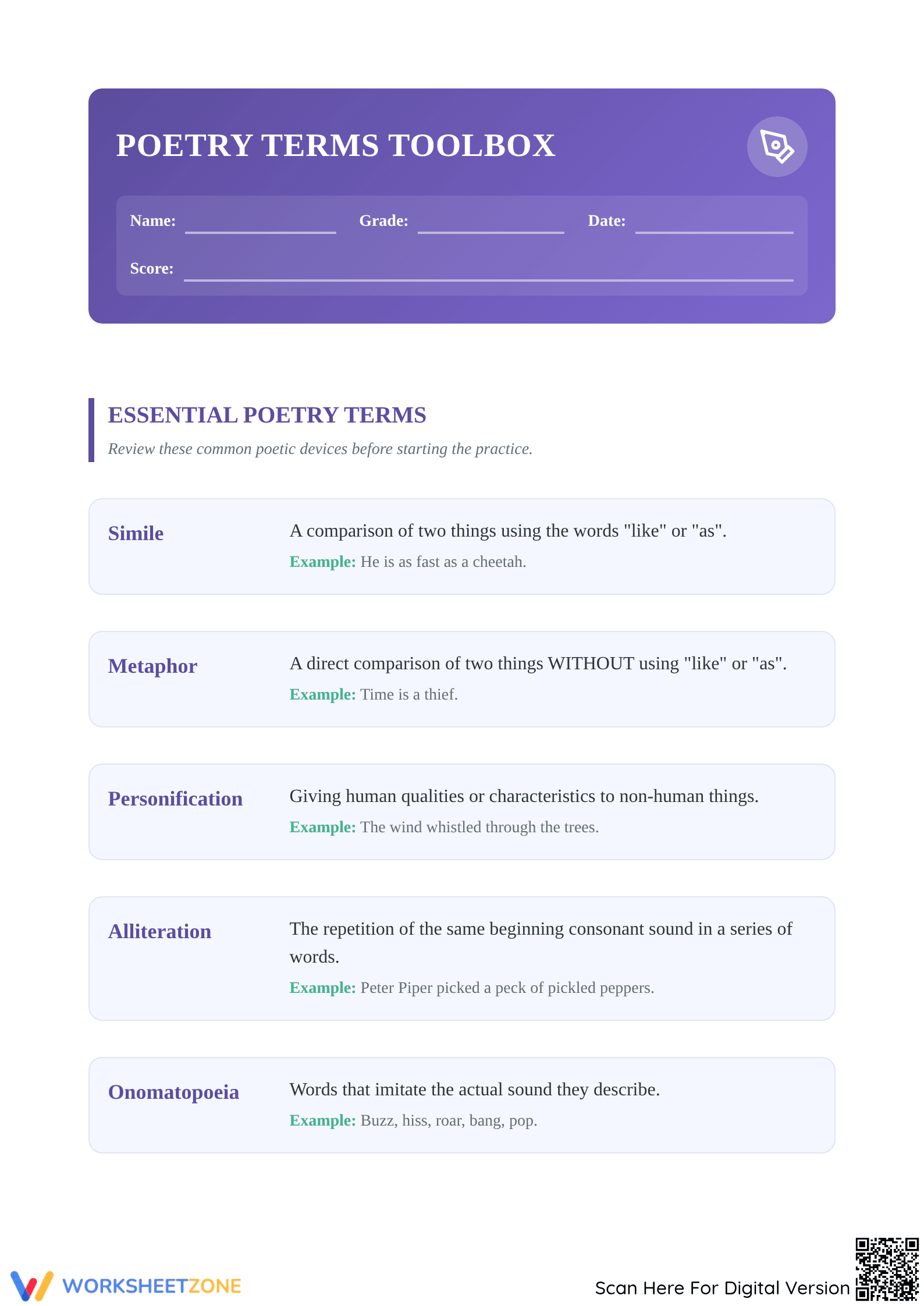
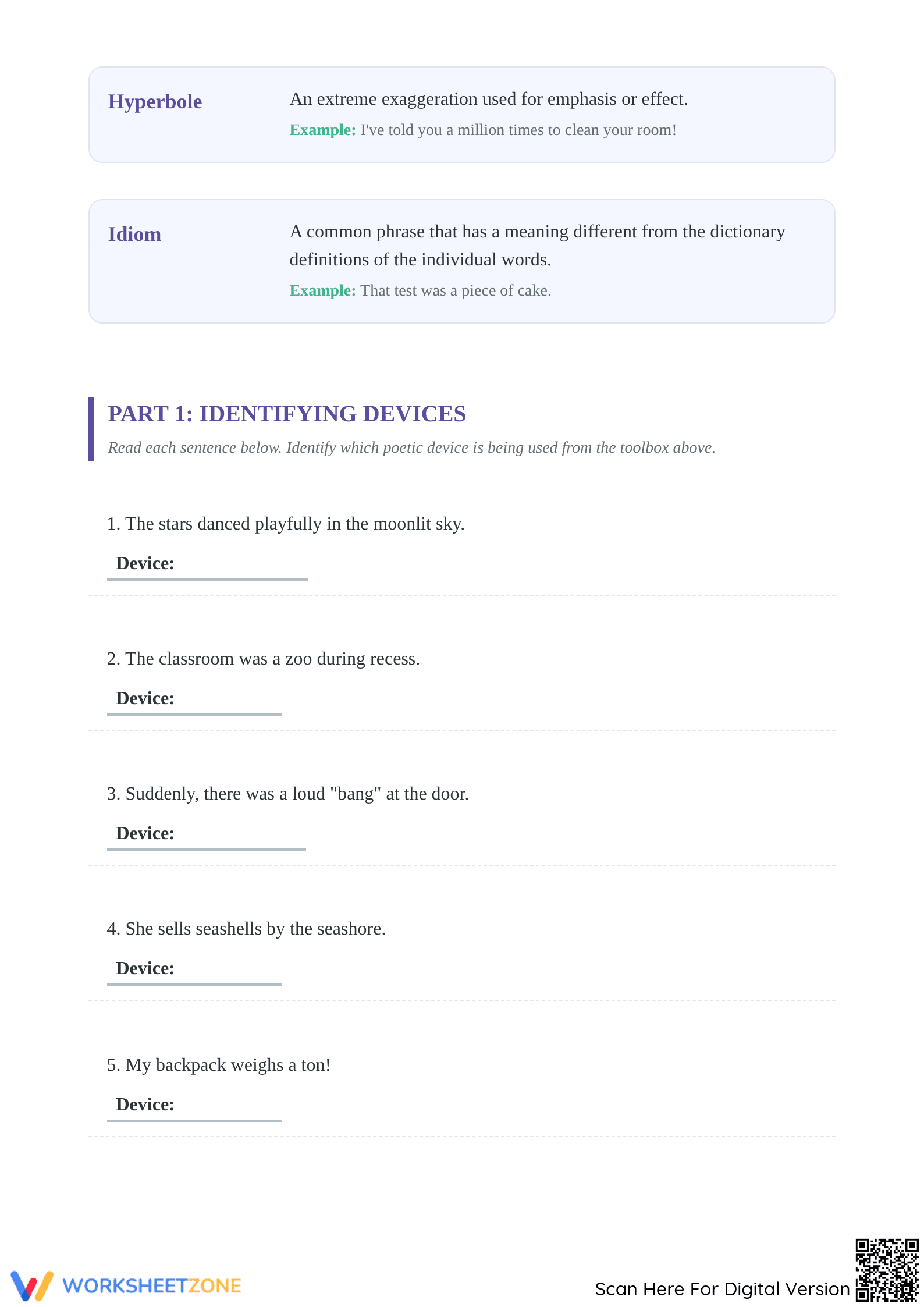
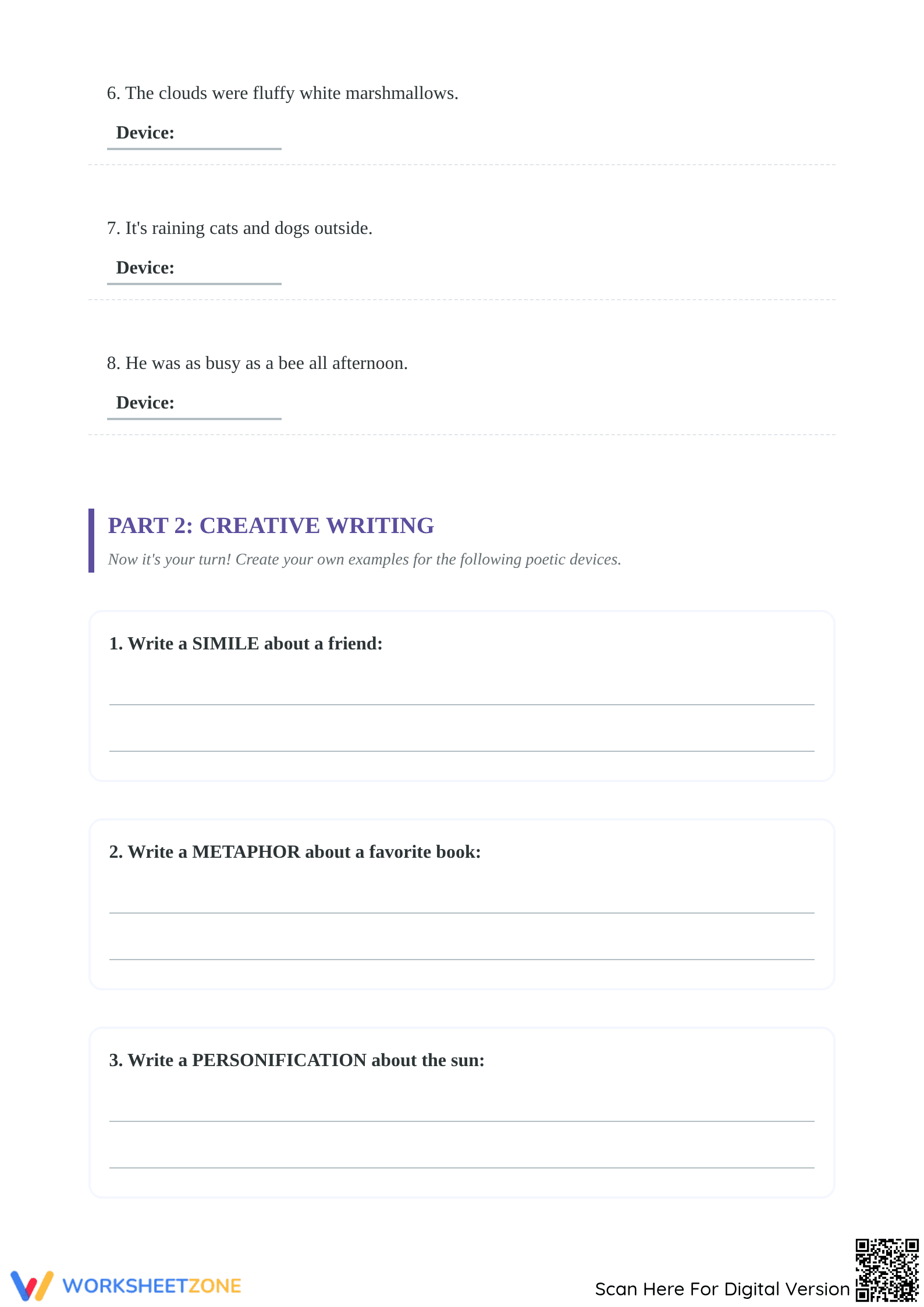
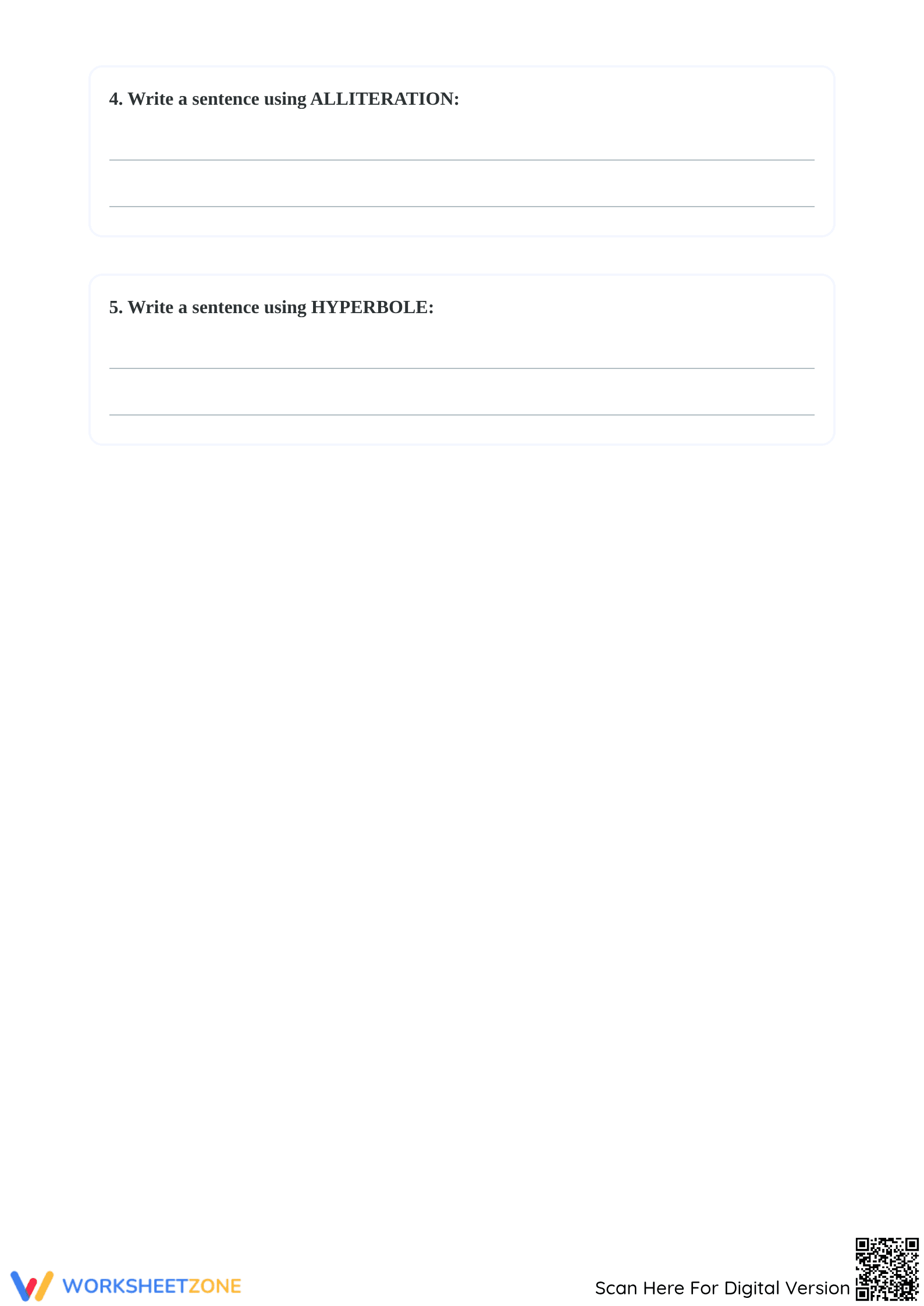
The resource contains a four-page student packet and a full answer key. The first two pages feature a "Poetry Terms Toolbox" defining seven key devices: simile, metaphor, personification, alliteration, onomatopoeia, hyperbole, and idiom. Following the definitions, students complete 8 identification problems and 5 open-ended creative writing prompts to demonstrate their mastery of the concepts.
Zero-Prep Workflow
- Print: Select the four student pages and the answer key for a complete 2-minute setup.
- Distribute: Hand out the packets as a standalone lesson, homework assignment, or supplemental practice.
- Review: Use the included answer key for immediate feedback, whole-class review, or peer-grading sessions.
This resource requires zero teacher preparation and functions perfectly as an emergency sub plan for any upper elementary ELA classroom.
Standards Alignment: This worksheet aligns with CCSS.ELA-LITERACY.L.4.5: Demonstrate understanding of figurative language, word relationships, and nuances in word meanings. This worksheet specifically targets sub-standard A, which focuses on explaining the meaning of simple similes and metaphors in context. Both standard codes can be copied directly into lesson plans, IEP goals, or district curriculum mapping tools.
How to Use It: Use this as a formative assessment after an introductory lesson on poetry to gauge which students struggle with abstract comparisons. It also serves as an excellent independent practice packet during literacy centers. Teachers should observe students during the creative writing portion to ensure they are not confusing similes with metaphors. Expect students to spend 25–35 minutes completing the full identification and writing sequence.
Who It's For: Designed for general education students in upper elementary, this packet is also highly effective for English Language Learners who need explicit definitions and examples of idioms and metaphors. Pair this with a specific poem or a figurative language anchor chart to provide additional visual support for struggling readers.
According to Fisher & Frey (2014), the gradual release of responsibility model is most effective when students are provided with clear linguistic scaffolds before being asked to generate original content. This worksheet adheres to that research by providing a "Toolbox" reference section that remains accessible as students transition from the 8 identification tasks to the 5 creative writing prompts. By explicitly defining terms like hyperbole and personification alongside concrete examples, the resource reduces cognitive load and allows students to focus on the application of the CCSS.ELA-LITERACY.L.4.5 standard. Recent NAEP data suggests that students who can identify and explain figurative language demonstrate significantly higher reading comprehension scores in middle school. This resource provides the structured repetition necessary to move these skills into long-term memory, making it a reliable tool for any Grade 3-5 ELA curriculum.


