


























Views
Downloads
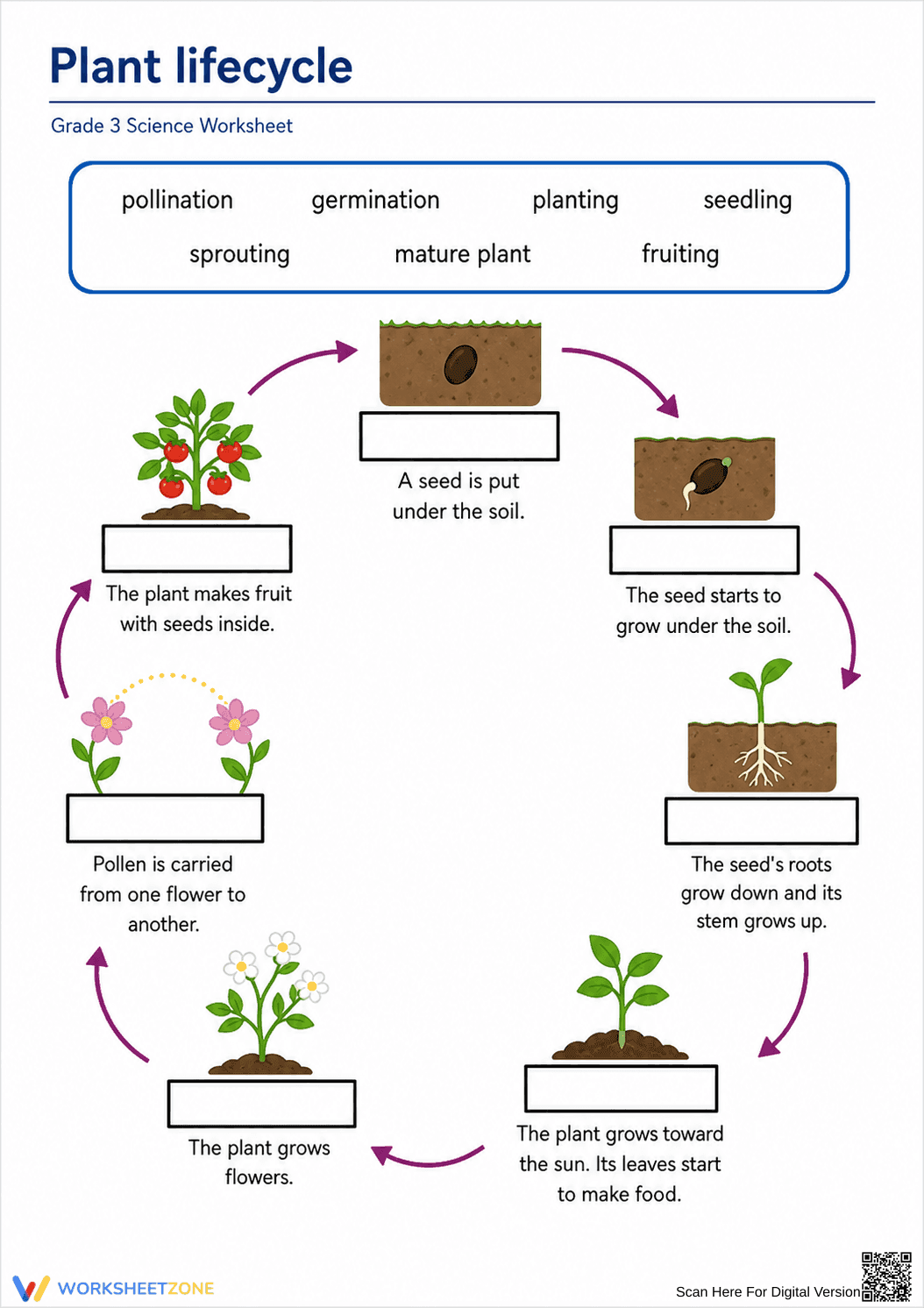
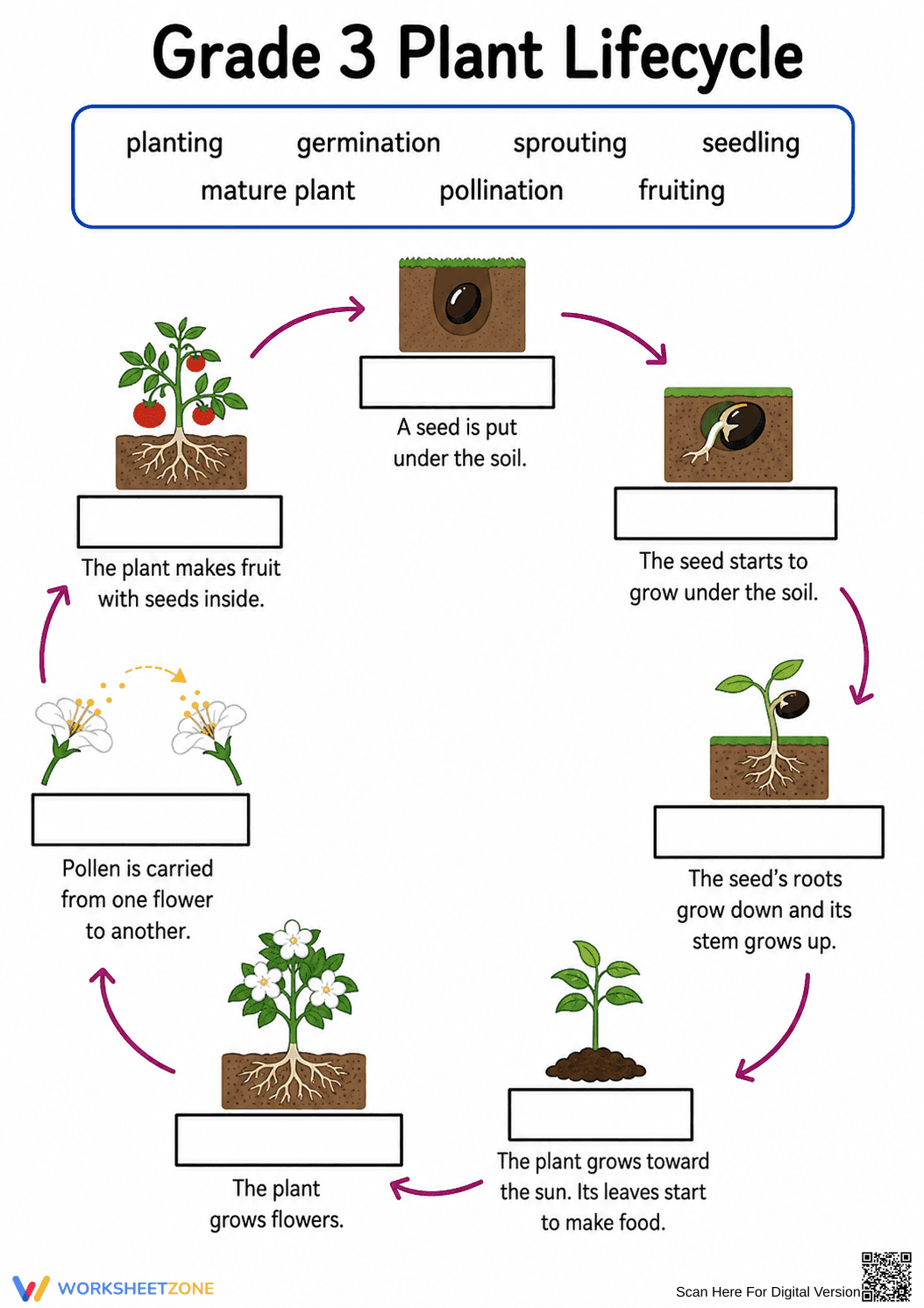

Grade 3 Plant Lifecycle — Printable No-Prep Worksheet
Paste this activity's link or code into your existing LMS (Google Classroom, Canvas, Teams, Schoology, Moodle, etc.).
Students can open and work on the activity right away, with no student login required.
You'll still be able to track student progress and results from your teacher account.
This Grade 3 plant lifecycle worksheet helps students visualize and sequence the biological stages of flowering plants. By matching key vocabulary to descriptive illustrations, learners develop a concrete understanding of how plants grow, reproduce, and sustain their species. It is an ideal resource for reinforcing life science concepts through active labeling and diagram analysis.
At a Glance
- Grade: 3 · Subject: Science
- Standard:
3-LS1-1— Develop models to describe that organisms have unique and diverse life cycles- Skill Focus: Sequencing plant growth stages
- Format: 2 pages · 7 problems · Answer key included · PDF
- Best For: Independent practice or science centers
- Time: 15–20 minutes
The download includes a high-quality 1-page student worksheet and a corresponding full-color answer key. The primary task features a circular flow diagram with seven distinct stages, each accompanied by a brief descriptive sentence. A word bank containing terms like germination, seedling, and pollination is provided at the top to support vocabulary acquisition and spelling accuracy.
This resource is designed for immediate classroom implementation. Teachers can print the single-page diagram in under 1 minute, distribute it to students in seconds, and review the completed cycles using the provided answer key in less than 1 minute. Total teacher preparation time is under 2 minutes, making it an excellent choice for emergency sub plans or morning work.
This resource aligns directly with `3-LS1-1`, requiring students to develop models to describe that organisms have unique and diverse life cycles. It specifically focuses on the commonalities of growth and reproduction in flowering plants. Both standard codes can be copied directly into lesson plans, IEP goals, or district curriculum mapping tools.
Use this worksheet as a formative assessment after a direct instruction lesson on botany or seed dispersal. As students work, circulate to observe if they can distinguish between sprouting and germination based on the visual cues. It also serves as an excellent interactive notebook insert; students can color the illustrations and glue the page into their science journals for future reference. Completion typically takes 15 to 20 minutes.
This activity is designed for third-grade students but is highly effective for second-grade enrichment or fourth-grade review. The visual nature of the diagram provides excellent support for English Language Learners (ELLs) and students with IEPs who benefit from graphic organizers. Pair this with a hands-on bean planting experiment or a classroom anchor chart for maximum impact.
According to the RAND AIRS 2024 report on science literacy, the use of visual models and sequencing tasks significantly improves long-term retention of biological processes in elementary learners. This worksheet addresses the 3-LS1-1 standard by requiring students to identify the chronological progression of a plant's life, from planting and germination to the development of a mature plant and eventual pollination. By engaging with the 7 specific stages provided, students move beyond rote memorization toward a conceptual understanding of life cycles. Research from Fisher & Frey (2014) suggests that providing word banks alongside diagrams scaffolds the cognitive load, allowing students to focus on the relationship between the stages rather than just vocabulary recall. This resource provides a structured, evidence-based approach to mastering essential life science curriculum requirements in the primary grades.


