


























1 / 5
0
Views
0
Downloads


0.0
0
Save
0 Likes
Share
Create a Planet Folding Booklet
0 Views
0 Downloads
Paste this activity's link or code into your existing LMS (Google Classroom, Canvas, Teams, Schoology, Moodle, etc.).
Students can open and work on the activity right away, with no student login required.
You'll still be able to track student progress and results from your teacher account.
Information
Description
What It Is:
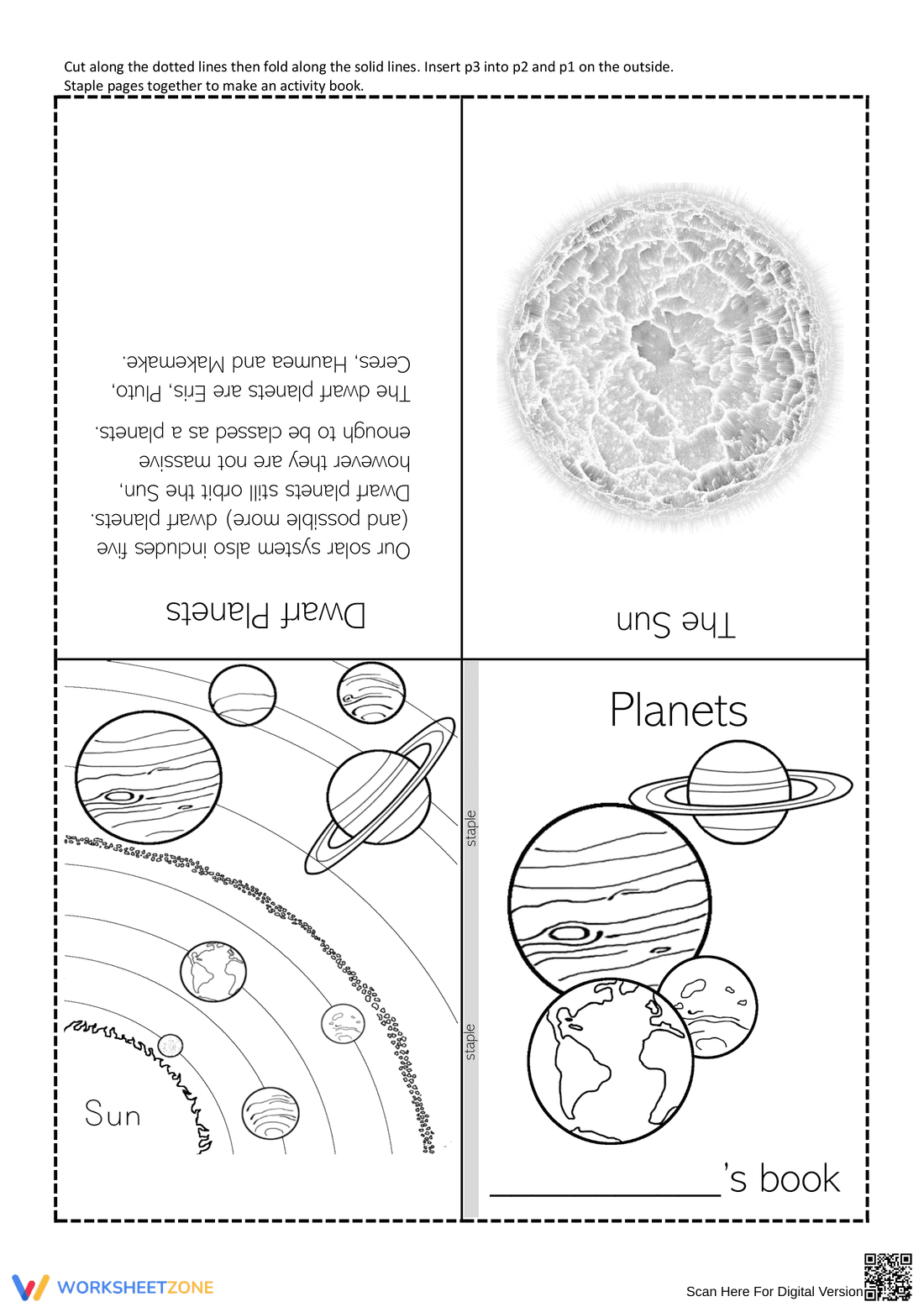
This is a printable worksheet designed to be folded into a small booklet. It covers basic facts about the solar system, including the sun, planets, and dwarf planets. The worksheet features illustrations of the sun, planets, and dwarf planets, and includes information about dwarf planets like Eris, Pluto, Ceres, Haumea and Makemake. There is also a space to write a name to personalize the booklet.
Grade Level Suitability:
Suitable for grades 1-3. The content is simple and introduces basic concepts about the solar system. The illustrations and booklet format make it engaging for younger learners.
Why Use It:
This worksheet introduces students to the solar system and the different types of celestial bodies within it. It helps them differentiate between planets and dwarf planets and introduces them to the names of some dwarf planets. The booklet format makes it a fun and interactive learning tool.
How to Use It:
Print the worksheet. Cut along the dotted lines. Fold along the solid lines. Insert page 3 into page 2 and page 1 on the outside to create a booklet. Students can then color the illustrations and read the information provided.
Target Users:
This worksheet is ideal for elementary school students, particularly those in grades 1-3, who are learning about the solar system for the first time. It can also be used as a supplemental activity for older students who need a review of basic astronomy concepts.
This is a printable worksheet designed to be folded into a small booklet. It covers basic facts about the solar system, including the sun, planets, and dwarf planets. The worksheet features illustrations of the sun, planets, and dwarf planets, and includes information about dwarf planets like Eris, Pluto, Ceres, Haumea and Makemake. There is also a space to write a name to personalize the booklet.
Grade Level Suitability:
Suitable for grades 1-3. The content is simple and introduces basic concepts about the solar system. The illustrations and booklet format make it engaging for younger learners.
Why Use It:
This worksheet introduces students to the solar system and the different types of celestial bodies within it. It helps them differentiate between planets and dwarf planets and introduces them to the names of some dwarf planets. The booklet format makes it a fun and interactive learning tool.
How to Use It:
Print the worksheet. Cut along the dotted lines. Fold along the solid lines. Insert page 3 into page 2 and page 1 on the outside to create a booklet. Students can then color the illustrations and read the information provided.
Target Users:
This worksheet is ideal for elementary school students, particularly those in grades 1-3, who are learning about the solar system for the first time. It can also be used as a supplemental activity for older students who need a review of basic astronomy concepts.


