


























Views
Downloads

Printable Pitch Identification Worksheet | Grade 1 Science
Paste this activity's link or code into your existing LMS (Google Classroom, Canvas, Teams, Schoology, Moodle, etc.).
Students can open and work on the activity right away, with no student login required.
You'll still be able to track student progress and results from your teacher account.
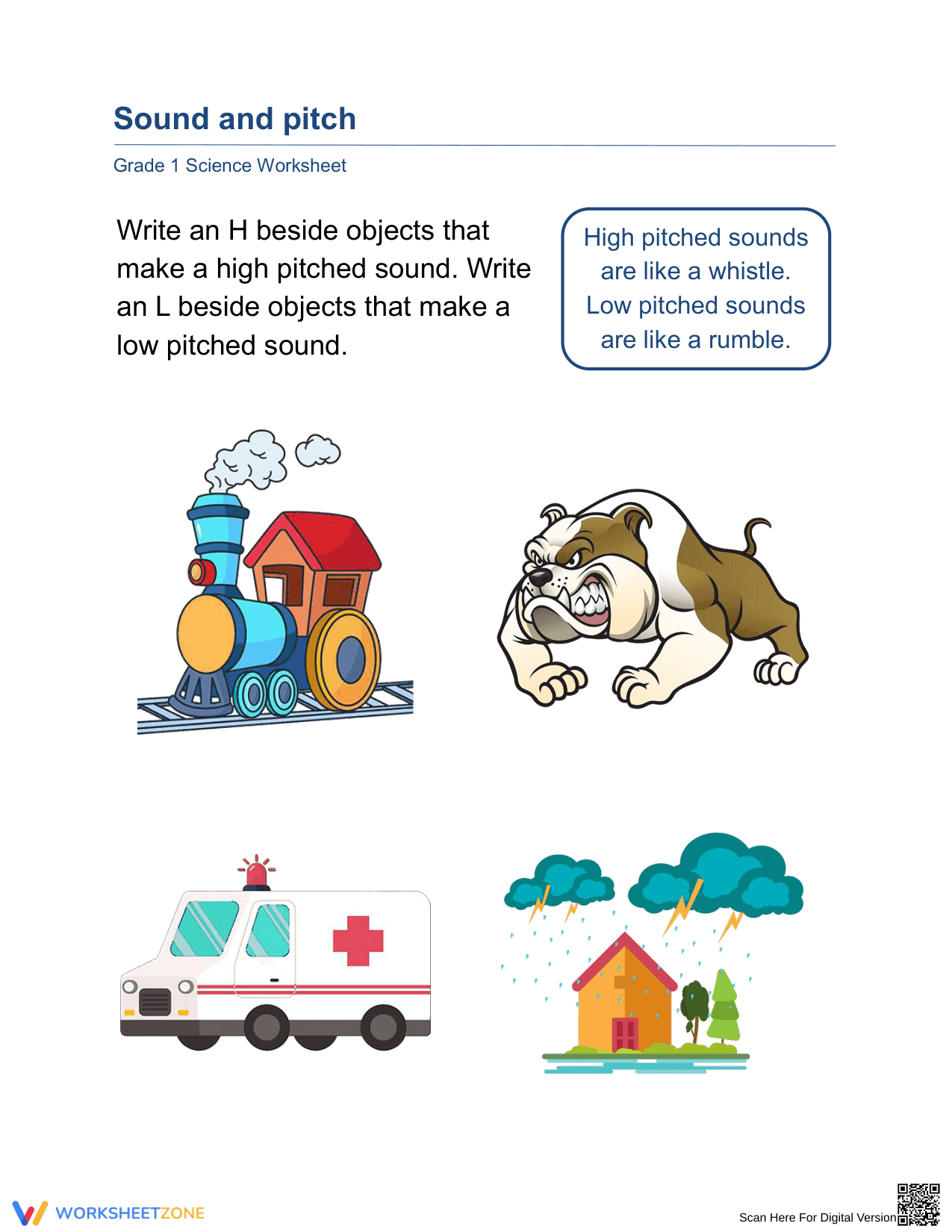
This Grade 1 science worksheet provides focused practice on the concept of sound pitch. Students learn to distinguish between high-pitched sounds (like a whistle) and low-pitched sounds (a rumble). Through a simple labeling task, learners connect common objects to their sound properties, building essential skills for NGSS standards.
At a Glance
- Grade: 1 · Subject: Science
- Standard:
1-PS4-1— Plan and conduct investigations about vibrating materials and sound.- Skill Focus: Identifying high and low pitch sounds
- Format: 2 pages · 4 problems · Answer key included · PDF
- Best For: Introductory lesson, skill practice, science centers
- Time: 5–10 minutes
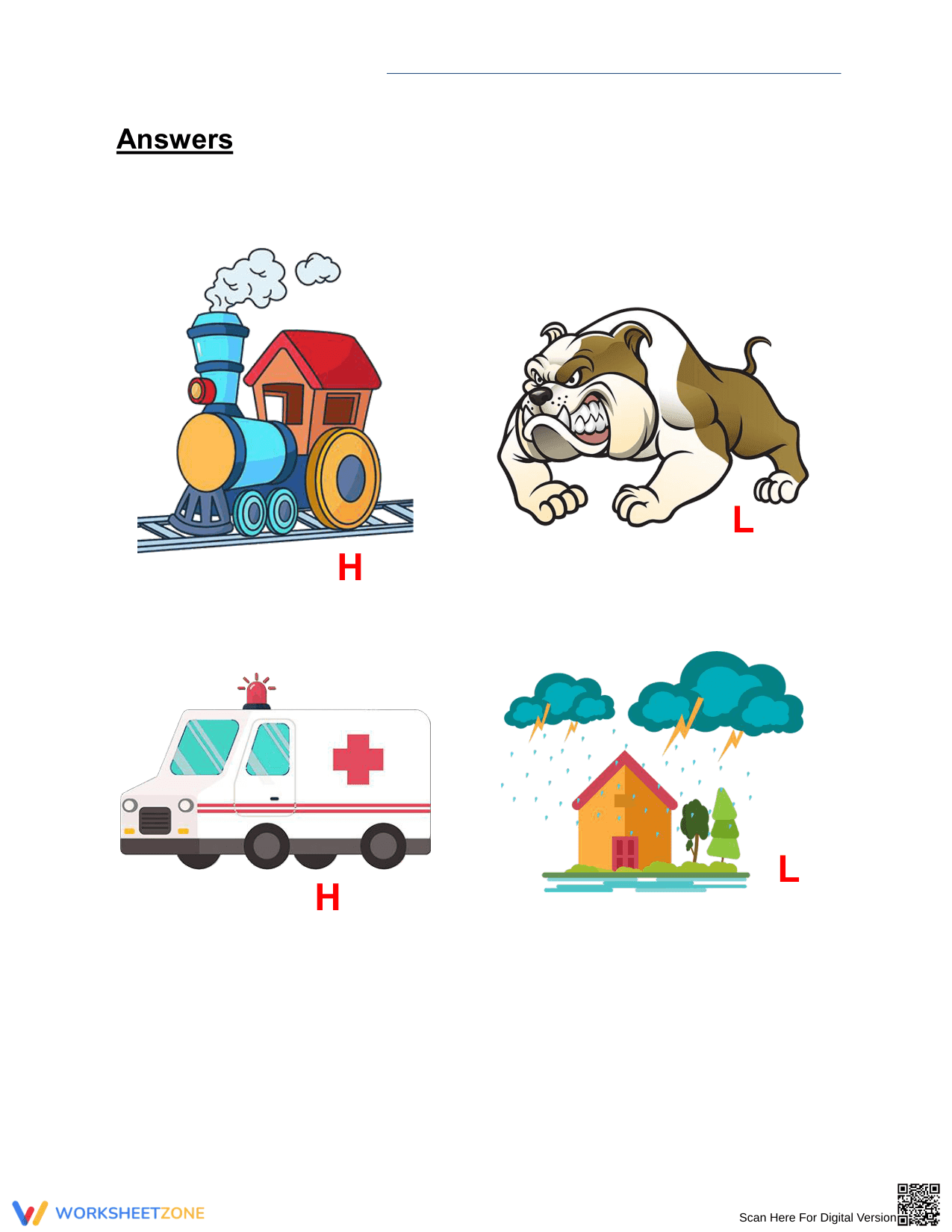
This resource is a two-page PDF file. The first page is the student worksheet with four clear illustrations and a definition box. The second page provides a complete answer key with the correct 'H' (high) or 'L' (low) labels, making grading quick and easy.
- Guided Practice: The worksheet begins with a clear definition box that explains high and low pitch sounds using simple analogies, serving as a built-in anchor for the task.
- Supported Practice: Students apply this knowledge by observing four distinct images. The visual prompts provide a strong scaffold, connecting abstract sound concepts to familiar objects.
- Independent Practice: The task requires students to independently write the correct letter next to each image, demonstrating their understanding. This gradual-release format effectively solidifies learning.
This worksheet directly supports the Next Generation Science Standards (NGSS). The primary standard addressed is 1-PS4-1, which involves investigating how vibrating materials create sound. Understanding pitch is a foundational part of investigating sound properties. This activity serves as an entry point for developing vocabulary and skills for scientific inquiry. The standard code can be copied directly into lesson plans or curriculum maps.
This worksheet is ideal for a unit on sound or the five senses. Use it as a warm-up before a science experiment or as a check for understanding exit ticket after a lesson on pitch. For formative assessment, listen to students explain why they chose a label; their reasoning reveals their understanding. This activity should take 5 to 10 minutes to complete and requires no teacher prep.
This resource is designed for first-grade students learning about sound properties. Its clear layout is accessible for most learners, including English Language Learners who benefit from visual cues. For students needing support, play sound clips of each object before they complete the page. This worksheet pairs well with a classroom anchor chart that categorizes familiar sounds by pitch.
This Grade 1 science resource provides targeted practice aligned with NGSS standard 1-PS4-1, focusing on the fundamental skill of identifying high and low pitch sounds. By connecting visual representations of common objects to their auditory properties, the worksheet builds a critical foundation for understanding wave properties. Research highlights the importance of such foundational, single-skill exercises in early science education. According to the RAND AIRS (2024) analysis, instructional materials that isolate specific scientific concepts and provide clear, non-linguistic representations lead to greater conceptual understanding for primary students. The worksheet's structure—presenting a definition and then asking for application—mirrors effective instructional models that promote retention. This targeted approach ensures students master the core concept of pitch, a prerequisite for later investigations into sound waves and vibrations as outlined in the NGSS framework.


