




























Views
Downloads
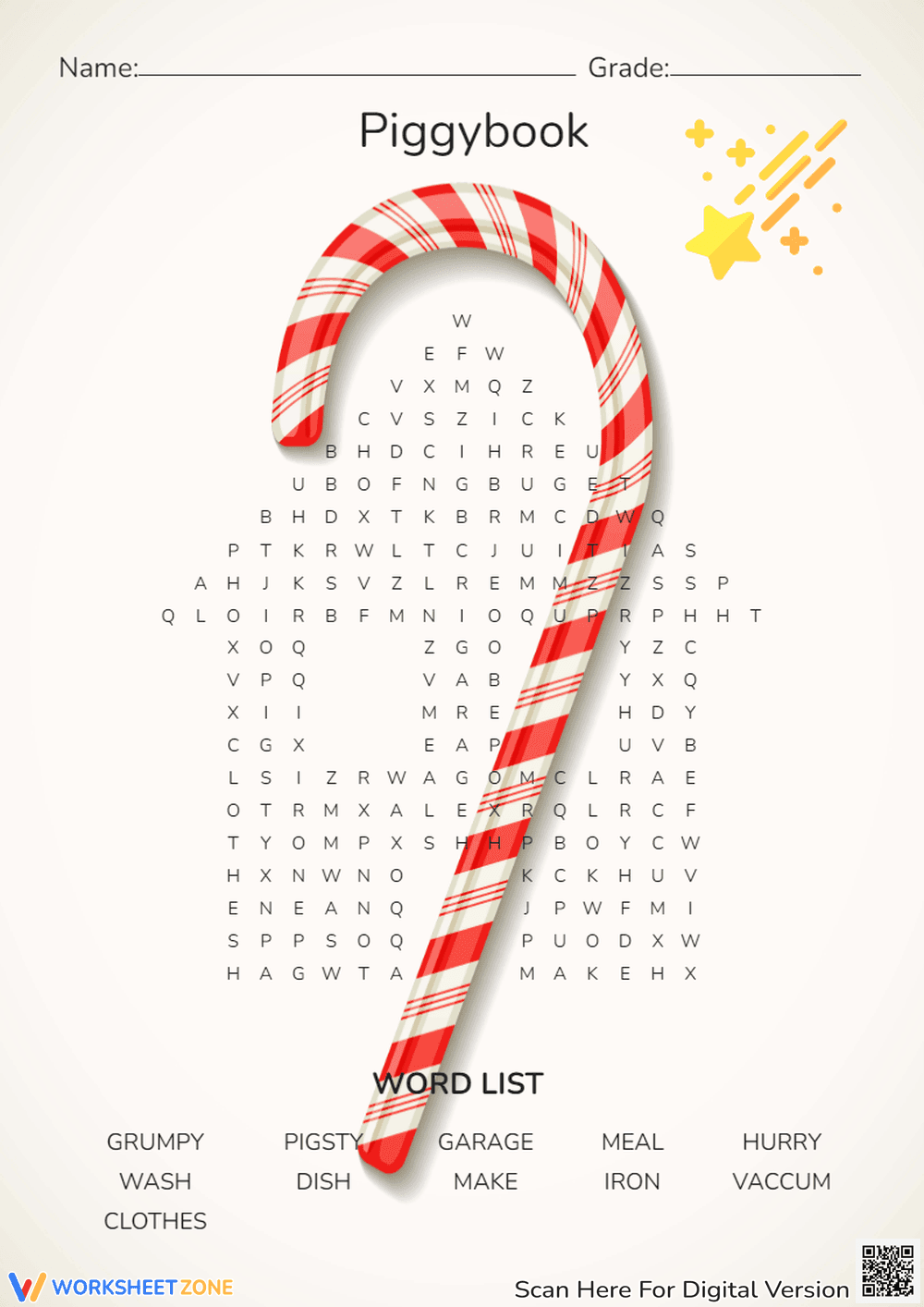

Piggybook Word Search | Grade 3 Essential Printable

Paste this activity's link or code into your existing LMS (Google Classroom, Canvas, Teams, Schoology, Moodle, etc.).
Students can open and work on the activity right away, with no student login required.
You'll still be able to track student progress and results from your teacher account.
This Grade 3 Piggybook word search provides a focused way for students to engage with the key vocabulary from Anthony Browne’s classic story. By identifying thematic terms within the puzzle, learners reinforce their word recognition and spelling skills while connecting back to the narrative's central themes of household chores and family dynamics.
At a Glance
- Grade: 3 · Subject: ELA
- Standard:
CCSS.ELA-LITERACY.L.3.4— Determine or clarify the meaning of unknown and multiple-meaning words- Skill Focus: Vocabulary & Word Recognition
- Format: 1 page · 11 words · Answer key included · PDF
- Best For: Post-reading activity or morning work
- Time: 15–20 minutes
What's Inside
This single-page PDF features a unique candy cane-shaped letter grid containing 11 hidden words. The word list includes essential terms from the story such as Grumpy, Pigsty, Garage, and Vacuum. The layout is clean and high-contrast, ensuring it is easy to read and photocopy for entire classrooms. A comprehensive answer key is provided to facilitate quick grading and student self-correction.
Zero-Prep Workflow
- Print: Select the single-page PDF and print enough copies for your group in under 30 seconds.
- Distribute: Hand out the sheets as a transition activity or a literacy center task requiring zero teacher explanation.
- Review: Use the included answer key to check student work in less than one minute, or have students self-correct to build autonomy. This resource is an ideal sub-plan component.
Standards Alignment
This resource is aligned with `CCSS.ELA-LITERACY.L.3.4`, which focuses on helping students determine or clarify the meaning of unknown and multiple-meaning words and phrases. By interacting with the specific vocabulary of the text, students build the foundational lexical knowledge required for reading comprehension. Both standard codes can be copied directly into lesson plans, IEP goals, or district curriculum mapping tools.
How to Use It
Assign this worksheet immediately after a read-aloud of "Piggybook" to reinforce the vocabulary used to describe the Piggott family's transformation. It serves as an excellent formative assessment tool; observe which students struggle to recognize word patterns or spelling sequences. Expected completion time is 15 to 20 minutes depending on student familiarity with the text and word search experience.
Who It's For
This activity is designed for third-grade students but is also suitable for second-grade enrichment or fourth-grade intervention. It pairs naturally with a character trait anchor chart or a direct instruction lesson on domestic roles and responsibilities. It is particularly effective for English Language Learners who benefit from seeing story-specific words in a new visual context.
According to research by Fisher & Frey (2014), word-level activities like puzzles and searches contribute to the "word consciousness" necessary for long-term literacy development. This Piggybook word search targets `CCSS.ELA-LITERACY.L.3.4` by requiring students to scan, recognize, and internalize 11 specific vocabulary terms from the narrative. By isolating words like "pigsty" and "vacuum," students bridge the gap between auditory recognition during a read-aloud and visual orthographic processing. This type of supplemental practice is a staple in balanced literacy frameworks, providing a low-stakes environment for students to master spelling and word identification. The 1-page format ensures that instructional time remains focused on the text while providing a necessary cognitive break that still maintains academic rigor. Educators can reliably use this tool to support vocabulary acquisition goals across diverse Grade 3 classroom settings.


