


























Views
Downloads


Essential Perimeter of Compound Shapes: Grades 4-5 Worksheet
Paste this activity's link or code into your existing LMS (Google Classroom, Canvas, Teams, Schoology, Moodle, etc.).
Students can open and work on the activity right away, with no student login required.
You'll still be able to track student progress and results from your teacher account.
Mastering the perimeter of compound shapes is a critical milestone for upper elementary mathematicians. This comprehensive worksheet provides structured practice for students to calculate the total distance around complex rectilinear figures. By decomposing shapes into their constituent parts, learners build the spatial reasoning and additive logic required for advanced geometric mastery and real-world spatial problem-solving.
At a Glance
- Grade: 4–5 · Subject: Math
- Standard:
CCSS.MATH.CONTENT.4.MD.A.3— Apply the area and perimeter formulas for rectangles in real-world and mathematical problems.- Skill Focus: Calculating perimeters of additive rectilinear compound shapes.
- Format: 4 pages · 24 problems · Answer key included · PDF
- Best For: Independent practice and geometric skill reinforcement
- Time: 30–45 minutes
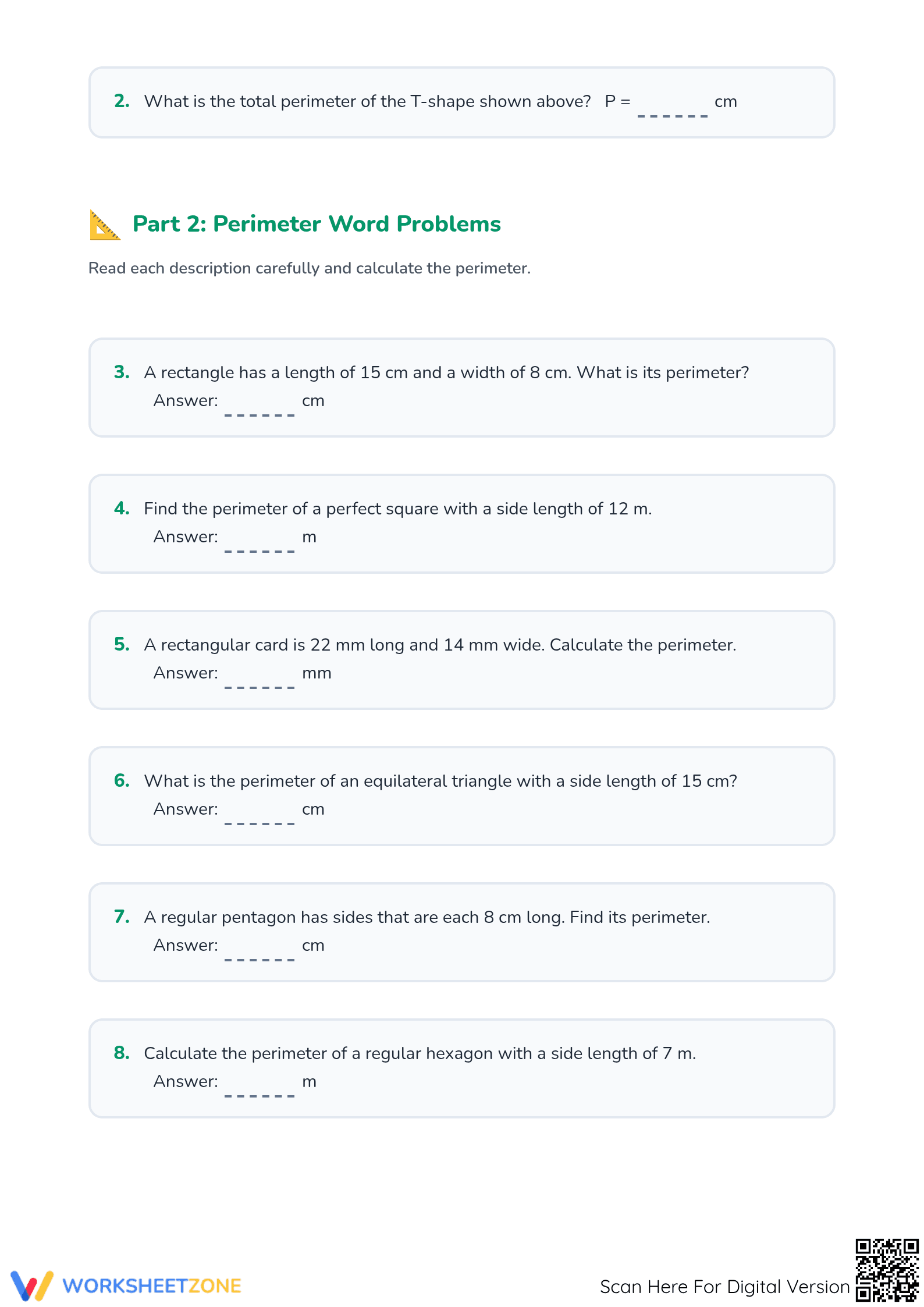
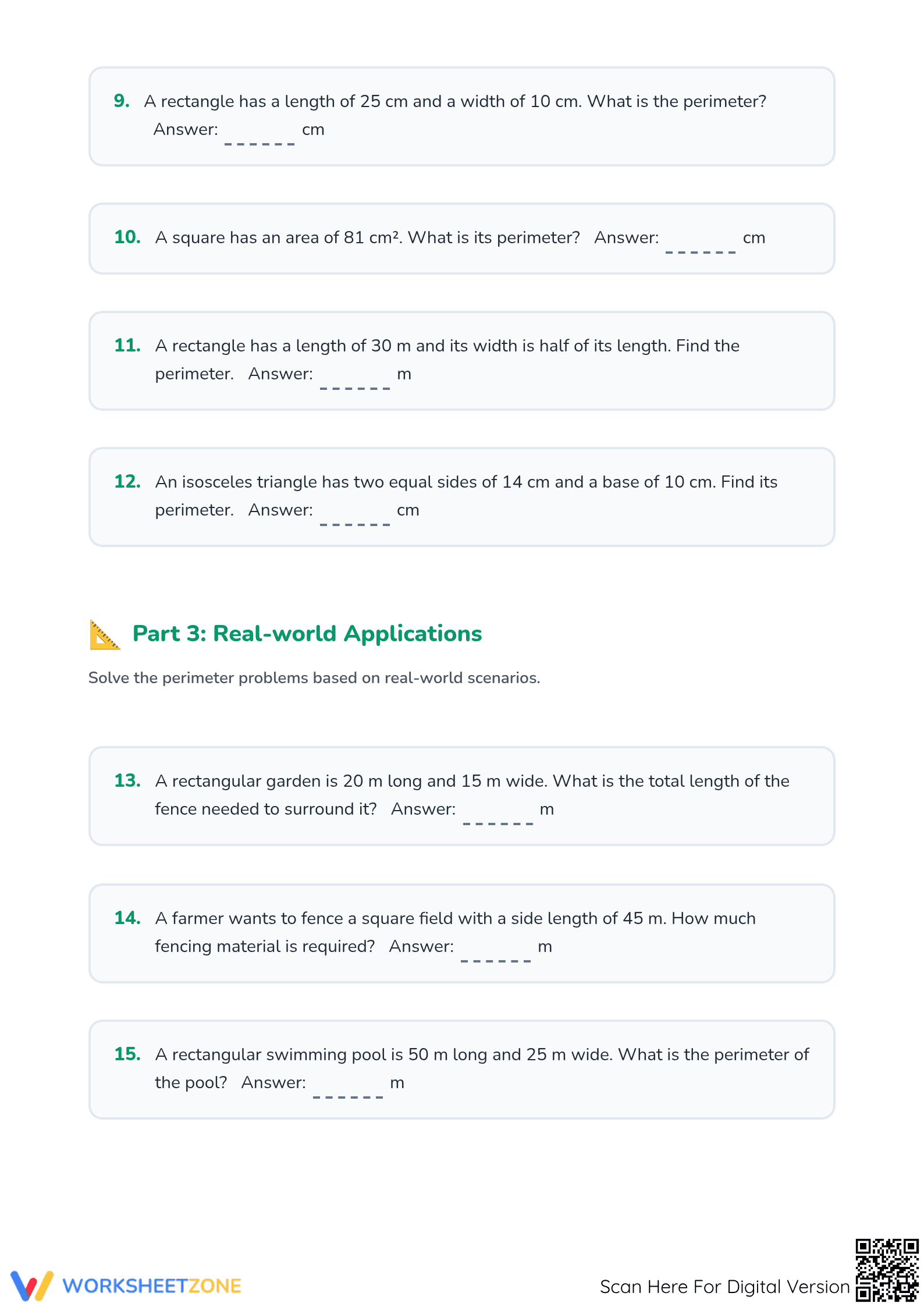
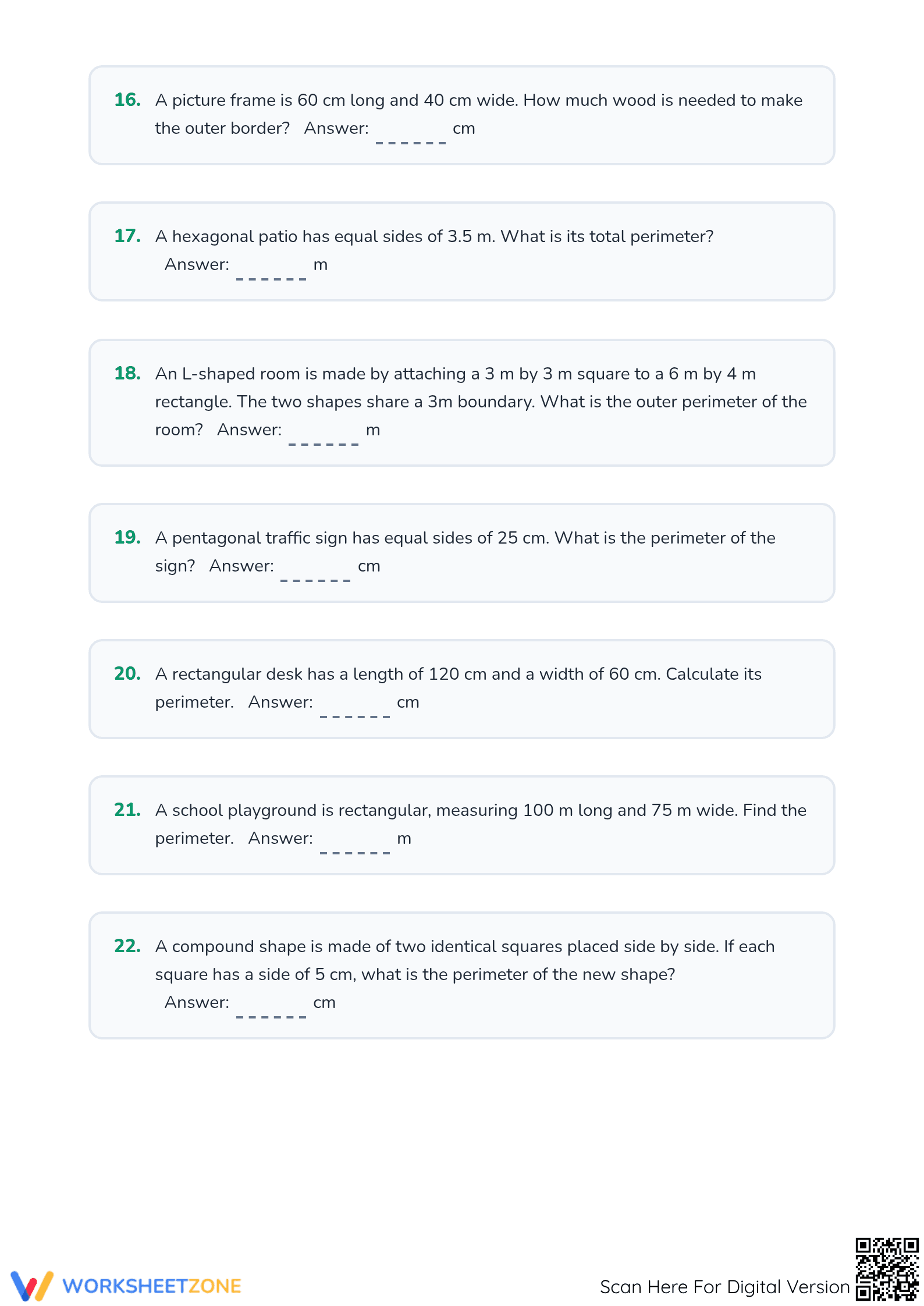
Inside this 4-page PDF resource, students will find 24 unique compound shape problems, ranging from simple L-shapes to more complex multi-step rectilinear figures. Each problem is presented on a clear grid background to assist with visual tracking, though the shapes are not to scale to ensure students rely on numerical calculation rather than counting units. A comprehensive answer key is included for rapid grading and student self-correction.
Zero-Prep Workflow
This resource is designed for a seamless classroom experience. First, simply print the 4-page PDF (less than 1 minute). Next, distribute the packet to students for independent work or as a rotational center activity (30 seconds). Finally, use the provided answer key for immediate feedback or peer-grading (under 1 minute). The entire setup takes under two minutes, ideal for sub plans.
Standards Alignment
Aligned primarily to CCSS.MATH.CONTENT.4.MD.A.3, this worksheet requires students to "Apply the area and perimeter formulas for rectangles in real world and mathematical problems." While the shapes are composite, they are built from rectangular components, requiring students to synthesize their understanding of side-length properties. This standard code can be copied directly into lesson plans, IEP goals, or district curriculum mapping tools.
How to Use It
Use this worksheet as a post-instruction practice set after students have mastered finding the perimeter of simple rectangles. It serves as an excellent formative assessment to check if they can successfully add multiple side lengths without skipping missing segments. Alternatively, assign individual pages as daily warm-ups or "exit tickets" to maintain geometric fluency throughout the school year.
Who It's For
This resource is tailored for Grade 4 and Grade 5 students working toward geometric proficiency. It is particularly useful for students who require repetitive, focused practice to solidify their understanding of additive perimeter. Pair this with a physical set of tangrams or a digital geoboard to provide a multi-sensory approach for learners who struggle with abstract spatial concepts.
Rigorous practice with CCSS.MATH.CONTENT.4.MD.A.3 is essential for developing the mathematical stamina required for middle school geometry. According to the RAND AIRS 2024 report on mathematics instructional materials, high-quality supplemental worksheets that focus on a single, discrete skill—like the perimeter of compound shapes—significantly reduce cognitive load during the initial acquisition phase of learning. Research indicates that this type of "spaced repetition" within a single session helps move procedural knowledge into long-term memory, particularly when paired with the immediate feedback provided by the included answer key. This worksheet meets the criteria for evidence-based practice by isolating the core calculation task within a structured, low-distraction layout, ensuring that student effort is focused entirely on the geometric standard rather than navigating complex instructions.


