


























Views
Downloads

Penguins Coloring Page | Essential Winter Printable
Paste this activity's link or code into your existing LMS (Google Classroom, Canvas, Teams, Schoology, Moodle, etc.).
Students can open and work on the activity right away, with no student login required.
You'll still be able to track student progress and results from your teacher account.
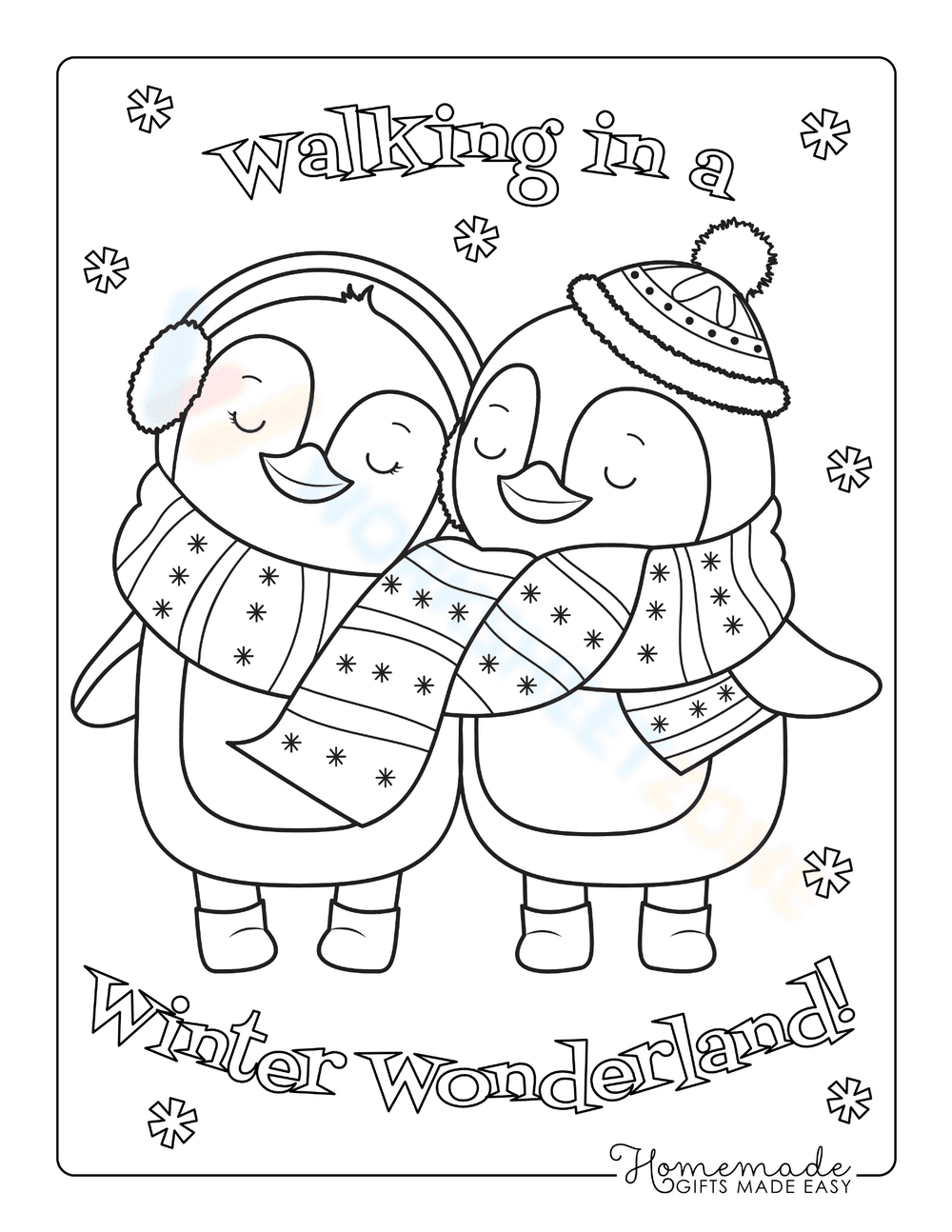
This winter-themed coloring page features two adorable penguins and the phrase "Walking in a Winter Wonderland!" to help young learners develop fine motor control while engaging with seasonal vocabulary. It provides a creative outlet for students from Preschool through Grade 5, making it a versatile addition to any winter or Valentine's Day classroom activity set.
At a Glance
- Grade: K-5 · Subject: Coloring & English
- Standard:
CCSS.ELA-LITERACY.L.K.6— Use words and phrases acquired through responding to texts and seasonal themes- Skill Focus: Fine Motor Control & Vocabulary
- Format: 1 page · 1 task · No answer key needed · PDF
- Best For: Morning work or early finishers
- Time: 15–20 minutes
This single-page PDF includes a high-quality line art illustration of two penguins wearing winter accessories like scarves and earmuffs. The page features large, clear borders and the thematic text "Walking in a Winter Wonderland!" in an outline font that students can also color. The design is optimized for standard printer paper, ensuring a clean and professional look for classroom displays without requiring an answer key.
Zero-Prep Workflow:
- Print: Select the single-page PDF and print enough copies for your class in less than 30 seconds.
- Distribute: Hand out the sheets along with crayons, markers, or colored pencils during transition times.
- Review: Spend 1 minute discussing the "Winter Wonderland" theme and identifying the penguins' winter gear to reinforce seasonal vocabulary. Total prep time is under 2 minutes.
Standards Alignment
The primary standard addressed is `CCSS.ELA-LITERACY.L.K.6`, which focuses on acquiring and using words and phrases through responding to seasonal themes and visual texts. By interacting with the text on the page, students bridge the gap between visual art and language conventions. Both standard codes can be copied directly into lesson plans, IEP goals, or district curriculum mapping tools.
How to Use It
Use this worksheet as a calming morning work activity during the cold winter months or as a themed Valentine's Day craft. It serves as an excellent formative assessment for observing pencil grip and fine motor precision in younger students. Expect students to spend 15 to 20 minutes completing the coloring and text-tracing elements during independent work time.
Who It's For
This resource is designed for early childhood and elementary students, including those in special education who benefit from high-contrast visual tasks. It pairs naturally with a winter-themed read-aloud book or an anchor chart about arctic animals and their adaptations to cold environments. No additional teacher setup is required for this inclusive activity.
According to the RAND AIRS 2024 report, integrating creative arts with foundational literacy tasks significantly improves student engagement and retention of thematic vocabulary. This worksheet aligns with CCSS.ELA-LITERACY.L.K.6 by providing a visual context for seasonal language, allowing students to use words and phrases acquired through responding to the "Winter Wonderland" theme. Research from Fisher & Frey (2014) suggests that fine motor activities like coloring help develop the hand-eye coordination necessary for early writing success. By combining artistic expression with text recognition, this resource supports a multi-sensory approach to learning that is particularly effective for Preschool through Grade 2 learners. Educators can utilize this 1-page printable to bridge the gap between creative play and academic standards, ensuring that even "fun" activities contribute to measurable student growth in language acquisition and motor development.


