




























1 / 3
0
Views
0
Downloads

Save
0 Likes
Share
Identify Musical Instrument Parts
0 Views
0 Downloads

Paste this activity's link or code into your existing LMS (Google Classroom, Canvas, Teams, Schoology, Moodle, etc.).
Students can open and work on the activity right away, with no student login required.
You'll still be able to track student progress and results from your teacher account.
Information
Description
What It Is:
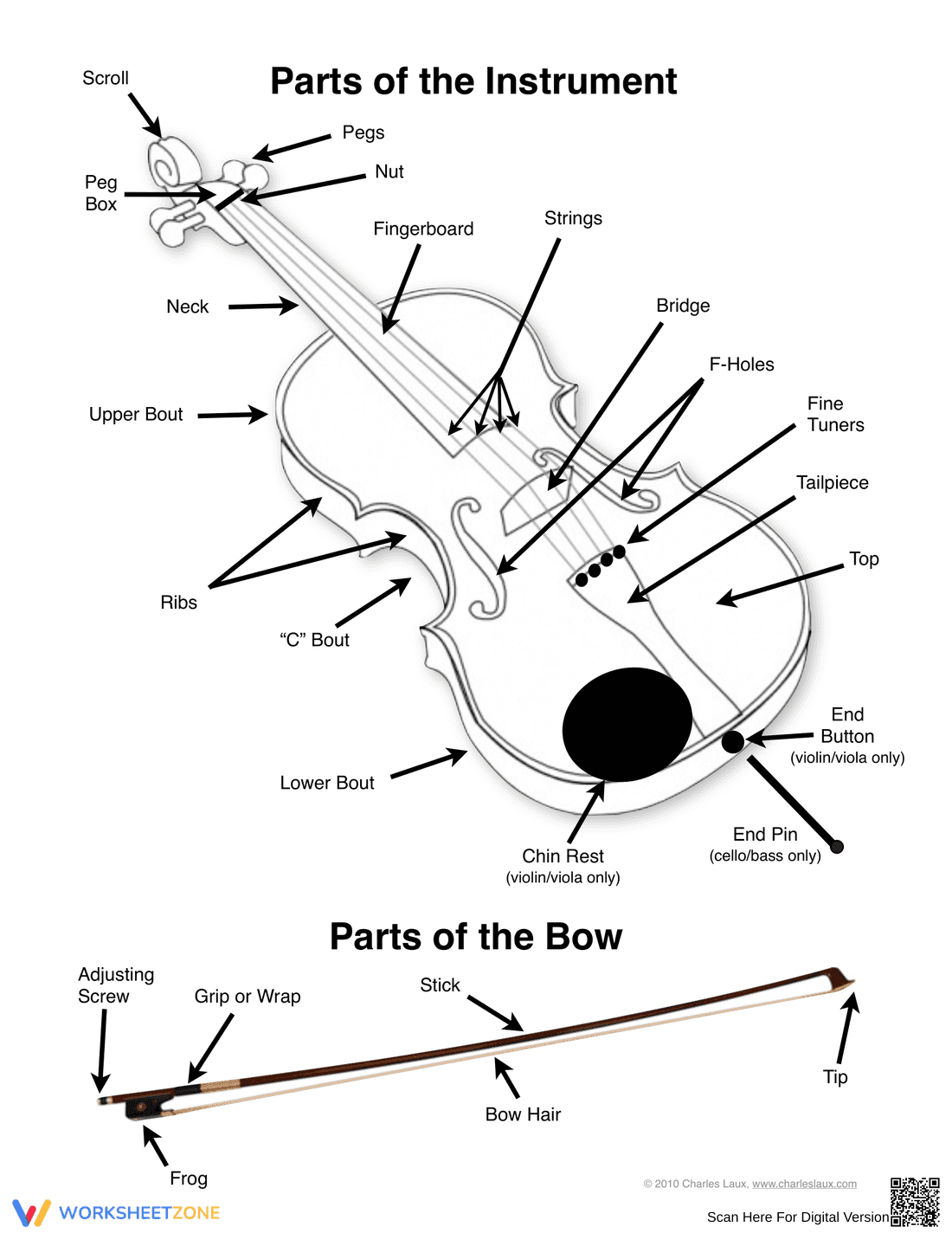
This is an educational worksheet featuring labeled diagrams of a violin and its bow. The violin diagram labels parts such as the scroll, pegs, nut, fingerboard, strings, bridge, F-holes, fine tuners, tailpiece, top, end button, chin rest, end pin, neck, upper bout, ribs, 'C' bout, peg box, and lower bout. The bow diagram labels the adjusting screw, grip or wrap, frog, stick, and bow hair.
Grade Level Suitability:
This worksheet is suitable for late elementary (grades 4-5) through middle school (grades 6-8). It's appropriate for these grades because it requires basic reading comprehension and the ability to identify and label parts of a musical instrument.
Why Use It:
This worksheet helps students learn the names and locations of the different parts of a violin and bow. It can be used to introduce students to stringed instruments, enhance their understanding of musical terminology, and improve their visual recognition skills.
How to Use It:
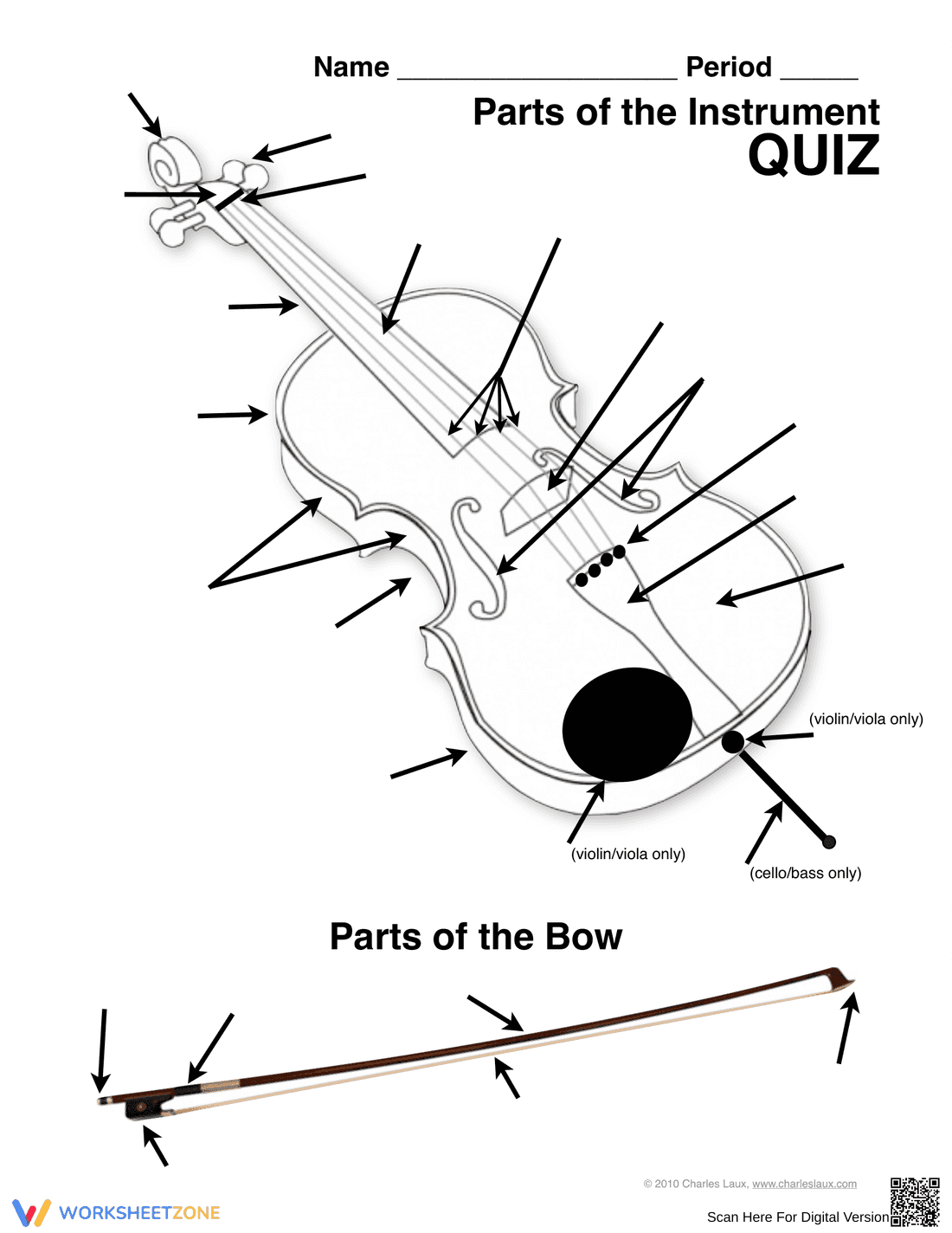
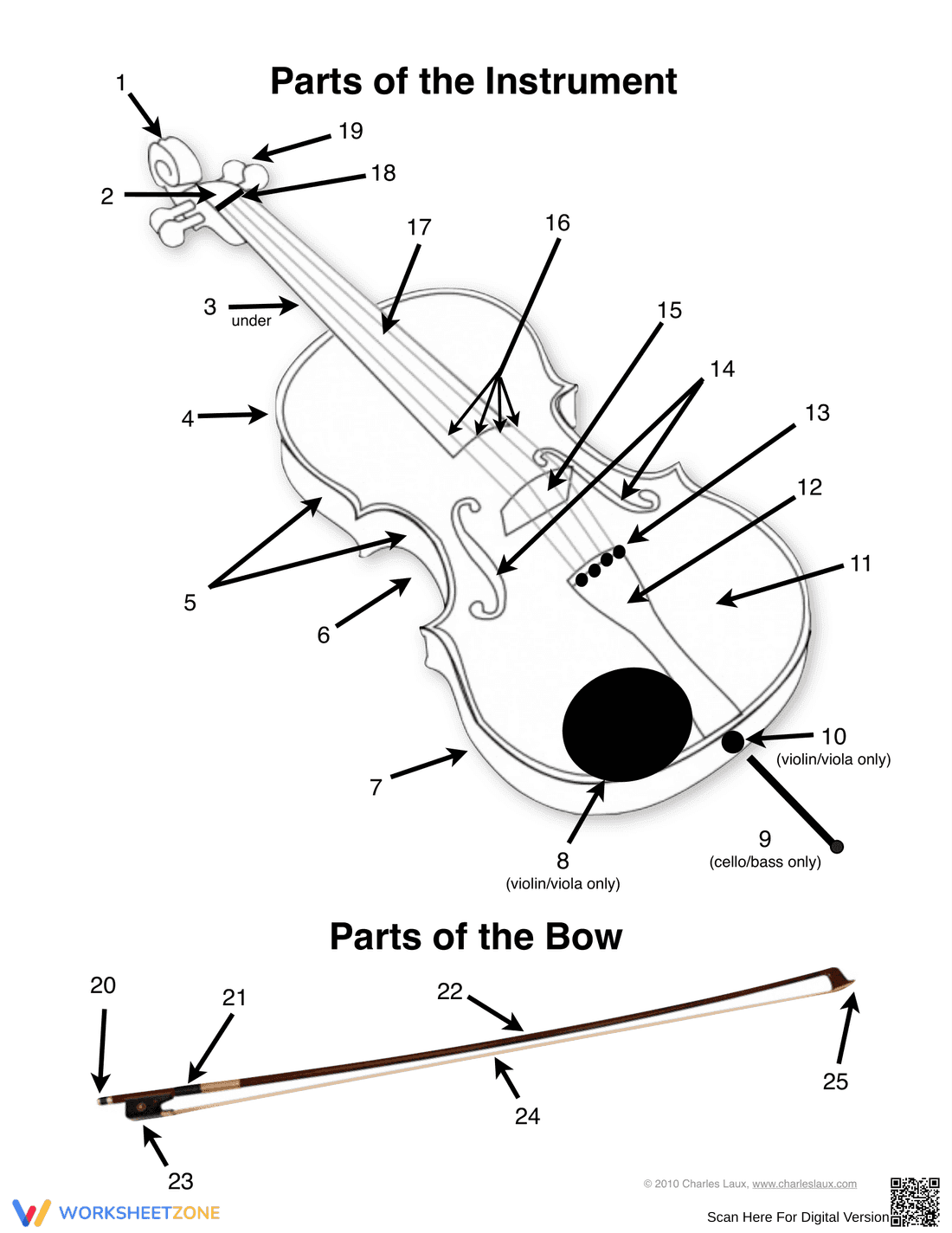
Students can use this worksheet as a reference guide while learning about the violin. They can also use it as a labeling exercise, filling in the names of the parts of the violin and bow. It can also be used as a study guide for a quiz or test.
Target Users:
The target users are music students, particularly those learning to play the violin, viola, cello, or bass. Music teachers can use it as a teaching aid in their classrooms. It can also be used by anyone interested in learning more about the anatomy of stringed instruments.
This is an educational worksheet featuring labeled diagrams of a violin and its bow. The violin diagram labels parts such as the scroll, pegs, nut, fingerboard, strings, bridge, F-holes, fine tuners, tailpiece, top, end button, chin rest, end pin, neck, upper bout, ribs, 'C' bout, peg box, and lower bout. The bow diagram labels the adjusting screw, grip or wrap, frog, stick, and bow hair.
Grade Level Suitability:
This worksheet is suitable for late elementary (grades 4-5) through middle school (grades 6-8). It's appropriate for these grades because it requires basic reading comprehension and the ability to identify and label parts of a musical instrument.
Why Use It:
This worksheet helps students learn the names and locations of the different parts of a violin and bow. It can be used to introduce students to stringed instruments, enhance their understanding of musical terminology, and improve their visual recognition skills.
How to Use It:
Students can use this worksheet as a reference guide while learning about the violin. They can also use it as a labeling exercise, filling in the names of the parts of the violin and bow. It can also be used as a study guide for a quiz or test.
Target Users:
The target users are music students, particularly those learning to play the violin, viola, cello, or bass. Music teachers can use it as a teaching aid in their classrooms. It can also be used by anyone interested in learning more about the anatomy of stringed instruments.


