




























Views
Downloads

Essential Area and Perimeter Parallelograms Worksheet

Paste this activity's link or code into your existing LMS (Google Classroom, Canvas, Teams, Schoology, Moodle, etc.).
Students can open and work on the activity right away, with no student login required.
You'll still be able to track student progress and results from your teacher account.
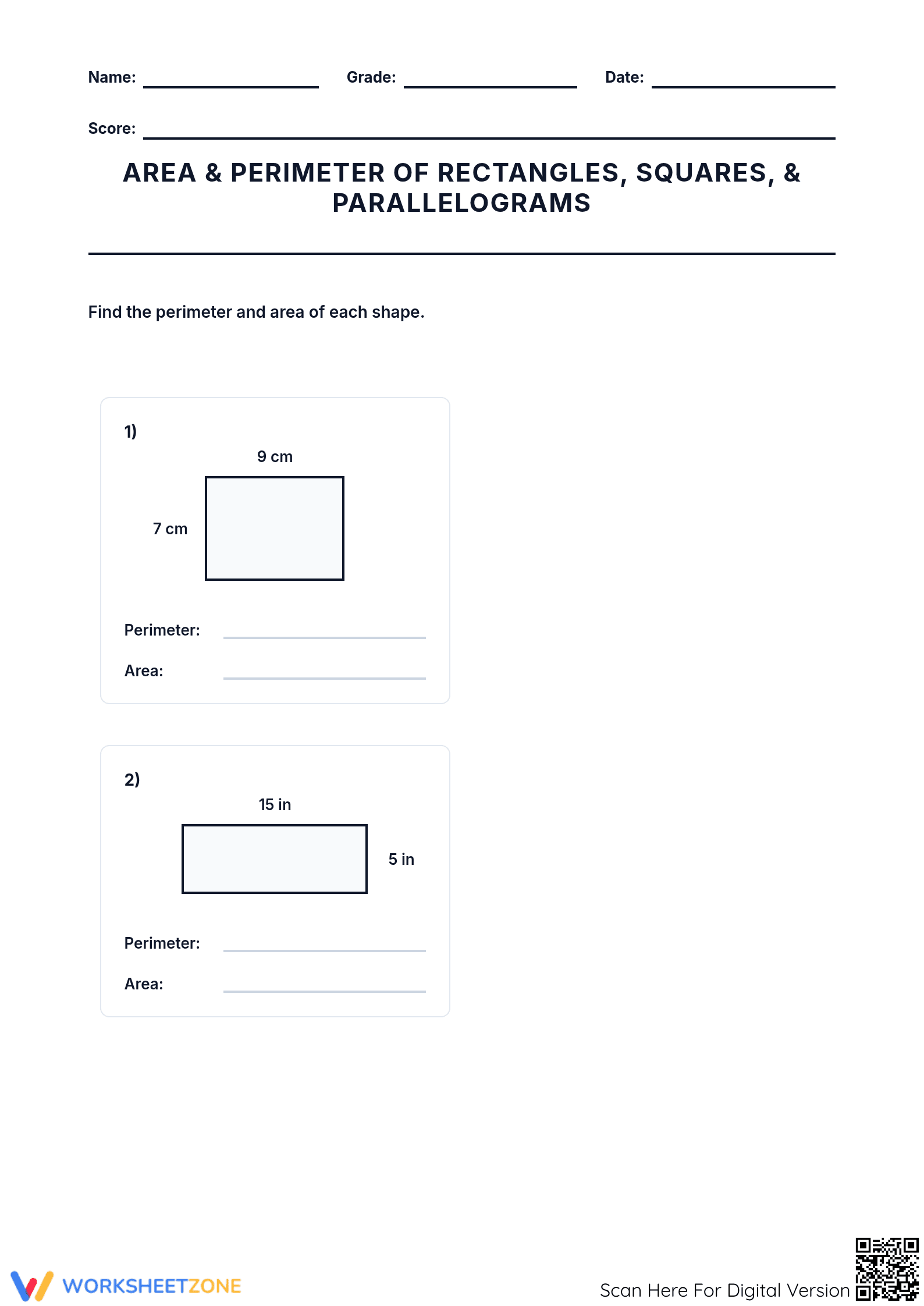
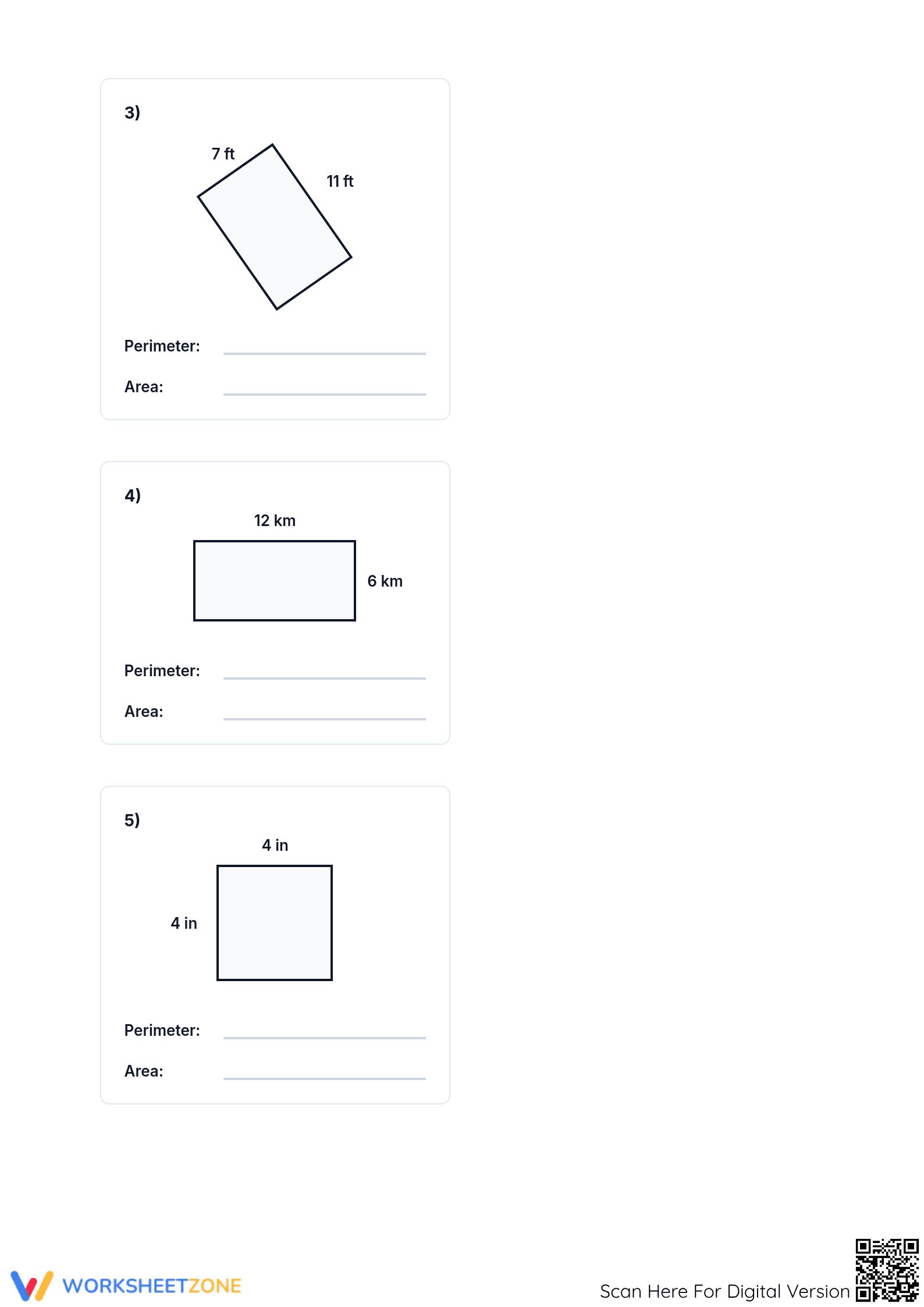
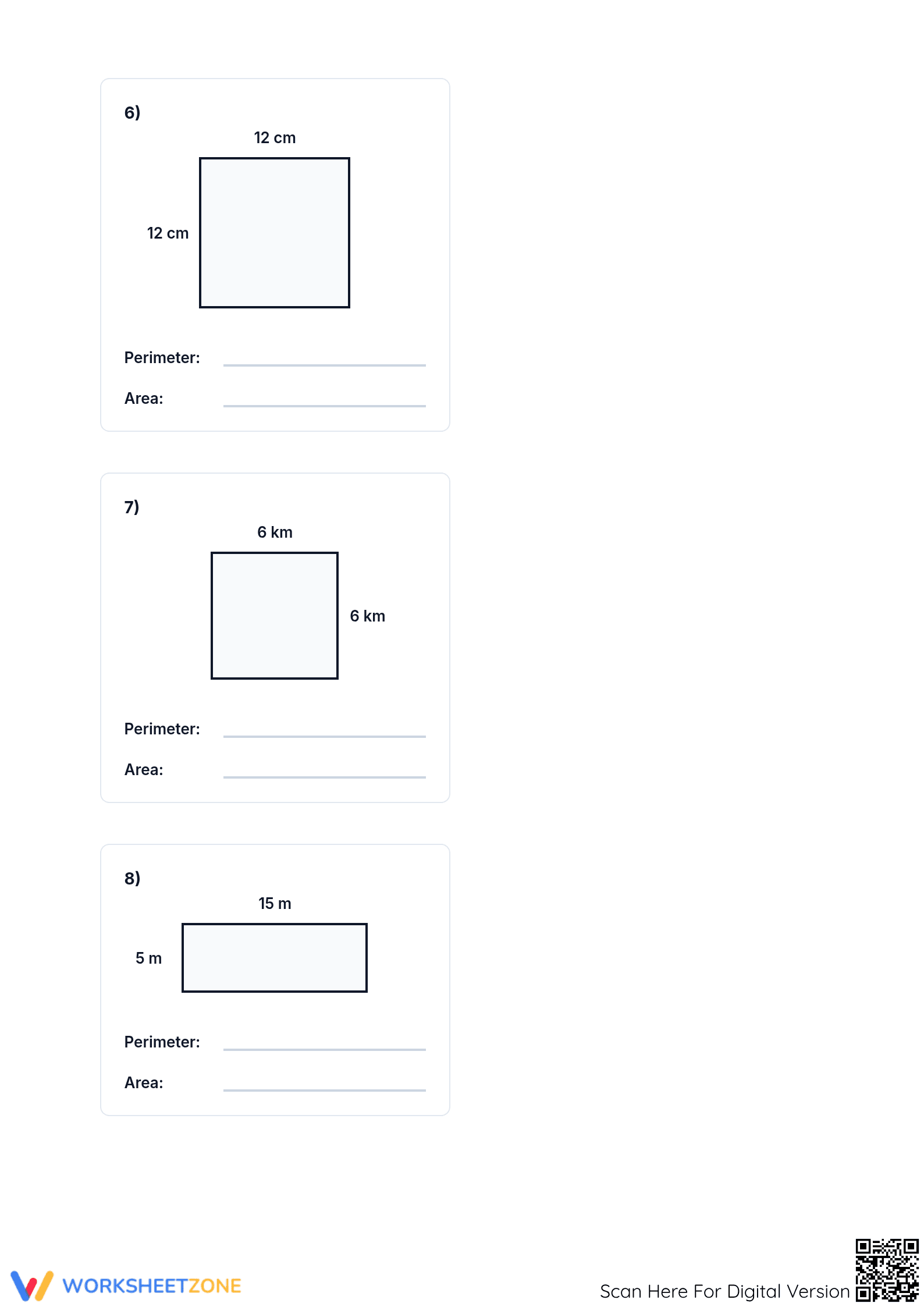
Calculate the area and perimeter of various quadrilaterals with this comprehensive 5-page practice set. Students will master finding the boundary and interior space for rectangles, squares, and parallelograms using 12 structured problems. This resource ensures learners transition from basic rectangular calculations to more complex parallelogram area formulas with confidence and precision.
At a Glance
- Grade: 7 · Subject: Math
- Standard:
CCSS.MATH.CONTENT.6.G.A.1— Find the area of special quadrilaterals and polygons by composing or decomposing shapes- Skill Focus: Quadrilateral Area & Perimeter
- Format: 5 pages · 12 problems · Answer key included · PDF
- Best For: Independent practice and quick formative assessments
- Time: 30–45 minutes
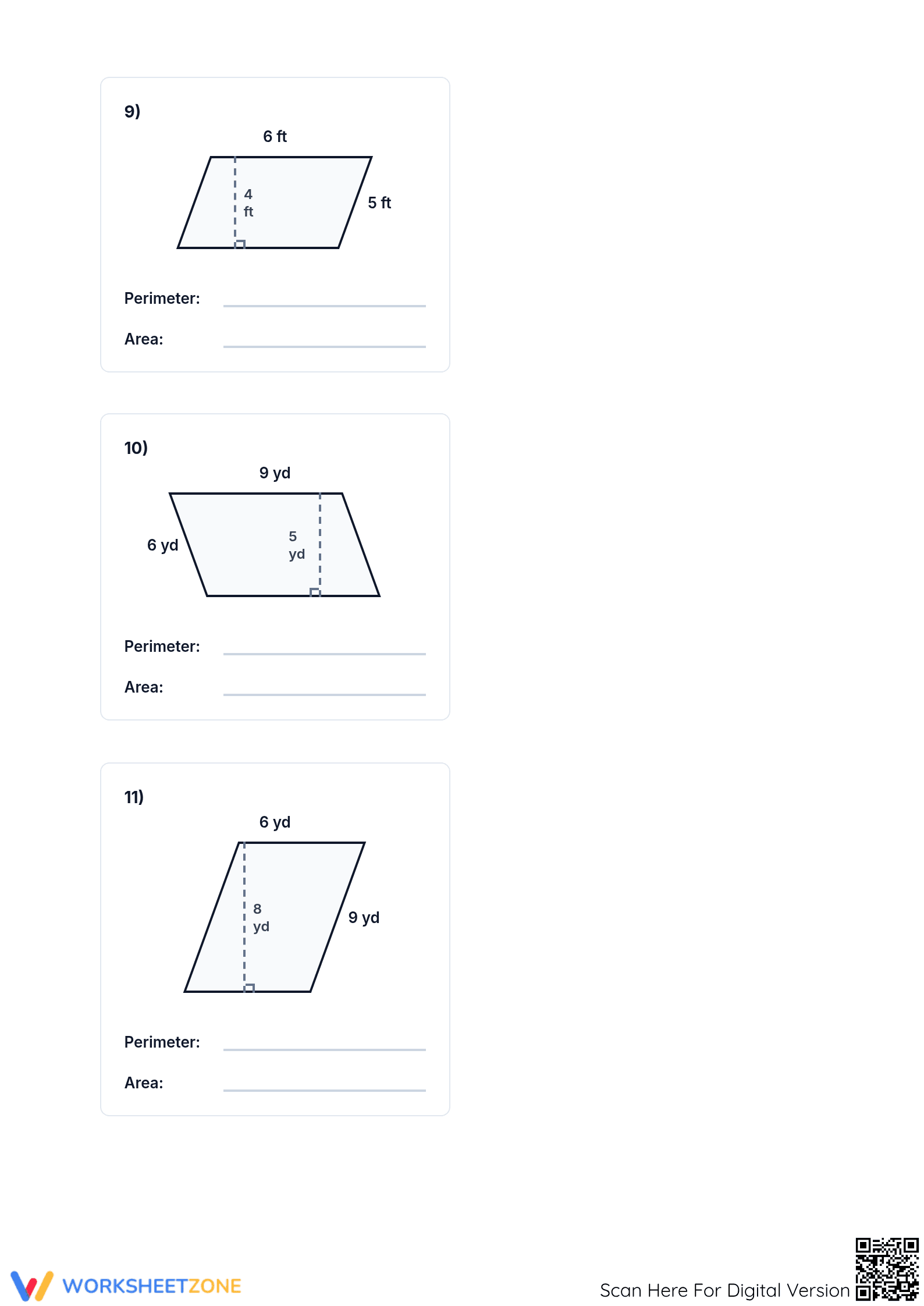
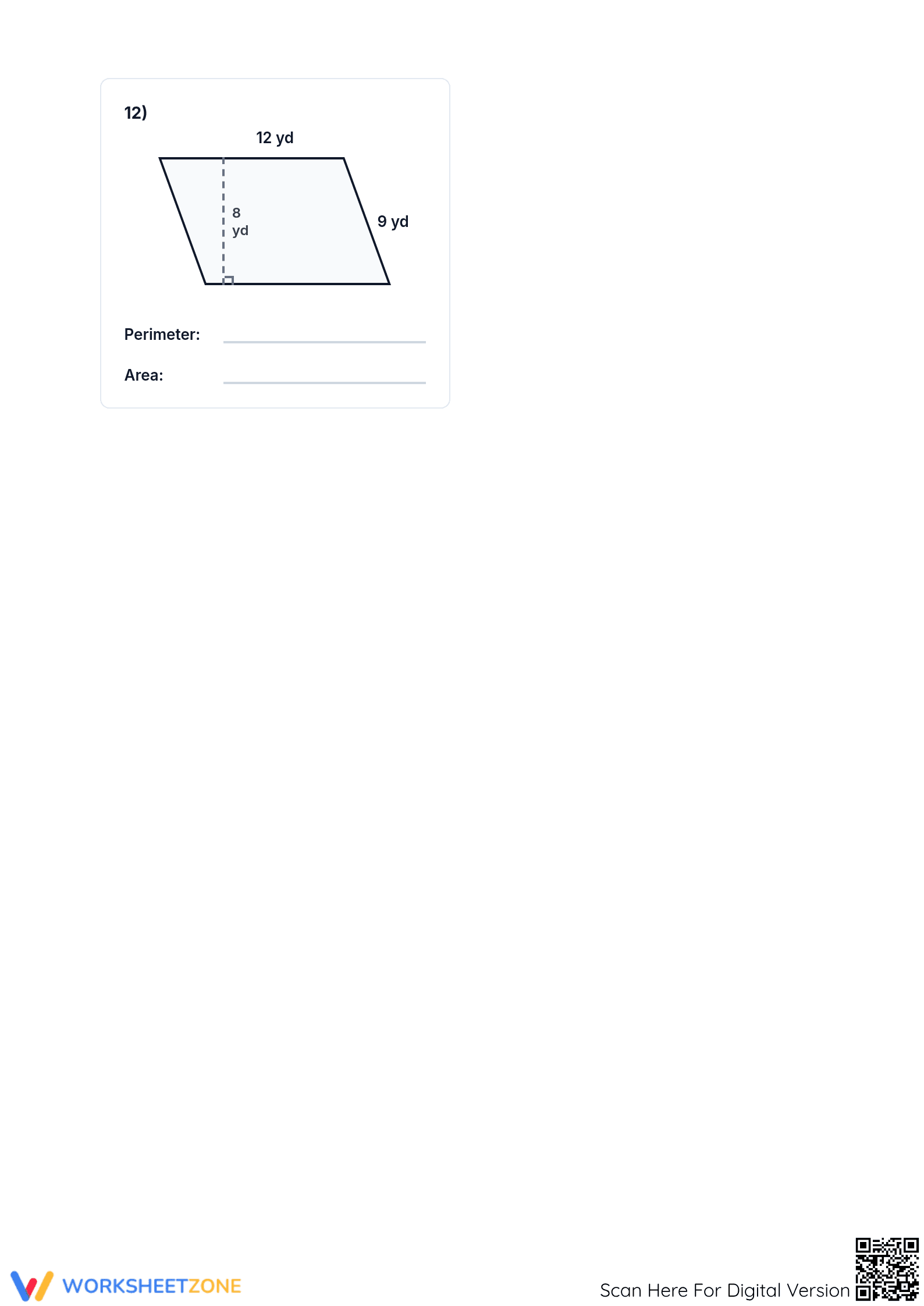
What's Inside: This 5-page PDF contains 12 distinct mathematical tasks focused on two-dimensional measurement. The first few pages cover rectangles and squares with clear dimension labeling, while the final pages introduce parallelograms with vertical height indicators. A complete answer key is provided at the end, allowing for rapid grading or student self-correction.
Zero-Prep Workflow
- Print (30 seconds): Select all five pages and the answer key for a complete classroom set.
- Distribute (1 minute): Hand out the worksheets as a warm-up, main lesson activity, or homework assignment.
- Review (1 minute): Use the provided answer key to check for common errors in unit labeling or formula application.
This streamlined workflow is designed for busy educators, making it an ideal choice for emergency sub plans or last-minute lesson extensions.
Standards Alignment
This resource is directly aligned to `CCSS.MATH.CONTENT.6.G.A.1`: "Find the area of right triangles, other triangles, special quadrilaterals, and polygons by composing into rectangles or decomposing into triangles and other shapes; apply these techniques in the context of solving real-world and mathematical problems." This standard code can be copied directly into lesson plans, IEP goals, or district curriculum mapping tools.
How to Use It
Assign this worksheet after a direct instruction lesson on the relationship between rectangles and parallelograms. For a formative assessment, observe students during problems 9 through 12 to ensure they are correctly identifying the base and height rather than using the slant height for area calculations. Students typically complete the 12 problems in 30 to 45 minutes.
Who It's For
This practice set is designed for Grade 7 through Grade 10 students who need to solidify their understanding of geometry and measurement. It is particularly effective for learners who benefit from a clean, distraction-free layout and can be paired with an anchor chart detailing quadrilateral formulas for additional support.
According to EdReports 2024, high-quality mathematics instructional materials must bridge the gap between procedural fluency and conceptual understanding. This worksheet achieves that balance by requiring students to apply the foundational area formula across multiple quadrilateral types, including squares, rectangles, and parallelograms. By isolating the calculation of perimeter and area, learners develop a robust internal model for two-dimensional measurement that is essential for higher-level geometry and coordinate plane work. The inclusion of 12 distinct problems ensures that students encounter varying dimensions and units, reinforcing the importance of unit consistency and precision in mathematical modeling. This resource is specifically aligned to CCSS.MATH.CONTENT.6.G.A.1, which focuses on finding the area of special quadrilaterals by composing or decomposing shapes. Mastery of these skills is a critical predictor of success in middle-school geometry standards, providing the necessary scaffolding for calculating surface area and volume of complex three-dimensional prisms in subsequent units.


