


























Views
Downloads
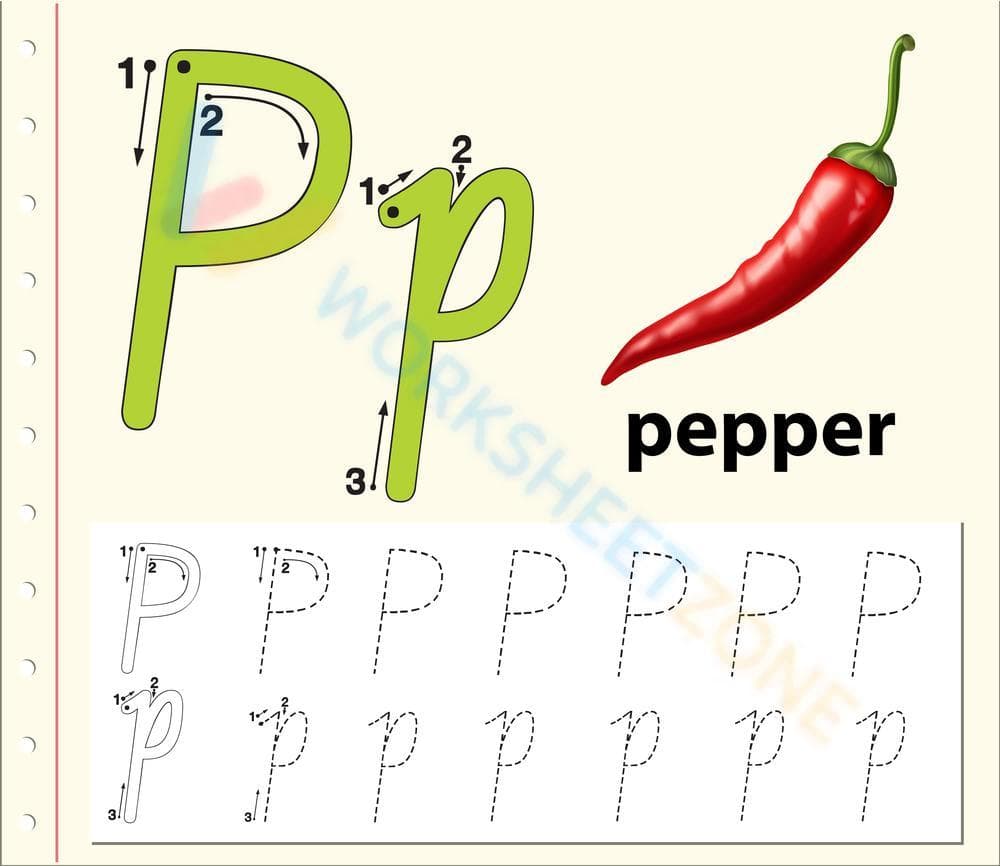

Kindergarten Letter P Tracing — Printable No-Prep Worksheet
Paste this activity's link or code into your existing LMS (Google Classroom, Canvas, Teams, Schoology, Moodle, etc.).
Students can open and work on the activity right away, with no student login required.
You'll still be able to track student progress and results from your teacher account.
This printable letter P tracing worksheet helps early learners master uppercase and lowercase letter formation while reinforcing phonics. Students trace the letter strokes guided by numbered arrows, connecting the letter shape to the beginning sound of the word pepper. This activity builds the fine motor control necessary for fluent writing.
At a Glance
- Grade: Kindergarten · Subject: ELA Phonics
- Standard:
CCSS.ELA-LITERACY.RF.K.1.D— Recognize and name all upper- and lowercase letters of the alphabet- Skill Focus: Letter P formation and identification
- Format: 1 page · 14 tasks · No answer key needed · PDF
- Best For: Independent morning work and fine motor practice
- Time: 10–15 minutes
This single-page PDF features large, clear visual guides for both uppercase P and lowercase p, complete with numbered directional arrows to teach proper stroke order. Below the visual guides, students practice writing with two rows of tracing tasks. The top row contains seven uppercase letters, and the bottom row contains seven lowercase letters. A colorful illustration of a red pepper provides a concrete visual anchor for the beginning sound /p/.
This zero-prep worksheet integrates into your daily routine. First, print the single-page PDF (1 minute). Next, distribute the sheets to students with pencils or crayons (1 minute). Finally, review student stroke order during independent practice (5 minutes). The entire setup takes under two minutes, making this resource ideal for emergency sub plans, morning work, or transition periods.
Standards Alignment
This activity aligns directly with the Common Core State Standard CCSS.ELA-LITERACY.RF.K.1.D, which requires students to recognize and name all upper- and lowercase letters of the alphabet. Additionally, it supports early phonics development by linking the letter shape to its corresponding sound. Both standard codes can be copied directly into lesson plans, IEP goals, or district curriculum mapping tools.
How to Use It
Use this worksheet during direct instruction by modeling the stroke order on a whiteboard before students begin tracing. Alternatively, assign it as a formative assessment during center rotations to observe pencil grip and stroke direction. The worksheet takes approximately 10 to 15 minutes to complete, allowing teachers to quickly gauge student letter recognition and fine motor readiness.
Who It's For
This resource is designed for kindergarteners and preschool students learning letter formation, as well as first graders needing remedial handwriting practice. It pairs naturally with a letter-sound anchor chart or a read-aloud book focusing on the letter P. The simple layout minimizes visual distractions, making it highly effective for English language learners and students receiving special education services.
Early childhood writing research emphasizes that explicit instruction in letter formation combined with visual stroke guides accelerates orthographic mapping and letter recognition. According to a study by Fisher & Frey (2014) on gradual release of responsibility, scaffolded tracing tasks help young learners transition from guided imitation to independent motor execution. This worksheet applies these principles by providing numbered arrows for initial attempts before students trace the remaining letters independently. By linking the visual form of the letter P with the phonemic anchor of the word pepper, the resource reinforces the dual pathways of visual recognition and auditory association. Incorporating this structured practice into daily ELA blocks supports the development of automaticity in handwriting, which is a critical predictor of later reading and writing fluency. Teachers can confidently integrate this standard-aligned resource to meet CCSS.ELA-LITERACY.RF.K.1.D requirements.


