


























Views
Downloads
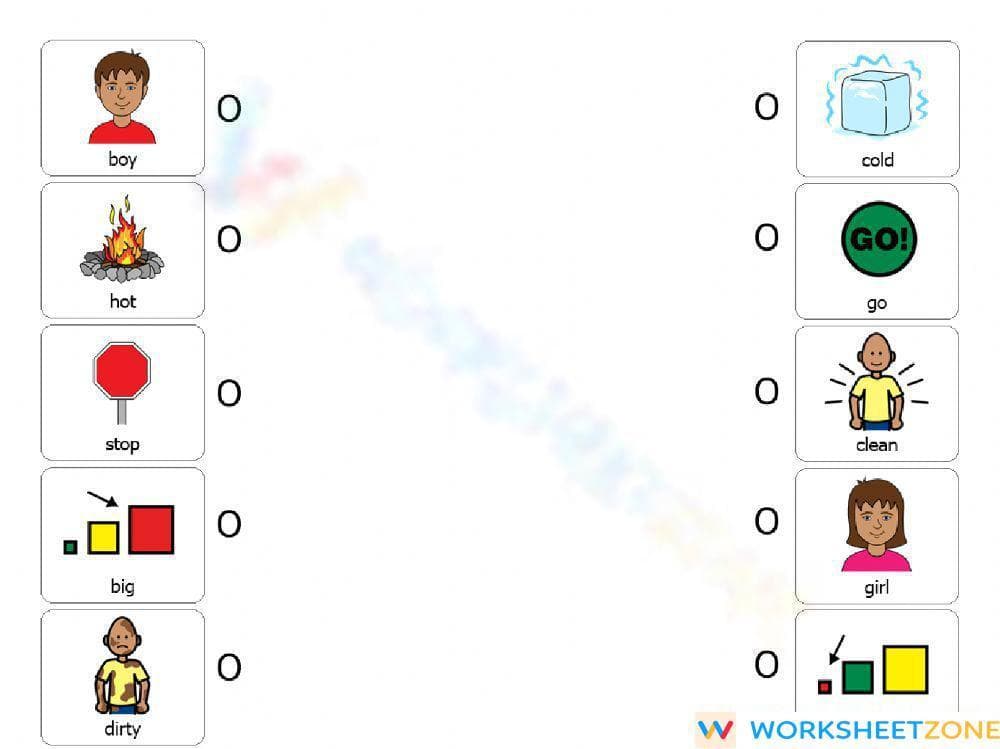


Essential Opposites Matching Worksheet | Kindergarten ELA
Paste this activity's link or code into your existing LMS (Google Classroom, Canvas, Teams, Schoology, Moodle, etc.).
Students can open and work on the activity right away, with no student login required.
You'll still be able to track student progress and results from your teacher account.
This essential opposites matching worksheet helps early learners master basic vocabulary by identifying antonym pairs through visual cues and text. Students develop critical language skills by connecting familiar concepts like "hot" and "cold" or "big" and "small," ensuring a strong foundation for reading comprehension and descriptive writing. It is a perfect tool for immediate classroom implementation.
At a Glance
- Grade: Kindergarten · Subject: English Language Arts
- Standard:
CCSS.ELA-LITERACY.L.K.5.B— Relate frequently occurring verbs and adjectives to their opposites- Skill Focus: Vocabulary and Antonyms
- Format: 2 pages · 10 problems · Answer key included · PDF
- Best For: Independent practice and vocabulary stations
- Time: 10–15 minutes
The package includes two high-quality pages featuring ten distinct matching tasks. Each problem utilizes clear, engaging illustrations paired with simple text labels to support emerging readers. The layout is clean and intuitive, utilizing a classic "line-to-dot" connection format that builds fine motor skills alongside linguistic proficiency. A comprehensive answer key is included for rapid grading and student self-correction.
The zero-prep design ensures this resource can be integrated into your lesson plan in under two minutes. Step one: print the two-page PDF directly from your device (30 seconds). Step two: distribute the worksheets to your students as a morning warm-up or center activity (30 seconds). Step three: review the completed work using the provided answer key for immediate feedback (60 seconds). It is also highly suitable for emergency sub plans.
This resource is primary aligned to CCSS.ELA-LITERACY.L.K.5.B, which requires students to demonstrate understanding of frequently occurring verbs and adjectives by relating them to their opposites. It also supports general vocabulary acquisition found in Grade 1 standards. Both standard codes can be copied directly into lesson plans, IEP goals, or district curriculum mapping tools.
Use this worksheet during the "Independent Practice" phase of a vocabulary lesson to solidify understanding of antonyms. As a formative assessment tip, observe students as they match the images; those who hesitate may need additional concrete modeling with classroom objects. This activity typically takes 10 to 15 minutes to complete, making it an ideal "exit ticket" to gauge student progress.
This activity is designed for Kindergarten and Grade 1 students, including English Language Learners (ELL) who benefit from the strong visual-text pairings. It is an excellent resource for general education classrooms, special education small groups, or homeschool environments. Pair this worksheet with a read-aloud of an opposites-themed picture book for a comprehensive instructional experience.
Effective vocabulary instruction in early childhood requires explicit exposure to word relationships, such as antonyms, to build the mental lexicon necessary for future reading fluency. According to research by Fisher & Frey (2014) on the gradual release of responsibility, structured practice with visual scaffolds enables students to internalize linguistic patterns more efficiently than through rote memorization alone. This Grade K opposites worksheet directly addresses CCSS.ELA-LITERACY.L.K.5.B by providing 10 targeted matching tasks that bridge the gap between visual recognition and abstract conceptualization. By focusing on frequently occurring adjectives and verbs, the resource ensures that learners gain mastery over the core vocabulary essential for academic success. This evidence-based approach to language acquisition provides teachers with a reliable tool for both primary instruction and remedial intervention, facilitating measurable growth in student linguistic competency.


