


























Views
Downloads
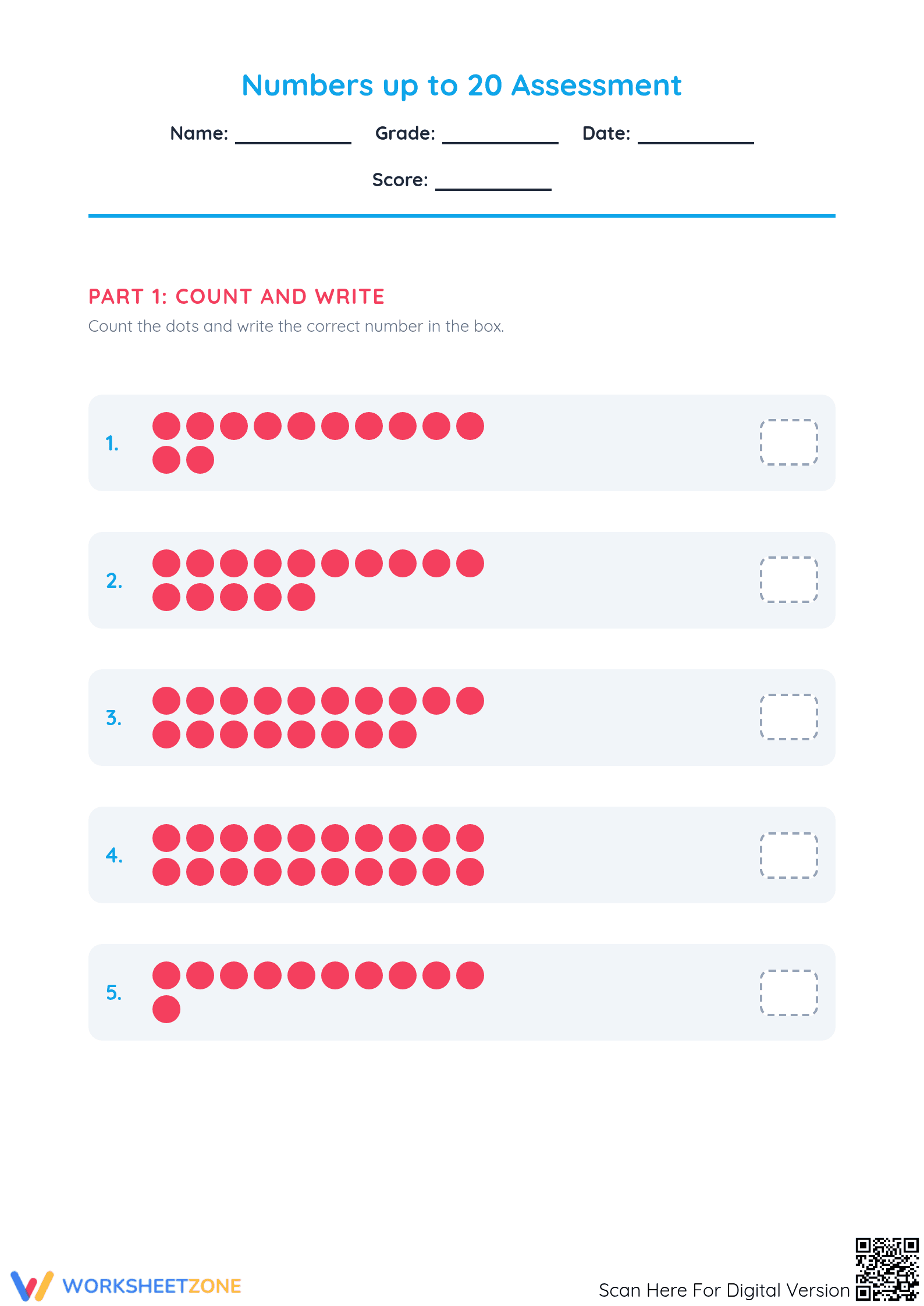
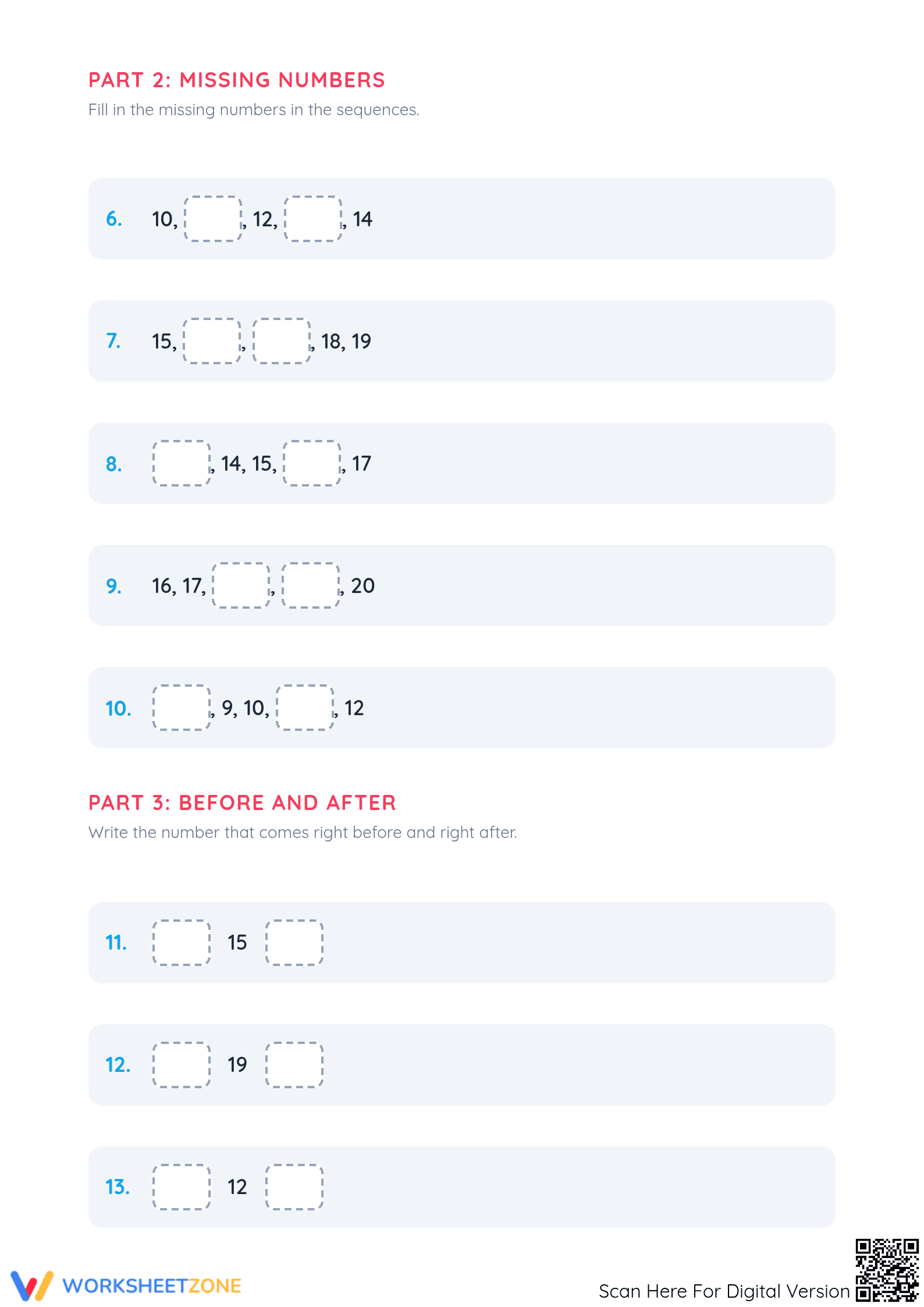
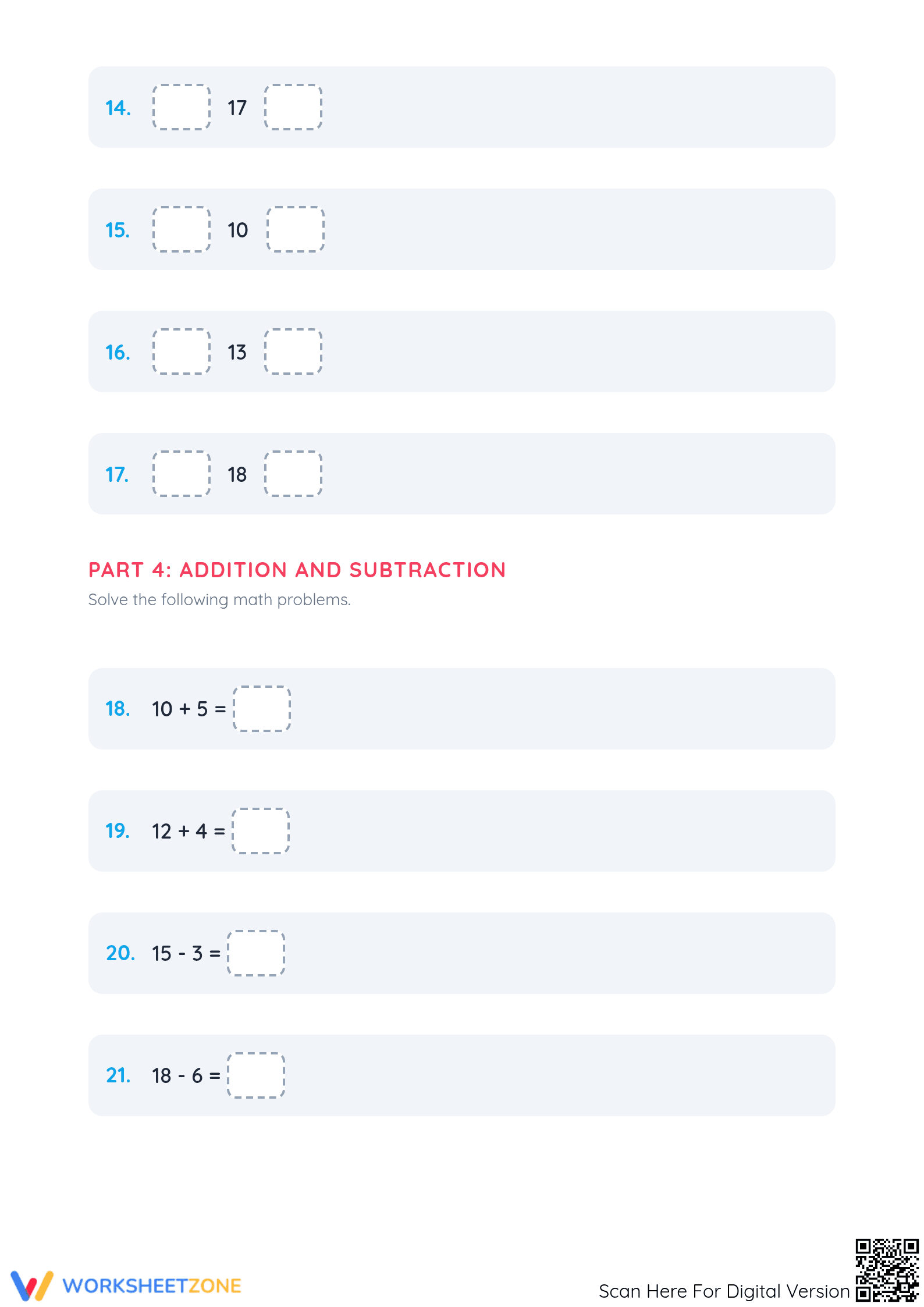
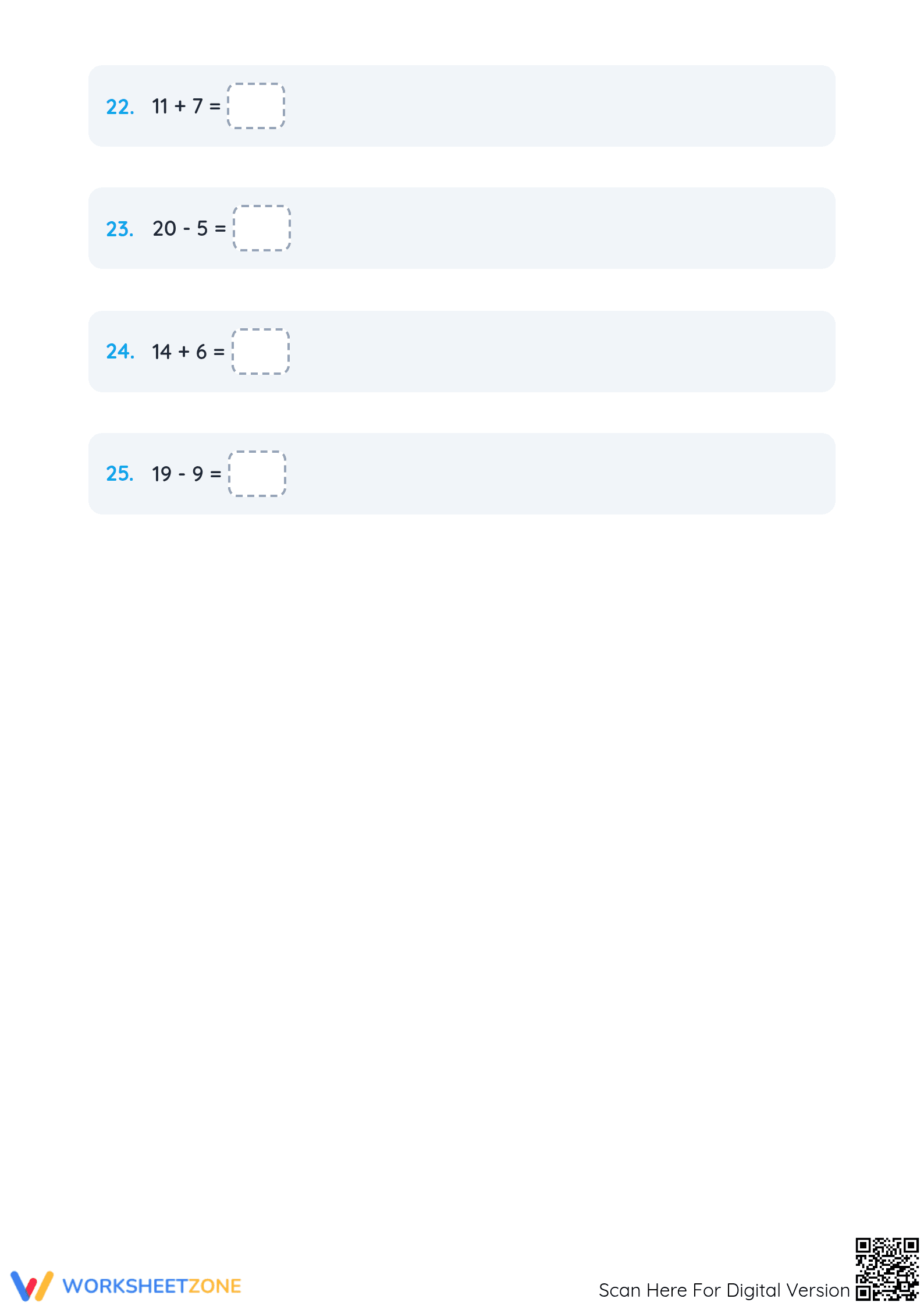

1.NBT.B.3 Worksheet: Comparing Numbers — Grade 1 Aligned
Paste this activity's link or code into your existing LMS (Google Classroom, Canvas, Teams, Schoology, Moodle, etc.).
Students can open and work on the activity right away, with no student login required.
You'll still be able to track student progress and results from your teacher account.
This Grade 1 assessment provides focused practice on comparing and ordering numbers up to 20, directly aligning with key early numeracy standards. Students will work through a variety of tasks, including using comparison symbols, identifying larger and smaller numbers, and sequencing, to build a solid foundation in number sense and place value.
At a Glance
- Grade: 1 · Subject: Math
- Standard:
CCSS.MATH.CONTENT.1.NBT.B.3— Compare two-digit numbers using >, =, and < symbols.- Skill Focus: Comparing and Ordering Numbers 1-20
- Format: 3 pages · 44 problems · Answer key included · PDF
- Best For: Summative assessment, standard mastery check, test prep
- Time: 15–25 minutes
What's Inside
This comprehensive four-page PDF includes a three-page student assessment and a full one-page answer key for quick grading. The assessment features six distinct sections: using greater than, less than, or equal to symbols; circling the bigger number; circling the smaller number; ordering number sets from smallest to biggest and vice-versa; and completing a number chart from 1 to 20.
Evidence of Mastery
This worksheet serves as a direct tool for measuring student mastery of standard CCSS.MATH.CONTENT.1.NBT.B.3. While it does not include a formal rubric, the tasks are sequenced to provide clear evidence of student understanding across different levels of cognitive demand. Performance on the initial symbol-based comparison tasks can be evaluated as "approaching," success with ordering mixed number sets as "meeting," and flawless completion of the entire packet as "exceeding" the standard's core requirements. These results offer concrete data for gradebooks or standards-based progress reports.
Standards Alignment
This assessment is principally aligned to CCSS.MATH.CONTENT.1.NBT.B.3, which requires students to "Compare two two-digit numbers based on meanings of the tens and ones digits, recording the results of comparisons with the symbols >, =, and <." The activities also support CCSS.MATH.CONTENT.K.CC.C.7 by extending number comparison from the Kindergarten level. Both standard codes can be copied directly into lesson plans, IEP goals, or district curriculum mapping tools.
How to Use It
Use this worksheet as a summative assessment after a unit on place value and number comparison for numbers 1-20. It is an excellent tool to gauge which students have achieved mastery before moving on to larger numbers. For formative assessment, observe students as they work through the first page. Note if they are consistently using a number line or counting on their fingers, which can indicate a need for more concrete practice before this abstract work. The assessment should take most students between 15 and 25 minutes to complete.
Who It's For
This resource is designed for first-grade students learning to compare numbers. It is also suitable for advanced Kindergarteners ready for a challenge or as a review for second-graders at the beginning of the year. For students who struggle, pair this worksheet with a physical number line or a set of 20 counting blocks to help them visualize the quantities they are comparing.
Providing targeted assessments like this one is critical for building early numeracy, a key predictor of later academic success. This worksheet for CCSS.MATH.CONTENT.1.NBT.B.3 provides the focused practice on number comparison that research supports. According to the RAND AIRS 2024 report, frequent, low-stakes assessment of foundational skills is essential for effective early math intervention and tracking student progress. The 44 distinct problems in this packet give students multiple opportunities to demonstrate their ability to compare two-digit numbers, a skill that underpins more complex operations like addition and subtraction with regrouping. By using tools that directly measure standard-specific skills, educators can gather the precise data needed to inform instruction and ensure every student builds a strong and lasting mathematical foundation, making this a valuable resource for any primary classroom.


