


























Views
Downloads

Essential Non-Fiction Book Log | Grade 1-4 Printable
Paste this activity's link or code into your existing LMS (Google Classroom, Canvas, Teams, Schoology, Moodle, etc.).
Students can open and work on the activity right away, with no student login required.
You'll still be able to track student progress and results from your teacher account.
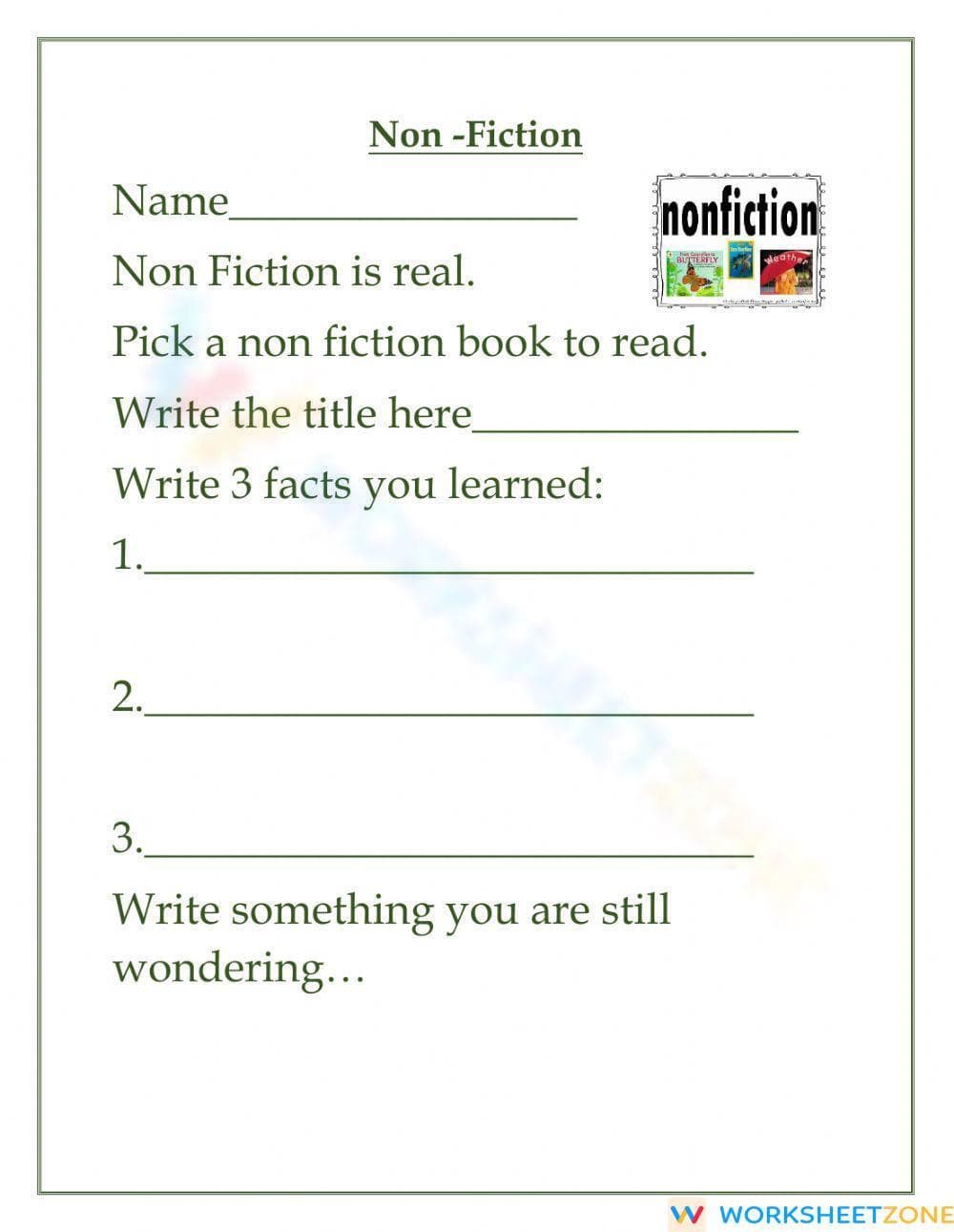
This printable Non-Fiction Book Log helps elementary students transition from passive reading to active informational processing. By requiring students to identify specific facts and formulate questions, this worksheet builds comprehension foundations. It serves as a versatile response tool that turns any informational book into a structured learning opportunity.
At a Glance
- Grade: 1-4 · Subject: ELA
- Standard:
CCSS.ELA-LITERACY.RI.1.1— Ask and answer questions about key details in a non-fiction text- Skill Focus: Fact extraction and inquiry
- Format: 1 page · 5 tasks · Answer key included · PDF
- Best For: Literacy centers and independent reading response
- Time: 15–20 minutes
What's Inside
This single-page PDF features a student-friendly layout for early elementary learners. The worksheet includes an introductory definition of non-fiction, a field for the book title, and three numbered lines for recording facts. A final "wondering" section encourages inquiry-based learning, making it more than just a simple recall exercise.
Zero-Prep Workflow
This classroom-ready resource follows a three-step implementation with zero teacher preparation. First, print the single-page response sheet in less than thirty seconds. Second, distribute the logs to students during independent reading. Third, review responses in one minute per sheet. Total teacher prep time is under two minutes, making this an ideal emergency sub-plan resource.
Standards Alignment
The primary alignment is CCSS.ELA-LITERACY.RI.1.1, requiring students to ask and answer questions about key details. By documenting three facts, students demonstrate mastery of identifying informational evidence. The final reflection question supports inquiry standards across grades. Both standard codes can be copied into lesson plans or IEP goals.
How to Use It
Use this log as a during-reading scaffold to keep students focused, or as an after-reading assessment to verify retention. For formative assessment, walk around while students complete the "wondering" section to see if their questions relate to the facts. This provides insight into their ability to synthesize new information.
Who It's For
This worksheet is ideal for students in Grades 1-4 developing informational reading stamina. It is effective for English Language Learners and students requiring visual structure, as the simple prompts reduce cognitive load. This resource pairs with any classroom library informational passage or anchor chart describing non-fiction features.
Academic research consistently highlights the importance of structured response tools in developing informational literacy. According to Fisher & Frey (2014), providing students with specific prompts to identify key details significantly increases their ability to synthesize complex non-fiction content. This worksheet addresses the CCSS.ELA-LITERACY.RI.1.1 standard by forcing a distinction between "learning facts" and "asking questions," a core competency in early inquiry-based learning. By limiting the response to three facts and one wondering, the tool prevents cognitive overwhelm while ensuring that students engage with the most salient parts of a text. This approach aligns with current best practices in reading comprehension pedagogy, which emphasize the "gradual release of responsibility" through structured scaffolds. Teachers can use the data from these logs to inform small-group instruction and targeted interventions, ensuring that every student masters the foundational skills of non-fiction analysis and evidence-based reporting.


