


























Views
Downloads


Printable Nocturnal Animals Vocabulary | Grade 1 ELA
Paste this activity's link or code into your existing LMS (Google Classroom, Canvas, Teams, Schoology, Moodle, etc.).
Students can open and work on the activity right away, with no student login required.
You'll still be able to track student progress and results from your teacher account.
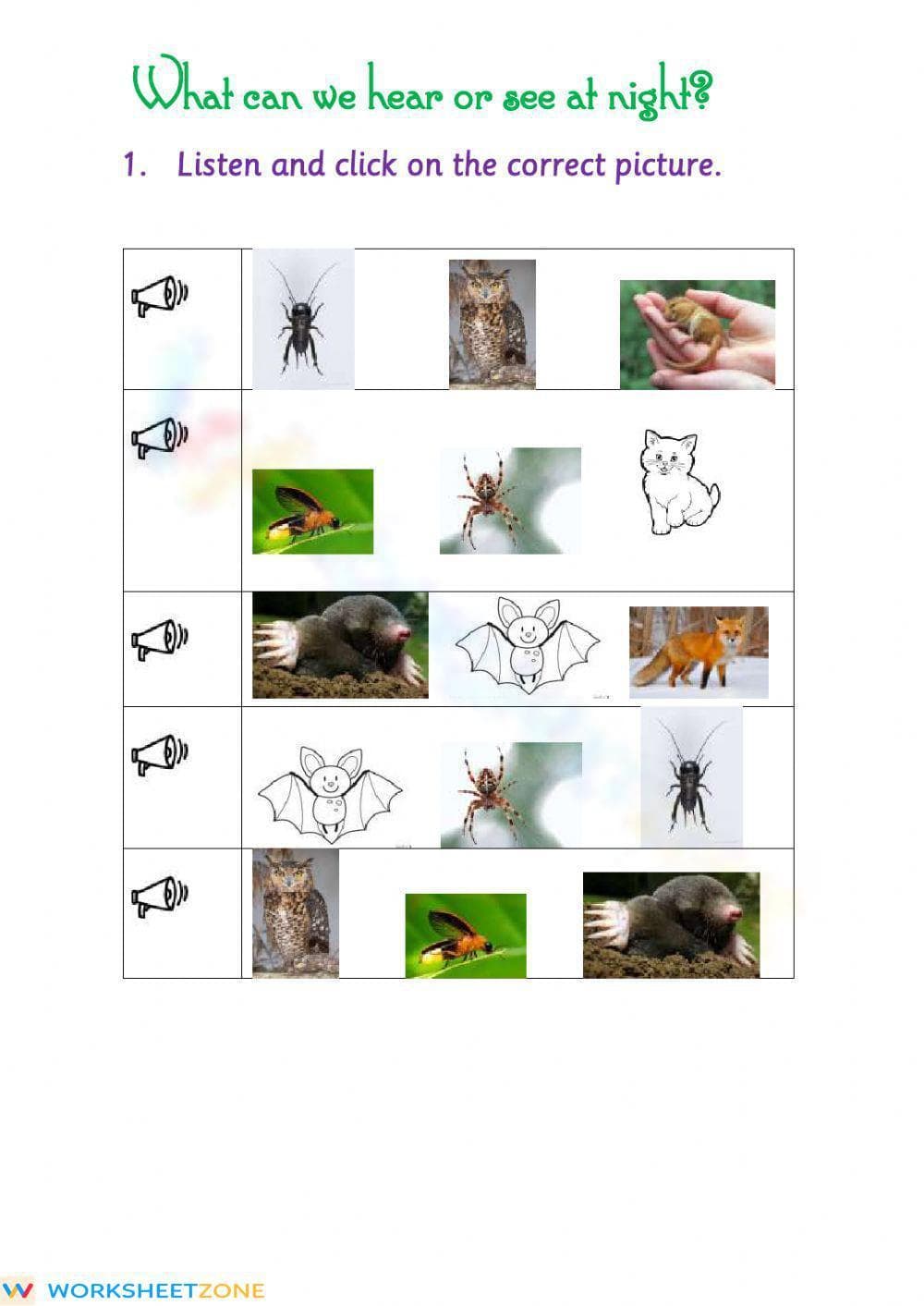
This printable Grade 1 English Language Arts worksheet provides essential vocabulary practice centered on nocturnal creatures. Students develop word recognition and spelling skills through four distinct interactive-ready activities. By identifying animals like the dormouse, mole, and firefly, learners build a foundation for science-integrated literacy while mastering expressive language goals in a structured environment.
At a Glance
- Grade: 1 · Subject: English Language Arts (ELA)
- Standard:
CCSS.ELA-LITERACY.L.1.6— Use words and phrases acquired through conversations and reading- Skill Focus: Vocabulary: Nocturnal Animals
- Format: 4 pages · 25 problems · Answer key included · PDF
- Best For: Vocabulary building and science center activity
- Time: 15–20 minutes
What's Inside
This four-page PDF resource contains four progressive tasks designed to move students from recognition to production. It begins with a listening and identification grid, followed by a word-to-picture matching exercise. The third section offers noun discrimination through multiple-choice selections, while the final page requires independent writing. A full answer key is included for immediate feedback.
A Structured Path to Skill Mastery
The worksheet employs a scaffolded approach to ensure student success:
- Guided Practice: Listening and matching tasks (13 items) provide high levels of support as students encounter new science-based terms for the first time.
- Supported Practice: Middle tasks (6 items) require students to distinguish between similar nouns in a multiple-choice format, reducing scaffolds as confidence grows.
- Independent Practice: Learners write animal names from memory (6 items), demonstrating full mastery of the nocturnal animal vocabulary set.
This sequence follows the gradual-release model, ensuring students are never overwhelmed by new content.
Standards Alignment for Your Lesson Plans
This resource is meticulously aligned to Common Core standard CCSS.ELA-LITERACY.L.1.6. This standard requires Grade 1 students to use words and phrases acquired through reading and responding to texts. By focusing on domain-specific vocabulary related to nocturnal animals, this worksheet provides the evidence of learning needed for formal progress monitoring. Standard codes can be copied directly into lesson plans or IEP goals.
How to Use It in Your Classroom
Incorporate this worksheet immediately following a read-aloud or science unit about animals of the night. It serves as an excellent independent center activity or a quick formative assessment during the "You Do" phase of a lesson. For best results, use the final writing page as an exit ticket to gauge which students require additional small-group support for spelling or recall.
Who It's For
While primarily designed for first-grade students, this resource is highly effective for advanced kindergarteners or as a review tool for second graders. The heavy reliance on clear, realistic visuals makes it a perfect choice for English Language Learners (ELL) or students requiring visual processing supports. Pair this with an anchor chart for a Tier 1 instructional intervention.
Aligned with CCSS.ELA-LITERACY.L.1.6, this nocturnal animals worksheet provides 25 targeted practice items to help Grade 1 students acquire and use content-specific vocabulary. Research by Fisher & Frey (2014) highlights that a gradual release of responsibility—moving from matching to independent writing—is essential for moving academic language into long-term memory. By integrating science topics with literacy demands, the worksheet reflects the multidisciplinary approach recommended by current educational frameworks for early childhood development. This structured vocabulary practice ensures that students can move beyond mere recognition to the expressive production of words, which is a critical precursor to complex reading comprehension and academic writing. The inclusion of high-quality visuals alongside text-based tasks supports a wide range of learner needs while maintaining high standards for mastery. This resource is an essential component for any comprehensive Grade 1 literacy curriculum.


