


























Views
Downloads
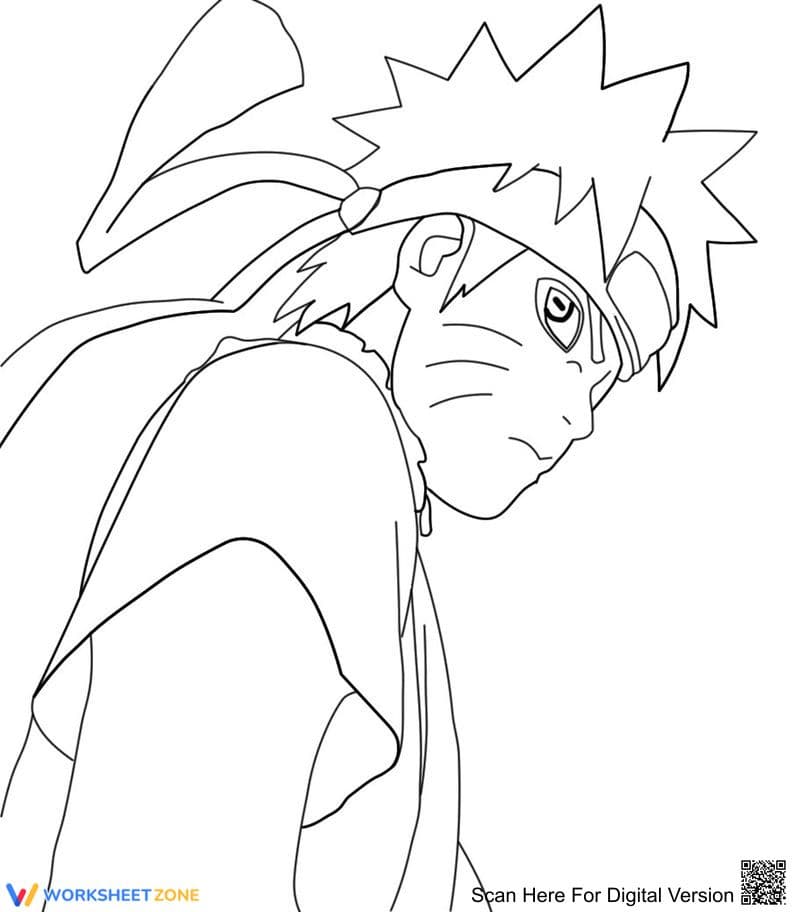

Naruto Portrait Coloring Page | Essential Grade K-5 Art
Paste this activity's link or code into your existing LMS (Google Classroom, Canvas, Teams, Schoology, Moodle, etc.).
Students can open and work on the activity right away, with no student login required.
You'll still be able to track student progress and results from your teacher account.
This Naruto Portrait coloring worksheet provides Kindergarten through Grade 5 students with a high-interest artistic activity to refine fine motor control and hand-eye coordination. By focusing on a popular character, students remain engaged while practicing precision in their coloring techniques, leading to improved pencil grip and spatial awareness. This resource supports foundational writing skills through creative engagement.
At a Glance
- Grade: K-5 · Subject: English (Arts & Crafts)
- Standard:
VA:Cr1.1.Ka— Engage in exploration and imaginative play with various art materials- Skill Focus: Fine Motor Skills and Artistic Expression
- Format: 1 page · 1 task · No answer key needed · PDF
- Best For: Early finishers and morning work
- Time: 15–20 minutes
What's Inside
This single-page PDF features a clean, professional line-art portrait of Naruto Uzumaki. The bold outlines are designed to assist younger learners in staying within the lines, while the detailed hair and headband provide a challenge for older elementary students. There are no complex instructions, making it an ideal resource for independent work stations or creative breaks.
Zero-Prep Workflow
The implementation of this resource requires less than 2 minutes of teacher preparation. First, Print (30 seconds) the single-page PDF for your class size. Second, Distribute (30 seconds) the sheets along with crayons, colored pencils, or markers. Third, Review (60 seconds) the completed portraits to observe student progress in color selection and boundary control. It serves as a perfect emergency sub plan filler.
Standards Alignment
The primary standard addressed is `VA:Cr1.1.Ka`, which involves students engaging in exploration and imaginative play with art materials. Additionally, it supports foundational writing skills by strengthening the small muscles in the hand required for letter formation. This standard code can be copied directly into lesson plans, IEP goals, or district curriculum mapping tools.
How to Use It
Use this worksheet during the after phase of direct instruction as a calming transition activity or as a reward for completing core ELA tasks. Teachers can use this as a formative assessment moment by observing a student's tripod grip and pressure control during the coloring process. Expect completion within 15 to 20 minutes depending on the medium used.
Who It's For
This resource is designed for elementary students in Grades K-5, particularly those who benefit from high-interest visual stimuli to maintain focus. It is an excellent tool for Occupational Therapy sessions or as a calming activity for students with sensory processing needs. Pair this with a character-building lesson or a short reading passage about perseverance.
Research from Fisher & Frey (2014) emphasizes the importance of purposeful independent work that builds student agency and motor proficiency. Coloring activities, while often viewed as purely recreational, play a critical role in the development of the intrinsic muscles of the hand, which are foundational for fluent handwriting. According to a 2024 analysis of instructional materials, high-interest characters like those found in this Naruto Portrait worksheet significantly increase task persistence among primary learners. By integrating standard VA:Cr1.1.Ka, educators ensure that creative expression is balanced with developmental milestones. This worksheet provides a structured environment for students to practice color theory and spatial reasoning without the cognitive load of complex verbal instructions. Such activities are essential for early childhood development, bridging the gap between play and formal academic writing tasks through the refinement of fine motor skills. This resource serves as a bridge between artistic play and academic readiness.


