


























Views
Downloads




Essential Narrative Poetry Worksheet | Grade 1-2 ELA
Paste this activity's link or code into your existing LMS (Google Classroom, Canvas, Teams, Schoology, Moodle, etc.).
Students can open and work on the activity right away, with no student login required.
You'll still be able to track student progress and results from your teacher account.
Narrative poetry blends the emotional resonance of verse with the structural elements of a story. This comprehensive Grade 1-2 English Language Arts worksheet guides students through identifying sensory language and narrative arcs within poems. By the end of these activities, learners will be able to pinpoint words that suggest feelings and craft their own narrative poem brainstorm.
At a Glance
- Grade: 1–2 · Subject: ELA
- Standard:
ELAGSE-1RL4— Identify words and phrases in poems that suggest feelings or appeal to senses.- Skill Focus: Narrative Poetry Elements
- Format: 5 pages · 6 tasks · Anchor charts included · PDF
- Best For: Introduction to narrative verse and poetic structure
- Time: 45–60 minutes
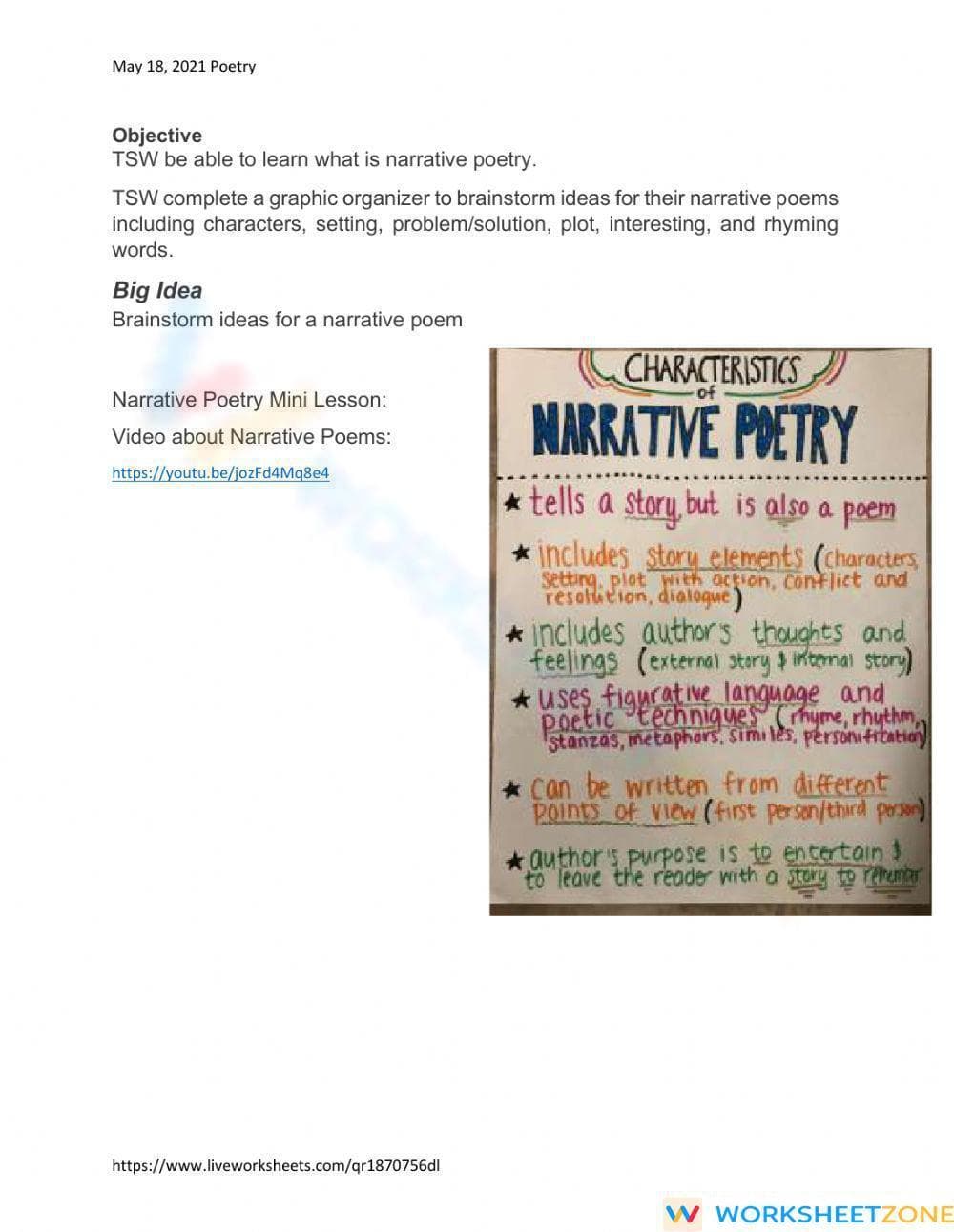
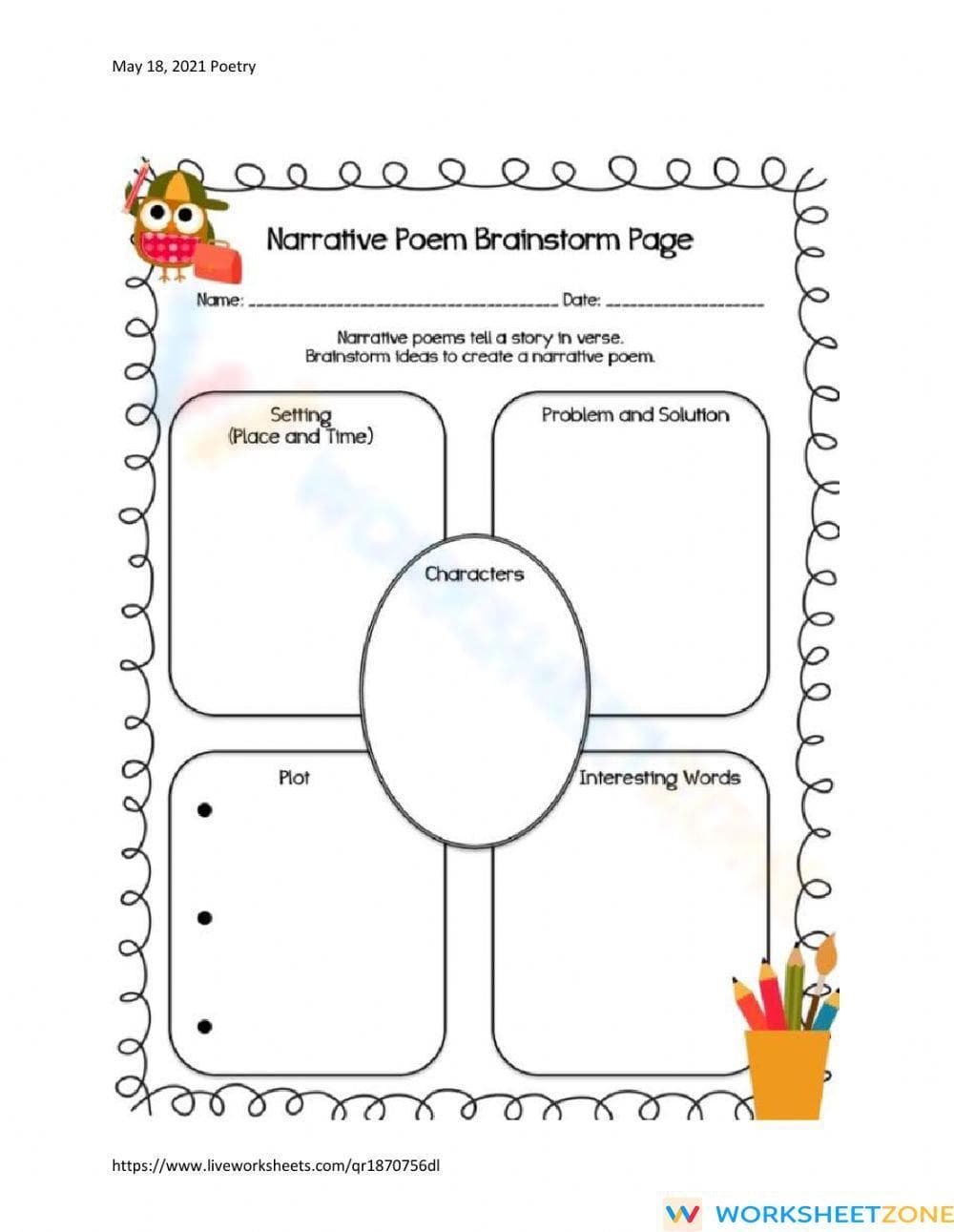
This 5-page packet provides a complete instructional sequence. It begins with a dedicated standards and learning targets page to orient students and teachers. Inside, you will find a "Characteristics of Narrative Poetry" anchor chart, links to a mini-lesson video, a sample poem analysis task ("Crocodile on the Loose"), a rhyming word exploration activity, and a multi-section narrative poem brainstorming graphic organizer.
Zero-Prep Workflow
Teachers can implement this lesson in three simple steps. First, print the 5-page PDF or assign it digitally (1 minute). Second, distribute the packet and use the anchor chart as a shared reading exercise to establish definitions (10 minutes). Third, students complete the independent analysis and brainstorming tasks (30 minutes). Total preparation time is under two minutes.
Standards Alignment
The primary focus is standard `ELAGSE-1RL4`, which requires students to identify words and phrases in stories or poems that suggest feelings or appeal to the senses. Additionally, the brainstorming sections support `ELAGSE-1W3` by asking students to recount sequenced events and include details about what happened. Both standard codes can be copied directly into lesson plans, IEP goals, or district curriculum mapping tools.
How to Use It
This resource is ideal for the "We Do/You Do" phase of a poetry unit. Start by reviewing the anchor chart as a class to define narrative elements like characters and setting, then transition to the sample poem analysis. For a formative-assessment observation, check if students can successfully link "interesting words" in their brainstorm to the sensory feelings they intend to evoke in their readers.
Who It's For
This packet is tailored for first and second-grade students moving from simple rhyming to complex literary structures. It provides scaffolds for emerging writers while the 'Interesting Words' and 'Problem and Solution' sections challenge advanced learners. Pair this with a read-aloud of narrative poems or a sensory word wall for maximum impact.
Standard `ELAGSE-1RL4` is foundational for early literacy, bridging the gap between basic decoding and deep comprehension. According to `Fisher & Frey (2014)`, the gradual release of responsibility—moving from teacher-led anchor charts to independent brainstorming—is critical for mastering complex genres like narrative poetry. This worksheet leverages that methodology by providing a clear sequence that includes definitions, examples, and practice. By identifying words that appeal to the senses and mapping story elements in verse, students develop analytical skills for literary criticism. Research from `EdReports 2024` highlights that standards-aligned materials which integrate reading, writing, and language strands significantly improve student outcomes. This resource ensures Grade 1-2 learners engage with narrative poetry through a rigorous, accessible framework, fostering creative expression and technical proficiency in alignment with Common Core expectations.


