


























Views
Downloads
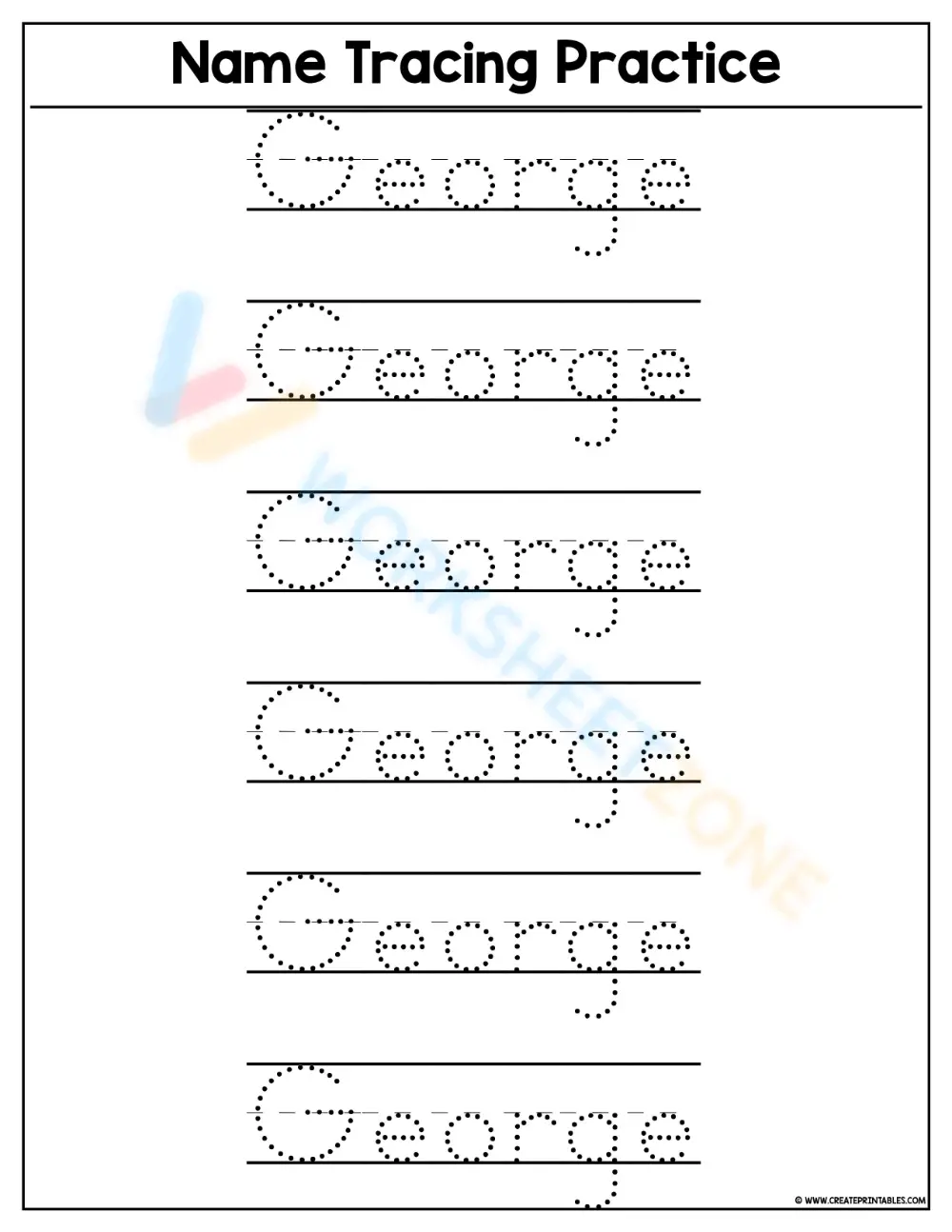

Grade K Name Tracing: George — Printable No-Prep Worksheet
Paste this activity's link or code into your existing LMS (Google Classroom, Canvas, Teams, Schoology, Moodle, etc.).
Students can open and work on the activity right away, with no student login required.
You'll still be able to track student progress and results from your teacher account.
This printable handwriting worksheet provides targeted practice for students learning to write the name George. By tracing dotted letters on primary writing lines, early learners develop essential fine motor control and proper letter formation habits. This single-page resource offers straightforward, repetitive practice to build confidence in foundational literacy skills.
At a Glance
- Grade: K · Subject: English
- Standard:
CCSS.ELA-LITERACY.L.K.1.A— Print many upper- and lowercase letters- Skill Focus: Name Tracing and Letter Formation
- Format: 1 page · 6 problems · No answer key · PDF
- Best For: Morning work or literacy centers
- Time: 5–10 minutes
This resource features a single, highly focused practice page with six lines of tracing exercises. The name George is presented in a clear, dotted primary font, perfectly aligned on standard handwriting guidelines with a dashed midline. This structured layout ensures students understand exactly where to start and end each stroke, promoting consistent sizing and spacing without the need for complex instructions or additional materials.
Implementing this resource requires absolutely minimal teacher preparation. First, print the PDF document (under one minute). Next, distribute the pages along with pencils or fine-tip markers (one minute). Finally, review the completed tracing lines to check for proper grip and stroke direction (two to three minutes). The setup takes less than two minutes, making it an excellent option for emergency sub plans, quick morning work, or immediate intervention for students struggling with name recognition and writing.
This worksheet is directly aligned with primary standard CCSS.ELA-LITERACY.L.K.1.A, which requires students to print many upper- and lowercase letters. It also supports foundational reading skills by reinforcing letter recognition through repeated exposure. Both standard codes can be copied directly into lesson plans, IEP goals, or district curriculum mapping tools.
This tracing sheet is highly versatile for early childhood classrooms. Use it as a daily morning work routine before direct instruction begins, allowing students to settle in with a familiar, independent task. Alternatively, place it in a literacy center for targeted fine motor practice. While students work, teachers can conduct quick formative assessments by observing pencil grip and noting whether children are forming letters from top to bottom. Most students will complete this activity within a five to ten-minute timeframe.
This resource is specifically designed for Pre-K and Kindergarten students who are mastering their personal information and basic handwriting skills. It serves as an excellent differentiation tool for occupational therapy sessions or special education students needing modified, repetitive fine motor tasks. Pair this worksheet with tactile letter-building activities, such as tracing in sand or using playdough, to create a comprehensive, multisensory approach to letter formation and name recognition.
Developing automaticity in handwriting is a critical precursor to expressive writing and broader literacy success. According to a comprehensive Fisher & Frey (2014) analysis on foundational skills, explicit instruction and repeated practice in letter formation significantly reduce the cognitive load required for transcription, allowing young learners to eventually focus on content generation. This worksheet targets CCSS.ELA-LITERACY.L.K.1.A by having students print many upper- and lowercase letters through guided tracing. By practicing the specific sequence of letters in the name George, students build the muscle memory necessary for fluent writing. The structured use of primary lines with dashed midlines provides the essential visual scaffolding recommended by early childhood researchers to establish correct spatial proportions. Consistent engagement with targeted tracing activities ensures that students develop the fine motor strength and precision required for long-term academic achievement across all subject areas.


