


























Views
Downloads

Essential Mental Arithmetic Book 1: Grade 1-2 Math Practice
Paste this activity's link or code into your existing LMS (Google Classroom, Canvas, Teams, Schoology, Moodle, etc.).
Students can open and work on the activity right away, with no student login required.
You'll still be able to track student progress and results from your teacher account.
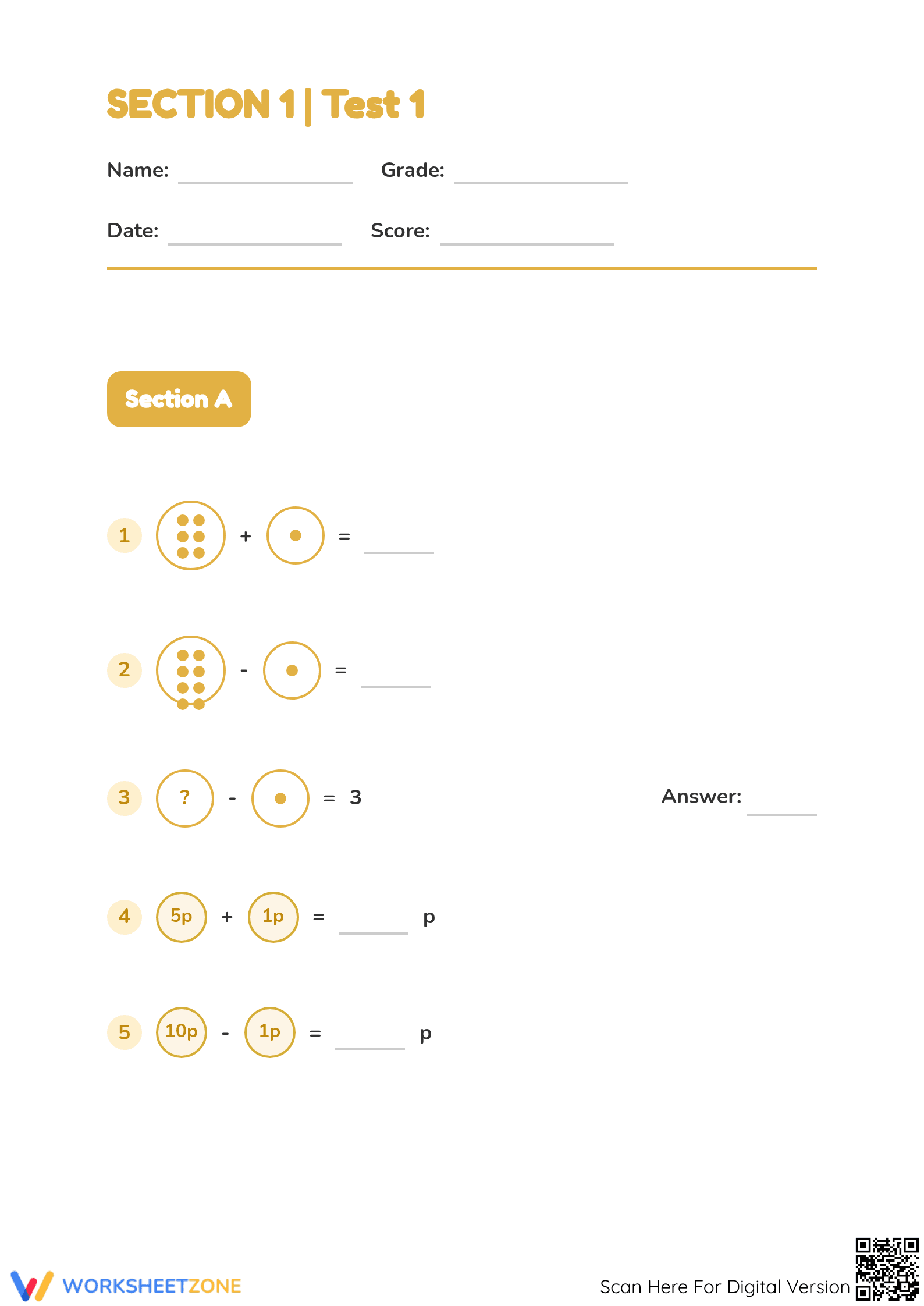
This comprehensive mental arithmetic worksheet empowers Grade 1 and 2 students to master foundational math skills through structured practice. By engaging with tasks ranging from visual addition to word-based mental math, learners build the fluency necessary for higher-level operations. Students will gain confidence in calculating sums, differences, and identifying basic measurements.
At a Glance
- Grade: 1–2 · Subject: Math
- Standard:
CCSS.MATH.CONTENT.1.OA.C.6— Add and subtract within 20, demonstrating fluency for addition and subtraction- Skill Focus: Mental Arithmetic & Mixed Review
- Format: 4 pages · 30 problems · Answer key included · PDF
- Best For: Daily warm-ups or weekly assessments
- Time: 15–25 minutes
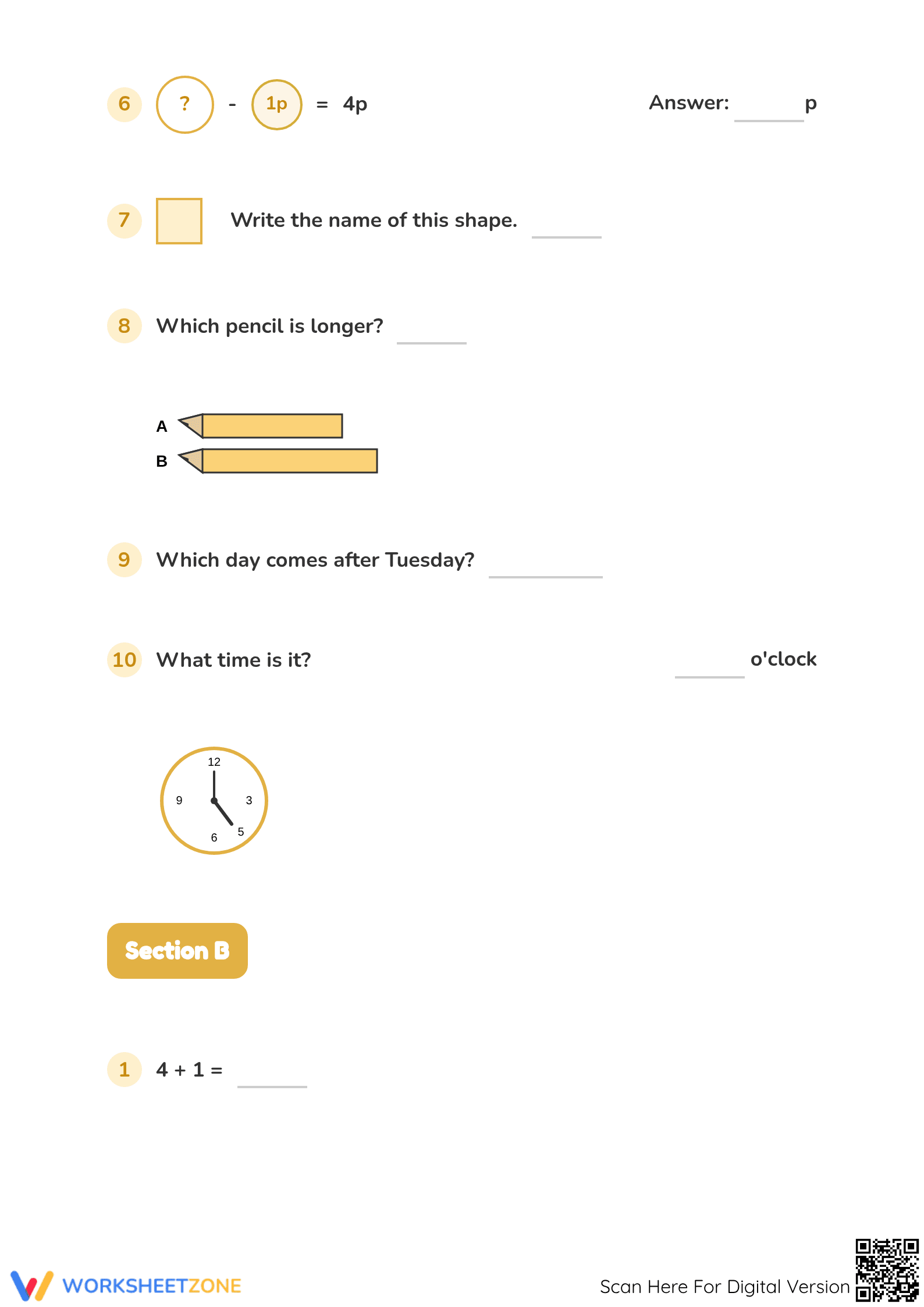
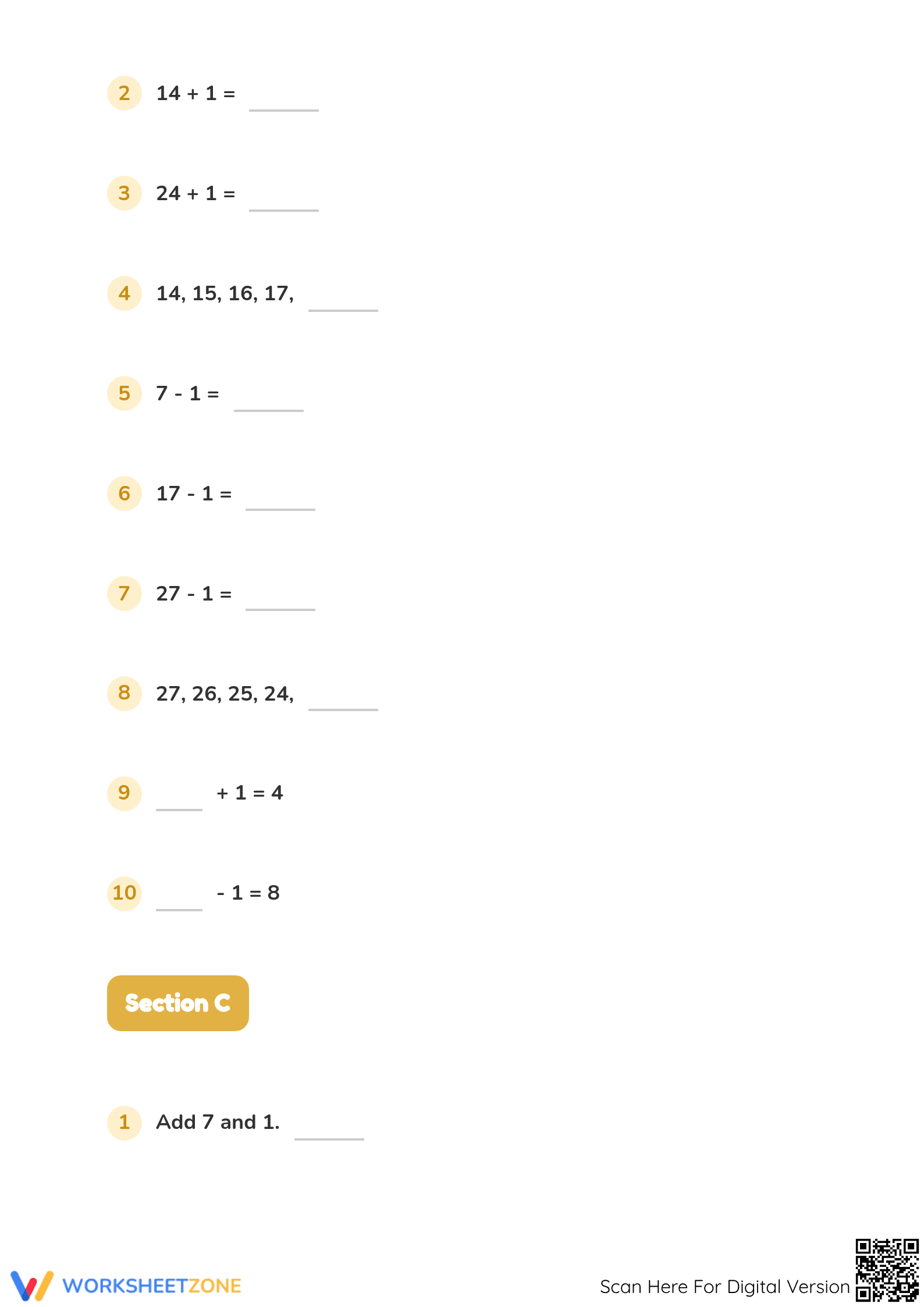
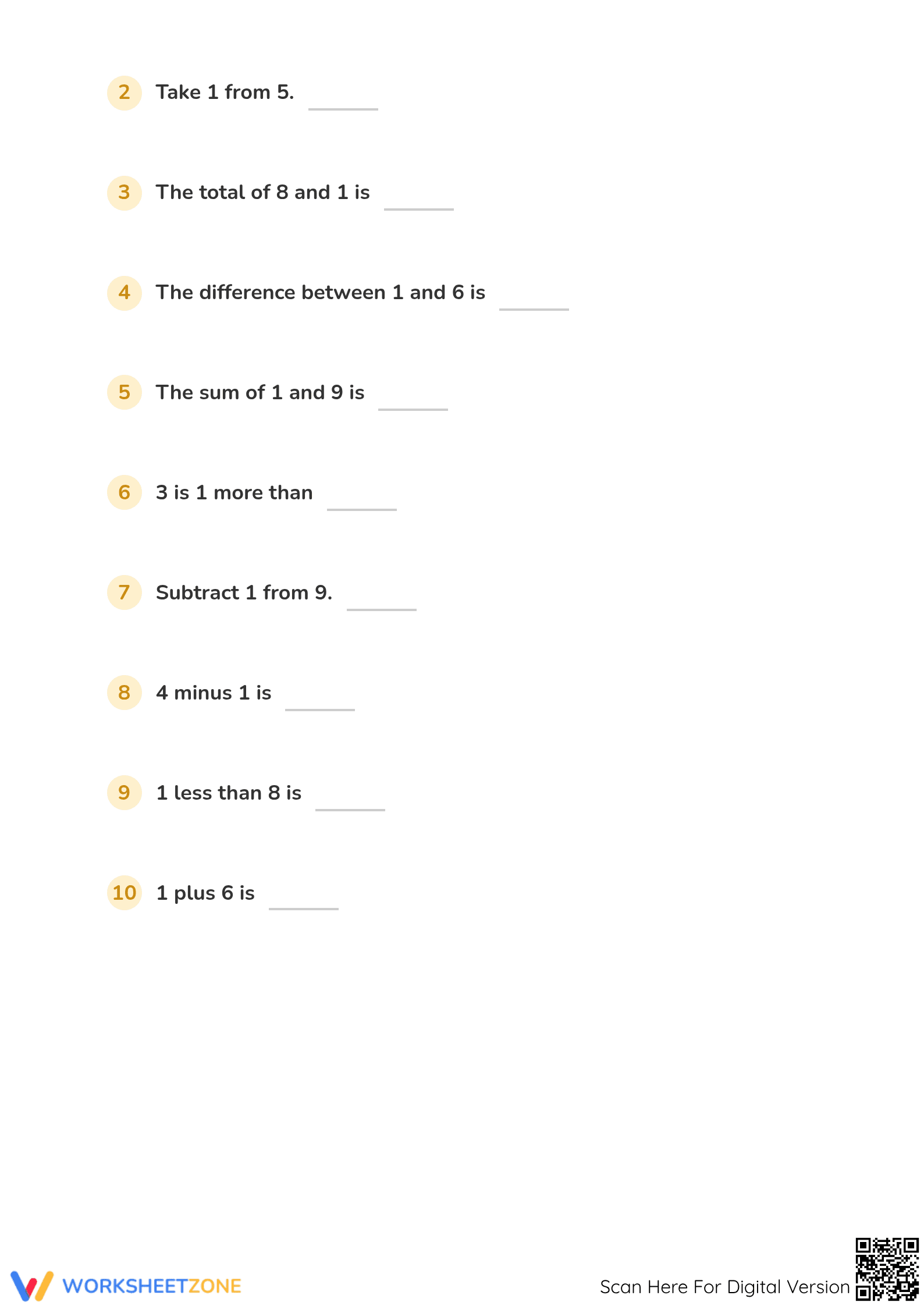
Inside this four-page resource, you will find thirty sequenced problems divided into three sections. Section A uses visual models and currency to bridge concrete and abstract math. Section B focuses on equations and number sequences, while Section C introduces verbal math phrasing like "sum" and "difference." A complete answer key is included for rapid grading.
This resource follows a three-step workflow to save teacher time. First, print the four-page PDF (30 seconds). Second, distribute the worksheets for independent practice or a timed quiz (1 minute). Finally, use the answer key for instant review or self-correction (1 minute). This zero-prep design makes it ideal for morning work or sub plans.
The primary focus is CCSS.MATH.CONTENT.1.OA.C.6, requiring students to add and subtract within 20. The inclusion of shape identification and time-telling also supports geometry and measurement standards. This alignment ensures every problem contributes to grade-level mastery. Both standard codes can be copied directly into lesson plans or district curriculum mapping tools.
Implement this as a formative assessment to gauge prior knowledge or as a weekly check to monitor math accuracy. During completion, observe if students rely on finger counting or recall facts automatically; this provides data for small-group intervention. Most students complete the thirty questions within twenty minutes, making it a flexible instructional tool.
Designed for Grade 1 and 2 students, this resource also serves as a review for Grade 3 learners. It pairs naturally with math manipulatives or number lines to support students requiring extra scaffolding. It is effective when used alongside a daily calendar math routine to reinforce time and sequence concepts for all learners.
Effective mental arithmetic instruction relies on the transition from concrete representations to abstract numerical fluency. According to research by Fisher & Frey (2014), the use of diverse problem sets—including visual models, missing-number equations, and verbal cues—supports the gradual release of responsibility and deepens mathematical comprehension. This worksheet adheres to those principles by providing multiple entry points for diverse learners, ensuring that students do not merely memorize facts but understand the underlying logic of operations like CCSS.MATH.CONTENT.1.OA.C.6. Practicing addition and subtraction through varying linguistic frames such as "more than" or "less than" helps students develop the cognitive flexibility required for complex word problems. This structured approach to mental math has been shown to reduce math anxiety and increase long-term retention of core numerical facts, making it a reliable tool for driving student achievement in elementary mathematics.


