


























Views
Downloads


Measuring Angles Worksheet | Essential Grade 3 Math
Paste this activity's link or code into your existing LMS (Google Classroom, Canvas, Teams, Schoology, Moodle, etc.).
Students can open and work on the activity right away, with no student login required.
You'll still be able to track student progress and results from your teacher account.
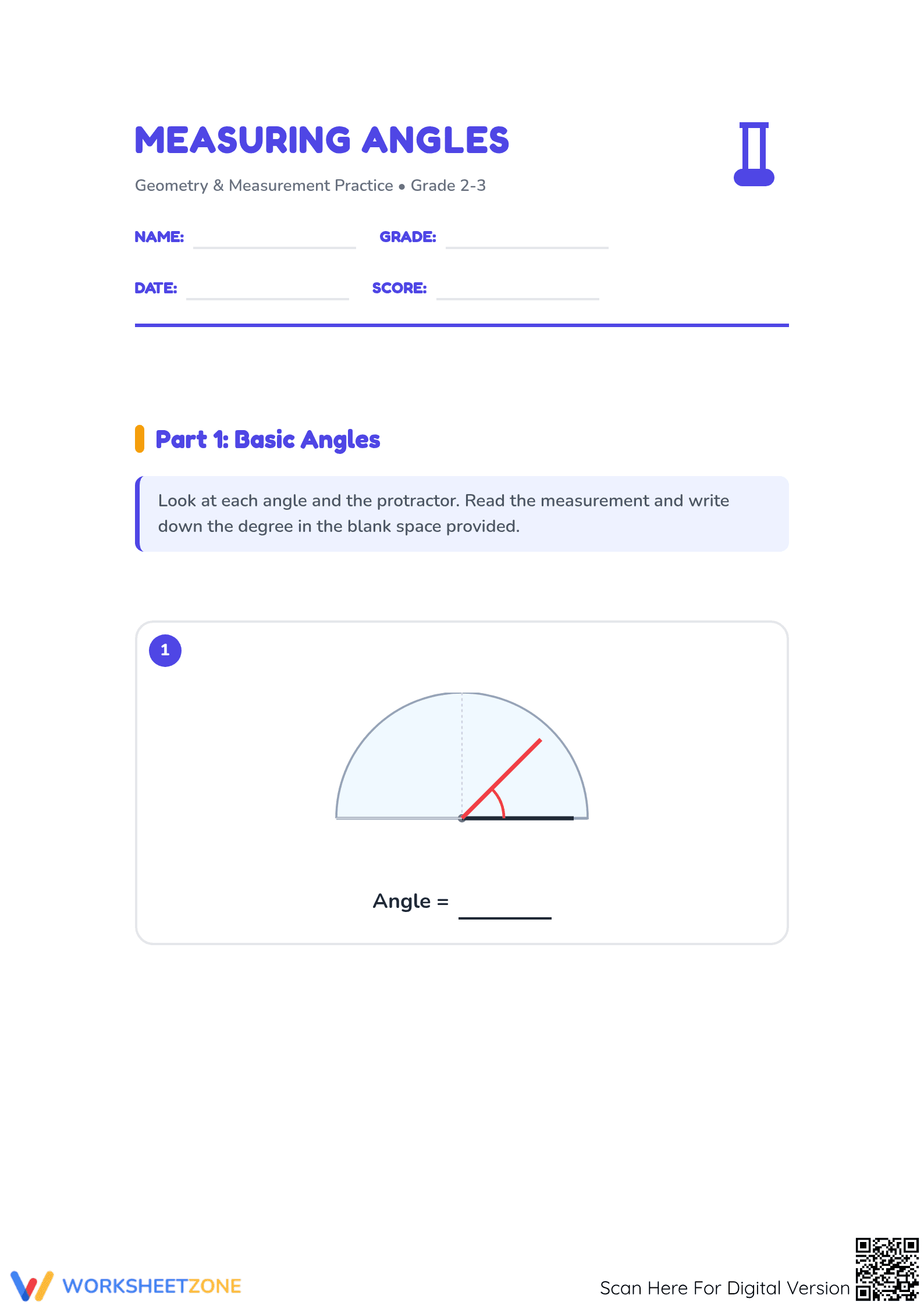
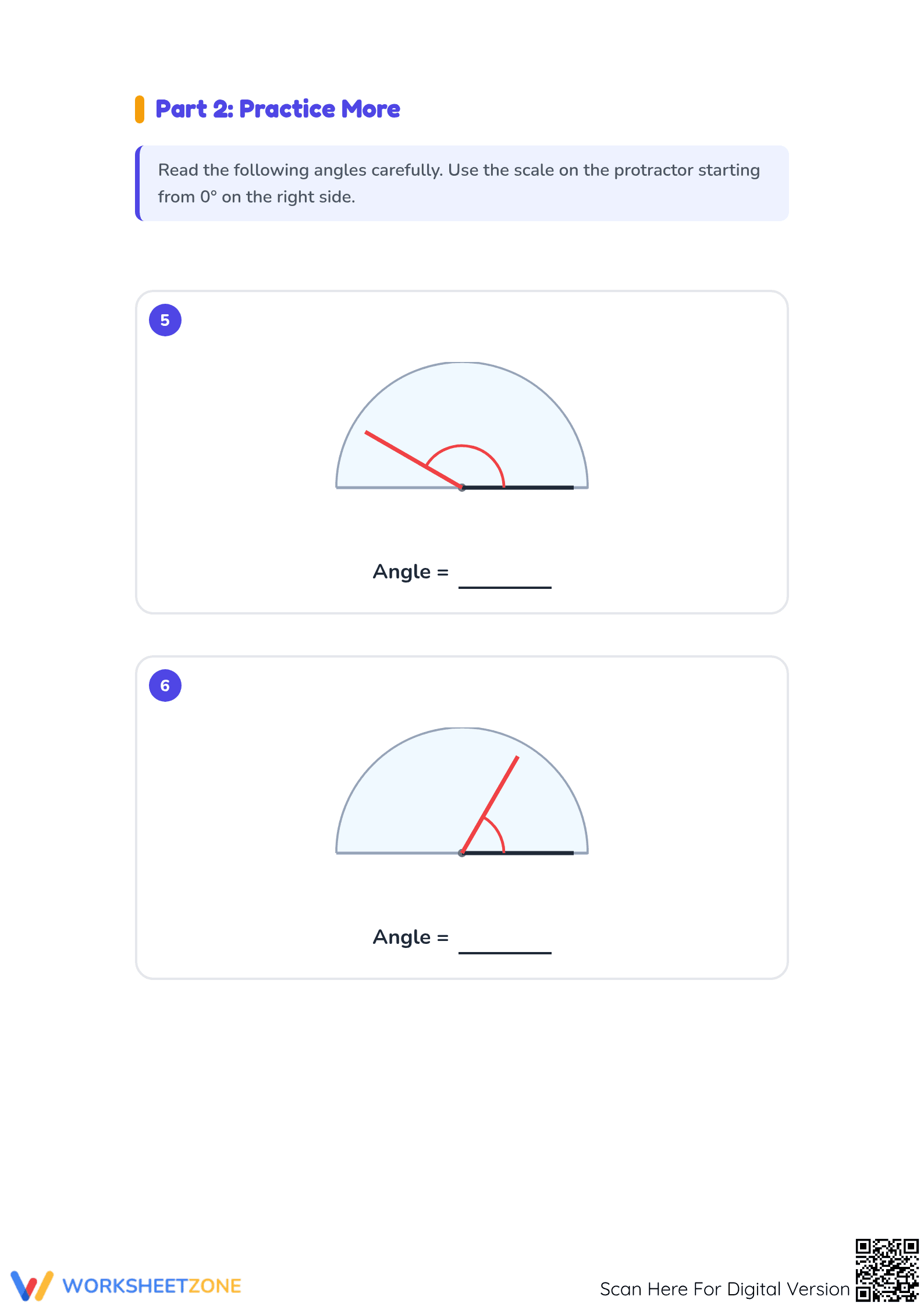
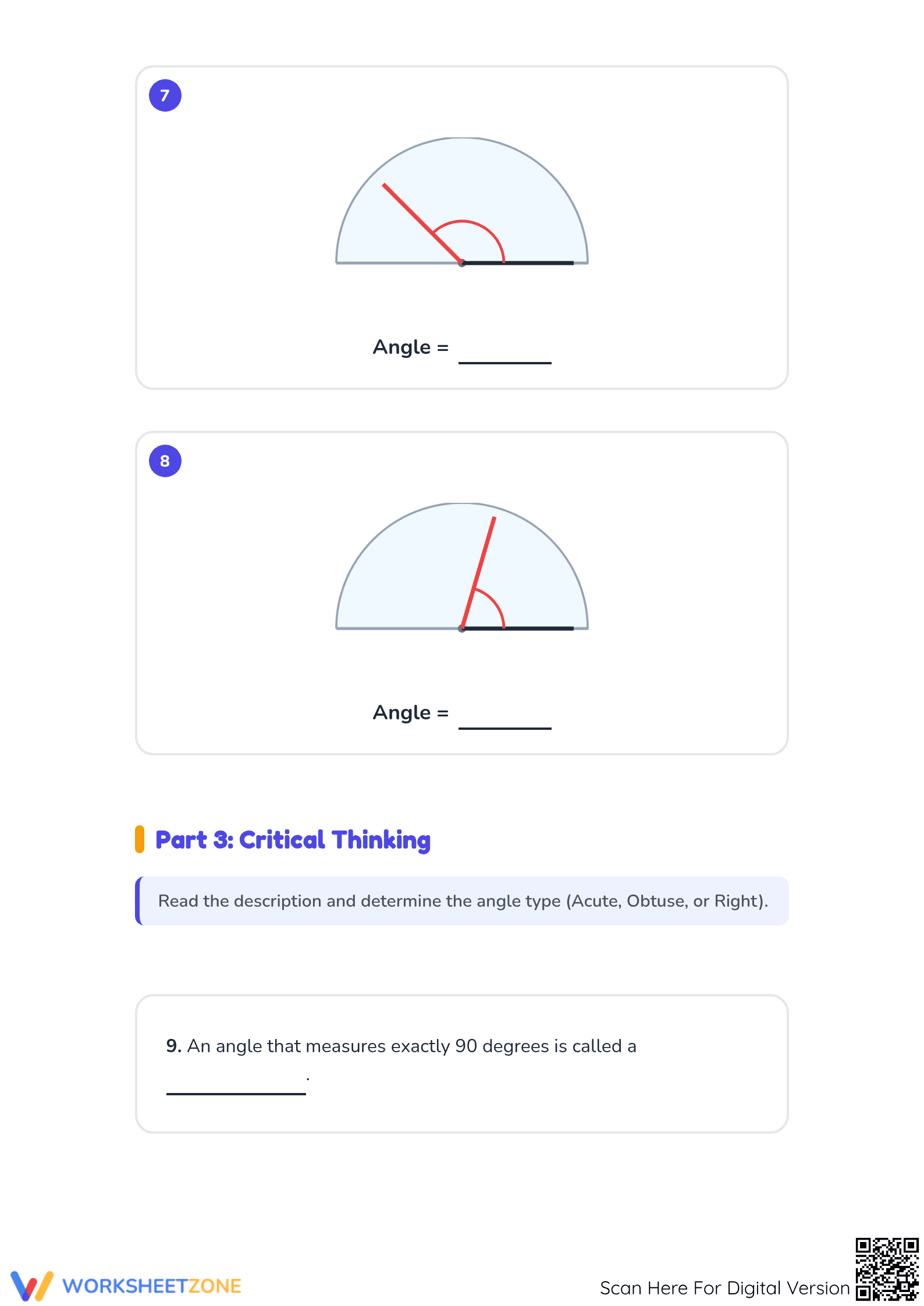
This comprehensive geometry resource helps students master the technical skill of reading a protractor to determine angle degrees. By providing clear visual models and structured practice, the worksheet ensures students can accurately identify the vertex and rays to find precise measurements. Students will transition from basic visual identification to classifying angles as acute, obtuse, or right.
At a Glance
- Grade: 3 · Subject: Math
- Standard:
4.MD.C.6— Measure angles in whole-number degrees using a protractor- Skill Focus: Measuring and classifying angles
- Format: 5 pages · 12 problems · Answer key included · PDF
- Best For: Introductory geometry and measurement practice
- Time: 20–30 minutes
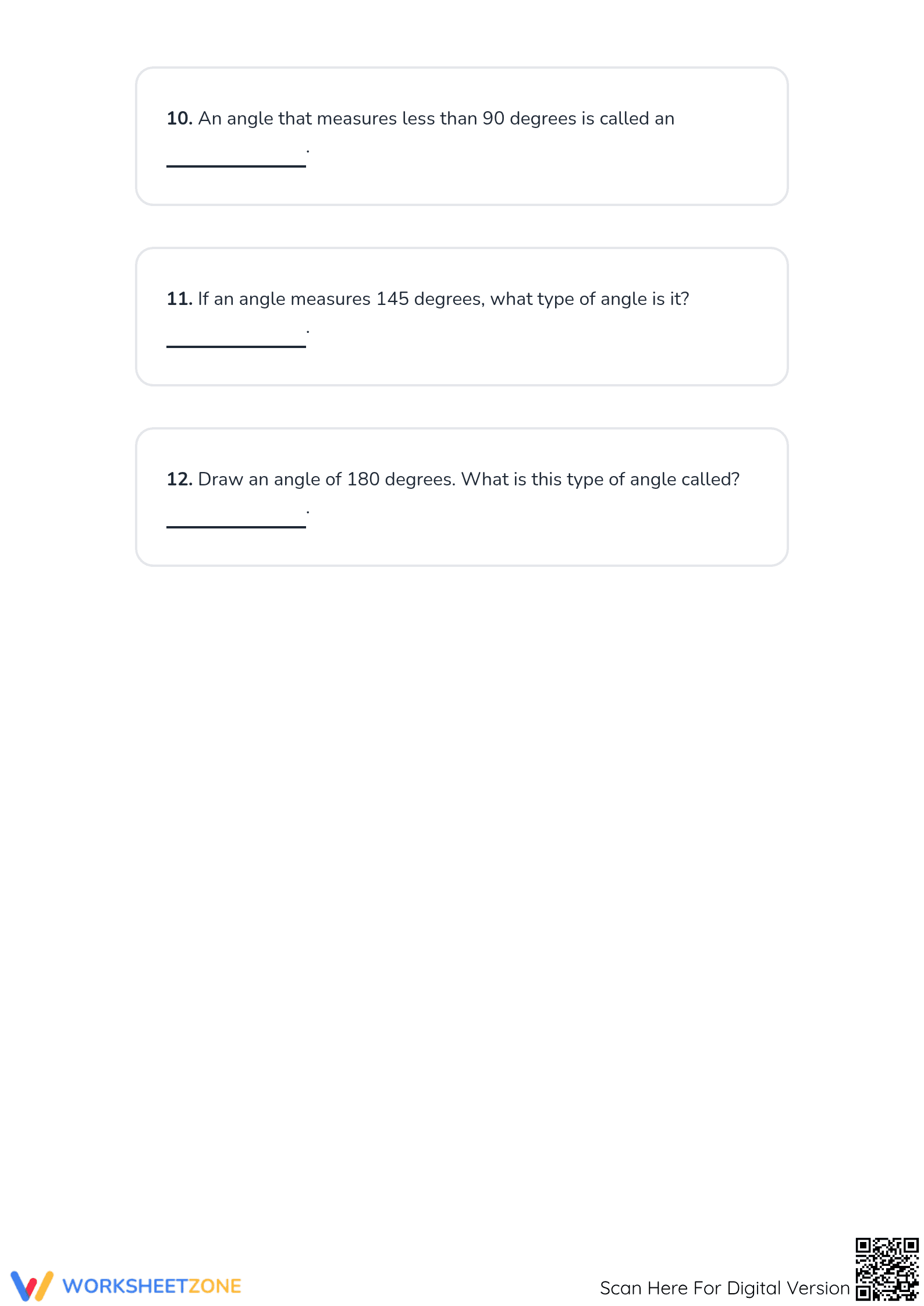
What's Inside: This 5-page PDF contains 12 targeted tasks divided into three logical sections. The first two sections provide large, clear protractor diagrams with overlaid angles for measurement practice. The final section features critical thinking questions that require students to define and identify angle types based on numerical values. A full answer key is provided for every page, allowing for quick grading or student self-correction.
Zero-Prep Workflow
- Print (1 minute): Select the specific pages needed for your lesson or print the entire 5-page packet for a comprehensive unit.
- Distribute (1 minute): Hand out the worksheets; the clear instructions and visual protractors mean students can begin working immediately without additional tools.
- Review (5 minutes): Use the included answer key to check for accuracy or project the pages for a whole-class review of measurement techniques.
This resource is an ideal solution for emergency sub plans, morning work, or as a focused homework assignment that requires no teacher setup.
Standards Alignment
This worksheet is primarily aligned to `CCSS.MATH.CONTENT.4.MD.C.6`: "Measure angles in whole-number degrees using a protractor. Sketch angles of specified measure." It also supports foundational understanding for `CCSS.MATH.CONTENT.4.G.A.1` regarding the identification of right, acute, and obtuse angles. Both standard codes can be copied directly into lesson plans, IEP goals, or district curriculum mapping tools.
How to Use It
Use this worksheet during the "Guided Practice" phase of your geometry unit. After demonstrating how to align the center point of a protractor with an angle's vertex, assign the first four problems to check for initial understanding. It also serves as an excellent formative assessment tool; observe if students are reading the correct scale (inner vs. outer) on the protractor. Expect most students to complete the 12 tasks within 25 minutes.
Who It's For
This resource is designed for Grade 3 students ready for advanced measurement or Grade 4 students working toward standard mastery. It is particularly helpful for visual learners who benefit from the large, high-contrast diagrams. Pair this worksheet with a physical protractor demonstration or a digital angle-manipulative tool for a multi-sensory learning experience.
Research from Fisher & Frey (2014) emphasizes the importance of visual scaffolds, such as the integrated protractor overlays found in this resource, to help students transition from conceptual understanding to procedural fluency in geometry. By providing 12 distinct opportunities to practice measurement, this worksheet aligns with the National Assessment of Educational Progress (NAEP) framework for spatial reasoning. The inclusion of both visual measurement and terminology-based critical thinking questions ensures that students do not just memorize numbers but understand the properties of acute, obtuse, and right angles. This dual-approach design supports the CCSS.MATH.CONTENT.4.MD.C.6 standard by requiring students to apply protractor skills to real-world geometric representations. Educators can use these 5 pages to establish a baseline for student mastery before moving into more complex polygon construction or multi-step geometric proofs.


