


























Views
Downloads
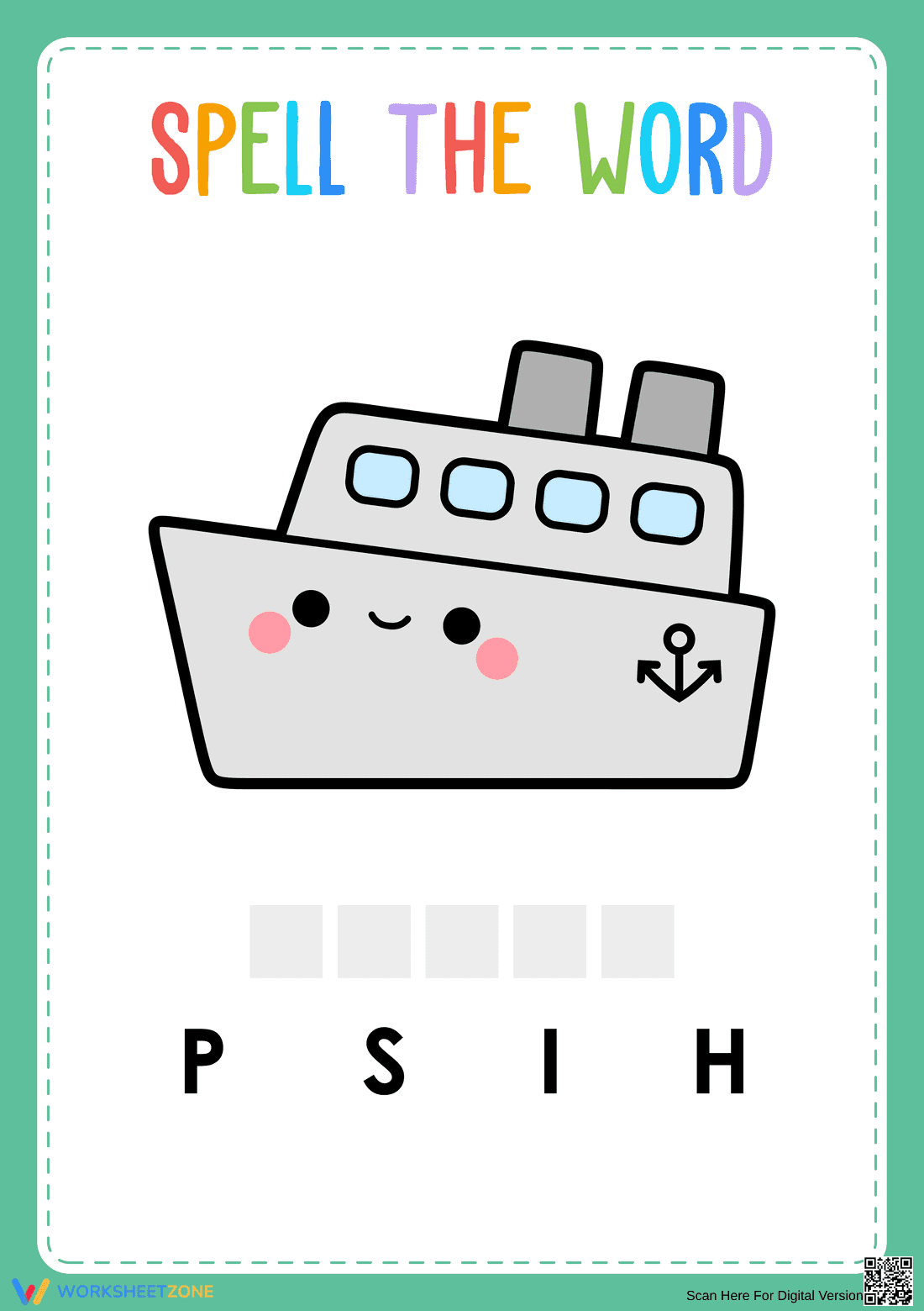

Printable Preschool Spelling Worksheet: Transportation
Paste this activity's link or code into your existing LMS (Google Classroom, Canvas, Teams, Schoology, Moodle, etc.).
Students can open and work on the activity right away, with no student login required.
You'll still be able to track student progress and results from your teacher account.
This single-page spelling worksheet helps preschool and kindergarten students practice letter recognition and basic word formation. By unscrambling the letters to spell "ship," early learners develop foundational phonics skills and improve their transportation vocabulary in a highly visual, engaging format.
At a Glance
- Grade: Preschool · Subject: ELA
- Standard:
CCSS.ELA-LITERACY.L.K.2.D— Spell simple words phonetically- Skill Focus: Spelling and Letter Unscrambling
- Format: 1 page · 1 problem · Answer key included · PDF
- Best For: Morning work or literacy centers
- Time: 5–10 minutes
Inside this one-page PDF, educators will find a focused spelling activity featuring a large, appealing illustration of a ship. The task requires students to look at four scrambled letters (P, S, I, H) and write them in the correct order within the provided blank boxes. A discreet answer key is located in the bottom right corner of the page, allowing for quick teacher reference or student self-checking.
Zero-Prep Workflow
- Print (1 min): Download the PDF and print copies. No cutting necessary.
- Distribute (1 min): Hand out sheets and pencils during morning arrival.
- Review (3 mins): Observe letter formation and assist with sounding out the word.
With a total teacher prep time of under two minutes, this resource is highly effective for busy mornings or as an emergency addition to a substitute teacher plan.
Standards Alignment
This activity aligns with CCSS.ELA-LITERACY.L.K.2.D, which asks students to spell simple words phonetically, drawing on knowledge of sound-letter relationships. It also supports early phonological awareness by encouraging children to isolate the initial, medial, and final sounds of a familiar transportation word. Both standard codes can be copied directly into lesson plans, IEP goals, or district curriculum mapping tools.
How to Use It
Deploy this worksheet during morning work to establish a calm, focused routine before direct instruction begins. Alternatively, place it in a literacy center alongside plastic letter tiles so students can physically manipulate the letters before writing them in the boxes. As a formative assessment tip, observe whether students identify the "sh" digraph first or if they attempt to sound out each letter individually. Expected completion time ranges from five to ten minutes.
Who It's For
This resource is designed for preschool and kindergarten students who are beginning to transition from letter recognition to basic spelling. For students needing extra support, provide a model of the word "ship" on a whiteboard. Advanced learners can be challenged to write a short sentence about the ship on the back of the page. It pairs perfectly with a read-aloud book about boats or a broader transportation thematic unit.
Mastering early spelling skills requires consistent, targeted practice with familiar vocabulary. This worksheet addresses CCSS.ELA-LITERACY.L.K.2.D by helping students spell simple words phonetically through a structured unscrambling task. According to a recent EdReports 2024 review of foundational literacy practices, providing young learners with visual cues alongside letter manipulation tasks significantly increases their phonemic awareness and early writing proficiency. By isolating the letters of a highly recognizable object like a ship, educators can reduce cognitive load and allow students to focus entirely on sound-letter correspondence. This targeted approach ensures that preschool and kindergarten students build the necessary confidence to tackle more complex phonetic patterns as they progress through early childhood literacy benchmarks. The inclusion of a self-checking element further promotes independent learning and immediate feedback, which is crucial for early childhood development.


