


























Views
Downloads
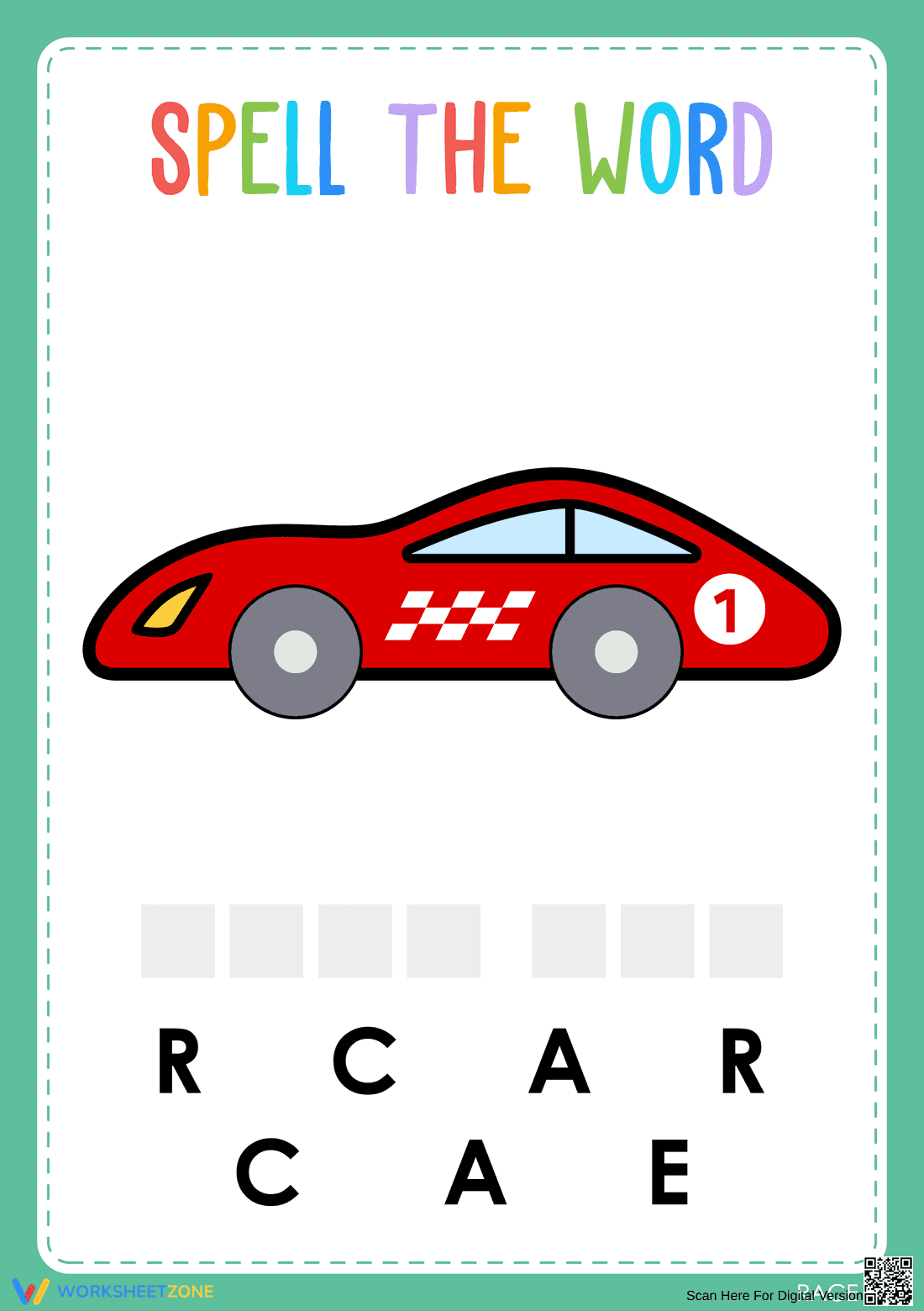

Printable Preschool Spelling Worksheet: Transportation
Paste this activity's link or code into your existing LMS (Google Classroom, Canvas, Teams, Schoology, Moodle, etc.).
Students can open and work on the activity right away, with no student login required.
You'll still be able to track student progress and results from your teacher account.
This single-page preschool spelling worksheet helps early learners practice letter recognition and word formation. By unscrambling the provided letters to spell "race car," students actively build foundational literacy skills while engaging with a fun, familiar transportation theme. It provides immediate visual feedback for young readers.
At a Glance
- Grade: Preschool · Subject: ELA
- Standard:
CCSS.ELA-LITERACY.RF.K.1.B— Recognize that spoken words are represented by specific letter sequences- Skill Focus: Spelling and Letter Recognition
- Format: 1 page · 1 problem · No answer key · PDF
- Best For: Independent practice or centers
- Time: 5–10 minutes
Inside this resource, educators will find a single spelling task centered around a red race car illustration. The page features seven blank letter boxes corresponding to the scrambled letters provided below. A small text hint at the bottom right corner serves as a built-in reference, making the activity self-checking. The clean layout minimizes distractions, ensuring students focus entirely on sequencing the letters correctly.
Designed for a zero-prep workflow, this resource is ideal for busy mornings:
- Print (1 minute): Download the PDF and print.
- Distribute (1 minute): Hand out with pencils. The instructions are self-explanatory.
- Review (1 minute): The target word is printed at the bottom, allowing students to self-correct.
Total teacher prep time is under two minutes, making it an excellent sub plan addition.
This worksheet aligns directly with CCSS.ELA-LITERACY.RF.K.1.B: Recognize that spoken words are represented in written language by specific sequences of letters. By physically writing or placing the letters in the correct order to form the word "race car," students reinforce their understanding of print concepts and letter-sound correspondence. Both standard codes can be copied directly into lesson plans, IEP goals, or district curriculum mapping tools.
Teachers can utilize this worksheet during morning work to gently transition students into the academic day. It also functions perfectly as an independent literacy center activity. As a formative assessment tip, observe whether students attempt to sound out the letters or rely entirely on visual matching. Expected completion time ranges from five to ten minutes.
This activity is designed for preschool students beginning to explore word formation. It naturally supports visual learners who benefit from picture-to-word association. For differentiation, teachers can provide physical letter magnets for students struggling with pencil grip, allowing them to place letters in the boxes. This worksheet pairs beautifully with a read-aloud book about cars.
Early exposure to letter sequencing is a critical component of emergent literacy. According to Fisher & Frey (2014), providing students with structured, visually supported tasks significantly increases their independent engagement and retention of foundational skills. This worksheet targets CCSS.ELA-LITERACY.RF.K.1.B, helping students recognize that spoken words are represented by specific letter sequences. By isolating a single, high-interest vocabulary word like "race car," the cognitive load is reduced, allowing young learners to focus entirely on the mechanics of spelling and letter identification. Activities that combine visual cues with active letter manipulation foster stronger neural pathways for reading readiness. This targeted practice ensures that preschool students build the necessary confidence and phonetic awareness required for more complex decoding tasks in kindergarten and beyond, establishing a solid framework for lifelong literacy success.


