


























Views
Downloads

Essential Grade 3 Math Exam: Comprehensive Term Assessment
Paste this activity's link or code into your existing LMS (Google Classroom, Canvas, Teams, Schoology, Moodle, etc.).
Students can open and work on the activity right away, with no student login required.
You'll still be able to track student progress and results from your teacher account.
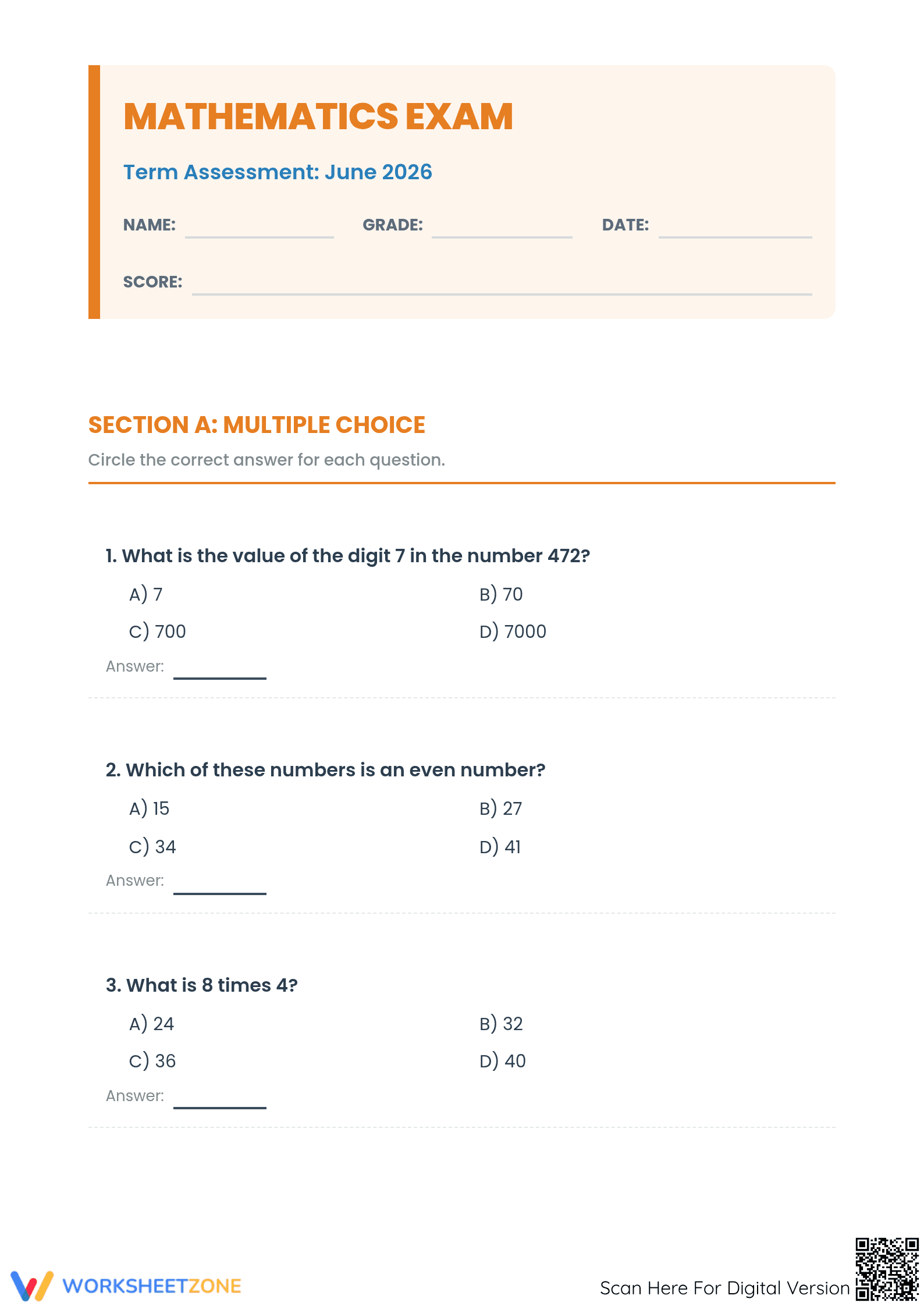
Mastering core mathematical concepts is a pivotal milestone for third-grade students. This comprehensive mathematics exam provides a robust assessment of essential skills, ranging from basic arithmetic and place value to geometry and complex word problems. By evaluating student proficiency across multiple domains, educators can identify specific strengths and areas for targeted instructional support.
At a Glance
At a Glance
- Grade: 3 · Subject: Math
- Standard:
CCSS.MATH.CONTENT.3.OA.D.8— Solve two-step word problems using the four operations and represent them with equations- Skill Focus: Mixed Operations & Geometry Review
- Format: 5 pages · 18 problems · Answer key included · PDF
- Best For: End-of-term summative assessment or intensive review
- Time: 45–60 minutes
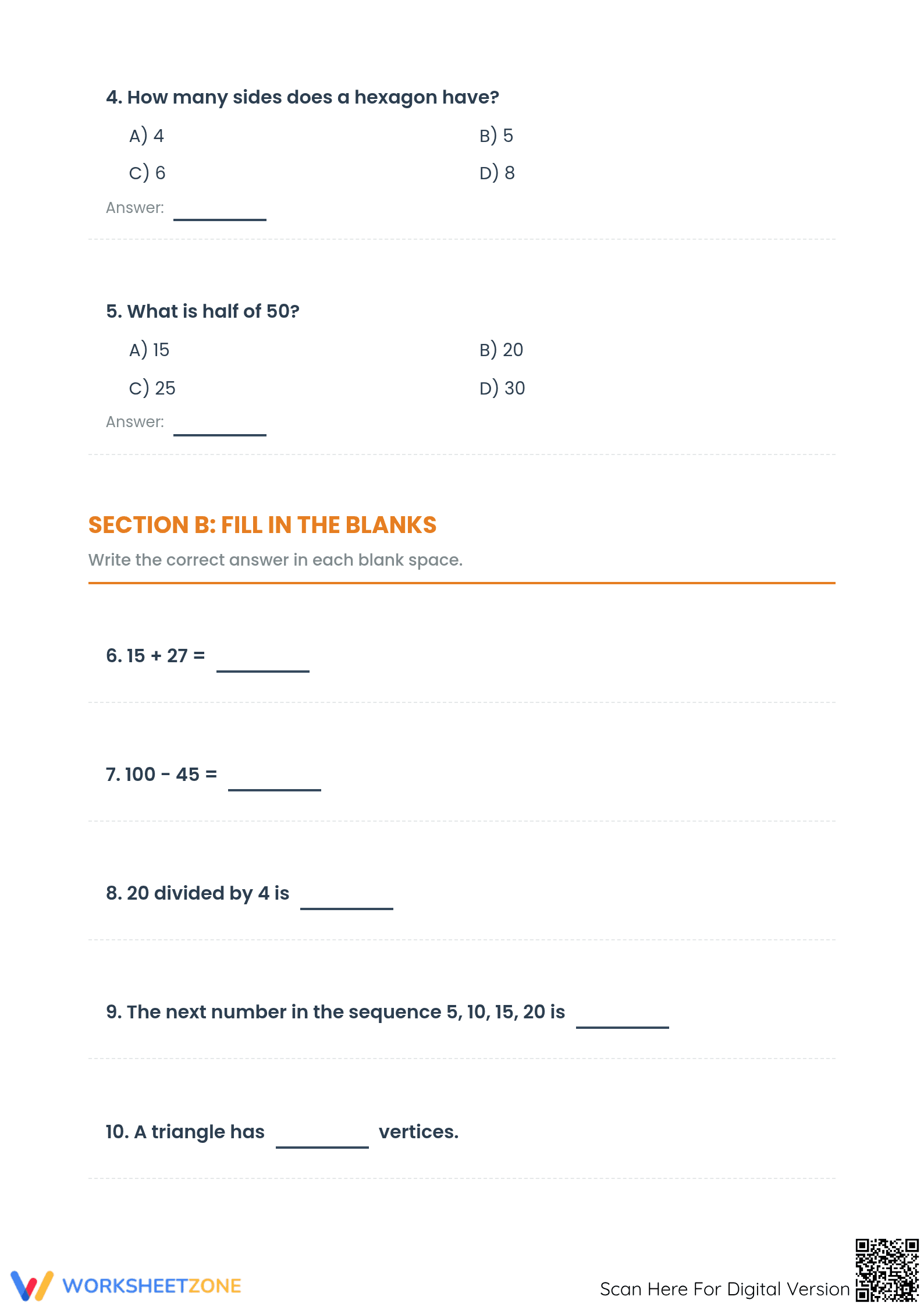
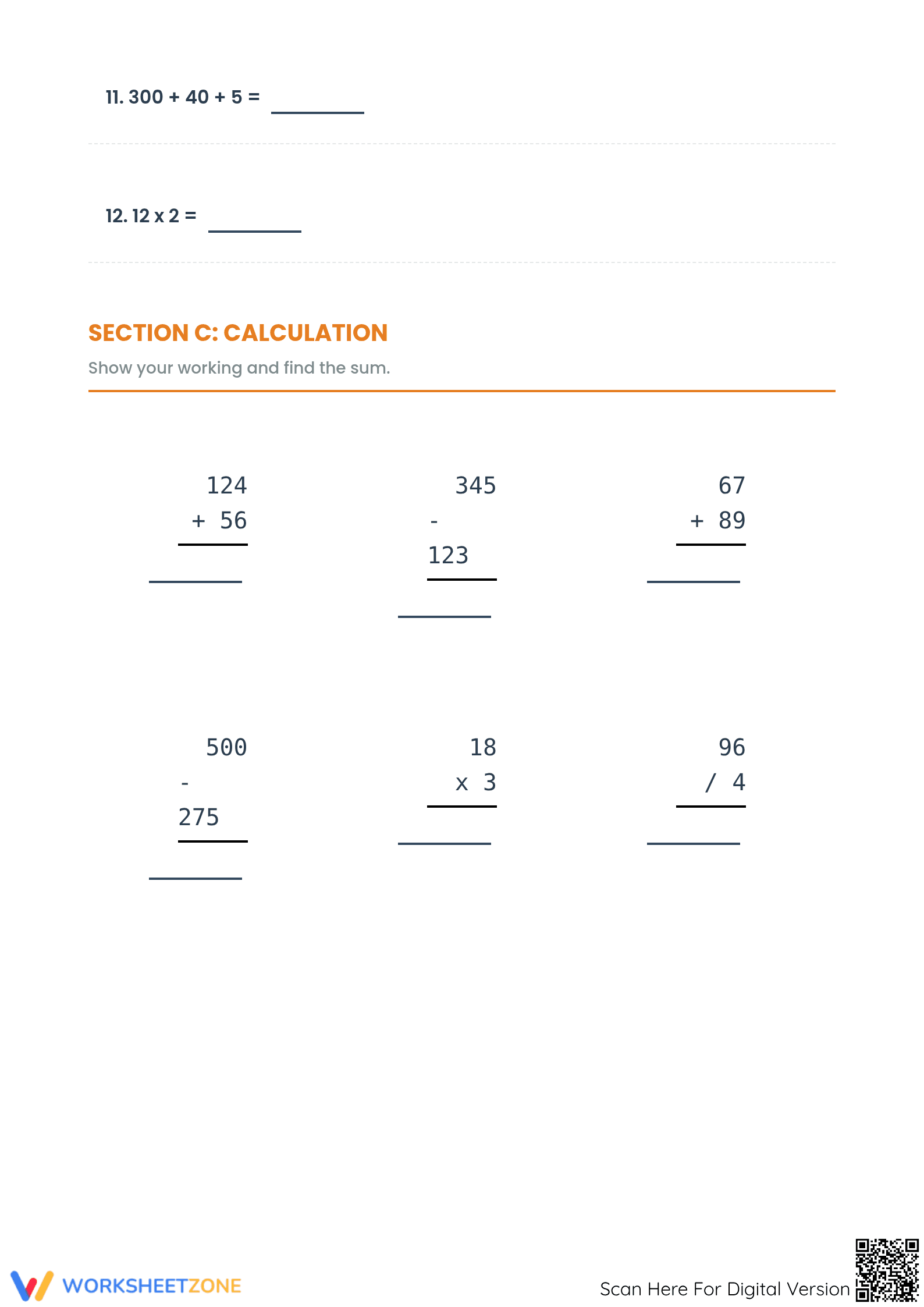
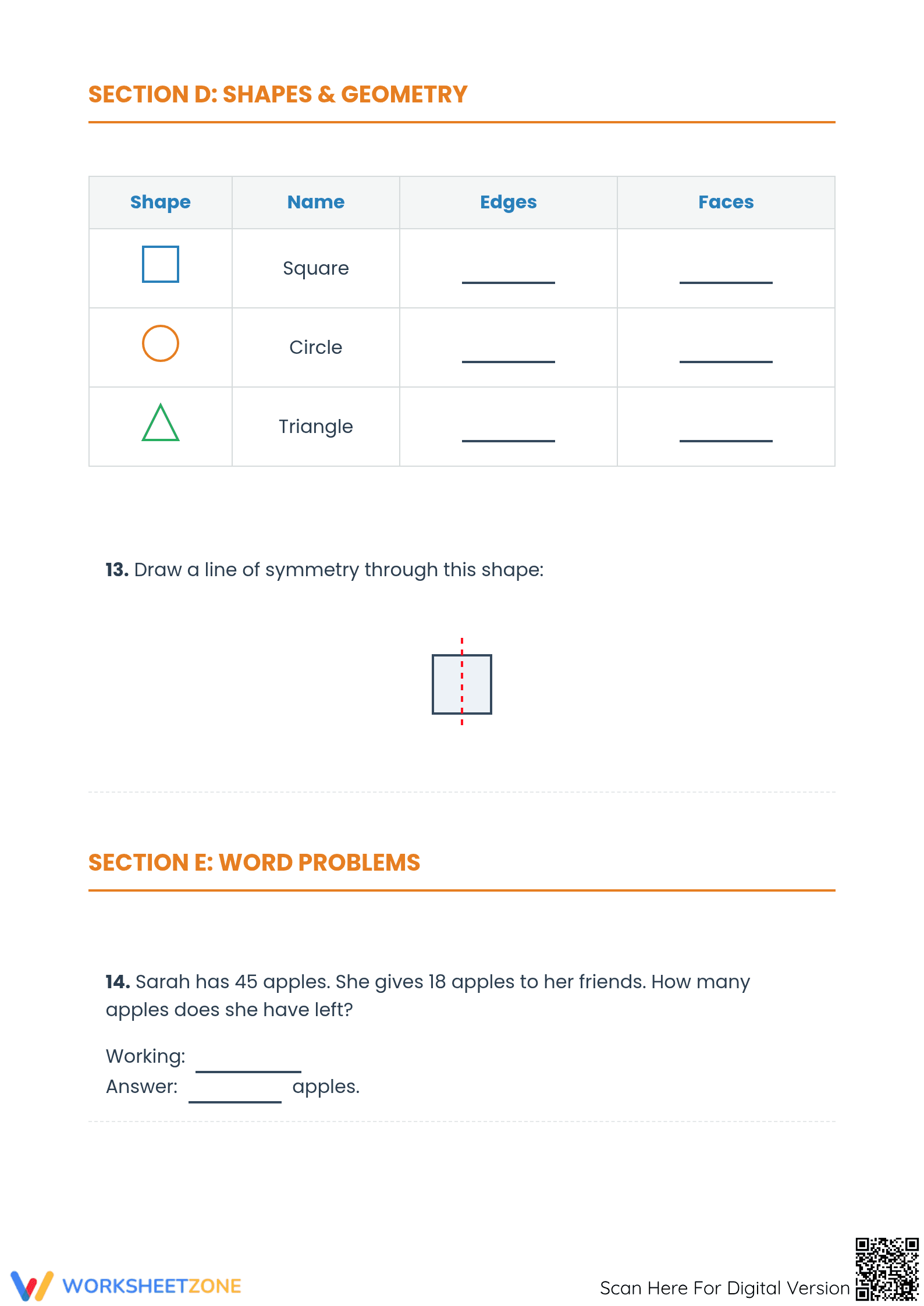
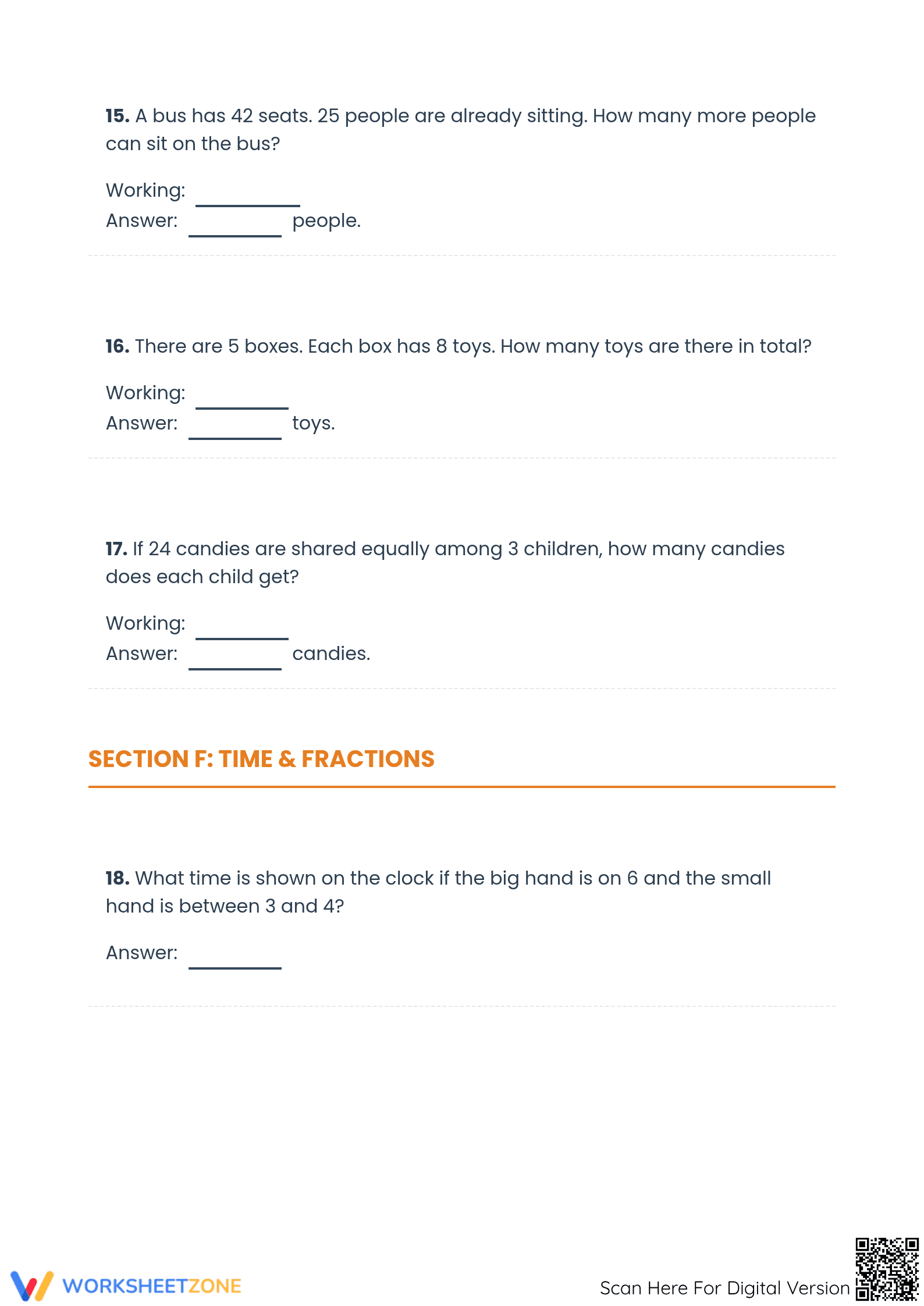
This five-page assessment is structured into six sections for balanced evaluation. It features 18 tasks, including multiple-choice questions, fill-in-the-blank items, and calculation zones. The worksheet integrates a geometry table and multi-step word problems requiring visible working. A full answer key is included to facilitate rapid grading and immediate feedback.
Each section of this exam is meticulously mapped to specific sub-skills within the Grade 3 curriculum. From place value identification to identifying geometric vertices and edges, the tasks progress from simple recall to higher-order application in word problems. Educators can utilize the clear section divisions to score students across different domains, providing a granular view of mastery that aligns directly with report card standards or IEP progress monitoring.
The primary focus of this assessment is `CCSS.MATH.CONTENT.3.OA.D.8`, which requires students to solve problems involving the four operations and represent unknown quantities. Additionally, the geometry section aligns with `CCSS.MATH.CONTENT.3.G.A.1`, focusing on the attributes of shapes such as quadrilaterals and polygons. Both standard codes can be copied directly into lesson plans, IEP goals, or district curriculum mapping tools.
Deploy this assessment as a summative end-of-unit exam after completing instruction on basic multiplication, division, and introductory geometry. For a formative approach, use Section C (Calculation) as a timed skill-check during independent practice. Educators should observe students during the word problem section to identify if errors stem from calculation slips or a lack of reading comprehension. Expected completion time is approximately 50 minutes.
This resource is designed for Grade 3 students but serves as an excellent challenge for advanced Grade 2 learners or a necessary intervention for Grade 4 students needing a refresher. It pairs naturally with a math reference folder or an anchor chart focusing on key terms like "vertices," "even numbers," and "products."
Research from EdReports 2024 emphasizes that high-quality mathematics assessments must move beyond rote memorization to evaluate how students apply operational skills in varied contexts. This Grade 3 mathematics exam adheres to this principle by integrating `CCSS.MATH.CONTENT.3.OA.D.8` throughout its design, forcing students to translate verbal scenarios into mathematical equations. The inclusion of geometry and place value tasks ensures that the assessment captures a holistic view of the student's mathematical fluency, rather than an isolated skill set. By providing structured calculation spaces alongside multiple-choice conceptual checks, the worksheet supports the gradual release of responsibility model, confirming that students can perform both mental math and procedural algorithms. Utilizing such standards-aligned tools is essential for maintaining instructional rigor and ensuring that all learners are prepared for the increasing complexity of upper-elementary mathematics. This assessment serves as a reliable instrument for gauging student readiness and informing future instructional pacing and differentiation strategies.


