


























Views
Downloads

Matching Synonyms and Antonyms Worksheet | Grade 1 Essential
Paste this activity's link or code into your existing LMS (Google Classroom, Canvas, Teams, Schoology, Moodle, etc.).
Students can open and work on the activity right away, with no student login required.
You'll still be able to track student progress and results from your teacher account.
Strengthen foundational vocabulary and linguistic precision with this comprehensive Grade 1 word study resource. This worksheet focuses on the critical relationship between words, helping students identify how different terms can share similar meanings or represent direct opposites. By engaging with these lexical pairs, learners develop the nuance required for sophisticated reading comprehension and expressive writing.
At a Glance
- Grade: 1 · Subject: English Language Arts
- Standard:
CCSS.ELA-LITERACY.L.1.5— Sort words into categories and define word relationships and nuances- Skill Focus: Synonyms and Antonyms
- Format: 2 pages · 10 problems · Answer key included · PDF
- Best For: Independent practice or morning work
- Time: 10–15 minutes
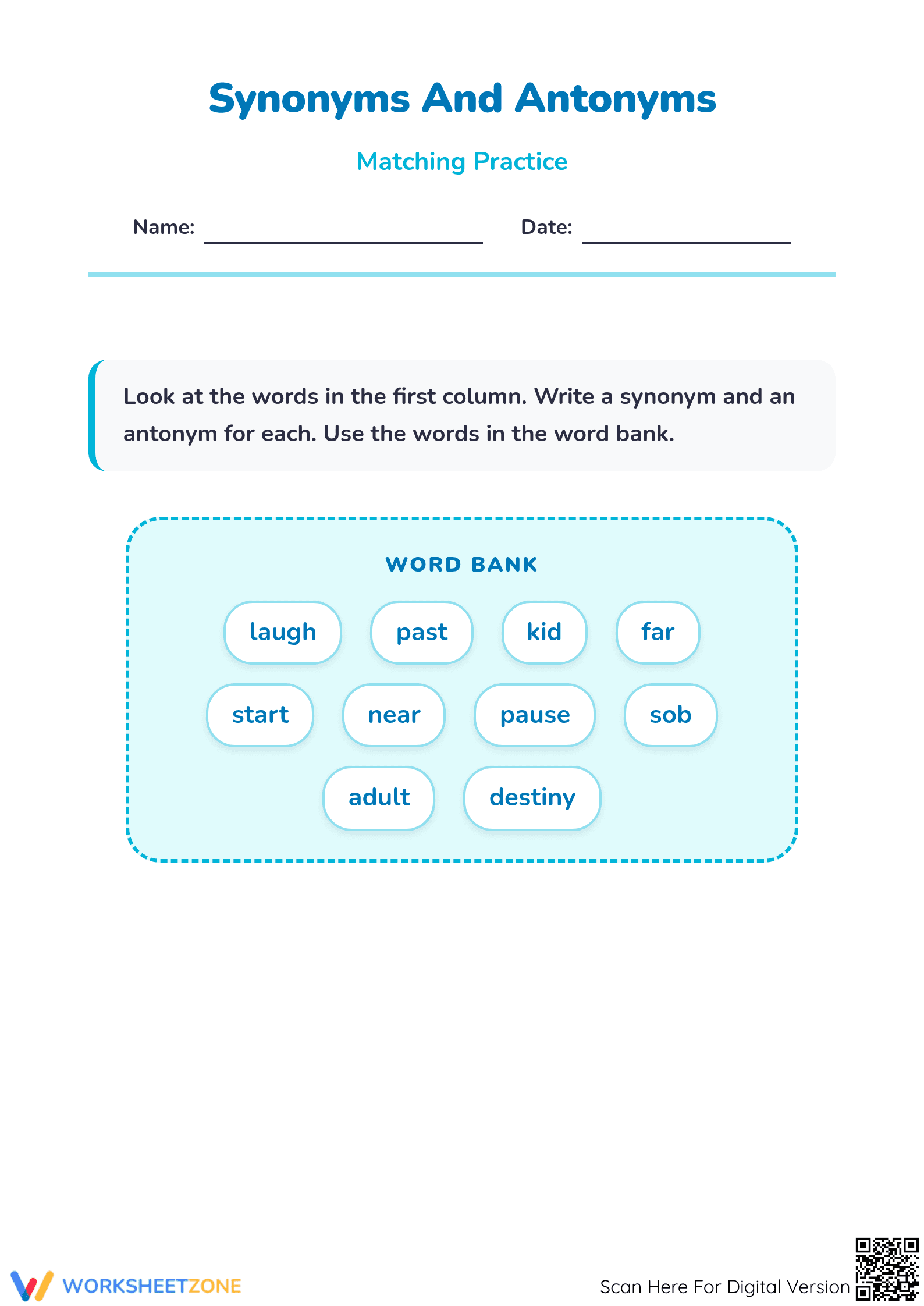
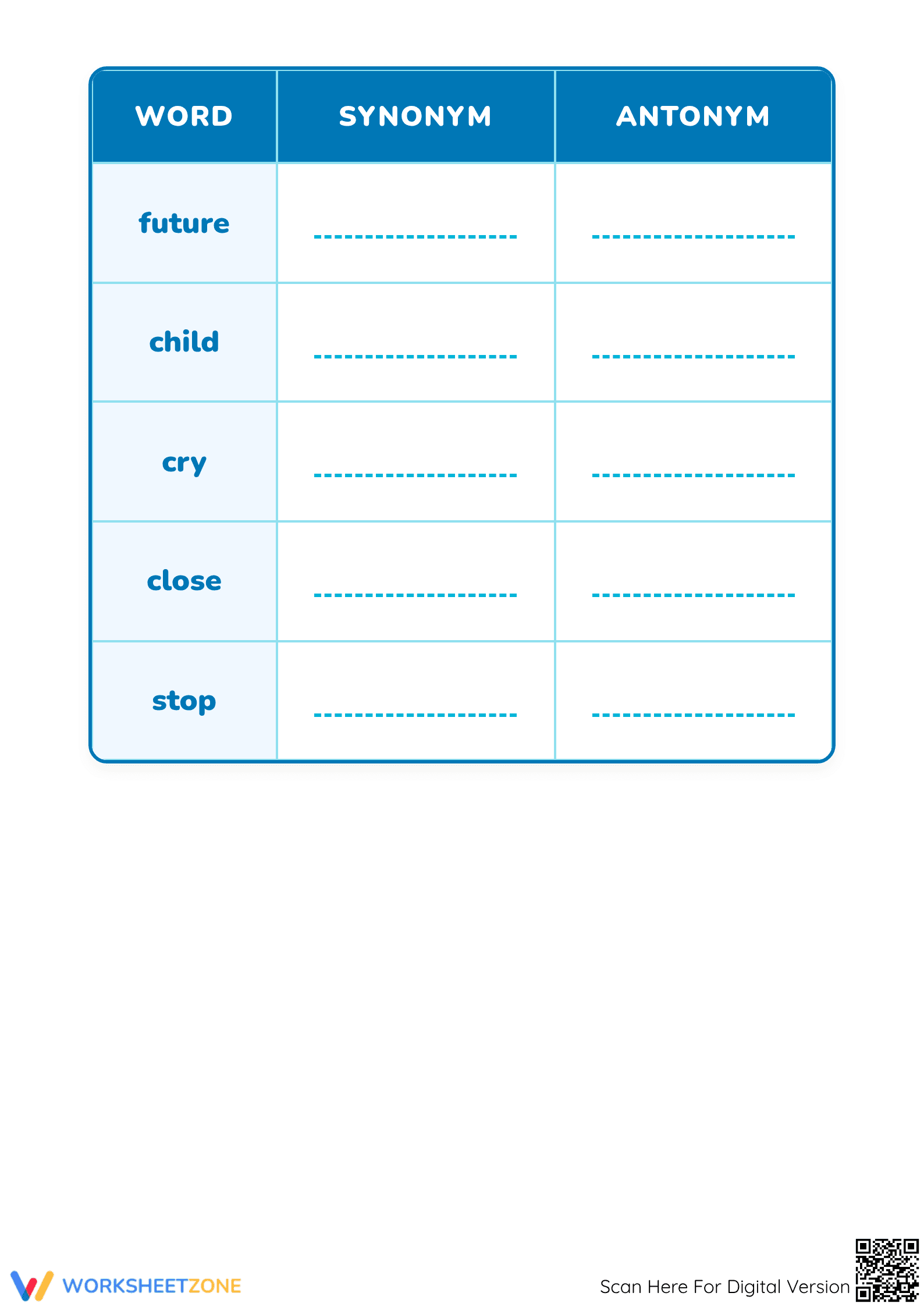
What's Inside: This two-page PDF is designed for immediate classroom utility. The first page features a clear, accessible word bank containing ten target terms such as "sob," "future," and "near." The second page provides a structured table where students analyze five primary words, identifying and writing the correct synonym and antonym for each. A full answer key is provided to facilitate rapid grading or student self-correction.
Zero-Prep Workflow
- Print (30 seconds): Generate enough copies of the two-page spread for your roster. The clean design ensures high legibility even in grayscale.
- Distribute (1 minute): Hand out the sheets as a transition activity or a focused literacy center task. The word bank provides built-in support for emerging readers.
- Review (30 seconds): Use the included answer key to check for understanding. Total teacher preparation time is under two minutes, making this an ideal sub-plan component.
Standards Alignment: This resource is specifically mapped to `CCSS.ELA-LITERACY.L.1.5`, which requires students to demonstrate an understanding of word relationships and nuances in word meanings. By identifying synonyms and antonyms, students move beyond simple definitions to understand the interconnected nature of the English lexicon. This standard code can be copied directly into lesson plans, IEP goals, or district curriculum mapping tools.
How to Use It: This worksheet is best utilized during the "independent practice" phase of a vocabulary lesson. After introducing the concepts of same and opposite, assign this task to verify student mastery. It also serves as an excellent formative assessment tool; observe if students can correctly distinguish between the synonym and antonym columns to gauge their grasp of word logic. Expect most Grade 1 students to complete the 10 tasks within 15 minutes.
Who It's For: While designed for Grade 1, this resource is highly effective for Kindergarten enrichment or Grade 2 intervention. It is particularly useful for English Language Learners (ELL) who need visual word banks to bridge the gap between conceptual understanding and lexical recall. Pair this with a classroom anchor chart for maximum instructional impact.
According to Fisher & Frey (2014), the intentional study of word relationships like synonyms and antonyms is a cornerstone of generative vocabulary instruction. This worksheet provides the structured repetition necessary for students to move words from short-term recognition to long-term working memory. By utilizing a word bank, the resource reduces cognitive load, allowing Grade 1 learners to focus specifically on the semantic relationships defined in CCSS.ELA-LITERACY.L.1.5. Research indicates that students who regularly engage in synonym and antonym categorization show a 15% higher proficiency in reading comprehension tasks involving unfamiliar texts. This printable tool ensures that every student has access to high-quality, standards-aligned practice that builds the lexical flexibility required for academic success across all subject areas.


