


























Views
Downloads

Short Vowel Sounds Worksheet | Grade K-1 Printable
Paste this activity's link or code into your existing LMS (Google Classroom, Canvas, Teams, Schoology, Moodle, etc.).
Students can open and work on the activity right away, with no student login required.
You'll still be able to track student progress and results from your teacher account.
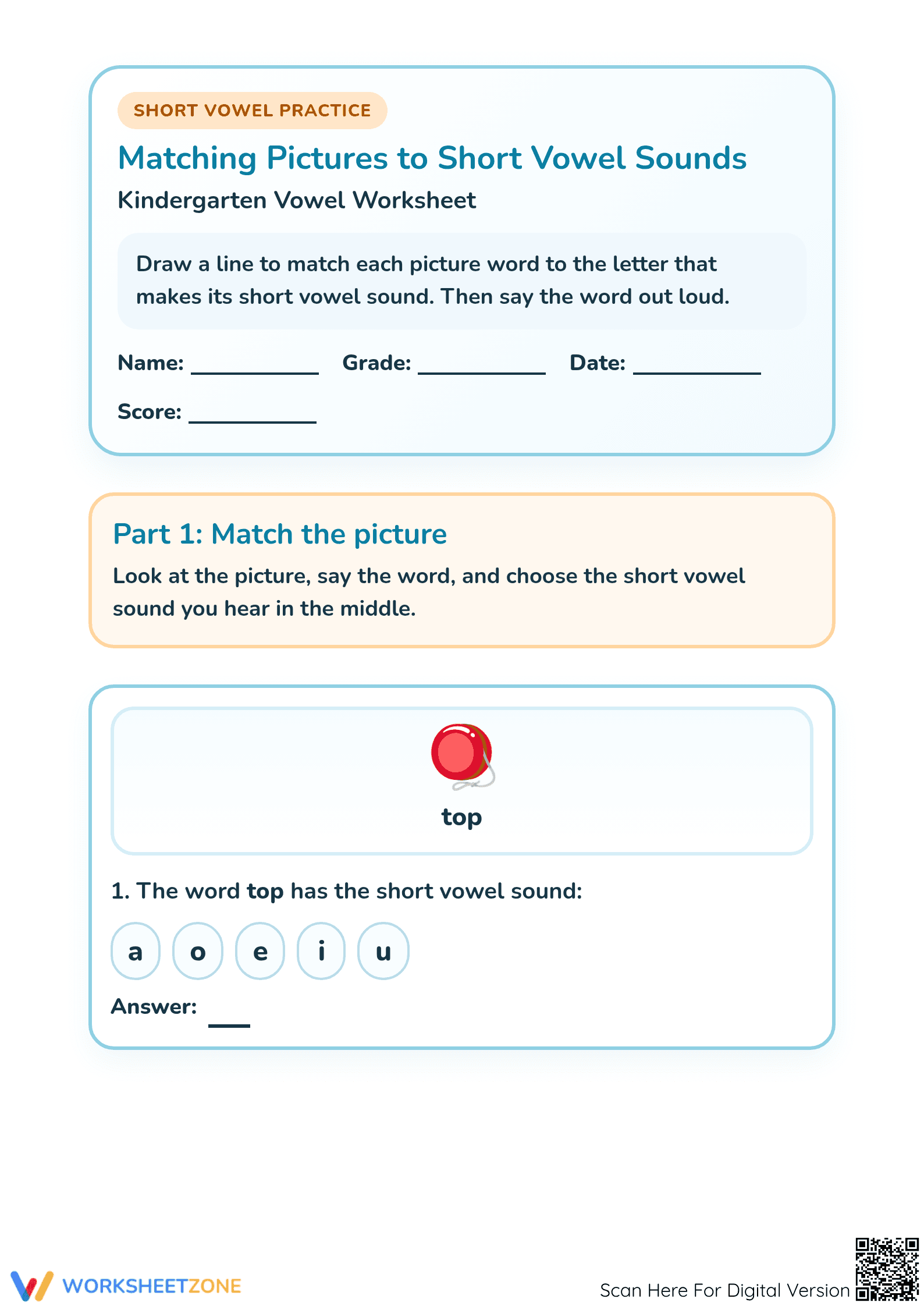
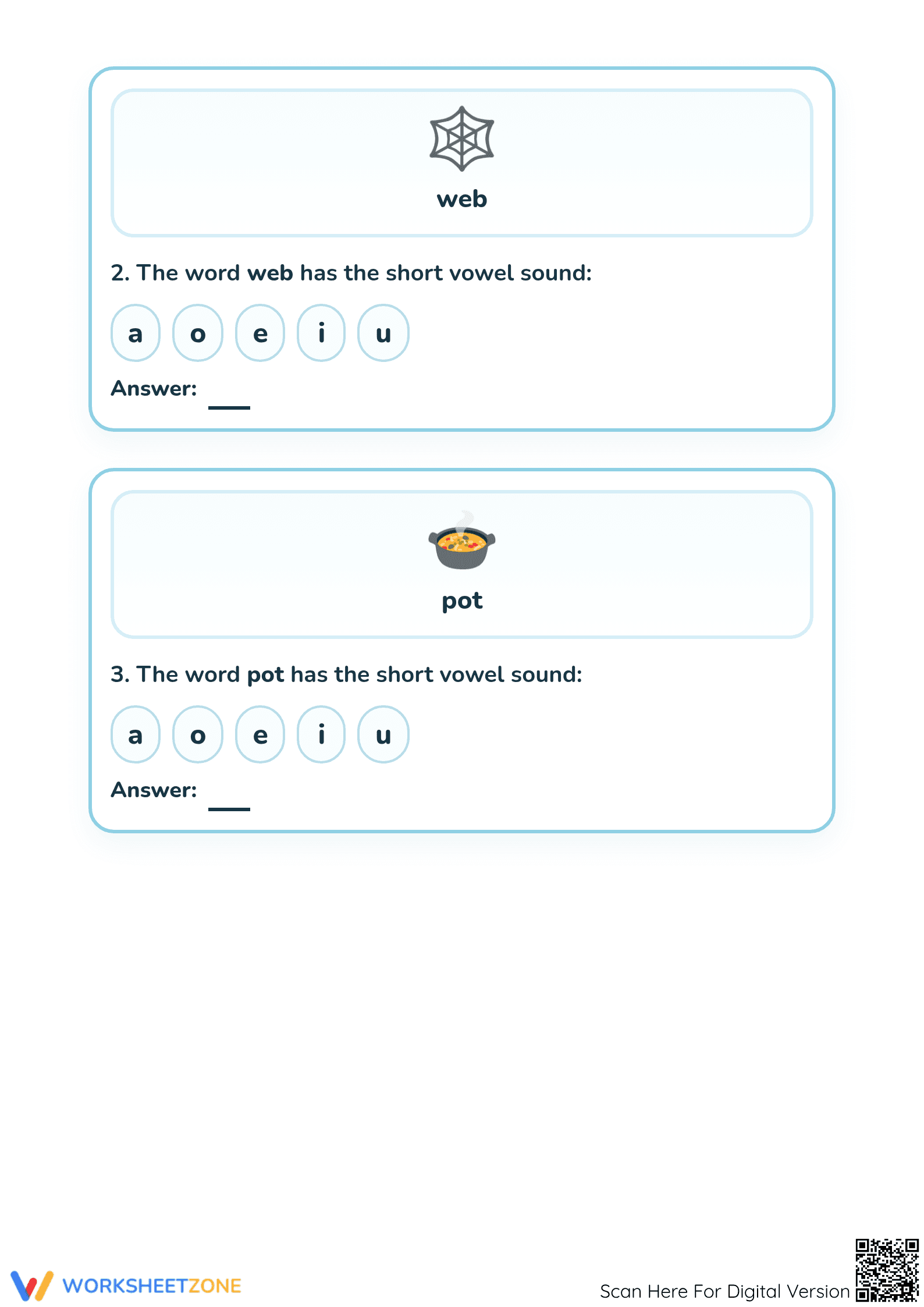
This Grade K-1 phonics worksheet helps early learners master short vowel sounds through visual and auditory association. Students identify medial vowel sounds in CVC words like top, web, and pig, building the phonemic awareness necessary for fluent reading. It provides a structured way to bridge the gap between letter recognition and word decoding.
At a Glance
- Grade: Kindergarten · Subject: ELA Phonics
- Standard:
RF.K.2.D— Isolate and pronounce medial vowel sounds in three-phoneme words- Skill Focus: Short Vowel Identification
- Format: 4 pages · 8 problems · Answer key included · PDF
- Best For: Independent phonics practice or morning work
- Time: 15–20 minutes
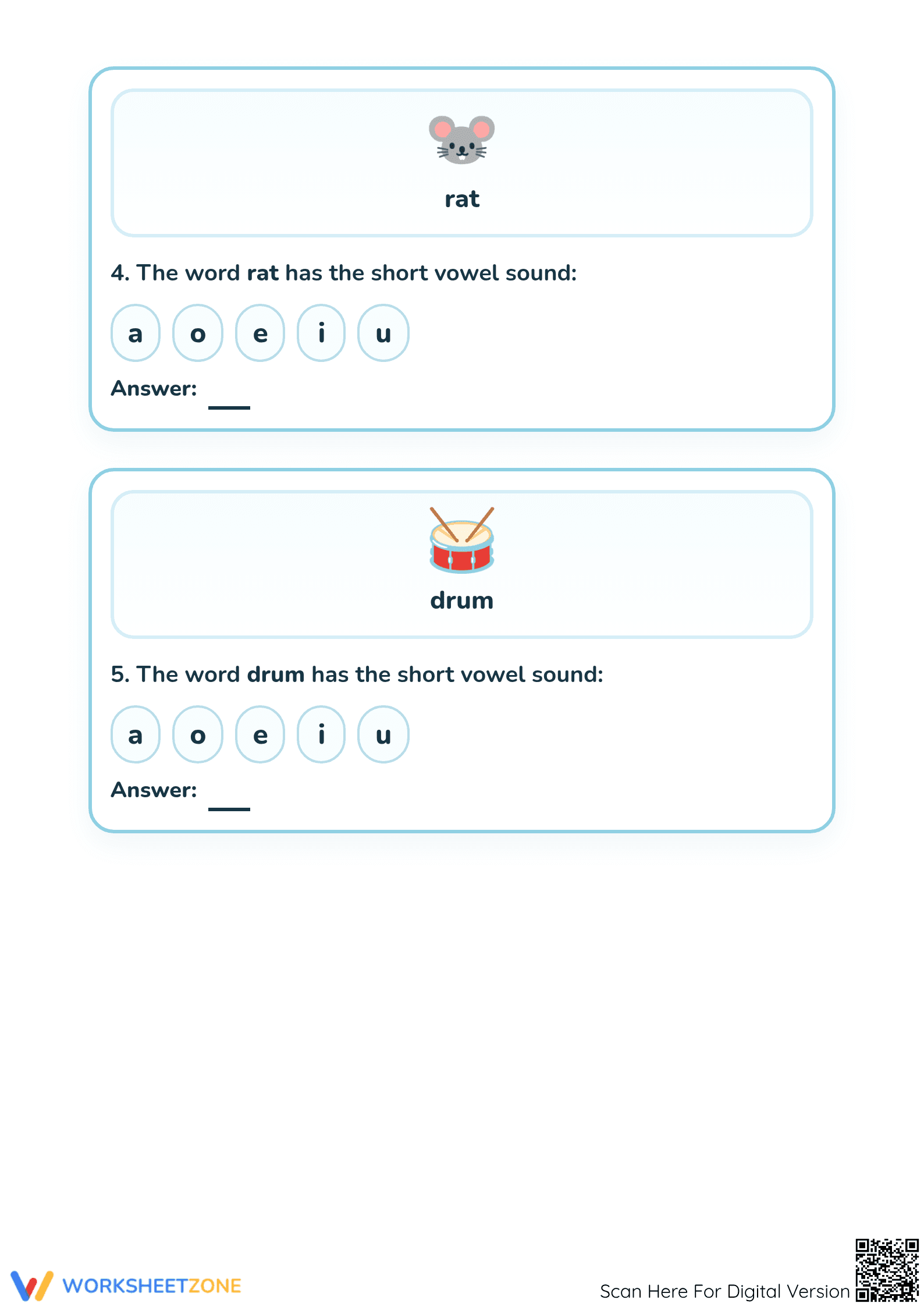
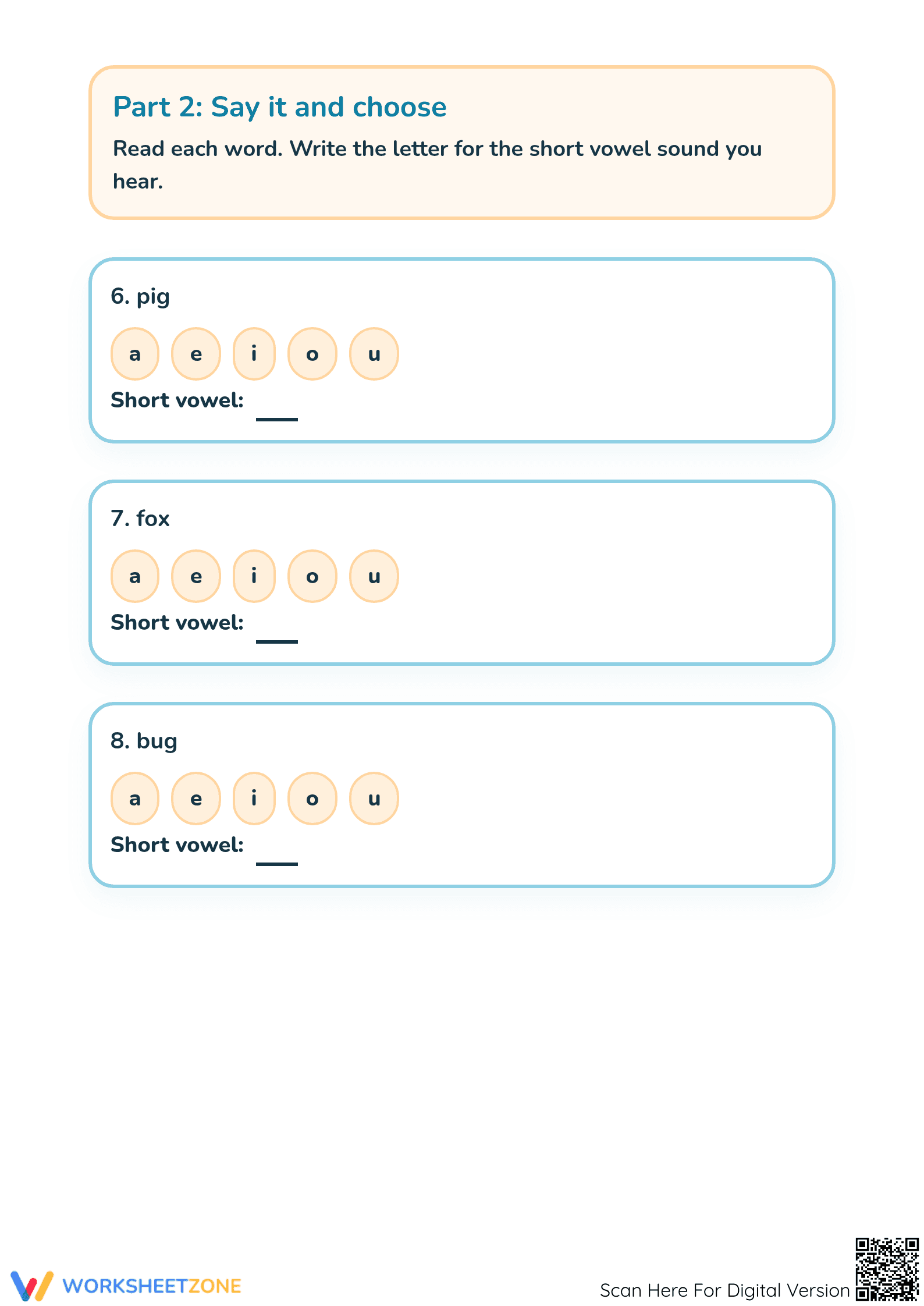
What's Inside: The packet contains 4 pages of focused practice. Part 1 features 5 picture-based tasks where students see an image (such as a drum or a rat), say the word, and select the correct vowel from a multiple-choice list. Part 2 offers 3 word-based tasks for text-only reinforcement. The layout is clean with large fonts and clear illustrations, accompanied by a full answer key for quick grading.
Zero-Prep Workflow: 1. Print: Select the 4-page PDF and print enough copies for your group in about 30 seconds. 2. Distribute: Hand out worksheets during centers or as a quiet desk activity in under 1 minute. 3. Review: Use the included answer key to check student work or project it for a whole-class review in 30 seconds. This resource is ideal for emergency sub plans or transition periods.
Standards Alignment: This resource aligns with `CCSS.ELA-LITERACY.RF.K.2.D`, focusing on the ability to isolate and pronounce the medial vowel sounds in CVC words. It also supports `CCSS.ELA-LITERACY.RF.1.2.C` by encouraging students to isolate and pronounce initial, medial vowel, and final sounds. Both standard codes can be copied directly into lesson plans, IEP goals, or district curriculum mapping tools.
How to Use It: Use this worksheet during the "You Do" phase of a gradual release model after teaching short vowel sounds. It serves as an excellent formative assessment; observe if students struggle with specific vowels like 'e' versus 'i'. Expected completion time is 15 to 20 minutes depending on the student's reading level and familiarity with the vocabulary.
Who It's For: Designed for Kindergarten and Grade 1 students, this is also suitable for Preschoolers ready for letter-sound correspondence. It works well for English Language Learners (ELLs) who need visual cues to identify vocabulary. Pair this with a short vowel anchor chart or a CVC word-building activity for a complete literacy lesson.
Phonemic awareness, specifically the ability to isolate medial vowels as required by CCSS.ELA-LITERACY.RF.K.2.D, is a critical predictor of later reading success. According to Fisher & Frey (2014), providing students with multiple opportunities to practice sound isolation through visual aids and verbal repetition strengthens the neural pathways associated with decoding. This 8-task worksheet utilizes high-frequency CVC words to ensure students are practicing with accessible vocabulary, allowing them to focus entirely on the phonological task. Research from the NAEP highlights that early mastery of vowel sounds significantly reduces the need for intensive intervention in later primary grades. By integrating both picture-to-sound and word-to-sound tasks, this resource addresses different learning modalities while maintaining a strict focus on the core standard. It is a reliable tool for establishing the foundational literacy skills necessary for Grade 1 readiness and beyond.


