




























Views
Downloads

Grade K Short Vowel Sounds — Printable No-Prep Worksheet

Paste this activity's link or code into your existing LMS (Google Classroom, Canvas, Teams, Schoology, Moodle, etc.).
Students can open and work on the activity right away, with no student login required.
You'll still be able to track student progress and results from your teacher account.
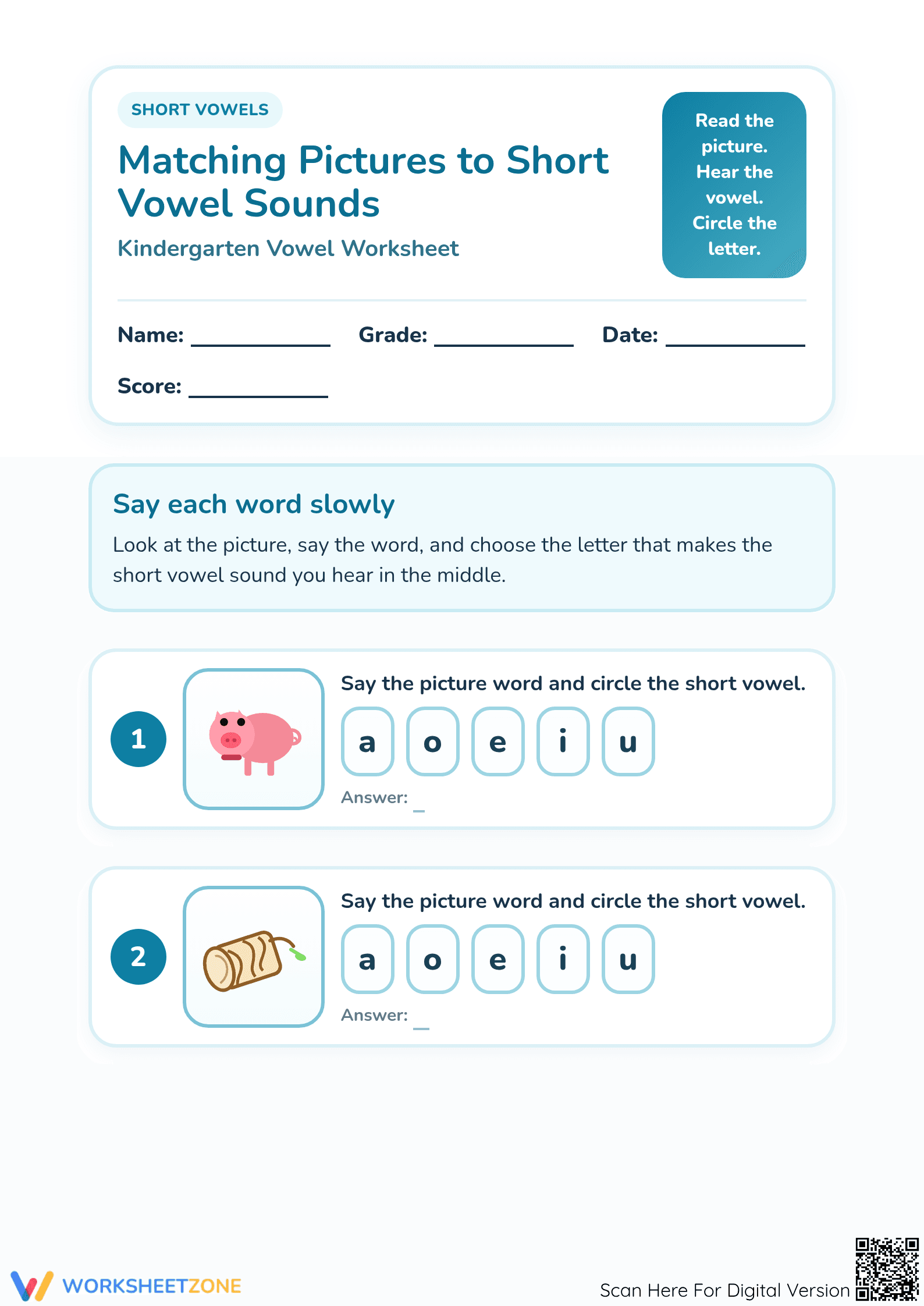
This printable Kindergarten phonics worksheet focuses on medial short vowel sound isolation through visual-auditory matching. Students identify the core vowel sound in five common CVC words by looking at clear illustrations and circling the corresponding letter. It builds the foundational phonemic awareness required for early reading fluency and decoding success in primary learners.
At a Glance
- Grade: Kindergarten · Subject: ELA Phonics
- Standard:
CCSS.ELA-LITERACY.RF.K.2.D— Isolate and pronounce medial vowel sounds in three-phoneme CVC words- Skill Focus: Medial Short Vowel Identification
- Format: 2 pages · 5 problems · Answer key included · PDF
- Best For: Small group phonics and center work
- Time: 10–15 minutes
What's Inside
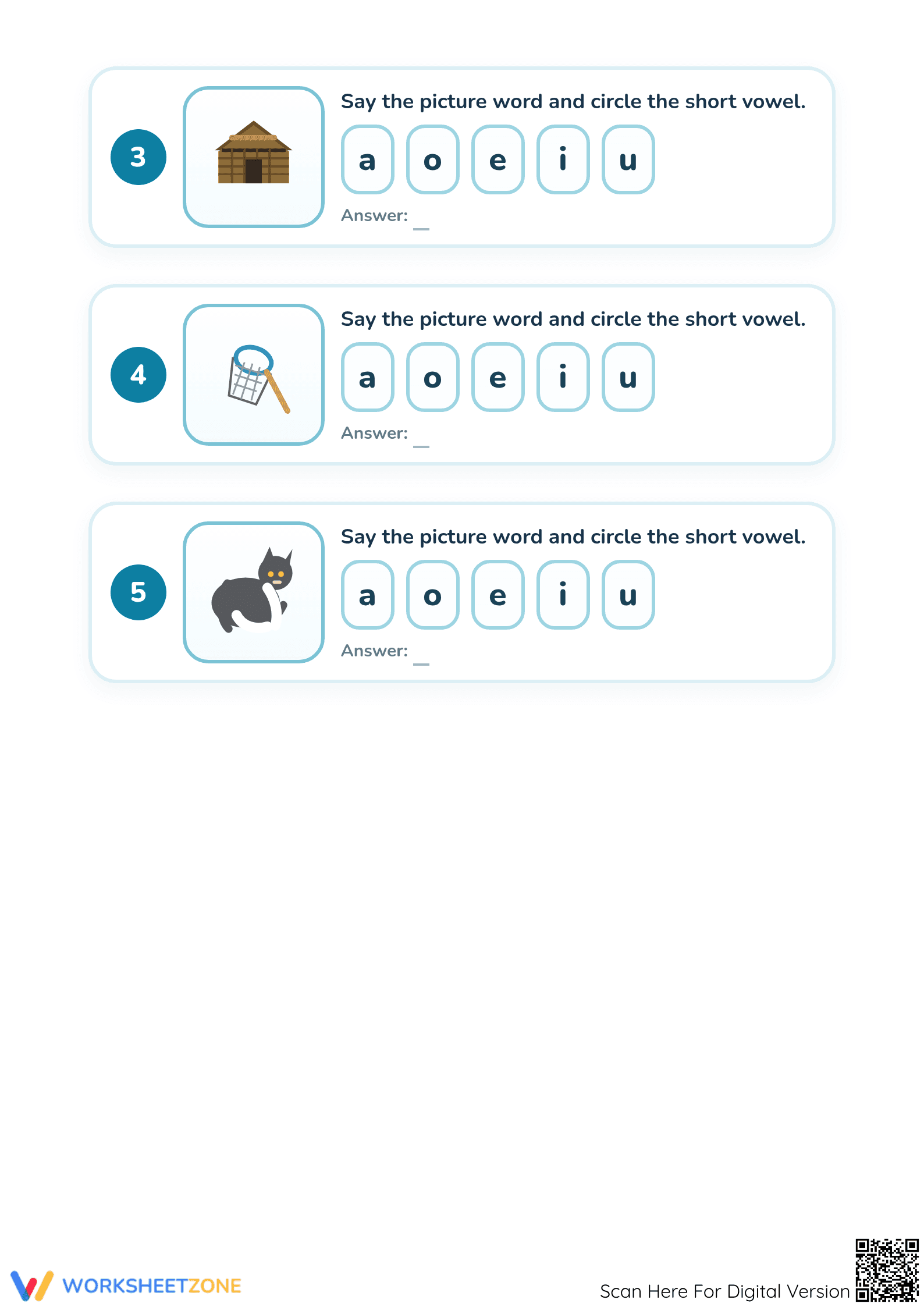
This resource provides five CVC tasks featuring images like a pig, log, hut, net, and cat. Each block contains an illustration, a "say it slowly" prompt, and five vowel choices. The spacious layout reduces cognitive load, and a full answer key is included for rapid grading and feedback.
Zero-Prep Workflow
The classroom-ready design ensures immediate implementation. First, print the PDF pages (30 seconds). Second, distribute with the "Say, Hear, and Circle" instruction (1 minute). Third, review using the answer key to identify phonemic gaps (30 seconds). This requires under two minutes of teacher prep, perfect for sub plans.
Standards Alignment
The activities are explicitly aligned with `CCSS.ELA-LITERACY.RF.K.2.D`, which requires students to isolate and pronounce the medial vowel sounds in three-phoneme words. By forcing students to choose the specific middle sound from a field of five options, the worksheet directly assesses and reinforces phonemic isolation skills. Both standard codes can be copied directly into lesson plans, IEP goals, or district curriculum mapping tools.
How to Use It
Use this during independent practice for short vowel lessons. Teachers should circulate to listen for sound stretching, providing a formative assessment opportunity. Alternatively, assign it as an exit ticket or literacy center activity to gauge phoneme isolation. Expected completion is twelve minutes.
Who It's For
Designed for Kindergarten and Grade 1 learners needing phonics support. It is effective for English Language Learners using the visual-to-sound connection. Pair this with a short vowel anchor chart to provide a cohesive instructional sequence for emerging readers.
This phonics resource facilitates the development of phonemic isolation, a critical component of the Reading Foundational standards. Specifically aligned with CCSS.ELA-LITERACY.RF.K.2.D, the worksheet tasks students with identifying medial vowel sounds in CVC words like "pig" and "net." According to the RAND AIRS 2024 analysis of foundational literacy materials, structured phonemic practice using visual anchors significantly improves sound-symbol mapping in early learners. By providing explicit practice in isolating the middle phoneme—often the most difficult sound for Kindergarten students to perceive—this tool bridges the gap between oral language and written text. The inclusion of five distinct tasks ensures enough repetition to solidify the concept without causing student fatigue. Such targeted practice is essential for building the decoding speed necessary for future reading fluency and comprehension. Teachers can use the resulting data to inform Tier 2 intervention groups.


