


























Views
Downloads
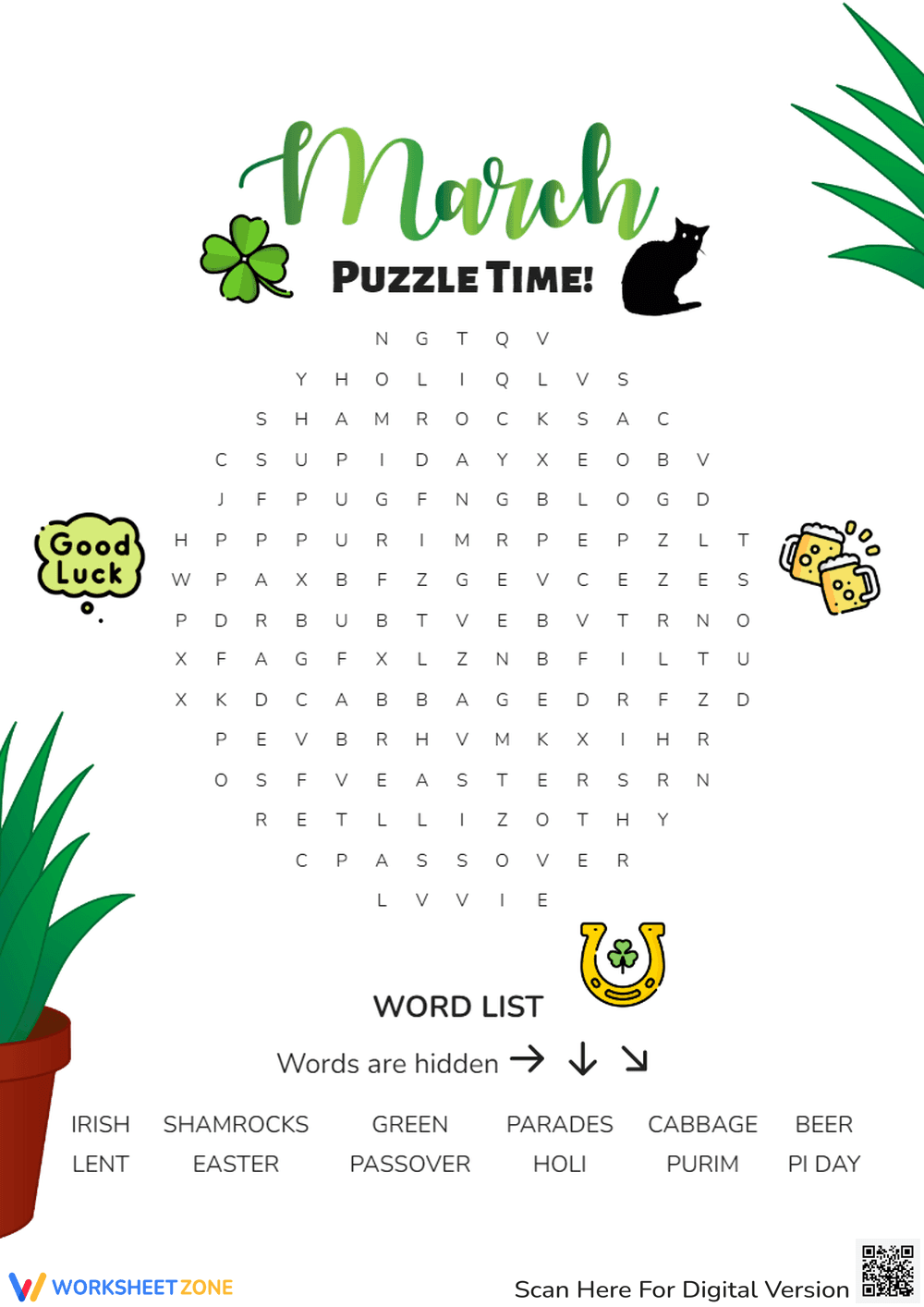

Printable March Word Search | Grade 2 ELA
Paste this activity's link or code into your existing LMS (Google Classroom, Canvas, Teams, Schoology, Moodle, etc.).
Students can open and work on the activity right away, with no student login required.
You'll still be able to track student progress and results from your teacher account.
This printable March word search worksheet provides students with an engaging way to practice spelling and vocabulary recognition. By scanning for seasonal terms, early elementary learners reinforce their letter-pattern awareness and visual tracking skills. It serves as an excellent seasonal activity to build word familiarity.
At a Glance
- Grade: 2 · Subject: ELA
- Standard:
CCSS.ELA-LITERACY.L.2.6— Acquire and use grade-appropriate vocabulary words- Skill Focus: Vocabulary Recognition
- Format: 1 page · 12 problems · No answer key · PDF
- Best For: Morning work or early finishers
- Time: 10–15 minutes
Inside this single-page resource, educators will find a visually appealing word search puzzle shaped like a circle, surrounded by festive March-themed clip art. The worksheet includes a dedicated word bank at the bottom featuring 12 seasonal terms such as shamrocks, parades, and spring holidays. Directional arrows clearly indicate that words can be found horizontally, vertically, and diagonally, providing appropriate structural support for young readers.
This resource is designed for immediate classroom implementation with a highly efficient zero-prep workflow.
- Print (1 minute): Simply download the PDF and print a class set. The black-and-white friendly design ensures crisp copies.
- Distribute (1 minute): Hand out the puzzle during morning transitions or as a quick transition activity.
- Review (0 minutes): The self-explanatory format means students can begin working immediately without direct teacher setup.
Total teacher prep time is under two minutes, making this an ideal, stress-free addition to any emergency sub plan or seasonal activity packet.
This activity aligns with CCSS.ELA-LITERACY.L.2.6, requiring students to use words and phrases acquired through conversations, reading and being read to, and responding to texts. By actively searching for specific seasonal vocabulary, students reinforce their orthographic mapping of these terms. Both standard codes can be copied directly into lesson plans, IEP goals, or district curriculum mapping tools.
Teachers can utilize this word search in multiple instructional moments. It works perfectly as a quiet morning work assignment to settle students before direct instruction begins. Alternatively, it serves as an engaging independent activity for early finishers during literacy centers. As a formative assessment observation tip, teachers can monitor how quickly students locate words to gauge their visual scanning and letter-recognition fluency. Expected completion time ranges from 10 to 15 minutes.
This worksheet is primarily designed for first through third-grade students developing their spelling and vocabulary skills. For differentiation, teachers can pair struggling readers with a partner to hunt for words collaboratively, or highlight the first letter of each word in the puzzle to provide extra scaffolding. It pairs naturally with a read-aloud book about March holidays or a direct instruction lesson on seasonal traditions.
Integrating thematic vocabulary activities like this word search supports broader literacy development by reinforcing spelling patterns and word recognition. Aligned to CCSS.ELA-LITERACY.L.2.6, this task helps students acquire and use grade-appropriate vocabulary words through repeated visual exposure. According to a RAND AIRS 2024 report on early literacy interventions, providing students with low-stakes, engaging word puzzles significantly improves their orthographic mapping and visual tracking capabilities. When learners actively scan for specific letter sequences, they strengthen the neural pathways required for fluent reading and accurate spelling. This printable resource offers a practical, research-backed method for increasing student exposure to seasonal terminology while maintaining high levels of engagement. By incorporating these targeted vocabulary exercises into daily routines, educators can effectively support foundational reading skills in a fun, accessible format.


